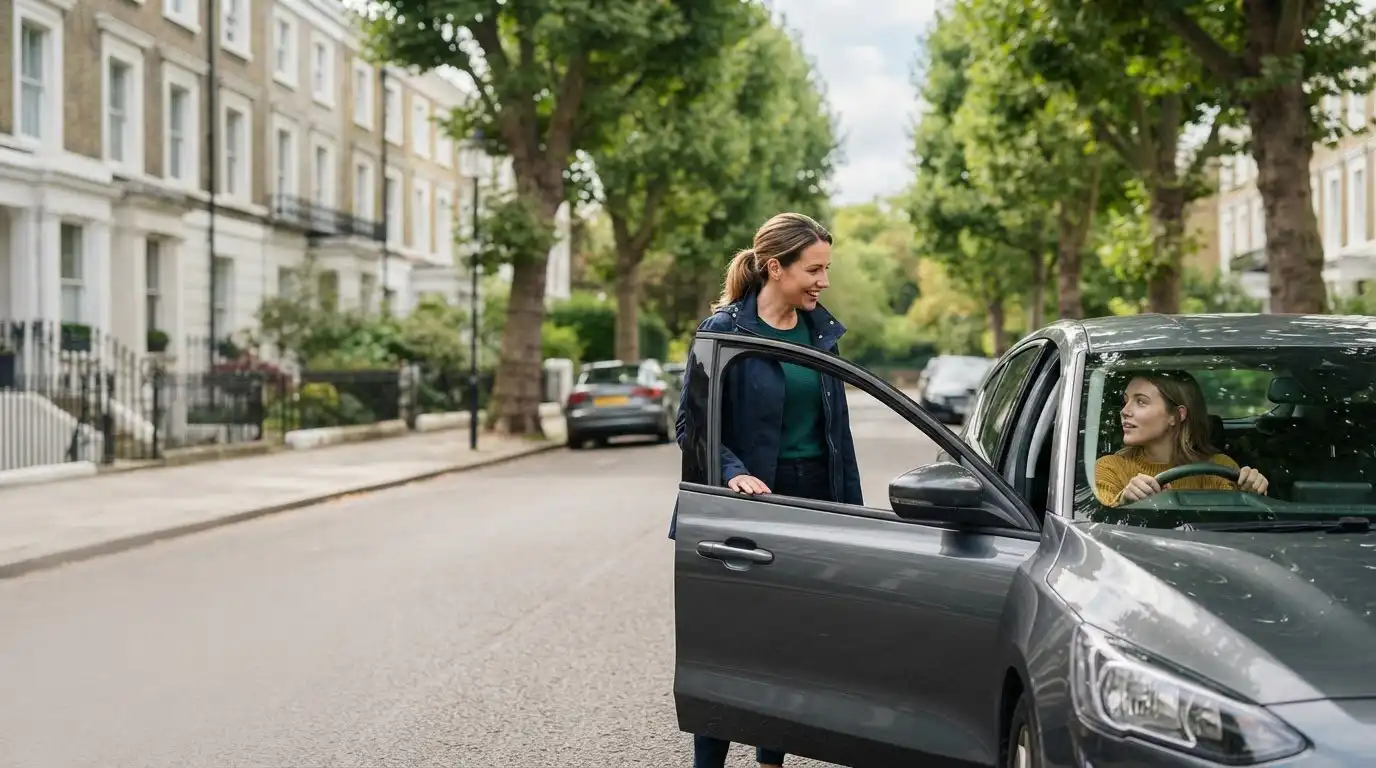
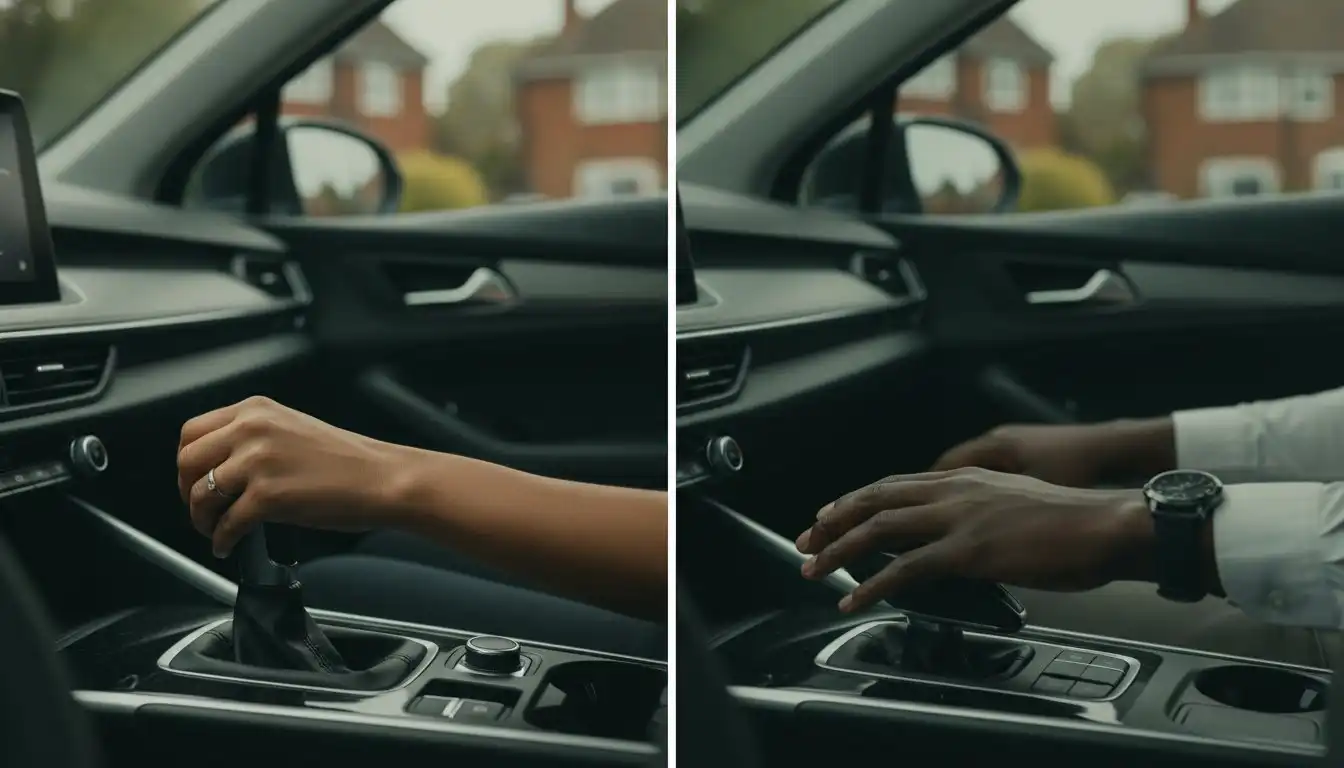
Did you know that 92% of new cars ordered in Britain are now automatic? This staggering shift suggests the traditional gear stick is rapidly becoming a relic of the past, yet the choice for a new learner remains as complex as ever. It is perfectly natural to feel torn between the two, especially if you harbour a fear of stalling at a busy London junction or feel overwhelmed by the rising costs of insurance. Navigating the manual vs automatic pros and cons is not just about choosing a car; it is about making a strategic decision for your driving future in Surrey and South West London.
We believe your driving education should be a transformative journey that leaves you feeling empowered and secure. You deserve a clear path that balances the ease of modern technology with the long term flexibility of a traditional licence. This guide promises to clear the fog, providing you with the professional knowledge needed to choose the right transmission for your specific needs. We will examine the impact on your insurance premiums, the reality of lesson durations, and how the 2035 ban on new petrol cars is reshaping the British road today.
Key Takeaways
- Understand the fundamental mechanical differences between transmissions and how they impact your control over the vehicle in busy urban environments.
- Evaluate the comprehensive manual vs automatic pros and cons to decide if the freedom of a full licence outweighs the convenience of an automatic.
- Discover why automatic cars are the definitive choice for stress-free driving in South West London congestion and how they can accelerate your journey to a pass.
- Learn how your choice of transmission influences long-term financial commitments, including vehicle purchase prices and annual insurance premiums.
- Utilise our expert decision framework to select the most effective learning path based on your personal budget and local geography in Surrey.
What is the Difference Between Manual and Automatic Cars?
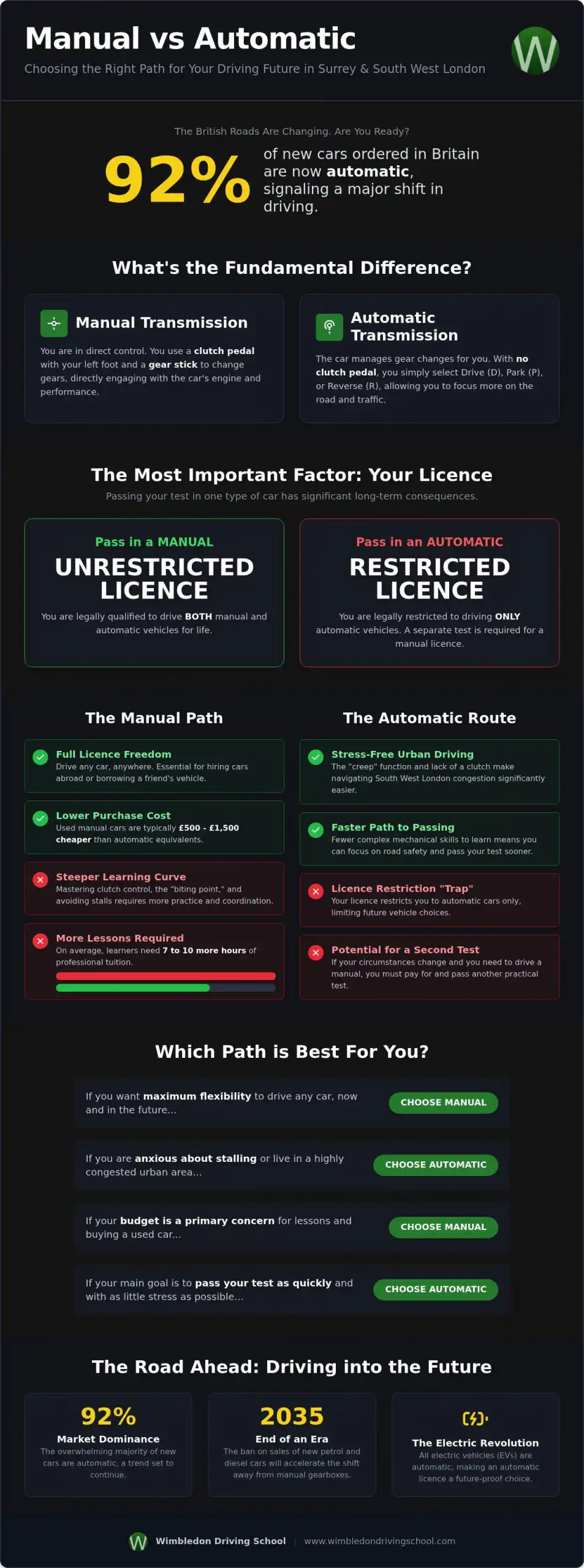
At its core, the distinction lies in who controls the gear changes: the driver or the car’s internal computer. In a manual car, you are the conductor, using a clutch pedal and a gear stick to shift between speeds. An automatic car simplifies this process entirely, removing the clutch and allowing the vehicle to select the appropriate gear for you. Understanding the manual vs automatic pros and cons starts with the UK driving licence regulations. If you pass your test in a manual vehicle, you earn the right to drive both manual and automatic cars. However, passing in an automatic restricts you solely to automatic vehicles. To drive a manual later, you would need to retake and pass a full practical test.
The Mechanics of a Manual Gearbox
Mastering a manual requires a unique physical synchronisation that many UK learners view as a traditional rite of passage. Your left foot manages the clutch pedal whilst your left hand operates the gear stick. This coordination is the engine of your control. The most significant hurdle for new students is often finding the “biting point.” This is the precise moment the clutch plates meet to transfer power from the engine to the wheels. For many, the fear of miscalculating this point and stalling at a busy Morden junction is a major source of anxiety. Yet, once mastered, this mechanical connection provides unparalleled engine control and a deeper sense of engagement with the vehicle’s performance.
How Modern Automatics Function
Modern automatic driving lessons focus on a much simpler interface that removes the physical stress of gear changes. There is no clutch pedal; your left foot remains completely stationary on the floor. You simply select from four primary modes: Drive (D), Park (P), Reverse (R), and Neutral (N). The car’s internal computer handles the complexities of shifting based on your speed and engine load. A standout benefit for urban driving is the “creep” function. When you release the brake, the car gently rolls forward without you needing to touch the accelerator. This makes low-speed manoeuvres and heavy South West London traffic significantly easier to manage, allowing you to focus entirely on your surroundings and safety.
Manual Driving: Pros and Cons for Learners
Choosing a manual car remains a strategic choice for many in 2026, despite the rise of electric technology. Weighing the manual vs automatic pros and cons requires looking beyond the dashboard and into your long-term driving future. For those living in Surrey, manual gearboxes offer superior engine braking on winding rural descents, providing a level of engagement and safety that many drivers find deeply rewarding. However, this control comes at the cost of a steeper learning curve. Stalling in the middle of a busy junction isn’t just a common fear; it’s a hurdle that demands resilience, patience, and expert professional guidance to overcome.
The Advantage of Full Licence Freedom
Passing your test in a manual vehicle grants you a Category B licence without any restrictions. This is widely considered the gold standard for flexibility. Whether you are hiring a car on holiday in Europe or borrowing a friend’s vehicle in an emergency, you’ll never be limited by the transmission type. You also gain significant financial leverage in the used car market. A used manual car can be between £500 and £1,500 cheaper than its automatic equivalent of the same age and condition. By choosing Manual Driving Lessons, you avoid the “licence trap.” This is where automatic-only drivers find themselves legally barred from driving manual cars, often forcing them to pay for a second practical test later in life when their circumstances change.
The Physical Challenges of Gears and Clutch
The physical demand of manual driving is undeniable. You must manage the delicate coordination between the clutch pedal and the gear stick, especially at notorious South West London spots like the Tibbet’s Corner roundabout. This complexity typically translates to more time behind the wheel. On average, learners in manual cars require 7 to 10 more hours of professional instruction than those opting for automatics. This extra time is spent perfecting slow-speed control and hill starts. For those who feel overwhelmed by these mechanics, our learning centre provides specialised resources for mastering the clutch. If you’re ready to take the first step toward total driving freedom, you can explore our competitive lesson rates to find a plan that suits your schedule.
Automatic Driving: Pros and Cons in Urban Environments
Automatic vehicles offer a distinct advantage for those navigating the dense, unpredictable streets of the capital. When weighing the manual vs automatic pros and cons, the sheer physical relief of an automatic in stop-start traffic cannot be overstated. For a nervous learner, the elimination of the clutch pedal removes the primary cause of test failure: stalling. This simplicity often leads to a faster pass, with learners typically requiring seven to ten fewer hours of instruction than their manual counterparts. However, you must consider the trade-offs. Automatic lessons generally command a higher hourly rate, and insurance premiums for automatic-only licence holders can be substantially higher than for those with a full manual qualification.
Mastering Stop-Start Traffic in London
Navigating the A24 or the South Circular at rush hour is a mental marathon. In a manual car, the constant shifting between first gear and neutral leads to significant physical fatigue and “clutch leg.” An automatic removes this burden entirely, allowing you to dedicate 100% of your cognitive focus to the road and your mirrors. By removing the mechanical distraction, you become a safer, more observant driver in high-pressure environments. If you are looking for local expertise, finding the right Automatic Driving Instructors Near Me ensures you are taught by professionals who understand these specific urban challenges and can build your confidence in heavy traffic.
The Future-Proofing Argument: EVs and Hybrids
The UK motoring landscape is changing at an unprecedented pace. With the government’s confirmed ban on the sale of new petrol and diesel cars by 2035, the era of the manual gearbox is drawing to a close. Electric vehicles (EVs) and hybrids are almost exclusively automatic. In fact, as of July 2026, 92% of new car orders in Britain were already automatic. Learning in an auto now isn’t just about immediate convenience; it’s about future-proofing your skills for the next decade of motoring. For those who want to reach this milestone quickly, our Intensive Driving Courses are specifically designed to help auto learners master these modern vehicles in a condensed timeframe. This approach makes the transition to electric driving seamless, ensuring you are ready for a world where the gear stick is a thing of the past.
Comparing Costs: Lessons, Insurance, and Fuel
Financial considerations often dictate the final choice for many learners in London and Surrey. When assessing the manual vs automatic pros and cons, you must look beyond the immediate hourly rate. National averages from June 2026 show that automatic lessons typically cost between £2 and £5 more per hour than manual ones. This price gap reflects the higher purchase price and maintenance costs of automatic training vehicles. However, the total cost of reaching test standard is rarely a simple multiplication of the hourly fee. You must weigh the upfront tuition costs against the long term expenses of owning and insuring your first car.
Initial Investment vs Long-Term Savings
A standard learner requires approximately 45 hours of professional tuition to be test-ready. Statistics show that those opting for an automatic gearbox often reach this milestone in 7 to 10 fewer hours because they don’t need to master complex clutch control. If you compare 40 hours of manual instruction against 30 hours in an automatic, the “real” price of your education may actually be lower with the latter. While automatic lessons carry a higher hourly rate, the reduced number of hours needed to reach test standard often levels the total investment. To maximise your budget, consider our block booking discounts which provide a cost-effective way to secure your training.
Insurance Premiums for New Drivers
The most significant financial sting often arrives after you pass. Insurance companies currently view automatic-only licence holders as a higher risk. Data from January 2026 indicates that drivers with an automatic-only licence paid an average of £1,296 for their annual premium, compared to just £696 for those with a full manual licence. This discrepancy exists because automatics are generally more expensive to repair, particularly regarding their complex gearboxes. To mitigate these costs, focus on choosing a vehicle in a low insurance group, typically groups 1 to 5, and maintain a clean driving record from day one. This strategic choice helps offset the naturally higher premiums associated with automatic vehicles.
Fuel efficiency was once a major win for manual cars, but technology has closed that gap. Modern Direct-Shift Gearboxes (DSG) and Continuously Variable Transmissions (CVT) are now as efficient as their manual counterparts. In many cases, the car’s computer shifts gears more precisely than a human could, potentially saving you money at the pump. While a manual clutch will eventually wear out and require a replacement, an automatic gearbox is designed to last the life of the car if serviced correctly. If you are ready to start your journey, book your first lesson today and secure your path to driving success.
Which Should You Choose? A Decision Framework
Deciding between a manual or automatic licence is a pivotal moment in your driving education. To make the most effective choice, you must weigh your immediate goals against your long-term lifestyle. By evaluating the manual vs automatic pros and cons through a structured framework, you can move forward with total confidence. Our recommendation is always based on 20 years of local expertise in South West London and Surrey, where we’ve guided thousands of students through this exact dilemma. We view this choice not just as a technical preference, but as the first step in your transformative journey toward independence.
Your budget remains a primary factor. As previously explored, a manual licence offers lower entry costs for your first vehicle and significantly cheaper insurance premiums. However, your physical environment matters just as much as your bank balance. If you reside in the hilly outskirts of Surrey, mastering a manual gearbox provides essential engine control for steep descents. Conversely, if your daily commute involves the stop-start crawl of the South Circular, an automatic is the logical choice for modern urban life. For those struggling with nerves, removing the mechanical complexity of gears can transform driving from a source of anxiety into a skill you genuinely enjoy. We believe every student deserves a tailored approach that respects their individual learning pace.
Questions to Ask Yourself Before Booking
- Do I plan on driving or hiring cars abroad frequently? If your future includes road trips through Europe where manual rentals are still the standard, a manual licence is the only way to ensure total freedom.
- Am I looking to pass my test as quickly as possible? If you have a professional deadline or a specific date in mind, an automatic car often allows for a faster progression to test standard by reducing technical hurdles.
- Is my dream car a classic or a high-end EV? Classic car enthusiasts will always require a manual licence, whereas those focused on the latest electric technology will find an automatic licence perfectly sufficient for the future.
Your Journey Starts Here
Our RoSPA Gold and IAM-certified instructors are uniquely equipped to support whichever path you choose. We don’t just provide instruction; we mentor you through a disciplined process that prioritises safety and high-level proficiency. If you start in a manual and find the clutch coordination too taxing, our flexible seven-day-a-week structure allows you to switch to an automatic car seamlessly. This ensures your momentum is never lost. We invite you to secure your preferred lesson time and instructor today and take the first step toward this essential personal milestone.
Take the Wheel with Total Confidence
Choosing your path is the first milestone in your transformative journey toward independence. Whether you prioritise the total licence freedom of a manual or the stress-free simplicity of an automatic in London’s congestion, your decision should align with your long-term goals. We have explored the manual vs automatic pros and cons to ensure you have the professional knowledge to make a strategic choice for 2026 and beyond. Your choice defines your driving future, and we are here to ensure it is a successful one.
Wimbledon Driving School remains a premier provider by specialising in nervous and first-time drivers. Our highly qualified instructors, including RoSPA Gold and IAM members, provide a sense of security and prestige that few can match. This disciplined approach is why we achieve one of the highest pass rates in the country, turning anxious learners into proficient motorists. Your destination is within reach, and we are ready to mentor you toward that essential personal milestone.
Ready to start? Book your first lesson with Wimbledon Driving School today. We look forward to helping you master the road with skill and safety.
Frequently Asked Questions
Is it easier to pass a driving test in an automatic car?
Yes, it is generally considered easier to pass in an automatic because you don’t have to manage a clutch or change gears manually. This simplicity allows you to focus entirely on road safety and observations. Learners often find they make fewer technical errors, such as stalling or selecting the wrong gear, which are frequent reasons for test failure in manual vehicles.
Can I drive a manual car if I have an automatic licence?
No, you are legally restricted to driving automatic vehicles only if you hold an automatic licence. If you wish to drive a manual car, you must apply for a provisional manual licence, take further lessons, and pass a new practical driving test in a manual vehicle. There is no automatic upgrade; the law requires you to demonstrate competency with a clutch and gear stick.
Are automatic driving lessons more expensive than manual ones?
Yes, the hourly rate for automatic lessons is typically £2 to £5 higher than for manual tuition. This price difference exists because automatic training cars are more expensive for driving schools to purchase and maintain. When evaluating the manual vs automatic pros and cons, remember that requiring fewer total hours can often make the overall cost of getting your licence comparable.
Will manual cars be phased out by 2030 in the UK?
No, manual cars won’t be entirely phased out by 2030, though the market is shifting. The UK government plans to ban the sale of new petrol and diesel cars from 2035, and since most electric vehicles are automatic, manuals will eventually become rare. However, the second-hand market will continue to offer manual vehicles for many years after the ban on new sales takes effect.
Why do most people in the UK still learn in manual cars?
Most learners choose manual because it provides total driving freedom for the future. A manual licence allows you to drive both manual and automatic vehicles without any restrictions. This flexibility is invaluable for hiring cars abroad, driving older used vehicles, or keeping insurance costs lower. It remains the most versatile qualification for a lifetime of driving in diverse conditions.
How many more lessons does it take to learn manual vs automatic?
On average, a manual learner requires about 7 to 10 more hours of professional instruction than an automatic student. This extra time is dedicated to mastering the biting point, smooth gear transitions, and hill starts. When weighing the manual vs automatic pros and cons, you should decide whether you prefer a faster pass or the broader utility of a full licence.
Is insurance cheaper for manual or automatic cars for new drivers?
Insurance is significantly cheaper for drivers who hold a full manual licence. Insurers often view automatic-only drivers as a higher risk, and automatic gearboxes are more complex and expensive to repair. By passing in a manual, you could save hundreds of pounds on your annual premium compared to the higher rates typically quoted for automatic-only drivers.
What happens if I fail my manual test and want to switch to automatic?
You can switch to automatic lessons at any time if you find the manual gearbox too challenging. Transitioning to an automatic car can provide the confidence boost you need after a setback. You won’t need to retake your theory test, and your instructor can help you adapt your existing road skills to the simpler automatic transmission for a faster second attempt.
Disclaimer
This article is provided for general informational purposes only and does not constitute professional driving, legal, or safety advice. While we aim to keep our content accurate and up to date, rules, prices, and DVSA test requirements can change — always check gov.uk or contact us directly at 020 3524 7968 for the latest guidance before making any decisions. Nothing in this article guarantees a specific outcome, including passing your driving test within any stated timeframe. For current pricing, course availability, and instructor details, please visit our Prices page or get in touch.