
The real bottleneck in your new career isn’t the DVSA’s calendar; it’s the quality of the training you choose today. If you’re asking how long does adi training take, the answer typically spans six to twenty-four months, but the speed of your journey depends entirely on the precision of your mentorship. With a national shortage of instructors and London lesson rates often exceeding £50 per hour, the rewards for qualifying quickly are substantial. However, many candidates feel stuck, worried about the difficulty of the Part 3 exam or the long waiting lists at test centres like Morden and Tolworth.
We recognise the frustration of wanting to move forward while feeling held back by logistical hurdles. It’s a major life transition, and you need a clear path that respects your time and your current work commitments. This guide provides a definitive 2026 roadmap to qualification, promising a realistic 6-12 month timeline for those with the right support. You’ll learn how to balance your training with a current job and why choosing a local school with RoSPA Gold certified coaches is the most effective way to secure your future. We’ll preview the essential milestones, ensuring you have the confidence to transform your career without wasting a single pound on poor-quality instruction.
Key Takeaways
- Understand that while the national average varies, most focused candidates can qualify in 6 to 12 months with the right mentorship.
- Discover how the specific answer to how long does adi training take is influenced by your choice between intensive courses and flexible, part-time study.
- Learn how local expertise in South West London and Surrey test routes can help you navigate current DVSA waiting lists and pass your exams more efficiently.
- Recognise why 40 hours of specialist training is the essential milestone for obtaining your trainee licence and starting your career sooner.
- Identify how RoSPA Gold and IAM certified trainers can significantly reduce your qualification time by improving your first-time pass rates.
Understanding the ADI Qualification Journey and Typical Timelines
Embarking on the path to becoming an Approved Driving Instructor (ADI) is a transformative career move. It’s not just about learning to teach; it’s about mastering a professional standard that ensures road safety and personal independence for your students. For most candidates, the realistic answer to how long does adi training take falls between 6 and 12 months. This timeline isn’t arbitrary; it reflects the depth of the three DVSA qualifying tests and the practical experience required to succeed in a competitive London market.
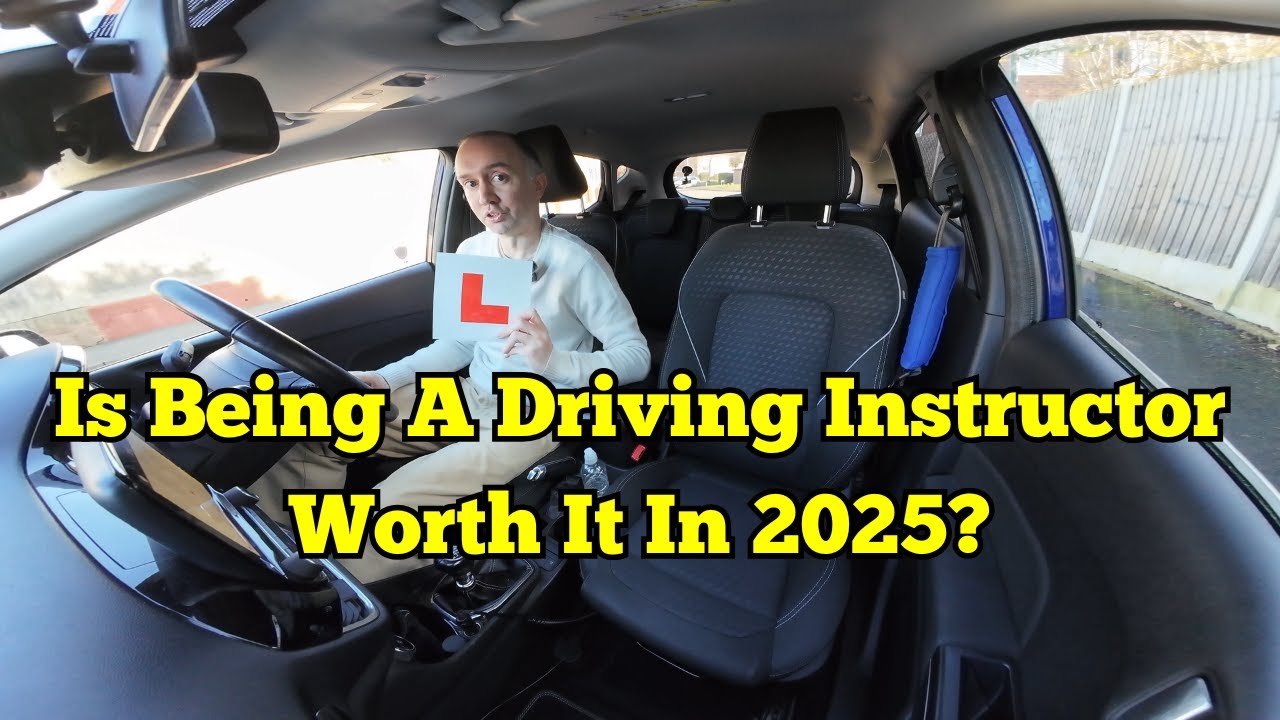
To gain a clearer perspective on whether this timeline aligns with your career goals, watch this helpful video from an industry expert:
Your progress depends heavily on your prior driving history and the hours you can dedicate each week. The qualification is split into three distinct stages: theory (Part 1), driving ability (Part 2), and instructional ability (Part 3). While the DVSA presents the process as a linear sequence, savvy trainees often overlap their theory study with practical preparation to maintain momentum. Professional coaching is the most effective tool for compressing this schedule. By working with mentors who understand the specific requirements of the Part 3 exam, you avoid the “failed attempt” cycle that adds months of waiting time to many journeys.
The Realistic 6-Month Fast-Track
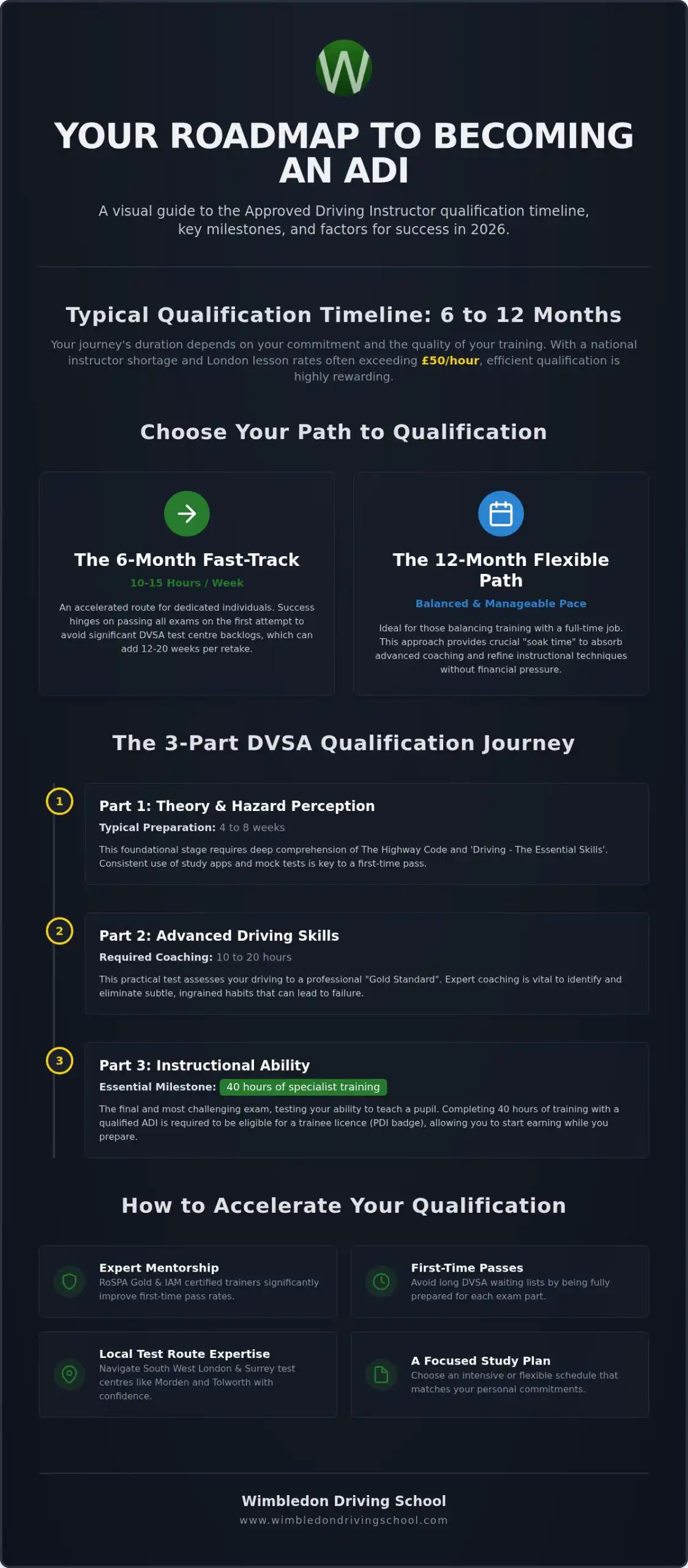
This accelerated route is perfect for those who can commit 10 to 15 hours of dedicated study and practice every week. Success on this timeline relies on passing all three parts on the first attempt. Even a single retake can add 12 to 20 weeks to your journey due to significant DVSA test centre backlogs in South West London centres like Morden and Tolworth. To make this work, you must book your test dates as early as possible and maintain a high level of proficiency throughout your training programme.
The 12-Month Flexible Path
If you’re balancing your transition with a full-time job, a one-year roadmap offers a more manageable and successful pace. This path provides a clear answer to how long does adi training take for those with busy schedules, providing essential “soak time” between the three parts. This allows you to absorb advanced coaching and refine your instructional techniques whilst maintaining your current income. It’s a disciplined yet accommodating approach that ensures you’re fully prepared for the rigours of the industry, making the eventual career shift feel like a natural, secure progression.
A Breakdown of the Three DVSA Qualifying Tests
The path to qualification is a structured climb. You cannot skip steps; each level builds on the last to ensure you’re fully equipped for the responsibility of teaching others. The official DVSA guide to becoming an ADI makes it clear that the process is strictly sequential. You start with Part 1, move to Part 2, and finish with the challenging Part 3. While you can take the theory test as many times as needed, you only get three chances for the practical parts. This pressure is exactly why our mentors focus on precision from day one, helping you avoid the frustration of a restart.
Mastering Part 1: Theory and Hazard
Most candidates spend four to eight weeks preparing for this stage. It’s not just about memorising signs; it’s about deep comprehension of The Highway Code and the “Driving – The Essential Skills” manual. We recommend using professional study apps and consistent mock tests to guarantee a first-time pass. Part 1 serves as the absolute foundation of your instructional knowledge.
Refining Part 2: Advanced Driving Skills
Part 2 requires approximately 10 to 20 hours of advanced coaching to reach the “Gold Standard” required for professional instruction. Most experienced drivers have developed subtle habits that lead to failure, such as crossing hands on the wheel or improper mirror timing. Our instructors help you identify and eliminate these long-term behaviours. We use local South West London routes to build your environmental familiarity, ensuring you’re comfortable with every junction in Morden or Tolworth.
The Trainee Licence (Pink Badge) Advantage
This is where you can significantly influence how long does adi training take. Once you’ve completed 40 hours of training for Part 3, you’re eligible for a trainee licence, often called the “Pink Badge.” This optional six-month licence allows you to work as a Potential Driving Instructor (PDI). It’s a game-changer for your timeline. You’ll gain real-world experience with actual students, earning an income whilst you prepare for your final exam. This practical immersion often leads to much higher pass rates and a smoother transition into your new career. If you’re eager to get started, you can book your first session and begin the journey toward your Pink Badge today.
Key Factors That Influence Your Training Duration
While the qualification process follows a set path, several external and personal variables dictate your actual progress. Understanding these factors allows you to manage your expectations and plan your transition with precision. The most significant variable in determining how long does adi training take is often the logistical landscape of the DVSA test booking system, particularly within the busy hubs of South West London and Surrey. Beyond the bureaucracy, your choice of training frequency and the calibre of your mentor will either accelerate your journey or add months of avoidable delays.
The quality of your coaching remains the most influential factor under your control. Expert trainers, such as those with RoSPA Gold or IAM certifications, possess a refined eye for detail. They identify instructional faults and driving habits much faster than a standard trainer, ensuring you don’t spend unnecessary hours practicing the wrong techniques. According to the Driving Instructors Association (DIA), professional standards and ongoing development are what separate successful instructors from those who struggle to qualify. By investing in high-level mentorship, you’re choosing a more efficient, direct route to your new career.
Navigating London Test Centre Wait Times
In 2026, waiting times for practical tests at centres like Morden, Tolworth, and Isleworth can range from 12 to 20 weeks. This backlog can derail your momentum if you don’t plan ahead. We advocate for a strategic booking approach; we encourage our trainees to secure their Part 2 test date whilst they are still studying for the Part 1 theory exam. Wimbledon Driving School takes an active role in managing these logistics, helping you navigate the booking system to find cancellations or earlier slots that align with your training progress.
The Role of Previous Experience
Your history behind the wheel provides a helpful starting point, but it isn’t the whole story. Candidates with an advanced driving background, such as those who have completed RoSPA or IAM courses, often find the Part 2 driving ability test more straightforward. However, the transition from being a “good driver” to a “driving instructor” requires a profound mental adjustment. You must learn to verbalise complex actions and anticipate the mistakes of others before they happen. Instructional ability is a separate skill from driving skill. This shift in perspective is often the most time-consuming part of the journey, requiring patience and a willingness to deconstruct your own driving behaviour to help others succeed.
Intensive vs. Flexible Training: Which Path is Faster?
Choosing the right training structure is as vital as choosing the right mentor. When candidates ask how long does adi training take, they often assume there is a single, fixed answer. In reality, your timeline is shaped by whether you opt for an intensive burst or a flexible, phased approach. Intensive courses compress over 40 hours of training into just a few weeks, making them the fastest route for those with high mental stamina and immediate availability. This pace is demanding; it requires you to clear your schedule entirely to focus on the transformative journey ahead without distractions.
Flexible training offers a different set of professional benefits. By studying part-time, you can integrate your ADI preparation into your current lifestyle without sacrificing your existing income. This steadier pace often leads to superior long-term retention of instructional skills, as it allows for deeper reflection and “soak time” between coaching sessions. Our seven-day-a-week availability ensures that regardless of which path you choose, your progress remains consistent and supported by the highest level of professional knowledge. We adapt to your needs, providing the safest and most effective choice for your education.
Is Fast-Track Training Right for You?
A “crash course” style programme is excellent for mastering the technical car control and advanced observation required for Part 2. We often recommend intensive blocks for this specific stage to build muscle memory quickly. However, Part 3, the instructional ability test, usually benefits from a more measured pace. This allows you to practice teaching real students under supervision, which is essential for passing the final exam. For more details on the logistics of rapid learning in the capital, explore our guide to the Intensive Driving Course London.
Organising Your Training Schedule
Success in ADI training is built on consistency. Long gaps between sessions can lead to skill fade, which inevitably extends the question of how long does adi training take by several months. We work with you to build a bespoke plan that fits your personal duties whilst maintaining a logical flow of learning. Whether you are a career changer or looking to diversify your skills, your schedule should mirror the momentum of the qualification process itself. To start building your personalised roadmap and secure your place with a premier training provider, book your initial assessment today.
Fast-Tracking Your Career with Wimbledon Driving School
Wimbledon Driving School stands as a premier provider because we prioritise the quality of your foundation. When you evaluate how long does adi training take, you must account for the calibre of your coach. Our training is often led by instructors holding RoSPA Gold and IAM certifications, the highest accolades in the industry. This level of proficiency ensures that your preparation is rigorous, safety-focused, and designed for a first-time pass. We don’t just teach you to pass a test; we prepare you for a prestigious career with a market-leading reputation.
Our personalised training plans are built around your specific learning speed. By focusing on your individual strengths and addressing instructional weaknesses early, we get you test-ready in record time. Once you qualify, you aren’t left to find your own way. We offer a supportive franchise network that provides a steady stream of pupils, ensuring your new career is financially viable from day one. This end-to-end support makes us the most effective choice for your education, providing a sense of security and prestige throughout your journey.
Why Local Mentorship Matters
Navigating the complex road layouts and dense traffic of South West London requires more than just general knowledge. Our mentors possess deep local expertise in the specific routes used by regional test centres. This familiarity allows you to practice in the exact environments where you’ll be assessed, reducing anxiety and improving performance. You’ll also gain access to a network of local instructors for peer support and mock tests, creating a community of success. To see how this local focus transforms your prospects, learn more about how to Become a Driving Instructor with a team that knows your area inside out.
Start Your Journey Today
The first step toward your new career is a simple eligibility check and an application for your Part 1 theory test. We recommend booking an initial assessment with our senior training team to gauge your current skills and set a realistic timeline. This session provides the clarity you need to move forward with confidence, respecting your time and your goals. We’ve been operating since 2006, and our high pass rates reflect our commitment to excellence. Don’t let uncertainty regarding how long does adi training take delay your progress. Take the definitive step toward professional independence and secure your ADI training place with Wimbledon Driving School now.
Secure Your Future as a Professional Driving Instructor
Qualifying as an ADI is a transformative journey that balances technical mastery with instructional excellence. While the question of how long does adi training take typically results in a six to twelve-month window, your choice of mentor is the ultimate accelerator. By leveraging local expertise in South West London and Surrey test routes, you bypass the common pitfalls that stall many aspiring instructors. We’ve acted as a confident mentor to hundreds of career changers since 2006, providing a sense of security in a competitive market.
Our RoSPA Gold and IAM certified trainers provide the high-level proficiency required to achieve high first-time pass rates. This ensures you move from trainee to professional as efficiently as possible. Whether you choose a rapid intensive block or a flexible schedule that respects your current job, the path to a prestigious new career is clear. Start your journey to becoming an ADI today and benefit from the safest, most effective choice for your professional education. We are ready to help you reach this significant personal milestone.
Frequently Asked Questions
Can I qualify as a driving instructor in 3 months?
Qualifying in three months is exceptionally rare in the current climate. While the training itself can be intensive, the reality of how long does adi training take is dictated by DVSA test availability. In South West London, waiting lists for practical tests often stretch to 20 weeks. Most successful candidates find that a six to twelve-month timeline allows for the necessary depth of study and practice required to maintain our high first-time pass rates.
How many hours of training are required for ADI Part 3?
You must complete a minimum of 40 hours of specialist training with a qualified ADI to apply for a trainee licence. This “Pink Badge” allows you to gain real-world experience whilst preparing for the final exam. Even if you choose to skip the trainee licence, these 40 hours are the industry standard for developing the instructional ability needed to pass the rigorous Part 3 test on your first attempt.
What happens if I fail one of the ADI qualifying tests?
The rules vary depending on which stage you are at. You can retake the Part 1 theory test as many times as necessary. However, you are limited to only three attempts for both the Part 2 driving ability and Part 3 instructional ability tests. If you fail the third attempt at either stage, the DVSA requires you to wait until two years after passing Part 1 before restarting the entire process from the beginning.
Is it possible to train as an ADI whilst working another job?
Absolutely. Many of our most successful instructors began their journey whilst working in other sectors. Because we operate seven days a week across Surrey and Middlesex, you can easily schedule your coaching sessions around your current employment. This flexible approach allows you to maintain your income whilst transitioning toward a more rewarding career. It also provides the “soak time” needed to absorb advanced teaching techniques at a manageable pace.
How much does ADI training cost in London for 2026?
The total investment includes several mandatory DVSA fees. As of 2026, the Part 1 theory test is £81, whilst Parts 2 and 3 are £111 each. Once qualified, the initial ADI registration fee is £300, valid for four years. You should also factor in the cost of an enhanced DBS check and professional coaching. Choosing a local school with RoSPA Gold certified trainers ensures your investment leads to a successful, high-earning career.
Do I need to pass a DBS check before starting ADI training?
Yes, you must pass an enhanced DBS check before you can start the official registration process with the DVSA. As of October 2026, this check costs £41.00. This is a vital safety requirement to ensure all instructors meet the high standards of character and conduct expected in the profession. We recommend starting this application early, as it is a prerequisite for booking your Part 1 theory test and beginning your training.
What is the difference between a PDI and an ADI?
A Potential Driving Instructor (PDI) is a trainee who has passed Parts 1 and 2 and is working toward their final qualification. They often use a “Pink Badge” to gain practical experience. An Approved Driving Instructor (ADI) has successfully passed all three parts of the qualifying process and holds a “Green Badge.” This distinction is important for learners, as it identifies the instructor’s level of experience and official registration status with the DVSA.
How long is the ADI Part 1 theory test valid for?
Your Part 1 theory test certificate is valid for exactly two years from the date you pass it. You must successfully complete the Part 3 instructional ability test within this two-year window. If you don’t qualify within this timeframe, you must start the entire process again, beginning with a new Part 1 test. This strict deadline is another reason why how long does adi training take is a critical consideration when planning your career change.