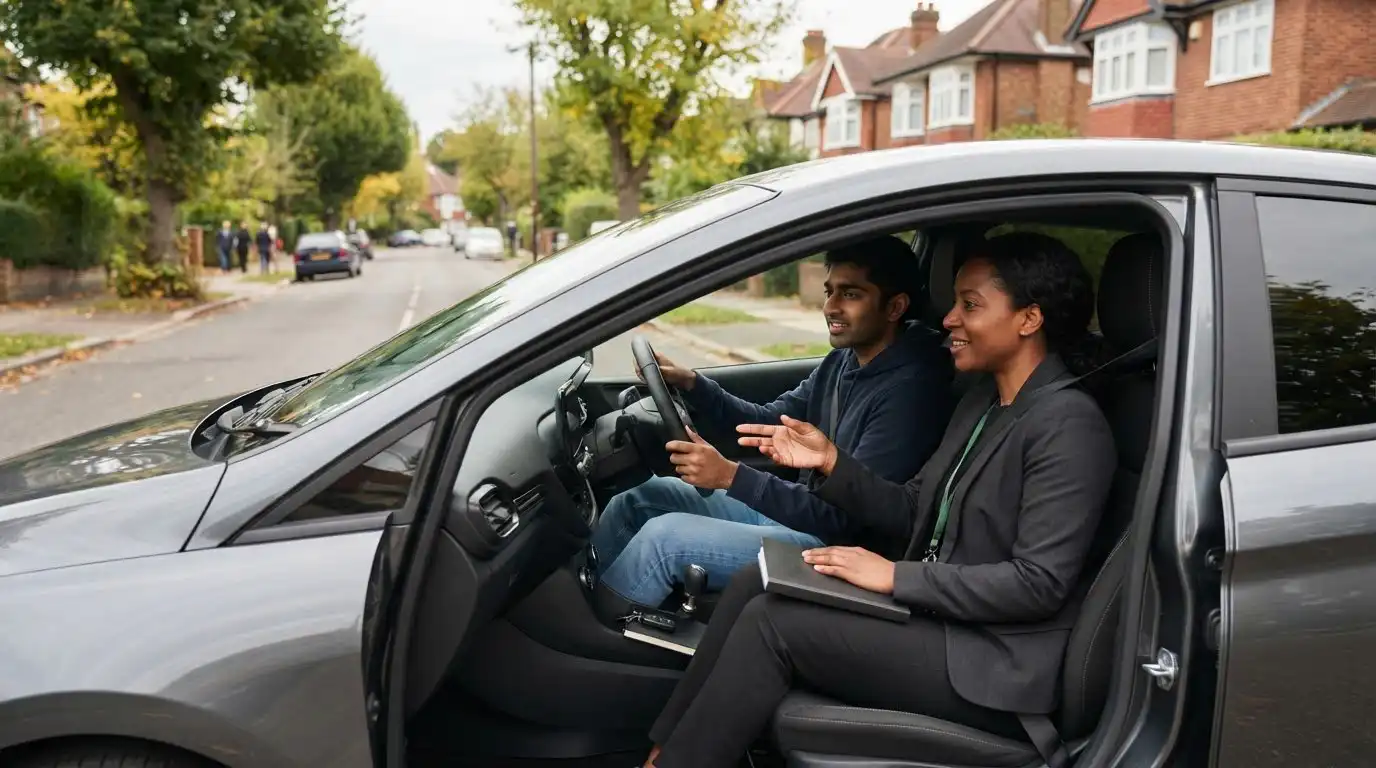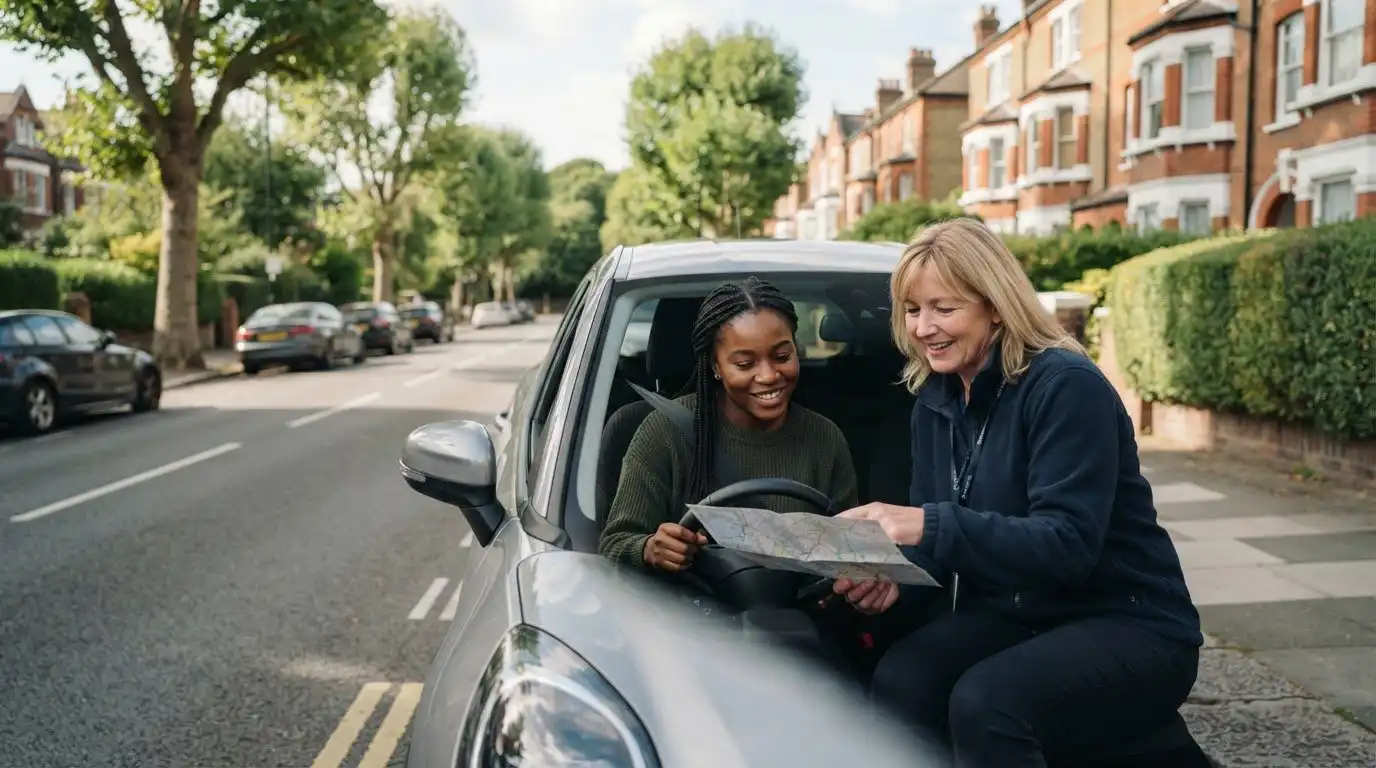
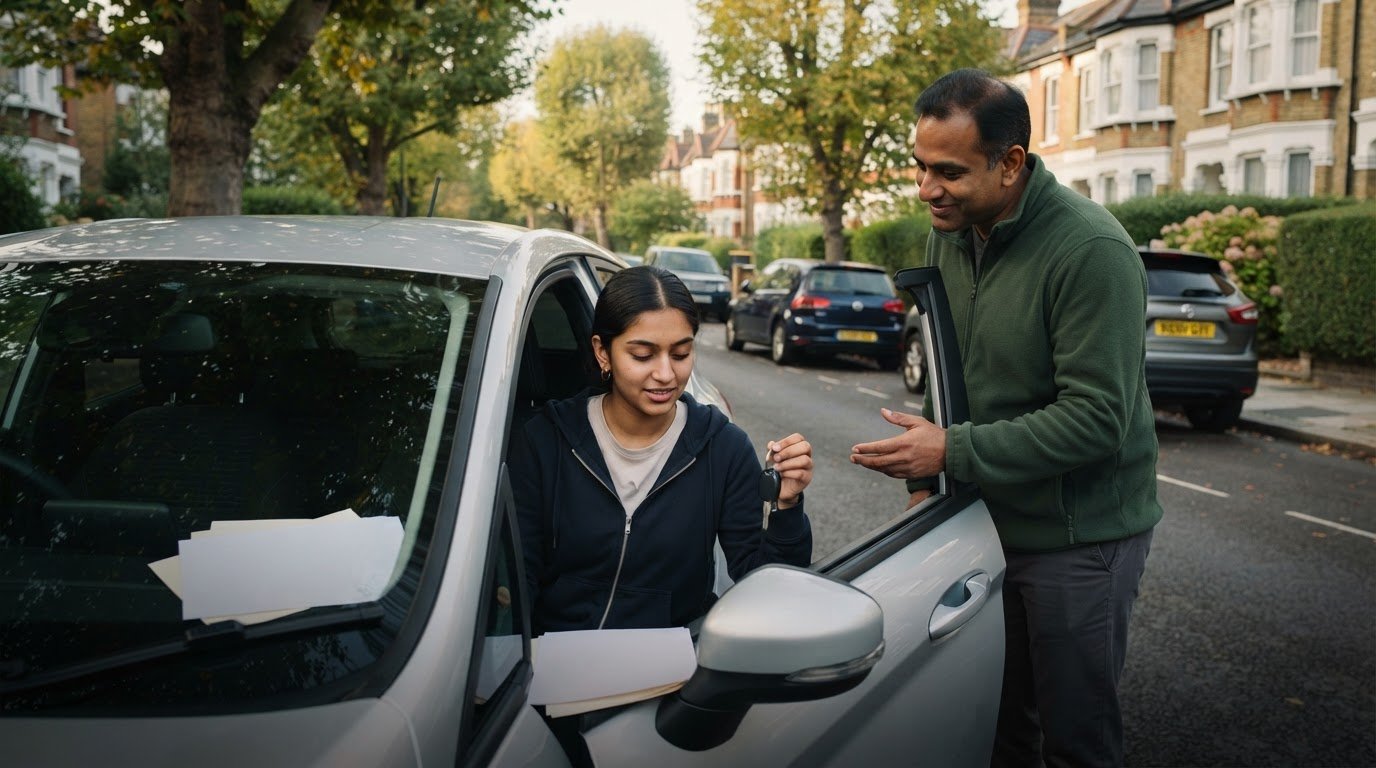
Passed your test, but wondering whether you can drive home alone? In Great Britain, you can drive independently as soon as you pass, provided you have suitable insurance for the car and journey. Learner cover may no longer apply after you pass, so confirm your cover before setting off. If you’re wondering what to do after passing your driving test uk, start with insurance, follow the instructions about your licence, then plan a first solo drive that feels manageable.
It’s normal to feel proud and a little nervous at the same time. This guide covers the practical next steps, including what happens to your provisional licence, how to check your insurance and how to prepare for your first drive without an instructor beside you. You’ll also find ways to build confidence on familiar roads and decide whether optional support, such as Pass Plus, a motorway lesson or refresher tuition, could help you with a particular skill. Passing is a major milestone; safe independence grows through steady, considered practice.
Key Takeaways
- Use a checklist to organise your licence paperwork, insurance and car before your first journey.
- For what to do after passing your driving test uk, start with a short, familiar route and build up gradually.
- Choose a quieter time and plan your route to make your first solo drive more manageable.
- Check which new-driver rules apply where you passed and will be driving.
- Consider Pass Plus, motorway or refresher lessons if you want support with a particular skill. Further tuition is optional.
Just passed your driving test? Start with these first steps
Congratulations, you’ve reached a major milestone. In Great Britain, you can drive independently after passing, but only when you have suitable insurance in place. Take the practical steps in this order: follow the instructions about your licence, arrange cover as a qualified driver, prepare the car, then choose a straightforward first journey.
Keep it manageable. You don’t need to plan a long trip or tackle every kind of road on your first day. Settle the essentials first, then build experience through regular, thoughtful practice.
What happens after the examiner tells you that you have passed?
Your pass result confirms you’ve passed the practical test; the full photocard licence is a separate part of the process. In most cases, the examiner takes your provisional licence and arranges for DVLA to send your full licence. If this doesn’t happen, you may need to apply yourself using your pass certificate. Check the current steps on GOV.UK’s full-licence application guidance, as the process can depend on your circumstances.
For a wider explanation of what changes after your test, see our guide to life after passing. The UK driving test overview describes the test and its result, but use GOV.UK for current application instructions.
Your first-hour checklist after passing
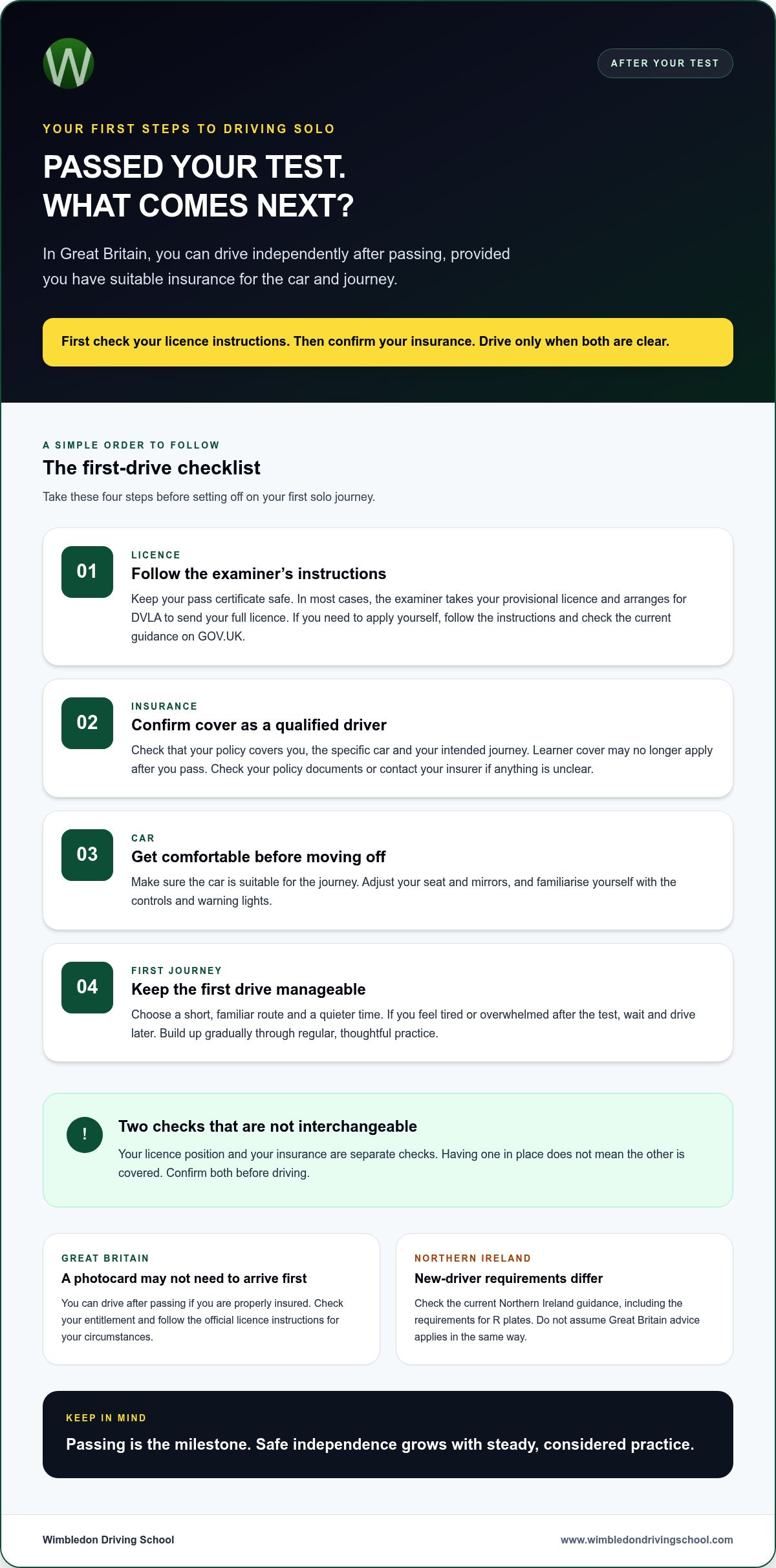
Use this checklist to separate what needs attention before you drive from the steps that can make your first journey feel easier:
- Follow the licence instructions. Keep your pass certificate safe and follow the examiner’s instructions about your provisional licence and full-licence application.
- Arrange suitable insurance. Confirm that your policy covers you as a qualified driver before taking the car out. Don’t assume learner cover still applies after you pass; check the policy terms or contact your insurer.
- Prepare the car. Make sure the car is suitable for the journey and insured for your intended use. Before moving off, adjust the seat and mirrors and familiarise yourself with the controls and warning lights.
- Choose an easy first drive. Pick a short, familiar route and a time when traffic is calmer. If you feel tired or overwhelmed after the test, wait and drive later.
In brief: follow the examiner’s instructions, use DVLA’s current guidance if you need to apply for your full licence, arrange appropriate insurance before driving, and prepare your vehicle and route. These steps help you move from passing the test to driving independently with care.
The paperwork and insurance checks are essential. Choosing a familiar route and taking a few minutes to settle into the car are practical confidence-builders, not extra requirements. Passing shows you’ve met the test standard; experience will continue to develop each time you drive thoughtfully.
Can you drive straight after passing your UK driving test?
In Great Britain, you can drive straight after passing your practical test, provided you’re properly insured. You don’t always have to wait for your full photocard licence to arrive. Your pass result doesn’t arrange insurance or resolve every paperwork situation, so check your entitlement and your cover separately before setting off.
The rules aren’t identical throughout the UK. Northern Ireland has separate requirements for new drivers, so check the relevant official guidance if you passed your test there. Don’t assume that information for England, Scotland or Wales applies in the same way.
Check your licence position and official instructions
In Great Britain, DVLA will usually receive your details through the examiner’s process for issuing a full licence. If your circumstances mean you need to apply yourself, follow the examiner’s instructions and check the current steps on GOV.UK. The official guidance on what to do after passing your driving test explains the next steps.
Your photocard is important, but its arrival isn’t always the deciding factor in whether you can drive in Great Britain. The pass result, your licence entitlement and the paperwork process are related, but they aren’t interchangeable. If your address or other details have changed, or you’re unsure about your entitlement, use GOV.UK’s guidance for your circumstances before driving.
If you passed in Northern Ireland, follow the Northern Ireland government’s current instructions. New-driver rules there differ from those in Great Britain, including requirements for R plates. Confirm what applies to you rather than relying on advice for another part of the UK.
Make sure you’re insured before setting off
Passing your test doesn’t transfer learner cover into full-driver cover. Before driving, make sure the policy covers you, the specific car and the way you intend to use it. If you were insured as a learner, check the policy documents or contact your insurer to understand what changes after your pass.
Don’t assume that being listed as a learner means you remain covered once qualified. If the documents don’t make your position clear, speak to your insurer and wait until you have confirmation of suitable cover. Licence entitlement and insurance are separate checks: meeting one doesn’t meet the other.
For a practical answer to what to do after passing your driving test uk, use this order: check the official licence instructions for your location, then confirm your insurance for the car and journey. Drive only once both are clear.
Plan your first solo drive: a simple confidence-building approach
Your first drive alone doesn’t need to be a long trip or a test of nerve. Choose a short, familiar journey and give yourself time to adjust to driving without an instructor beside you. A calm start helps you focus on the road, rather than feeling you have something to prove.
First-drive principle: prepare carefully, choose a manageable journey and concentrate on safe decisions, not bravado.
Choose a manageable route and conditions
Start with a route you already know, perhaps a straightforward journey through familiar streets near home. If you’re in Wimbledon, that could be local roads you’ve travelled as a passenger or practised during lessons. These are examples, not recommended routes. Choose roads you understand and feel ready to drive yourself.
Allow extra time so you’re not tempted to rush if you meet a queue, miss a turn or need a moment to think. Consider the weather, visibility and road layout before setting off. If poor visibility, heavy rain or complex junctions would add pressure, choose another time or a simpler destination. Traffic conditions can change, so be ready to adjust your plans.
You’re practising independent judgement, not performing for passengers. If having someone with you would make you self-conscious or distracted, drive alone when you’re ready. If you take a passenger, choose someone calm who understands that you need to concentrate.
Prepare yourself and the car before moving off
Give yourself a few quiet minutes before starting the engine. Make sure the driving position feels comfortable and your view is clear. Adjust your seat and mirrors, then familiarise yourself with the controls in this particular car. Even if it’s similar to the one you learnt in, small differences in the clutch, brakes, visibility or dashboard layout can take getting used to.
Set your route and navigation before moving off, and put your phone away so it doesn’t compete for your attention. If you’re unfamiliar with the route, review it while parked and identify a suitable place to stop if you need to regroup. Don’t change settings or study directions while driving.
- Choose a short journey with a clear destination and a familiar return route.
- Allow extra time and choose conditions that feel manageable for your current confidence.
- Settle your seat, mirrors and controls before moving off.
- Set your navigation and remove avoidable distractions before driving.
- If you feel overloaded, find a suitable safe place to stop before deciding what to do next.
Keep the first outing simple. You might drive to a nearby shop or make a short visit, then return by roads you know. Each journey will bring new situations, but you can build experience progressively instead of tackling everything at once. If you’re deciding what to do after passing your driving test uk, make your first solo drive a planned, manageable step towards everyday independence.
Which post-test lessons can help you build skills and confidence?
Passing your test means you can drive independently, but you don’t have to tackle every new situation without support. Further lessons are optional. The right choice depends on the journeys you expect to make and the situations you’d like to feel more comfortable handling.
Think about your real driving plans. Are you unsure about joining a motorway, driving in poor weather or handling an unfamiliar car? Naming a clear goal helps you choose useful practice instead of taking tuition that doesn’t match your needs.
Pass Plus, motorway tuition or refresher lessons?
Pass Plus offers structured practical training after passing. It covers different driving conditions and road types, including town driving, rural roads, night driving, all-weather driving, dual carriageways and motorways. It’s a voluntary course, not a requirement for holding a full licence.
Motorway lessons focus on supported practice on higher-speed roads. They may suit you if you haven’t driven on a motorway before, feel uncertain about joining or leaving one, or want to practise making decisions around faster-moving traffic.
Refresher lessons can focus on a particular concern rather than a broad course. You might want to practise parking in a tight space, driving a different type of car or dealing with busy junctions. An instructor can help you work on the situations you identify as challenging.
Choose the next step that fits your driving goals
Match the lesson to the journeys you’re likely to make. If regular travel means using motorways, focused tuition on those roads could be relevant. If you’re returning to driving after a break or adjusting to a new vehicle, refresher lessons may be a better fit. If you want a wider programme of practical experience across varied conditions, consider Pass Plus.
Before choosing, write down one or two situations you want to practise. Be specific: “joining a motorway from a short slip road” gives you a clearer starting point than “I’m nervous about driving”. An instructor can tailor tuition around your experience, confidence and practical goals, then help you practise in a structured way.
- Choose Pass Plus for a broader programme of post-test experience.
- Choose motorway tuition if higher-speed roads are your main concern.
- Choose refresher lessons to work on a particular skill, vehicle or confidence gap.
Choose a course for the experience you want, not a promised insurance discount or guaranteed improvement. Insurers set their own terms, so don’t assume training will change your premium. There’s no single route everyone needs to follow. If you’re deciding what to do after passing your driving test uk, identify the situation you want to handle more confidently, then consider optional support that addresses it.
Take your next step with post-test driving support in London and Surrey
Passing your test is a significant achievement. Your next step doesn’t have to be a major journey or a long course. Identify one situation you want to handle more comfortably, decide whether guided practice would help, then build up your independent driving progressively.
Wimbledon Driving School offers post-test support across South West London, South East London, Surrey and Middlesex. Depending on your goal, Pass Plus, motorway lessons or refresher tuition can give you a structured way to practise. These options support your development; you don’t have to take more lessons after passing.
When an instructor can make the next drive easier
An instructor can help you focus on a particular road type, vehicle or confidence concern. For example, you might want supported practice on a motorway, time to adjust to a different car, or help with a route that includes unfamiliar junctions. Sharing a clear goal at the outset helps keep tuition focused on the driving you expect to do.
Professional tuition also gives you space to ask questions and reflect on your decisions as you practise. You remain in control of your learning: further support is an option if it would be useful, not a condition of driving independently.
Turn passing into confident independent driving
Confidence develops through responsible experience, one journey at a time. Choose routes and conditions that suit your current ability, then gradually take on more varied driving as you feel prepared. If a particular situation continues to feel difficult, treat it as a skill to develop rather than a reason to doubt your achievement.
A practical next step is to name the skill you want to develop, choose support that fits, and practise progressively. That could mean Pass Plus for broader experience, a motorway lesson for higher-speed roads, or refresher tuition focused on a specific challenge. You don’t need to do everything at once.
Your test pass marks the beginning of independent driving, not the end of learning. Keep building experience at a pace that feels right for you, with or without further tuition.
Make your next journey a confident one
Your first few weeks of independent driving are a chance to learn what feels straightforward and where you’d value more practice. Choose one upcoming journey as a personal goal, then notice which parts feel comfortable and which need extra preparation. That gives you a useful basis for deciding what to do after passing your driving test uk, without comparing your progress with anyone else’s.
Confidence isn’t about never feeling nervous. It comes from making considered choices, learning from experience and allowing yourself time to develop. If a particular road type or driving situation still feels daunting, targeted tuition can help you approach it with guidance. You can also keep building experience independently, one suitable journey at a time.
You’ve earned the freedom to take the next step. Keep your focus on safe decisions, trust the skills you’ve developed and let each drive move you forward.
Frequently Asked Questions
Can I drive a manual car after passing an automatic driving test?
No. Passing an automatic test gives you entitlement to drive automatic cars, not manual cars. To drive a manual car, you’ll need to pass a practical driving test in a manual vehicle. Until then, check that any car you drive matches the entitlement shown on your licence. If you’re considering learning manual, an instructor can help you practise clutch control and gear changes before you take the test.
Do I have to display P plates after passing my driving test?
In England, Scotland and Wales, displaying green P plates is optional. They can signal to other road users that you’re newly qualified, but you don’t have to use them and there’s no set time limit for displaying them. Northern Ireland has different requirements: new drivers must display R plates for a year and follow restrictions. Check the current rules for where you passed and will be driving.
Can I hire a car straight after passing my driving test?
Possibly, but passing your test doesn’t mean a hire company will rent you a car. Rental companies set their own conditions, which may include minimum age, how long you’ve held a full licence and restrictions on vehicle types. Read the company’s current eligibility rules and insurance terms before making plans. If you’re newly qualified, don’t assume you’ll be able to collect a hire car on the day you pass.
Does Pass Plus guarantee cheaper car insurance?
No. Completing Pass Plus doesn’t guarantee a lower insurance premium. Insurers set their own prices and decide whether they recognise the course, so any discount depends on the individual provider and policy. If saving on insurance is your main reason for taking the course, ask your insurer how it treats Pass Plus before booking. Choose training primarily for the practical experience you want, rather than expecting a particular financial outcome.
Can I drive on a motorway as a newly qualified driver?
In Great Britain, newly qualified drivers can use motorways once they hold the appropriate entitlement and have suitable insurance for the car. You don’t need to wait until you’ve completed Pass Plus. If you’d rather build confidence first, a motorway lesson can offer supported practice with joining, leaving and driving at higher speeds. Northern Ireland has different new-driver rules, so check official guidance if you passed there.
What should I do if my driving licence has not arrived after I passed?
If the examiner kept your provisional licence and arranged the full-licence application, GOV.UK says to contact DVLA if your photocard hasn’t arrived within three weeks. If you applied yourself, check the application guidance and any tracking information available. An address change or other personal circumstances can affect what you need to do. For what to do after passing your driving test uk, use the official GOV.UK full-licence guidance for your situation.
Disclaimer
This article is provided for general informational purposes only and does not constitute professional driving, legal, or safety advice. While we aim to keep our content accurate and up to date, rules, prices, and DVSA test requirements can change — always check gov.uk or contact us directly at 020 3524 7968 for the latest guidance before making any decisions. Nothing in this article guarantees a specific outcome, including passing your driving test within any stated timeframe. For current pricing, course availability, and instructor details, please visit our Prices page or get in touch.