
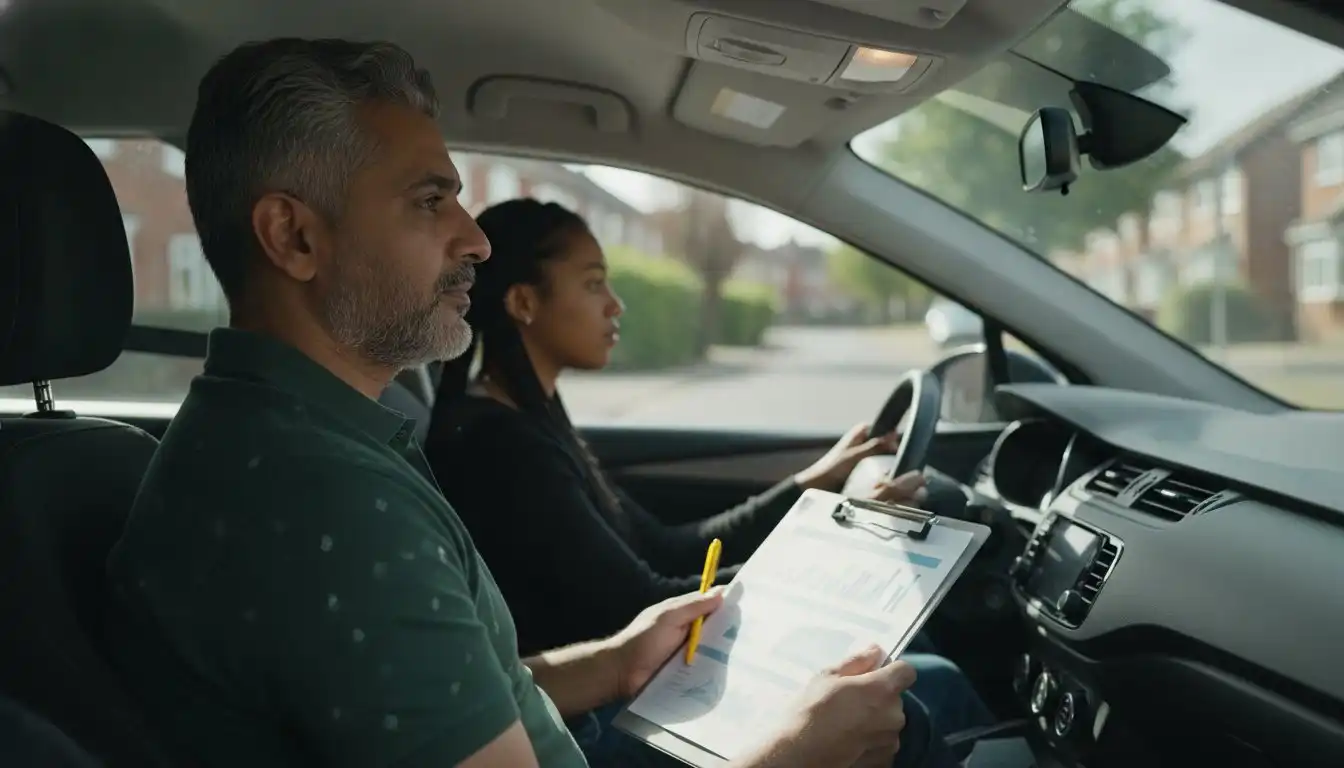
Your ADI standards check isn’t a test of how well you drive; it’s a high-stakes showcase of how effectively you empower your pupils to make safe, independent decisions. We know that even the most experienced instructors in South West London feel a surge of anxiety when a DVSA examiner joins their lesson, which is why specialised adi standards check training is becoming essential for those aiming for the top. With the 2026 update to the Code of Practice and an increased focus on data-driven assessments, the pressure to perform has never been higher. It’s completely normal to worry about demonstrating client-centred learning naturally or fearing the consequences of a sub-thirty score.
By engaging in expert coaching, you can replace that uncertainty with the prestige of a Grade A. We’ll help you master the 17 essential competencies and refine your teaching strategies to meet the highest industry standards. This guide provides a comprehensive roadmap to navigating the 2026 grading criteria, reducing your stress through realistic mock checks, and ensuring your name remains firmly on the ADI register. You’ll discover exactly how to turn a mandatory assessment into a transformative milestone for your career and your business growth.
Key Takeaways
- Understand how the DVSA uses performance data to trigger assessments and why staying current with the 2026 Code of Practice is vital for your registration.
- Master the 17 competencies of the SC1 form by refining your approach to lesson planning, risk management, and teaching strategies.
- Avoid common pitfalls like the “auto-pilot” trap by ensuring your instruction remains client-centred and interactive rather than overbearing.
- Learn how to strategically select the right pupil and lesson topic to showcase your ability to manage real-world driving challenges effectively.
- Secure your professional future and aim for a Grade A by investing in expert adi standards check training delivered by elite, industry-recognised mentors.
Understanding the DVSA ADI Standards Check in 2026
The DVSA standards check is a mandatory assessment designed to ensure that every Approved Driving Instructor (ADI) maintains a high level of instructional ability throughout their career. In 2026, the DVSA has moved further away from the outdated “check test” mentality, where instructors might have performed a rehearsed role for an hour. Instead, the modern assessment is a rigorous review of your daily teaching behaviour. It focuses on how you adapt to a learner’s immediate needs whilst maintaining a safe environment. Typically, you will face this assessment once every four-year registration period. However, the DVSA now uses performance data to trigger checks more frequently if a trainer’s pupils consistently show specific weakness in certain areas.
The 2026 shift places a heavy emphasis on the Goals for Driver Education (GDE) matrix and sophisticated risk management. This means you aren’t just teaching a manoeuvre; you are coaching a pupil to understand their own psychological state and decision-making process. For many, this evolution creates a sense of uncertainty. Professional adi standards check training bridges this gap by turning complex theory into practical, repeatable habits. It ensures that your teaching remains client-centred, which is the cornerstone of the modern DVSA philosophy.
The Grading System: Grade A vs Grade B
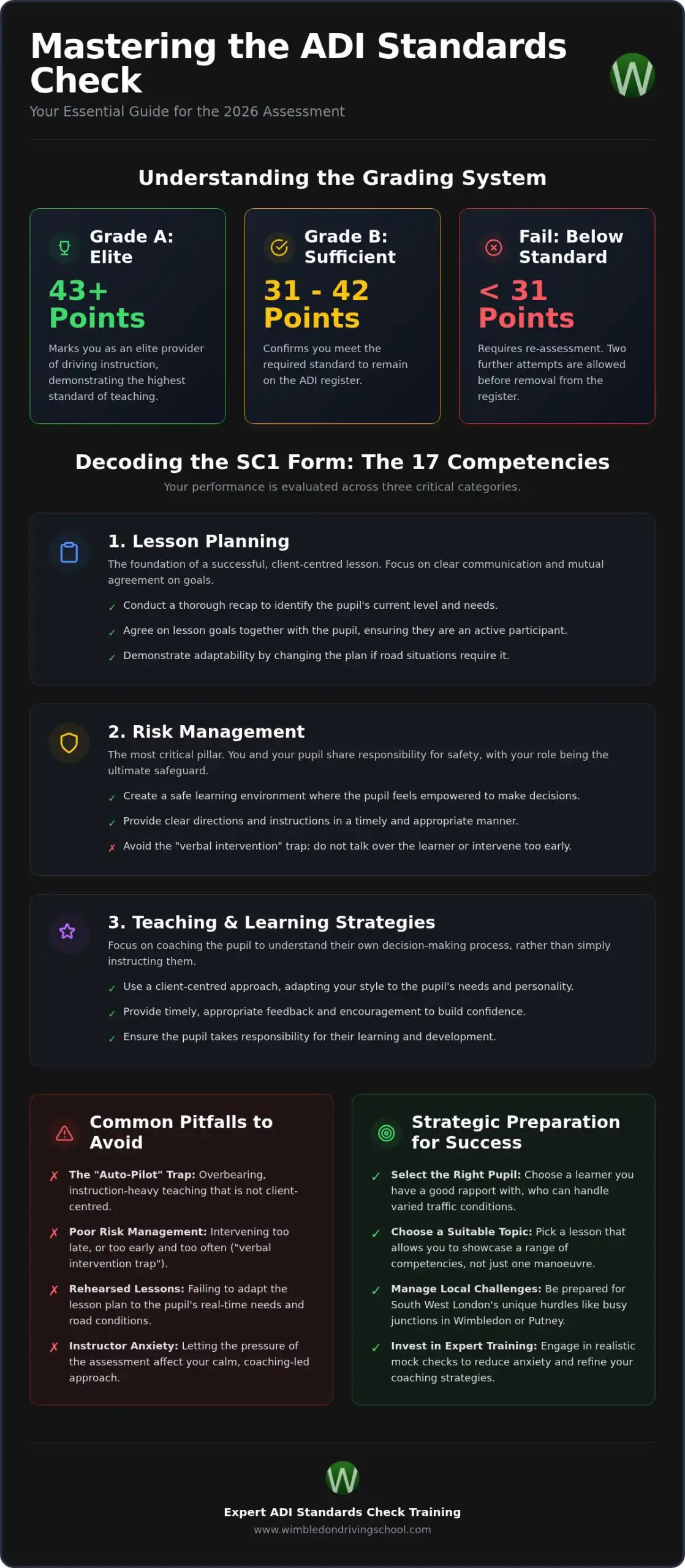
Success is measured across 17 competencies, resulting in a score that determines your professional standing. Achieving a Grade A requires a score of 43 or higher (85% and above), marking you as an elite provider of instruction. A Grade B, requiring 31 to 42 points (71% to 84%), confirms you meet the sufficient standard for the register. Falling below 31 points results in a fail. This outcome is often devastating for an instructor’s confidence. If you fail, you have two further attempts to demonstrate competence before being removed from the register entirely. This high-pressure grading system is why targeted preparation is so valuable for your career security.
Why Instructors in South West London Face Unique Challenges
Operating in South West London presents environmental hurdles that can rattle even the most experienced instructors. Navigating the high-density traffic of Wimbledon or the complex junctions around Putney requires immense concentration. When you add the psychological weight of an examiner in the back seat, the stress can become overwhelming. We recognise that the “nervous instructor” syndrome is real. It’s difficult to remain calm and coaching-led whilst your pupil is struggling with a busy roundabout in Morden or Tolworth. Our training focuses on managing this anxiety. We help you choose routes that provide genuine teaching moments without over-complicating the lesson, allowing you to showcase your skills naturally and confidently.
Mastering the 17 Competencies: The SC1 Form Decoded
The SC1 form is the definitive document used by examiners to evaluate your instructional ability. It breaks down your performance into 17 specific competencies grouped into three critical categories: Lesson Planning, Risk Management, and Teaching and Learning Strategies. To achieve a Grade A, you must demonstrate that Client-Centred Learning isn’t just a buzzword but the foundation of your entire approach. Professional bodies like the Approved Driving Instructor National Joint Council (ADINJC) emphasise that these competencies are interlinked. Engaging in specialised adi standards check training allows you to decode these requirements and apply them naturally in every lesson.
Lesson Planning: Setting the Foundation
Successful lessons start with clear communication. You must conduct a thorough recap to identify the pupil’s current level and any anxieties they might have. Don’t just tell them what you’re doing; agree on a lesson goal together. This ensures the learner is an active participant in the plan. If a situation arises on the road that requires a change of plan, show the examiner you can adapt mid-way without losing focus on the learner’s needs.
Risk Management: The Critical Safety Pillar
This is the most critical pillar of the assessment. You and your pupil share responsibility for safety. The “verbal intervention” trap is a common reason for lower scores. If you talk over the learner or intervene too early, you strip them of their autonomy whilst potentially missing a teaching opportunity. Crucially, if you score 7 or less in this category, it results in an automatic fail. Mastering risk management through targeted adi standards check training ensures you remain calm and effective under pressure. You must observe the learner’s behaviour closely to anticipate mistakes before they escalate into hazards.
Teaching and Learning Strategies
Move away from “telling” and embrace “coaching”. Effective questioning techniques encourage self-reflection, helping the pupil understand why a mistake happened. Provide feedback loops that are timely and relevant. Instead of just correcting a fault, encourage the learner to assess their own performance. This builds the independent decision-making skills that examiners look for in a top-tier instructor. If you’re feeling unsure about your current approach, exploring our learning centre can provide the clarity you need to excel.
Common Pitfalls: Why Experienced ADIs Fail to Secure a Grade A
Even the most seasoned instructors can find themselves faltering during an assessment if they rely solely on their years of experience without adapting to modern expectations. Longevity in the industry is a double-edged sword; whilst it brings confidence, it often leads to the “Auto-Pilot” trap. Many instructors fall back into instructional habits that were standard a decade ago but no longer align with the current DVSA emphasis on coaching. Professional adi standards check training helps identify these outdated patterns before they impact your grade. Success in 2026 requires more than just keeping the car safe; it demands a sophisticated, interactive approach to learner development.
Over-instruction remains one of the most frequent barriers to a Grade A. If you spend the majority of the lesson talking, you aren’t allowing the learner the mental space to process information or make independent decisions. The examiner isn’t looking for a lecture; they are looking for a facilitator. Similarly, choosing inadequate lesson goals can undermine your score. If the topic is too simple, there is no evidence of learning; if it is too complex, you risk a safety intervention. You must find the “Goldilocks” zone where the pupil is challenged but supported.
Misunderstanding Risk Management
Risk management is the most uncompromising part of the SC1 form. Failing to address a serious fault immediately is the quickest route to an unsatisfactory result. Examiners often see instructors notice a lack of mirrors or poor observations but fail to bring it to the learner’s attention until the end of the road. This delay suggests a lack of situational awareness on your part. When a safety-critical incident occurs, you must take immediate control to ensure safety whilst using the moment as a clear, reflective teaching opportunity once the danger has passed. If the examiner feels you’ve prioritised the “flow” of the lesson over immediate safety, a fail is almost certain.
The “Box-Ticking” Syndrome
Nervousness often leads instructors to treat the standards check like a rigid performance rather than a genuine lesson. This “box-ticking” syndrome results in an unnatural flow where the ADI tries to force all 17 competencies into a 45-minute window regardless of the pupil’s needs. If you focus more on the examiner’s clipboard than the learner’s progress, your teaching will feel disjointed and reactive. A common casualty of this stress is the recap and summary. Neglecting to tie the lesson together at the end leaves the “Teaching and Learning” category unsupported. Remember, your primary job is to mentor the person beside you, not to perform for the person behind you.
Strategic Preparation: Selecting the Right Pupil and Lesson Topic
Achieving a Grade A starts long before the examiner enters your vehicle. Strategic preparation is the difference between a reactive performance and a confident showcase of your professional expertise. To ensure you’re fully equipped, follow these five essential steps:
- Step 1: Select a pupil you have a strong rapport with and who is consistently reliable.
- Step 2: Choose a lesson topic that is “real” and offers a genuine challenge for the pupil’s current level.
- Step 3: Conduct a mock standards check with a qualified mentor, such as our RoSPA Gold or IAM certified trainers, to identify blind spots.
- Step 4: Review your previous SC1 forms to address historical feedback and track your professional development.
- Step 5: Present a clean, roadworthy car that meets all DVSA requirements to establish immediate professional authority.
Investing in bespoke adi standards check training provides the structured environment needed to refine these elements. It allows you to practice in a low-pressure setting, ensuring that your teaching remains fluid and authentic on the day of the assessment.
The Ideal Pupil for your Standards Check
A “part-trained” learner is typically the strongest choice for your assessment. Unlike a complete beginner, they possess enough skill to handle the vehicle whilst you focus on high-level coaching and risk management. Ensure you brief them on the examiner’s presence without causing unnecessary alarm. Most importantly, avoid the temptation to “stage” a lesson. Examiners have seen thousands of checks; they can instantly spot a rehearsed scenario that lacks authenticity and fails to address the learner’s immediate needs.
Choosing the Best Route in South West London
Your choice of road can make or break the assessment. You need junctions and hazards that prompt teaching moments without causing gridlock. If you’re teaching in areas we cover like Wimbledon, Putney, or Morden, timing is critical. Getting stuck in town centre traffic for forty minutes leaves no room to demonstrate the 17 competencies. Plan a route that flows well and offers a variety of challenges, from mini-roundabouts to complex filter lights. This local knowledge allows you to manage the lesson rhythm effectively whilst keeping the learner engaged.
Ready to secure your professional future and aim for that Grade A? Book your professional ADI training session today and let our expert mentors guide you to success.
Bespoke ADI Standards Check Training with Wimbledon Driving School
Securing a Grade A is a significant professional milestone that requires more than just technical knowledge; it demands the guidance of a mentor who understands the nuances of elite instruction. At Wimbledon Driving School, we provide specialised adi standards check training delivered by trainers who hold the prestigious RoSPA Gold and IAM certifications. These accolades aren’t just titles; they represent a level of driving and instructional proficiency that places our mentors at the very top of the industry. Since 2006, we’ve helped countless instructors across South West London and Surrey transform their teaching approach from sufficient to superlative.
Our 1-2-1 in-car coaching sessions are designed to be a transformative journey rather than a simple checklist exercise. We recognise that the “nervous instructor” syndrome is a genuine barrier to success. Being watched by a DVSA examiner can be as daunting for an ADI as the initial driving test is for a learner. Our trainers act as confident mentors, providing a supportive environment where you can refine your style without judgment. We focus on building your resilience, ensuring you can maintain a calm, client-centred atmosphere even under the intense scrutiny of an assessment.
Why Our ADI Training is Different
We don’t just teach you to pass a check; we help you evolve into a premier instructor. Our training goes beyond the SC1 form to focus on long-term career success and business growth. By achieving a Grade A, you establish yourself as a market leader, naturally attracting more pupils and justifying higher rates. To support your development, you’ll gain access to our Learning Centre, which is packed with advanced instructional resources and the latest industry insights. This comprehensive support system ensures that your professional knowledge remains sharp and relevant in a competitive London market.
Booking Your ADI Support Session
We offer flexible scheduling to accommodate the busy lives of modern instructors, with sessions available throughout South West London, Surrey, and Middlesex. Whether you’re based near the busy junctions of Wimbledon or the quieter routes in Surrey, our local expertise ensures your training is relevant to the test centres you use daily. We provide high-level coaching at competitive driving school prices, making elite mentorship accessible to every professional. Don’t leave your professional future to chance. Take the first definitive step toward your Grade A status today and contact us to book your ADI training with the region’s leading specialists.
Elevate Your Professional Standing Today
Achieving a Grade A is more than just passing a mandatory assessment; it’s a definitive statement about your expertise as a premier London instructor. By mastering the 17 competencies and avoiding common pitfalls like over-instruction, you demonstrate a sophisticated commitment to client-centred learning. Strategic preparation, including careful pupil selection and route planning across South West London, ensures you remain calm and coaching-led during your assessment. This focus on excellence secures your position on the register and drives long-term business growth.
Wimbledon Driving School offers the bespoke adi standards check training you need to perform at your peak. Our RoSPA Gold and IAM certified trainers have been serving London and Surrey since 2006, delivering some of the highest pass rates in the country. We’re proud to act as your confident mentor, helping you navigate the 2026 standards with ease and authority. Don’t leave your registration to chance when you can learn from the very best in the industry.
Secure your Grade A with expert ADI Standards Check Training and join an elite group of driving professionals. Your journey toward a prestigious professional milestone starts here.
Frequently Asked Questions
How often do I have to take the ADI standards check?
You are required to undertake a standards check at least once during every four-year registration cycle. However, the DVSA now adopts a data-led approach, meaning you might be called in more frequently if your pupils’ driving test results suggest a need for assessment. Staying prepared through regular professional coaching ensures that you are always ready for these triggers, maintaining your professional standing without the stress of short-notice requests.
What happens if I fail my ADI standards check three times?
Failing the assessment three times leads to your removal from the ADI register. This is a significant professional risk that can halt your career. If you fail your first or second attempt, it’s vital to seek expert mentorship immediately. Professional coaching helps you identify the specific behavioural gaps that led to the unsatisfactory result, allowing you to return for your final attempt with the confidence and skills needed to secure your status.
Can I choose which pupil I bring to my standards check?
Yes, you have the autonomy to select the pupil you bring to the assessment. Choosing a reliable, part-trained learner with whom you have a strong rapport is often the most effective strategy. They should be at a level where you can demonstrate coaching rather than just basic instruction. We recommend briefing your pupil beforehand to minimise their anxiety, as their performance directly impacts how effectively you can showcase your 17 competencies to the examiner.
What is the difference between an ADI Part 3 test and a standards check?
The ADI Part 3 is the final qualifying test for prospective instructors, focusing on their initial ability to teach. In contrast, the standards check is an ongoing assessment of a fully qualified instructor’s current teaching standards. While both use the SC1 form and the 17 competencies, the standards check expects a higher level of maturity and adaptability in your coaching, reflecting your experience as an established professional in the industry.
How long does the ADI standards check last?
The entire assessment typically lasts around one hour. This includes a short introduction, a 45-minute observed lesson, and a feedback session at the end where the examiner discusses your performance and confirms your grade. It’s a compact window to demonstrate your skills, which is why every minute of the lesson must be purposeful. Our adi standards check training focuses on managing this time effectively to ensure all competencies are naturally evidenced.
Do I need to use my own car for the standards check?
You must provide a vehicle that is roadworthy, clean, and appropriately insured for the assessment. Most instructors use their own dual-controlled tuition car, as they are comfortable with its dimensions and features. The vehicle must be fitted with L-plates (or D-plates in Wales) and an extra rear-view mirror for the examiner’s use. Ensuring your car meets these DVSA requirements is a fundamental step in projecting a professional image from the moment the check begins.
Is it worth getting professional training before my standards check?
Investing in professional coaching is highly beneficial for securing a Grade A and reducing assessment anxiety. Many experienced instructors develop “blind spots” over time that can lead to a Grade B or even a fail. Working with a RoSPA Gold or IAM certified mentor for adi standards check training allows you to refine your coaching techniques and align them with the latest 2026 DVSA expectations. It’s a proactive step toward career security and business growth.
What are the 17 competencies on the SC1 form?
The 17 competencies are grouped into three main categories: Lesson Planning, Risk Management, and Teaching and Learning Strategies. These include specific points such as identifying the pupil’s needs, maintaining safety, and using effective questioning techniques. Each competency is scored from 0 to 3. Understanding how these points interlink is essential, as a high score across all areas is required to achieve the prestigious Grade A status that distinguishes top-tier instructors.
Disclaimer
This article is provided for general informational purposes only and does not constitute professional driving, legal, or safety advice. While we aim to keep our content accurate and up to date, rules, prices, and DVSA test requirements can change — always check gov.uk or contact us directly at 020 3524 7968 for the latest guidance before making any decisions. Nothing in this article guarantees a specific outcome, including passing your driving test within any stated timeframe. For current pricing, course availability, and instructor details, please visit our Prices page or get in touch.