Yes, you can change your driving instructor, including before your practical test. You’re not locked into one instructor, but timing matters: if you’re unhappy, start looking for a replacement before booking your test or aim to switch at least 3-4 weeks beforehand.
It’s understandable to hesitate. You may worry that changing will disrupt your progress or leave you without support close to test day. With only 5 days to go, finding a new instructor can be difficult, and a last-minute switch may unsettle your preparation.
This guide answers “Can I change my driving instructor?” and explains when a switch may make sense, what to consider if your test is approaching, and how to find a teaching style that suits you. You’ll also learn how to assess a new instructor and make the transition with a clearer plan.
Key Takeaways
- You can switch instructors before your practical test, but planning the change early gives you more room to settle into a new teaching style.
- If you’re unhappy, start looking before booking your test or aim to make the change at least 3-4 weeks beforehand.
- Before committing to a switch, use a lesson with another instructor to assess whether their communication and approach suit you.
- Look for clear explanations, useful feedback and lessons that focus on your learning needs. Persistent discomfort or unprofessional behaviour are reasons to reconsider the fit.
- Choose your next step based on what you need to improve, and make sure your test preparation stays focused on your progress.
Recommended timing for finding a new instructor
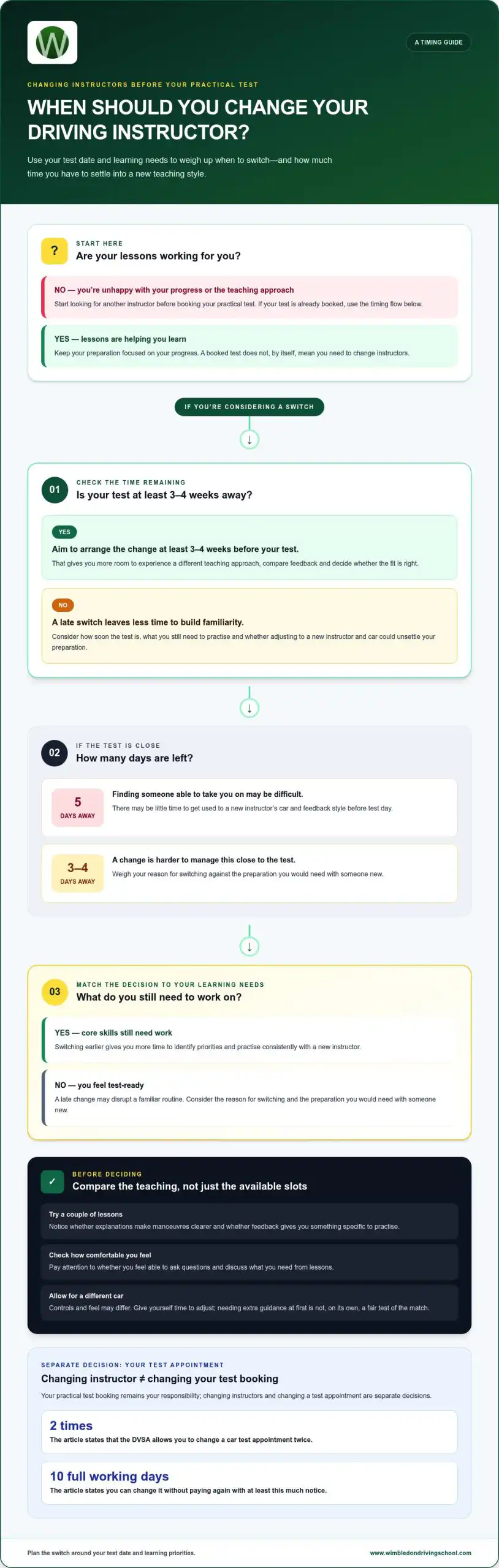
If your lessons aren’t working for you, start looking for another instructor before booking your practical test. If you’ve already booked, aim to arrange a change at least 3-4 weeks beforehand. That gives you more time to experience a different teaching approach and decide whether it helps.
Switching close to test day can leave little room to build familiarity with a new instructor, car and feedback style. If your test is only 5 days away, finding someone able to take you on may be difficult. A change 3-4 days before the test is harder to manage than starting weeks earlier.
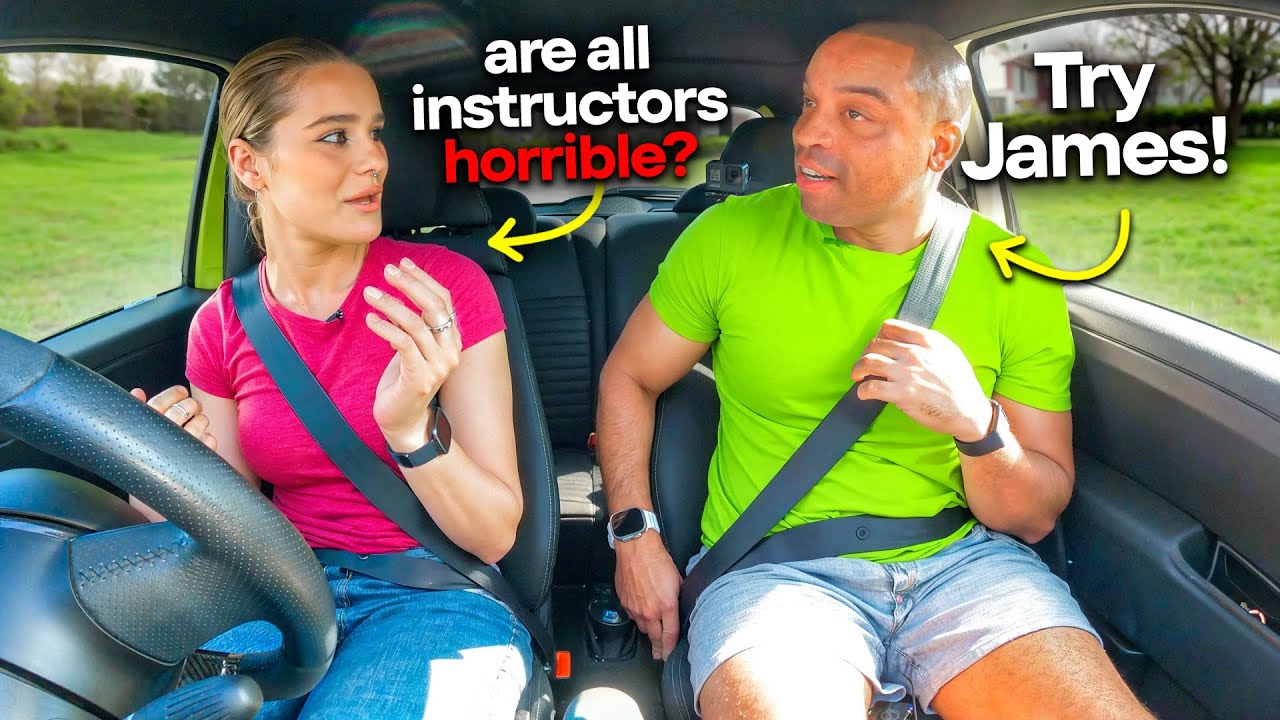
For a practical perspective on making that choice, watch this video:
Use the time before your test to compare teaching styles, not just available lesson slots. You could take a couple of lessons with another instructor before deciding. Notice whether their explanations make manoeuvres clearer, whether their feedback gives you something specific to practise, and whether you feel comfortable asking questions.
A trial lesson can also reveal practical differences. The instructor may use a different car, so allow time to adjust to its controls and feel. If you stall or need extra guidance at first, treat it as part of getting used to the vehicle, rather than judging the whole match on one moment.
Consider your test date alongside your learning needs. If you still need to work on core skills, switching early gives you more time to identify priorities and practise consistently. If you feel test-ready, a late change may disrupt a familiar routine, so weigh your reason for switching against the preparation you’d need with someone new.
Changing instructors and changing a test appointment are separate decisions. It’s worth checking who is responsible for changing your test appointment. According to the Driver and Vehicle Standards Agency (DVSA), you can change a car test appointment 2 times. You can change it without paying again with at least 10 full working days’ notice.
For a clearer comparison, write down what isn’t working now and what you need from your next lessons. A short list, such as calmer explanations or more structured practice, can help you assess a new instructor fairly. If you’re weighing up teaching styles, these questions to ask when choosing a driving instructor can help focus your decision.
Whether you can change instructors before a driving test
Yes, you can change your driving instructor before your practical test. Keep your test booking and lesson arrangements clear: your tuition may change, but the test booking remains your responsibility.
Changing instructors before a test
Changing instructors means arranging future lessons with someone else, even if your practical test is already booked. Your new instructor will need to understand your current ability, recent practice and remaining preparation. Share which manoeuvres you’ve practised and where you still need guidance, rather than assuming your previous instructor’s notes will be available.
Can my driving test booking be transferred to a new instructor? Your practical test is your booking, not something an instructor transfers to another instructor. If you need a different date, check who needs to arrange the change rather than assuming your instructor can do it for you.
Switching from a driving school
If you booked through a driving school, ask to change instructors within that school. Explain what you need from your lessons, such as clearer feedback or more practice at junctions. Schools may handle lesson arrangements and prepaid hours differently from independent instructors, so clarify what applies to your booking.
Can I change instructors if I booked through a driving school? Yes, you can request a different instructor through the school. Check your booking terms for how it handles future lessons, prepaid hours and any notice requirements.
Will I lose prepaid driving lesson money when changing instructor? Not necessarily. What happens to unused hours depends on your package terms. Review your agreement and ask the school how it handles transfers or refunds before arranging further lessons.
Changing during an intensive course
Changing instructors during an intensive course means adjusting tuition already arranged over a concentrated period. A change can affect the sequence and continuity of lessons. Identify the specific issue, then discuss how the remaining sessions and learning priorities will be organised.
Can I change driving instructors during an intensive driving course? You can request a change, but the effect on remaining sessions depends on the course arrangements. Before continuing, clarify how completed lessons, unused tuition and your next practice priorities will be handled.
Do driving lessons or progress records carry over to a new instructor? Your driving ability and experience come with you, but lesson notes may not transfer automatically. Bring any progress record you have, including skills covered and areas to practise, and describe your recent lessons in your first conversation.
Keep the practical details together: your test date, remaining tuition, areas to practise and any relevant school terms. This gives your new instructor a clearer starting point and helps you plan lessons around your next milestone.
Changing instructors if they are not a good fit
You can change instructors when the teaching relationship isn’t helping you learn. Wimbledon Driving School supports learners who wish to switch, even if they’ve bought lesson hours in advance.
How do I tell my driving instructor I want to change? Keep it brief and clear: say you’ve decided to continue learning with someone else. If you booked through a school, contact its office about the change and any unused lessons.
What should I do if I want to change instructors because of misconduct or safety concerns? Put your safety first and don’t continue a lesson if you feel at risk. Record what happened while it’s fresh, then raise the concern with the school or instructor’s organisation.
Not every difficult lesson means you need to leave. A new car, unfamiliar roads or a challenging skill can make a session feel uncomfortable. Look for a repeated pattern: you ask for an explanation, but the same issue continues without useful feedback or a plan to address it.
Separate a learning challenge from a poor teaching fit. Stalling while adjusting to an instructor’s diesel car, for example, may be part of getting used to its clutch. But if you aren’t given a chance to practise or understand the cause, explain what support would help. Then see whether the next lesson improves.
Before deciding, write down what happens during lessons and what you need instead. Be specific, for example: “I need junction instructions explained before approaching them” or “I need time to repeat parallel parking.” This gives you a practical basis for a conversation, rather than relying only on a general feeling that lessons aren’t working.
If you decide to leave, keep your message simple and professional. You don’t need to debate your decision or criticise the instructor personally. For example: “I’ve decided to continue my lessons with another instructor. Please let me know how we can arrange any remaining prepaid hours.” Keep a copy of the message and any reply.
For a safety or conduct concern, give a factual account. Note the date, what was said or done, and whether anyone else witnessed it. If lessons were arranged through a school, contact its office directly and ask how it will handle the complaint. Avoid claims you can’t support; clear details help the organisation understand the issue.
After switching, give your new instructor a concise handover. Describe the skills you’ve covered, what you find difficult and what teaching approach helps you concentrate. For instance, explain if you learn best with one instruction at a time. A fresh start works best when the next instructor understands your experience and priorities.
For instance, you can mention that you began learning to drive in your 30s and explain which skills you’ve covered so far. A new instructor may refuse to take you to a UK driving test if they do not think you’re ready. Ask what you still need to practise and use the answer to agree on a clear plan.
Signs of a good or unsuitable instructor
A good instructor explains what you’re practising, gives useful feedback and adapts their teaching to your needs. If lessons leave you confused, uncomfortable or unsure what to work on next, look for a pattern rather than judging one difficult drive.
How do I find and check a new DVSA-approved driving instructor? Use the GOV.UK service to find instructors and check an instructor’s ADI number. Then arrange a trial lesson to experience their teaching style and decide whether their explanations suit you.
During the lesson, notice how the instructor responds to a mistake. After a missed mirror check, for example, a constructive instructor explains what you missed and helps you practise the routine. Clear correction should give you a specific action to try next, not leave you guessing.
Look for signs that your learning is organised. A useful lesson has a focus, such as improving junction observations, and feedback that connects your driving to that goal. By the end, you should be able to describe what went well and what you’ll practise next.
- Clear communication: instructions arrive in time for you to respond safely, with explanations when you need them.
- Relevant feedback: comments identify a behaviour, such as checking mirrors before changing direction, rather than making personal judgements.
- Respectful conduct: the instructor treats you professionally and keeps the lesson focused on learning.
- Adaptability: if an explanation doesn’t help, the instructor tries another way to teach the same skill.
Pay attention to how lesson time is used. If an instructor spends at least 15 minutes talking in the car before driving, ask whether that discussion has a clear learning purpose. A short briefing can be useful; repeated delays without relevant instruction may signal a poor fit.
Be cautious if an instructor expects you to book a practical test immediately after your first lesson. One drive offers limited evidence of your progress, so ask how they’ll assess the skills you still need to develop. Likewise, question an instructor who agrees to take you to a test without first seeing you drive.
Professional boundaries matter too. If comments or behaviour make you uncomfortable, take that seriously and consider changing instructors. For instance, a personal relationship with a former student involving a 30-year age difference may raise questions about judgement and boundaries. Focus on the conduct and its effect on your learning.
Use a trial lesson to compare what you experience with what you need. Afterwards, note whether you felt listened to, understood the feedback and had a clear next step. A session lets you experience the teaching style and personality first-hand, helping you make a considered choice.
Notice whether the instructor’s teaching style and personality suit you. Consider whether you feel able to ask questions and whether their manner helps you stay engaged. Decide based on the lesson you experienced, not promises about future progress. If the fit feels wrong, you can look for another instructor before committing to more lessons.
Can I change my driving instructor in the UK at any time?
You can ask to change instructors at any stage of learning, including after several lessons or while preparing for a test. RED says learners can change if an instructor isn’t right for them, regardless of how many lesson hours they’ve purchased.
“At any time” doesn’t mean every practical detail changes automatically. Your next steps may depend on whether you book independently, use a driving school or have prepaid tuition. A school, for example, may need to explain how it arranges another instructor and handles unused hours.
Keep the decision to change separate from your test arrangements. Your test date, remaining lessons and readiness are different matters. A new instructor may want to assess your driving before agreeing to take you to a test. That assessment can help identify whether your current practice covers the skills you need.
Use these points to organise a switch:
- Identify the reason: note a specific issue, such as unclear explanations or lessons that don’t address your questions.
- Review your arrangements: check school terms or prepaid lesson details before ending future bookings.
- Share your progress: tell the new instructor what you’ve practised, such as roundabouts, manoeuvres or independent driving.
- Plan around your test: discuss the date and skills still needing practice during your first conversation.
If you’re comparing instructors, check the new instructor’s ADI number through the GOV.UK service. This gives you a concrete detail to verify as you consider their teaching style and whether their explanations work for you. A trial lesson can then show how they structure feedback in the car.
Changing instructors doesn’t erase what you’ve learned. If you can complete a manoeuvre but need reminders about observations, for instance, explain both. Your new instructor can use that example to assess what you can do confidently and what needs more practice.
Be especially organised if your practical test is close. A new instructor may need time to understand your driving, identify gaps and agree on a preparation plan. If you’re unsure about readiness, discuss specific skills, such as meeting traffic safely or responding to signs, rather than focusing only on the test date.
The practical answer is yes: you can seek a change whenever your current arrangement isn’t working. Make the switch with clear information about bookings, unused tuition, progress and test preparation. This gives your next instructor a useful starting point and helps keep your learning focused.
Wimbledon Driving School: Manual Driving Lessons
Wimbledon Driving School offers Manual Driving Lessons if you want to continue learning with a different instructor and build confidence with a manual car. Lessons can focus on the skills you need to strengthen, from clutch control to manoeuvres and test preparation.
If you’re considering a different transmission, Wimbledon Driving School also offers Automatic Driving Lessons. For a more concentrated schedule, Intensive Driving Courses provide another tuition option. Choose the format that fits your experience, priorities and learning pace.
Changing instructors gives you a chance to make your next lessons work better for you. Tell Wimbledon Driving School what you’ve already covered and what you’d like to improve. Contact the school to discuss your next step.
Make your next lesson a fresh starting point
If you’re still asking, “Can I change my driving instructor?”, focus on the learning environment you need next. Choose one priority for your next lesson, such as calmer explanations, more time to practise a manoeuvre or clearer feedback after mistakes. A specific goal helps you judge whether the teaching approach is working.
After the lesson, reflect on what felt different. Could you ask questions comfortably? Did you understand what to practise? Did the instructor explain how your next step connects to your progress? These are useful ways to assess the fit at any stage of learning.
You don’t need to have every detail mapped out before moving forward. Be open about your experience and the kind of guidance that helps you learn. A thoughtful next step can put you back in control of your driving journey.
Keep building towards the confidence and independence you want on the road.
Frequently Asked Questions
Can You Change Driving Instructor Before Your Test?
Yes, you can change instructors before your test. In your first conversation, explain which situations affect your concentration, such as busy roundabouts or independent driving. Ask how lessons can include practice in those situations before test day. This helps you judge whether the new approach addresses a real preparation need, rather than just feeling different from your previous lessons.
How do I know if the instructor’s teaching style is right for me?
Notice whether you can make decisions with less prompting as the lesson progresses. After discussing a busy roundabout, for example, can you identify a safe gap and explain your choice? A suitable teaching style should help you understand the reasoning, not just follow instructions. Afterwards, consider whether you felt able to think clearly and manage the situation independently.
Disclaimer
This article is provided for general informational purposes only and does not constitute professional driving, legal, or safety advice. While we aim to keep our content accurate and up to date, rules, prices, and DVSA test requirements can change — always check gov.uk or contact us directly at 020 3524 7968 for the latest guidance before making any decisions. Nothing in this article guarantees a specific outcome, including passing your driving test within any stated timeframe. For current pricing, course availability, and instructor details, please visit our Prices page or get in touch.