Did you know that the average learner now requires 67 hours of combined practice to be truly test-ready? It’s a figure that often catches new drivers off guard, especially when you’re eager to swap your provisional licence for a full one. When you ask, “how many driving lessons do i need uk average”, you aren’t just looking for a statistic; you want to ensure you aren’t overpaying for unnecessary tuition while avoiding the anxiety of a premature test date.
We always recommend measuring your progress in hours rather than a “number of lessons”. A single lesson could last 60 minutes, 90 minutes, or two hours. Longer sessions often provide better value as they allow for deeper immersion and more time spent on complex manoeuvres without the constant interruption of recapping. This approach, which is central to the curriculum at DriveSyncAcademy, helps you move beyond being merely “test-ready” to becoming “safe-for-life”, ensuring you possess the resilience to handle high-pressure urban environments long after the examiner has signed your certificate.
We understand that your time is valuable and your goal is clear. You want a safe, efficient path to passing your test without getting caught in the cycle of endless lessons. This guide provides the most accurate 2026 data on lesson requirements, including how choosing an automatic car or an intensive course can significantly alter your timeline. You’ll learn how to navigate current DVSA booking restrictions and discover strategic ways to reduce your total lesson count. We explore the specific challenges of learning in busy urban centres like London and show you how professional instruction transforms a daunting requirement into a proud personal milestone. By the end of this article, you will have a realistic plan to secure your freedom on the road.
Key Takeaways
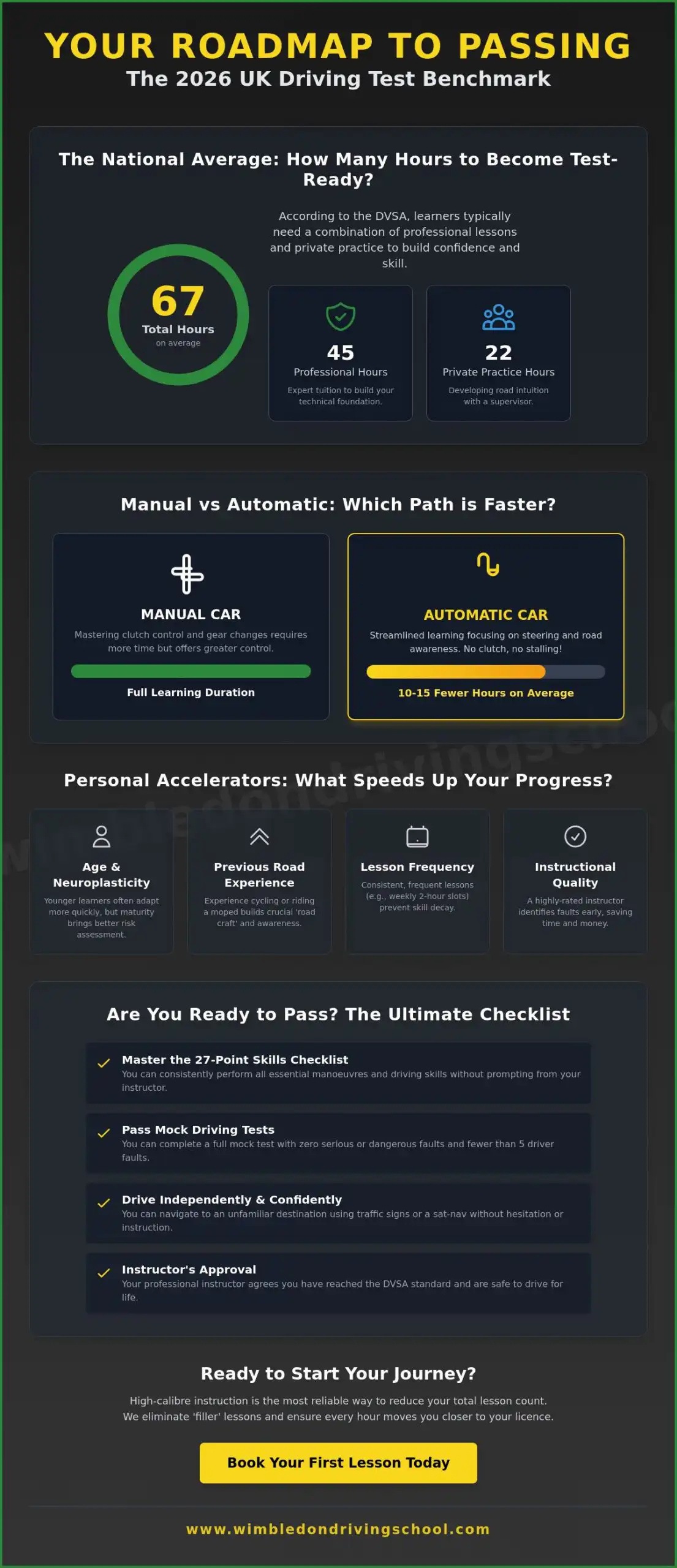
- Understand the benchmark: the DVSA reports that the “how many driving lessons do i need uk average” figure is approximately 45 hours of professional instruction plus 22 hours of private practice.
- Discover how choosing automatic driving lessons can streamline your journey, often requiring 10 to 15 fewer hours than manual tuition.
- Master the 27-point skills checklist and pass professional mock driving tests to ensure you are fully prepared for your test day.
- Identify the personal accelerators, such as lesson frequency and previous road experience, that help you reach your goals faster.
- Learn how high-calibre instruction from industry-leading experts eliminates “filler” lessons and ensures every hour is a step toward your qualification.
What is the Average Number of Driving Lessons to Pass in the UK?
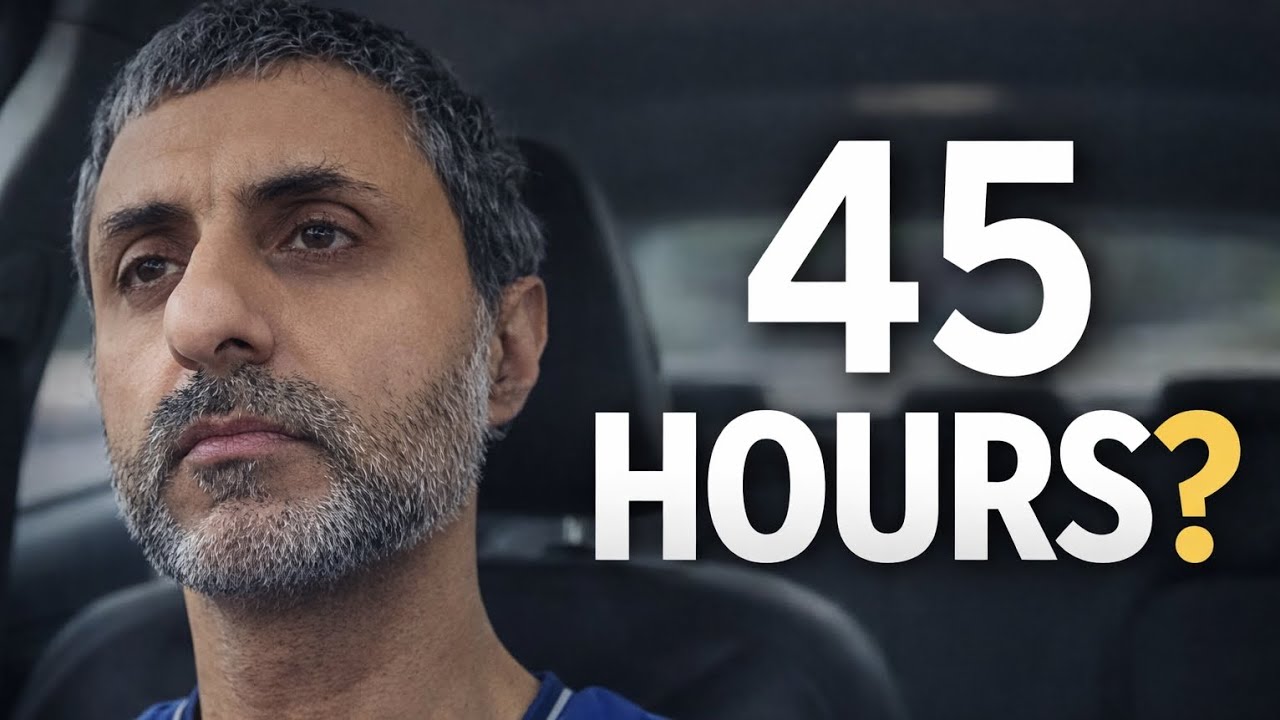
According to the latest Driver and Vehicle Standards Agency (DVSA) data, the average learner requires 45 hours of professional tuition supplemented by approximately 22 hours of private practice. When asking “how many driving lessons do i need uk average”, it is vital to view this figure as a flexible benchmark rather than a mandatory requirement for 2026. Every journey is unique; some students find their rhythm in 20 hours, whilst others benefit from 60 or more to feel truly confident behind the wheel. Understanding the UK driving test requirements is the first step in planning your education and setting realistic expectations for your progress.
To better understand how these hours translate into real-world progress, watch this helpful video:
We always recommend measuring your progress in hours rather than a “number of lessons”. A single lesson could last 60 minutes, 90 minutes, or two hours. Longer sessions often provide better value as they allow for deeper immersion and more time spent on complex manoeuvres without the constant interruption of recapping. This approach helps you move beyond being merely “test-ready” to becoming “safe-for-life”, ensuring you possess the resilience to handle high-pressure urban environments long after the examiner has signed your certificate.
The 45-Hour Benchmark Explained
The DVSA recommends a hybrid approach because professional instruction builds the technical foundation, while private practice develops vital road intuition. In 2026, test standards place a heavy emphasis on independent driving and satellite navigation skills. This requires a level of cognitive maturity that often takes time to develop. Whilst some learners with previous experience, such as moped riding or extensive cycling, might pass in 20 hours, most beginners need the full benchmark to master the 27 essential skills required for success.
Total Cost Implications for 2026
Learning to drive in London presents unique challenges that can influence your total investment. Whilst the temptation to choose the lowest hourly rate is strong, “cheap” instructors often lack the advanced certifications that streamline the learning process. This frequently leads to a higher total number of hours and multiple failed tests. Savvy learners often choose to block booking discounted fees to secure a premier instructor while managing their budget effectively. High-quality instruction from the start is the most reliable way to reduce your overall expenditure and achieve your licence faster.
Factors That Influence How Quickly You Learn to Drive
While national data provides a helpful starting point, your personal circumstances dictate the true duration of your journey. Age remains a significant factor; younger learners often possess faster reaction times and higher neuroplasticity, which can shorten the learning cycle. However, previous road experience is a more potent accelerator. If you’ve spent years cycling through busy intersections or riding a moped, you’ve already mastered the “road craft” that beginners often struggle with. This foundational knowledge allows you to focus purely on vehicle control, potentially bringing you well below the “how many driving lessons do i need uk average” of 45 hours.
Instructional quality acts as the ultimate variable in your progress. A RoSPA Gold certified instructor doesn’t just teach you how to pass your driving test; they possess the advanced observational skills to identify subtle behavioural faults before they become ingrained habits. By fixing these errors early, you avoid the “plateau” phase where progress stalls, saving you both time and money. When calculating “how many driving lessons do i need uk average”, remember that city learners often face a steeper initial curve than those in rural settings, making the quality of your mentor even more critical.
The Impact of Lesson Frequency
The “forgetting curve” is a psychological reality that affects every learner driver. If you take one-hour lessons once a week, you’ll likely spend the first 20 minutes of each session simply recapping previous material. This inefficiency significantly extends your total timeline. We’ve found that two-hour sessions, ideally taken twice a week, are the most effective way to learn. These longer blocks allow for “muscle memory” to settle in, particularly regarding clutch control and complex observations. Consistent tuition ensures each hour spent in the car builds directly upon the last.
Navigating London and Surrey Road Networks
The “London Factor” is perhaps the most overlooked influence on lesson counts. Navigating the high-density traffic and intricate cycle lanes of South West London is vastly different from driving on quiet rural roads. Areas like Morden, Tolworth, and Mitcham feature complex roundabouts and multi-lane junctions that require specific local knowledge and high-level hazard perception. Success in these environments requires a mentor who understands the specific pressures of the local test centres.
Our instructors specialise in these challenging areas we cover, ensuring you aren’t just learning to drive, but learning to master the specific environments where you’ll be tested. If you’re ready to begin your journey with a mentor who understands these local complexities, you can check our current availability to secure your preferred slot. This tailored approach is the most efficient way to navigate the road to your full licence.
Manual vs. Automatic and Intensive vs. Weekly Lessons
Choosing between manual and automatic transmissions is one of the most significant decisions affecting your total timeline. Whilst the 45-hour professional tuition figure is the standard answer to “how many driving lessons do i need uk average”, opting for automatic driving lessons typically reduces this requirement by 10 to 15 hours. This efficiency stems from removing the complexities of synchronising gear changes with clutch control. You must weigh this time saving against the limitation of an automatic-only licence, which prevents you from driving manual vehicles unless you retake the practical test later. For many, the trade-off is worth the accelerated progress.
The structure of your course, whether you choose a fast-track intensive or traditional weekly lessons, also dictates your ultimate success. Intensive courses are designed for rapid progress, yet they require immense mental stamina. Weekly lessons allow for the gradual development of long-term driving habits through consistent repetition. Your choice should reflect your personal learning style and the urgency of your need to drive. Both paths lead to the same destination, but the rhythm of the journey differs significantly.
The Automatic Advantage in London
London’s high-density environment makes automatic vehicles a practical and sophisticated choice for the modern learner. Navigating the constant stop-start traffic of the city centre is significantly less taxing when you aren’t managing a clutch. This reduction in cognitive load allows you to focus entirely on hazard perception and complex urban navigation. As we move through 2026, the surge in electric vehicle (EV) adoption has made automatic driving the new industry standard, as virtually all EVs operate without a manual gearbox.
Intensive Fast-Track Options
For those who need to pass quickly, an intensive driving course compresses the standard 45 hours of training into a focused two to four-week window. This route is ideal for learners who can commit full days to their training and wish to avoid the regression sometimes associated with long gaps between sessions. It is vital to have passed your theory test before starting, as current DVSA regulations require a valid theory certificate to secure any practical booking. Given the average 22-week wait for test slots reported in June 2026, an intensive approach combined with strategic planning is the most effective way to secure your licence without unnecessary delays.
The “Ready to Pass” Checklist: How to Know You Are Done
Identifying the exact moment you are ready for your practical test is a precise science, not a guessing game. While reaching the “how many driving lessons do i need uk average” benchmark of 45 hours is a significant milestone, your actual readiness is defined by your ability to drive without a safety net. You must transition from being a student who follows instructions to a driver who makes independent, safe decisions. True competency means your instructor sits in the passenger seat as an observer, rarely needing to offer verbal prompts or physical interventions.
To ensure you don’t book your test prematurely, we utilise a rigorous five-step checklist. This structured approach eliminates the fear of overpaying for extra tuition whilst protecting you from the frustration of a failed attempt. You are ready when you can:
- Consistently perform all 27 DVSA-mandated skills without any help or prompts from your instructor.
- Pass a professional mock driving test with zero “serious” faults and fewer than 15 “minor” faults.
- Navigate complex “independent driving” sections for 20 minutes using a sat-nav without losing situational awareness.
- Maintain high-level focus and calm behaviour for a full 40-minute session, even in heavy traffic.
- Receive a definitive professional sign-off from your instructor, who remains the most reliable judge of your road craft.
The Role of Mock Driving Tests
We recommend that every learner completes at least two full mock tests before their actual appointment. These sessions are designed to simulate the high-pressure environments of local centres like Morden or Douglas House. By replicating the examiner’s silence and the strict marking criteria, we identify exactly where your nerves might cause a lapse in judgment. Data from these tests allows us to fine-tune your final five hours of tuition, focusing exclusively on the specific junctions or manoeuvres that require extra polish. This strategic preparation is what separates a first-time pass from a costly second attempt.
The 27 Skills and the Reflection Level
The DVSA categorises learning into levels, and your goal is to reach the “Reflection” level. This means you aren’t just performing a task; you can explain the logic behind your choices. If you can justify why you chose a specific gap at a roundabout or why you adjusted your speed for a hazard, you have reached the level of independence required for success. For a deep dive into the specific requirements of the current exam, consult our Practical Driving Test 2026 guide. If you feel you are approaching this level and want a professional second opinion, you can book a mock driving test with one of our senior instructors to validate your progress.
How Wimbledon Driving School Reduces Your Total Lesson Count
The national benchmark of 67 hours of combined practice serves as a helpful safety net, but it doesn’t have to be your personal ceiling. When you research “how many driving lessons do i need uk average”, you’ll see the standard 45-hour professional tuition figure, yet many learners find themselves trapped in a cycle of “filler” lessons that add cost without adding value. Our approach is designed to disrupt this pattern. By combining advanced instructional techniques with a rigorous focus on your specific progress, we aim to get you test-ready well ahead of the national average.
The true return on investment in driving tuition comes from the calibre of your mentor. Our team features instructors with elite RoSPA Gold and IAM certifications, representing the highest standards of road safety in the UK. These qualifications aren’t just badges of honour; they are tools that save you money. An expert instructor can identify the psychological root cause of a driving error in minutes, whereas a less experienced tutor might spend hours merely correcting the physical symptom. This precision reduces the total number of sessions required to reach a safe, independent standard.
Quality Instruction vs. Quantity of Lessons
We operate on a “Confident Mentor” philosophy that prioritises empowerment over simple instruction. Instead of just telling you where to turn, we teach you how to read the road and anticipate the behaviour of others. This high-level cognitive training is what allows our students to consistently beat the “how many driving lessons do i need uk average” statistics. We use personalised progress tracking to ensure every hour has a clear, achievable goal. If you’ve mastered a skill, we move on immediately. There is no repetition for the sake of it, ensuring your journey remains efficient and your momentum stays high.
For nervous drivers, this structured support is even more vital. Anxiety often stems from a lack of control or understanding. By breaking down complex London junctions into manageable, logical steps, we build your confidence faster than traditional methods. This emotional resilience is a key factor in reducing the total lesson count and ensuring a first-time pass.
Start Your Journey with Confidence
Every successful journey begins with a clear map. We recommend booking an initial assessment lesson, which allows your instructor to evaluate your natural aptitude and any previous experience. Following this session, you’ll receive a personalised estimate of the hours you’ll likely need to reach test-readiness. With 7-day-a-week availability across South West London, we provide the flexibility to maintain a consistent learning rhythm, which is essential for retaining skills and building muscle memory.
Your path to freedom on the road should be as smooth and efficient as possible. By choosing elite instruction and a tailored learning plan, you are making the safest and most effective choice for your education. Book your manual or automatic lessons with Wimbledon Driving School today and take the first step toward a lifetime of safe, confident driving.
Secure Your Freedom on the Road Today
Your journey toward automotive freedom is a significant personal milestone. While the data suggests a “how many driving lessons do i need uk average” of 45 hours plus private practice, the true duration of your training rests on the quality of your mentorship. By choosing high-calibre instruction and following a structured “Ready to Pass” checklist, you can navigate the complexities of London’s roads with absolute confidence. We’ve seen how strategic choices, from transmission type to lesson frequency, directly influence your total investment and success rate.
At Wimbledon Driving School, we specialise in transforming nervous learners into safe, independent drivers. Our instructors hold elite RoSPA Gold and IAM certifications, ensuring you receive the most sophisticated training available. This commitment to excellence is why we maintain one of the highest pass rates in the country. Whether you’re a first-time learner or looking to build confidence after a break, our experts are here to guide you. Start your journey to a full licence; book your lessons with Wimbledon Driving School. We look forward to seeing you in the driver’s seat.
Frequently Asked Questions
Is 20 driving lessons enough to pass in the UK?
Twenty driving lessons is rarely enough for a complete beginner to reach the required standard for a UK driving test. While learners with previous road experience from mopeds or extensive cycling might progress faster, the DVSA benchmark remains 45 hours of professional tuition. Attempting a test prematurely often leads to failure and decreased confidence, so it is vital to focus on reaching a safe, independent level of competency rather than rushing to a specific lesson count.
What is the average cost of driving lessons in London for 2026?
Average driving lesson prices in London typically range between £35 and £45 per hour in 2026. This reflects the higher operational costs and the complexity of urban instruction found in the capital. While you might find cheaper rates elsewhere, high-tier instructors often save you money overall by identifying faults faster and reducing the total number of hours required to pass. Investing in quality mentorship is the most effective way to ensure a first-time pass.
Can I pass my driving test in 2 weeks with an intensive course?
You can pass your driving test in two weeks using an intensive course, provided you have already passed your theory test. These fast-track programmes compress the standard 45 hours of training into a focused window of full-day sessions. This route requires high levels of mental stamina and is ideal for those who learn best through total immersion. It is a sophisticated way to bypass the regression often associated with long gaps between weekly sessions.
Do I need more lessons for a manual car than an automatic?
Most learners require approximately 10 to 15 additional hours of tuition to master a manual car compared to an automatic. Manual vehicles involve the added complexity of clutch control and gear synchronisation, which naturally increases the initial learning curve. When asking “how many driving lessons do i need uk average”, consider that automatic lessons allow you to focus purely on road craft and observation from your very first hour.
How many hours of private practice should I do with my parents?
The DVSA recommends at least 22 hours of private practice to supplement your professional driving lessons. This additional time helps solidify your muscle memory and develops your ability to read the road in a variety of conditions. Private practice should always complement the technical foundation established by a qualified instructor. This ensures you don’t pick up ingrained habits that could lead to a fault during your practical exam.
What happens if I fail my mock driving test?
Failing a mock driving test is a valuable diagnostic tool that highlights exactly where your skills need refinement before the real event. It allows your instructor to tailor your remaining sessions to address specific faults, such as observation at junctions or hazard perception. Use this data to fine-tune your performance under pressure, ensuring you are fully prepared to meet the high standards of the actual practical exam with confidence.
Is it better to take 1-hour or 2-hour driving lessons?
Two-hour lessons are significantly more effective for building skills and maintaining momentum throughout your training. One-hour sessions often feel rushed, with a large portion of the time spent recapping previous material or navigating to suitable training areas. Longer blocks allow for deeper immersion and more time on complex road networks. This approach helps you master the “how many driving lessons do i need uk average” requirements much more efficiently.
Do I need to pass my theory test before starting lessons?
You don’t need to pass your theory test before starting practical driving lessons, but it is highly beneficial to do so early in your journey. Having a firm grasp of road signs and hazard perception rules makes your time in the car significantly more productive. Additionally, you cannot book your practical driving test without a valid theory certificate, so passing it early prevents logistical delays when you reach test-readiness.