Choose your lane before the Leret Way junction
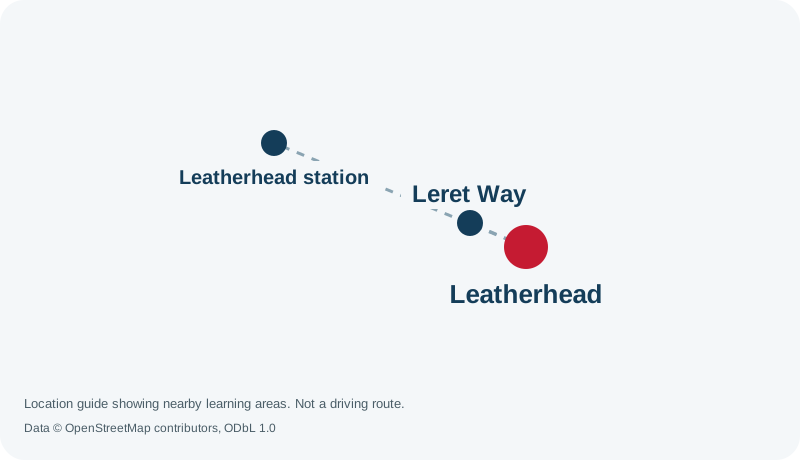
The Leret Way, North Street and Bull Hill junction brings several directions together close to the town centre. Reduce your speed early enough to read the signs and road markings, check the mirrors and settle into the correct lane before you need to turn.
Planning before the junction leaves more time to watch other vehicles and pedestrians. If you miss a direction, continue safely and find another route instead of making a late change.
Plan ahead on the A24 and A243
The A24 and A243 connect Leatherhead with a wider major-road network and routes towards M25 junction 9. These roads can help you practise checking mirrors before changing position, building speed with the traffic and leaving a safe gap ahead.
Look well beyond the vehicle in front so that a developing queue, direction sign or lane change does not arrive as a surprise. Earlier information gives you more time to act smoothly.
Watch the kerbside traffic on Station Approach
Station Approach leads to Leatherhead station and its signed drop-off point. Expect people moving between parked cars, vehicles pulling towards the kerb and drivers rejoining the road after a short stop.
Keep a steady speed, scan both pavements and check the mirrors before moving around a stopped vehicle. This is a practical way to build the observation needed whenever transport activity narrows the available space.
Check every sign at town-centre car parks
The Swan Centre and Church Street car parks are useful references for low-speed driving in central Leatherhead. Approach entrances slowly, give pedestrians space and wait until the full bay is visible before beginning a parking manoeuvre.
Read the signs for the exact entrance, bay and exit you are using. That habit matters in any car park because nearby spaces can have different restrictions or traffic movements.
Allow for school traffic on Dilston Road
Therfield School on Dilston Road gives learners a clear setting for adjusting speed around pedestrians and vehicles that may stop or turn. Keep the road ahead in view and expect gaps to close when traffic becomes busier.
Check behind before slowing and leave enough room for a safe response. These habits also apply near other schools, crossings and places where people move close to the carriageway.