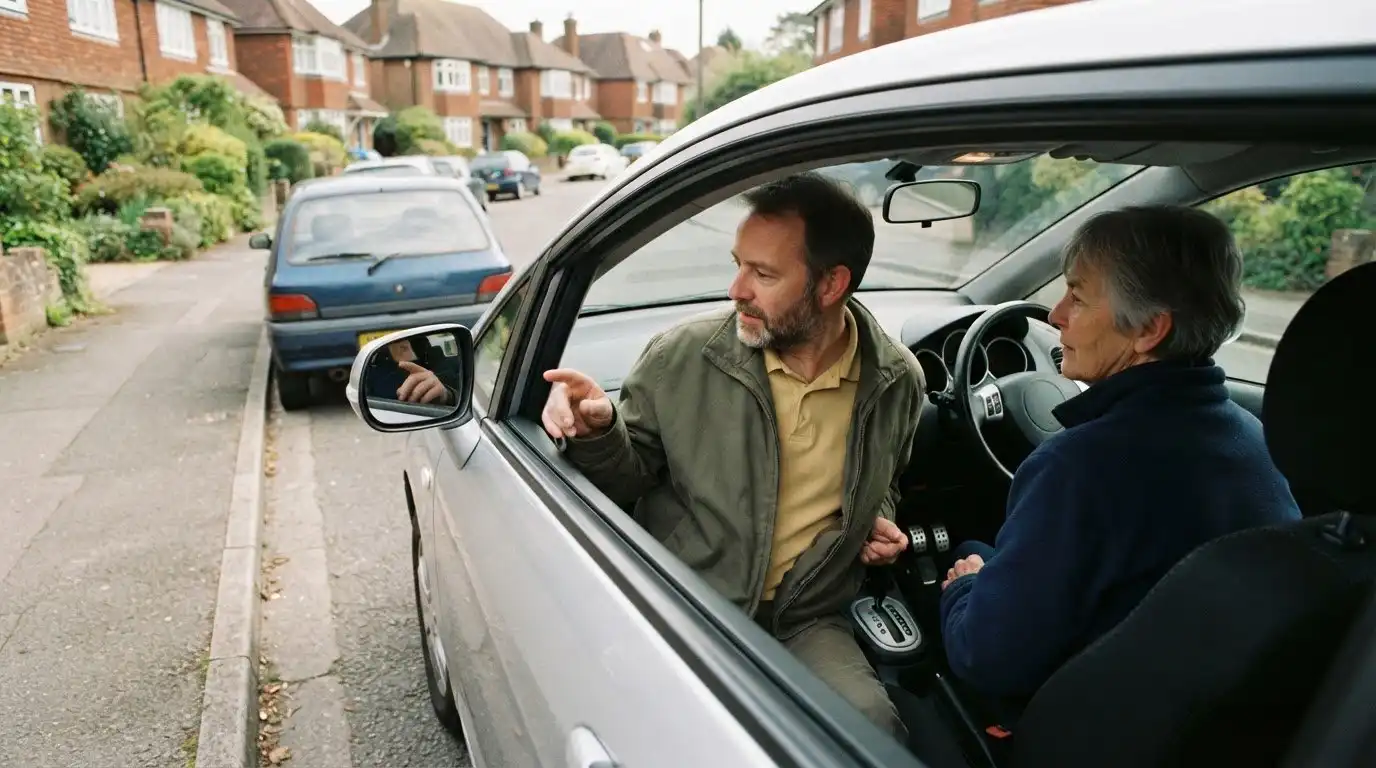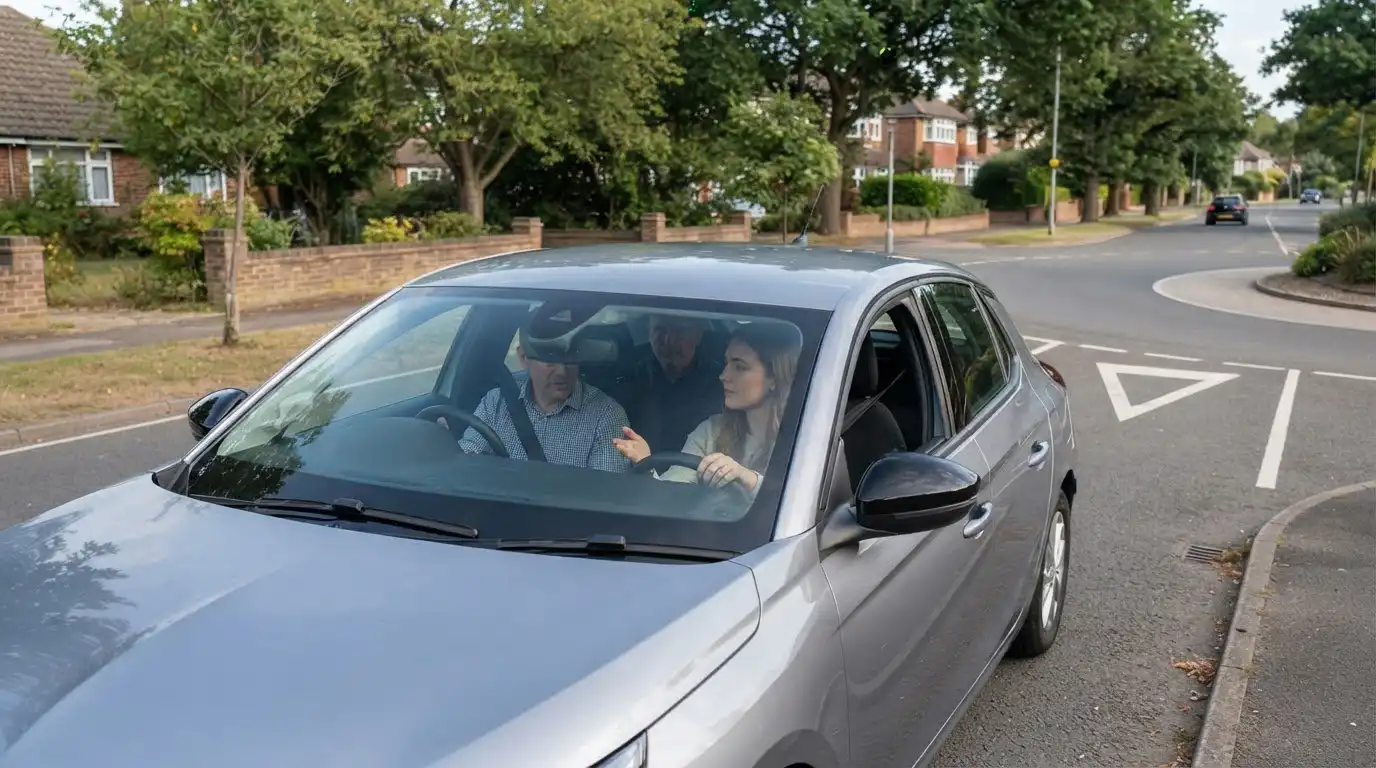
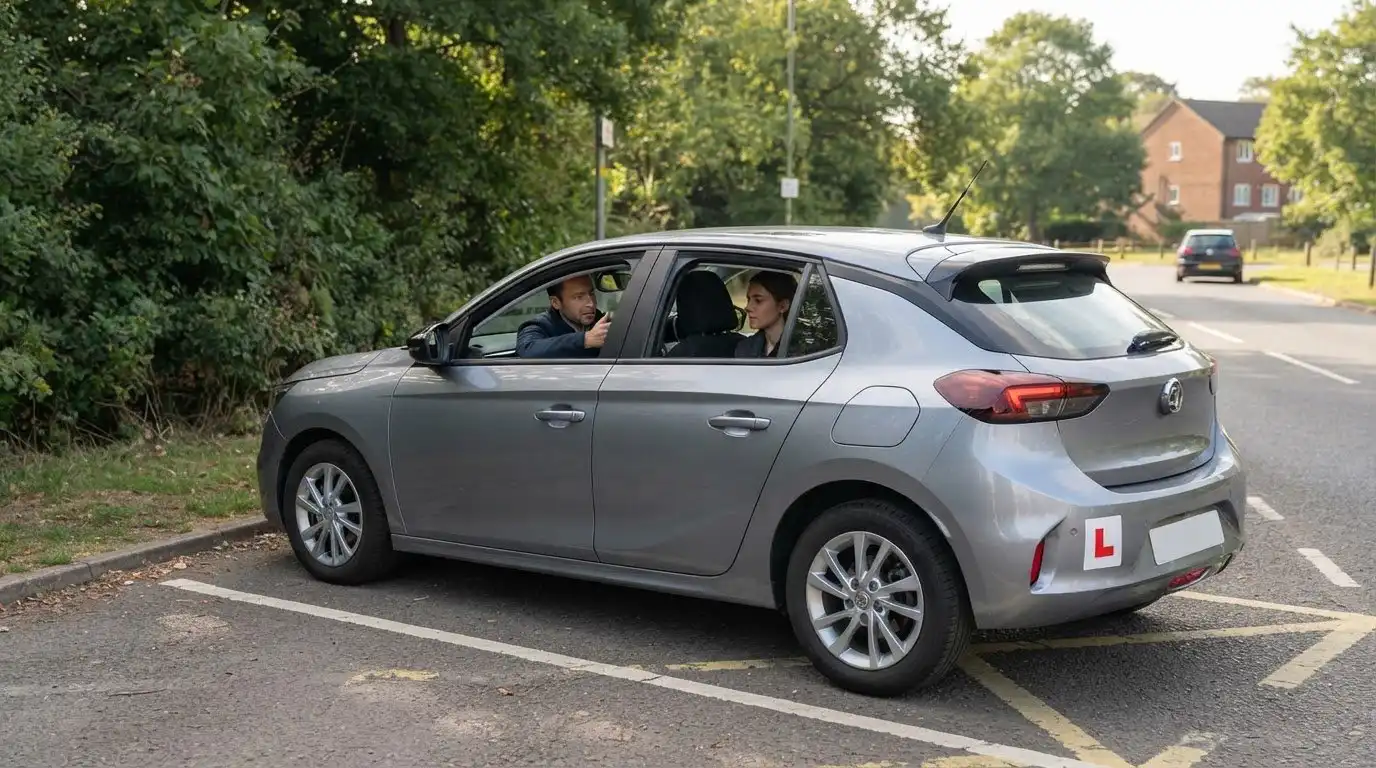
Being targeted by an impatient driver doesn’t mean you’ve done anything wrong. Dealing with road rage as a learner driver starts with keeping your attention on the road, not reacting, and listening to your instructor. If you feel too shaken to continue, pull over somewhere safe when you can.
It’s understandable to feel rattled when someone tailgates, honks or cuts in close. Learners may attract impatience because they display L-plates, take longer at junctions or need extra care with manoeuvres, but none of that excuses aggressive behaviour. You’re still learning, and safe, steady driving matters more than another driver’s impatience.
These five practical steps can help you understand why some drivers target learners, avoid escalating a confrontation, regain focus and decide when it’s safer to stop. Take them one at a time, and follow your instructor’s guidance rather than responding to pressure from another road user.
Key Takeaways
- Another driver’s impatience isn’t a measure of your ability; L-plates and taking extra time are part of learning.
- Don’t let tailgating or aggressive behaviour push you into speeding or making a sudden move.
- Keep your attention on the road and follow your instructor’s guidance instead of engaging with the other driver.
- If you feel too unsettled to continue, pull over when it’s safe and take time to regain your focus.
- Know what to do if someone threatens you or their behaviour puts you at risk, and report serious incidents.
1. Pulling over safely
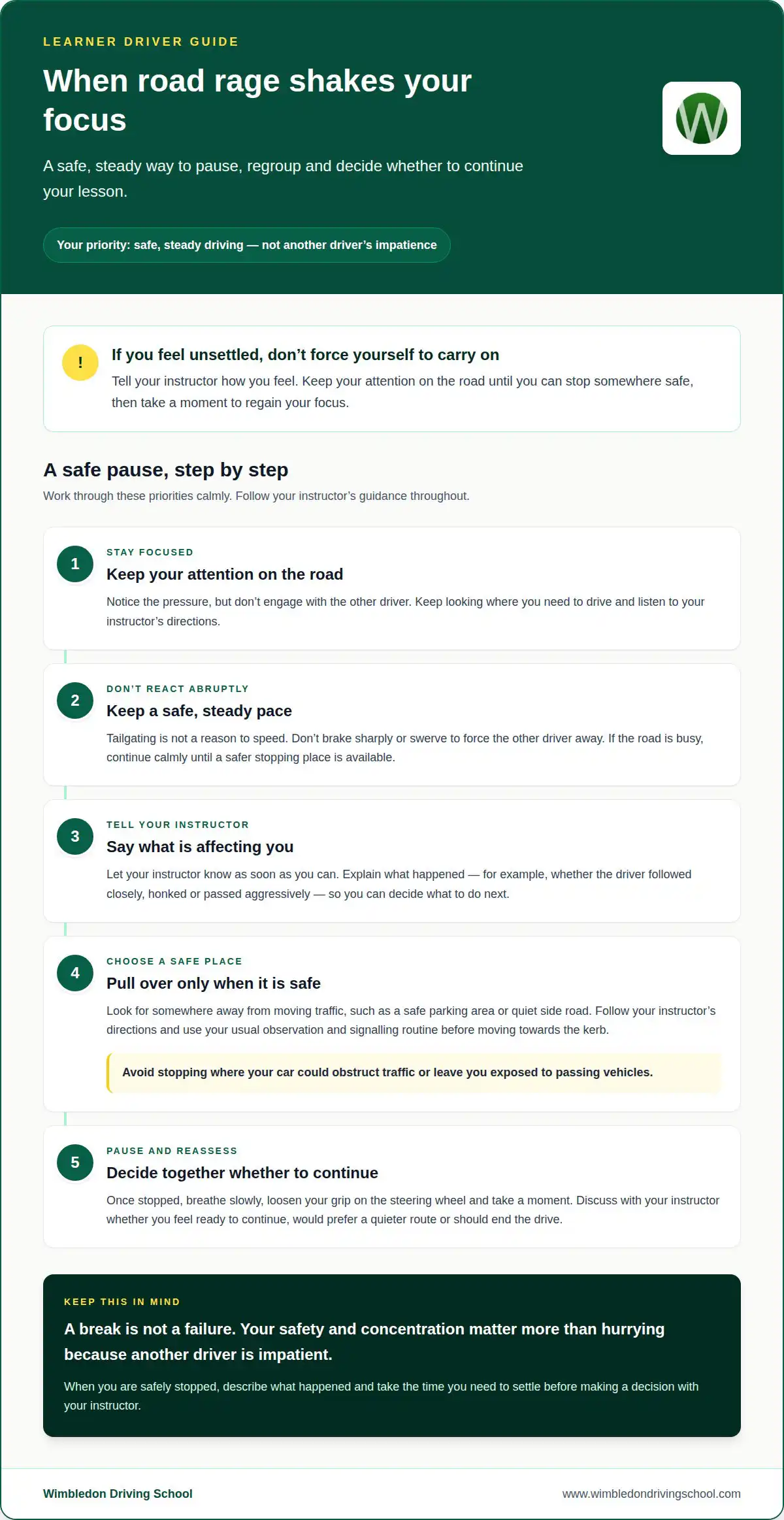
If another driver’s behaviour leaves you shaken, tell your instructor as soon as you can. During a lesson, they can help you decide whether to continue or pause. Breathe slowly and keep your attention on the road as you look for a safe place to stop. Don’t make a sudden move to escape the pressure. A controlled decision gives you time to settle without adding risk.
Look for a suitable place away from moving traffic, such as a safe parking area or quiet side road. Follow your instructor’s directions and use your usual observation and signalling routine before moving towards the kerb. Avoid stopping where your car could obstruct traffic or leave you exposed to passing vehicles. If the road is busy, keep driving calmly until a safer place is available.
Tailgating can make you feel hurried, but don’t speed to satisfy the driver behind. Keep a safe, steady pace and focus on the space ahead. When it’s safe, pull over and let the other driver pass. Don’t brake sharply or swerve to force them away. Your instructor can help you judge the road, traffic and stopping place.
Once stopped, take a moment before deciding whether to resume the lesson. Breathe slowly, loosen your grip on the steering wheel and tell your instructor what unsettled you. Explain, for example, whether the driver followed closely, honked or passed aggressively. Naming what happened helps your instructor address the specific concern instead of leaving you to continue while distracted.
A break can be a useful part of a lesson, not a failure. You might need time to regain focus after an upsetting incident, or simply to pause when tension is building. Agree with your instructor whether you feel ready to continue, need a quieter route or should end the drive. If confidence remains affected after the lesson, refresher lessons for building confidence can help you practise at a manageable pace and work through concerns with an instructor.
If you feel worked up, you don’t have to carry on without a pause. Learner drivers in the UK are advised to take a deep breath or pull over for a break if they feel worked up. Either option gives you a moment to pause before deciding what to do next. Keep it simple: stay focused on driving until you can stop safely, then take the time you need to settle. Tell your instructor how you feel and discuss whether you’re ready to continue. A break doesn’t have to be a response to the other driver; it can simply give you room to regain your composure.
If someone is following too closely, resist the pressure to change your speed for them. Don’t break the speed limit, and pull over when it’s safe to let the tailgater pass. Keep your attention on the road as you look for a safe place to stop, rather than reacting abruptly to the vehicle behind. Once stopped, letting the other driver pass can remove that immediate pressure. You can then take a break and decide with your instructor whether continuing feels manageable. The priority is to make a safe choice, not to hurry because someone is impatient. A calm pause can help you refocus on the lesson.
2. Why do people get angry with learner drivers?
Some drivers become impatient when a learner takes longer to move away, choose a gap or complete a manoeuvre. L-plates make your learner status visible, so other road users may expect hesitation before they see how you drive. A pause at a junction or a slower parallel park can prompt honking or tailgating. That frustration belongs to the other driver. A mistake or cautious decision during a lesson doesn’t justify intimidation.
Learning means making decisions with less experience than a qualified driver. You might check traffic carefully before entering a roundabout, for example, then wait for a clearer gap. A driver behind may see that pause as an inconvenience, but you’re practising judgement in real conditions. Aggression can also reflect someone else’s stress or impatience, neither of which you can control. Keep the distinction clear: review your driving with your instructor, but don’t accept blame for another person’s abusive behaviour.
Recognise the behaviour without trying to diagnose the driver. Tailgating means a vehicle is following too closely; aggressive overtaking means passing in a way that feels pressuring; verbal abuse can include shouting or insults. A horn or hand gesture can feel personal, but replying with a gesture, shout or prolonged glance gives the encounter more of your attention. Identify the immediate driving issue, such as reduced space behind you, then refocus on traffic and your instructor’s directions.
During a lesson, let your instructor guide your response. They can help you manage difficult situations with other road users. If a car sits close behind, continue at a safe pace and don’t speed to appease its driver. If someone overtakes aggressively, hold your course rather than copying their movement. Avoid sudden braking or swerving unless it’s necessary to prevent a collision. These choices help you stay in control of the car and focused on what’s happening around you.
Staying calm doesn’t mean pretending the behaviour is acceptable. Take a steady breath, look towards the road ahead and listen for your instructor’s next direction. If a driver shouts while you’re approaching a junction, for instance, prioritise your observations and the junction, not their words. Afterwards, describe what happened to your instructor and identify when it began to affect your concentration. That makes it easier to discuss what helped you stay focused and what you’d like to practise next.
3. Avoiding confrontation
When an aggressive driver tries to provoke you, don’t let the exchange become another hazard. Don’t shout, gesture, honk back or stare at them. Each reaction can draw your attention away from mirrors, road signs and traffic ahead. If someone leans on the horn behind you, keep looking where you need to drive and follow your instructor’s directions. This is a key part of dealing with road rage as a learner driver safely.
Retaliation won’t make the other driver behave more safely. Taking your hands off the wheel to gesture, turning to argue or matching their speed can reduce your control. Keep your hands ready for the driving task and your attention on changing traffic. If the driver moves towards your vehicle, don’t get out to confront them. Tell your instructor what’s happening and focus on reaching a safe place.
Don’t respond to an aggressive overtake by accelerating, blocking the car or moving towards it. Hold a steady course and leave room where the road allows. If a vehicle cuts in, avoid sudden braking or swerving unless necessary to prevent an accident. A sharp manoeuvre may put you, your instructor and nearby road users at greater risk. Let your instructor guide any adjustment to your speed or position.
Use a simple sequence to keep your decisions clear: notice the behaviour, check the road, listen to your instructor, then continue safely. If a driver follows closely as you approach a junction, don’t rush your observations to satisfy them. Make the junction decision you’ve been taught to make. If you can’t focus, tell your instructor; they can help you decide whether to change route or stop safely. This practical approach to dealing with road rage as a learner driver keeps your attention on what you can control.
After the immediate pressure passes, give your attention back to the lesson rather than replaying a gesture or insult. Your instructor can help you identify what happened, what you did to maintain control and what to practise next. This turns an upsetting moment into a specific learning point, such as holding your position during an overtake. Practising those choices is part of defensive driving on UK roads, where anticipating other road users helps you respond without escalating conflict.
4. Staying calm and focused behind the wheel
How can learner drivers stay calm and avoid escalating road rage? Take a deep breath, focus on the road ahead and listen to your instructor. Don’t answer a shout with a shout, gesture or prolonged look. If a driver honks as you approach a junction, keep your attention on the junction and make your next decision safely. A measured response protects your concentration and keeps the other driver’s behaviour from dictating your actions.
During a lesson, tell your instructor if an aggressive driver is affecting your focus. Follow their directions and drive steadily; don’t speed, brake sharply or swerve in response to pressure. If you’re struggling to concentrate, say so clearly. Your instructor can help you decide whether to continue or pause. You might agree to finish a busy stretch before reassessing how you feel.
When should you call 999 or 101? According to gov.uk, call 999 if someone’s actions create an immediate danger; use 101 to report a non-emergency incident. If you’re unsure which route applies, follow the current police guidance on gov.uk. Don’t make a call while driving: ask your instructor to help you stop safely first, or call when the car is stationary.
If road rage happens during a lesson, stay in control of the vehicle and follow your instructor’s guidance. If someone approaches the car, stay inside, lock the doors and seek police help if you feel threatened. Tell your instructor what’s happening. Once the situation has passed, discuss whether you feel able to continue or need to end the drive.
If you need to report a serious incident, note the other car’s registration plate, make and model only when it’s safe. Don’t use your phone or try to follow the vehicle while driving. Once stopped, describe observable details, such as where the incident happened and what the driver did. A clear account is more useful than guessing why the other person behaved that way.
A brief reset can help you return your attention to the lesson. Breathe slowly, release tension in your hands and listen for one instruction at a time, such as checking your mirrors before moving away. These mindfulness techniques may support concentration while driving. Use them only when safely stopped or when they don’t take your attention from driving.
5. Road rage and intimidation directed at learner drivers
L-plates can make you an easy target for impatient road users, especially when you pause before a junction or take extra time parking. That can feel personal, but tailgating, shouting or aggressive overtaking is the other driver’s behaviour, not proof that you’re incapable. Learning involves careful decisions and occasional mistakes. You don’t have to accept intimidation as a normal part of driving.
Being targeted by road rage doesn’t, by itself, mean you lose your licence or make an insurance claim. Your own driving matters: a learner who reaches 12 penalty points can lose their licence, while a collision and resulting claim may affect insurance costs.
If a driver follows or threatens you, don’t head home or stop somewhere isolated. Keep the doors locked if they approach your vehicle, and travel towards a safe, public place when you can do so safely. Tell your instructor what’s happening during a lesson. If you’re threatened or the behaviour puts you in danger, seek police help. Don’t get out to confront the other driver.
Take persistent harassment seriously, even if the driver hasn’t made physical contact. If the same vehicle continues following you after several turns, focus on driving safely towards a public place rather than trying to lose it with sudden turns or speed. Once stopped somewhere safe, contact the police. If the driver leaves, don’t follow; give the police your account instead.
For a serious incident, record the other vehicle’s registration plate, make and model only when it’s safe. Note the location, direction of travel and observable behaviour, such as tailgating, threats or dangerous overtaking. Don’t use your phone while driving or put yourself at risk to collect details. If you can’t remember everything, report what you do recall rather than guessing.
In the UK, police can issue a £100 fine and 3 penalty points for specified aggressive-driving offences, including tailgating, pushing into a queue, failing to give way and lane hogging. The key distinction is the behaviour involved: intimidation directed at you is one matter, while an offence is assessed according to the driver’s actions. Describe what happened clearly when seeking help.
Wimbledon Driving School
Wimbledon Driving School can help you build the skills and confidence to respond calmly when other road users behave aggressively. In lessons, practise staying focused, making safe decisions and following your instructor’s guidance in challenging traffic. If an incident has affected your confidence, tell your instructor so your lessons can address the situations you find difficult.
Choose manual or automatic driving lessons to suit how you want to learn, or consider an intensive course if you prefer a more concentrated programme. The right next step is the one that supports steady progress and safer decisions on the road.
Build confidence for the road ahead
With experience, dealing with road rage as a learner driver becomes less about controlling someone else’s reaction and more about trusting your own safe decisions. Each lesson is a chance to strengthen your judgement, notice hazards and move towards independent driving. If an incident has dented your confidence, tell your instructor what would help you feel ready to practise again.
Wimbledon Driving School offers manual and automatic driving lessons, as well as intensive driving courses, so you can choose a learning format that suits your next step. Your instructor can help you develop steady habits for handling pressure on the road.
Take the journey at a pace that helps you feel prepared. Your confidence can grow with every safe decision you make.
Frequently Asked Questions
Why do people get angry with learner drivers?
Some drivers become impatient when learners take longer to move away, choose a gap or finish a manoeuvre. L-plates make it clear you’re learning, and a cautious pause can be mistaken for hesitation or delay. That may explain a reaction, but it doesn’t excuse abuse. Taking extra time to position the car before a turn is part of learning, not a reason for another road user to intimidate you.
What should a learner driver do when another driver behaves aggressively?
Keep your driving controlled and focus on the road, not the other driver. Don’t make a sudden manoeuvre to get away or respond to a gesture. If you’re with an instructor, tell them what you’ve noticed and follow their directions. If a driver shouts at a red light, for example, don’t engage; focus on the traffic signal and wait for a safe opportunity to proceed.
How can learner drivers safely handle tailgating, honking and aggressive overtaking?
Maintain a safe, steady pace and don’t let a horn pressure you into rushing a decision. If a driver overtakes aggressively, don’t chase, block them or change course abruptly. Keep monitoring the road and leave space where it’s safe. If a car passes on a straight road, continue along your planned route and check your surroundings before turning or changing lanes.
What are the risks of confronting or gesturing at an aggressive driver?
Arguing, gesturing or staring can draw your attention away from hazards and may intensify an already tense encounter. Even a brief glance away matters if traffic is moving or you’re approaching a junction. Braking in retaliation or swerving can also unsettle passengers and other road users. Instead, keep your hands ready for driving, look ahead and let your instructor guide the next steps.
How can a driving instructor help a learner prepare for aggressive drivers?
An instructor can help you plan how to respond before a difficult situation arises, then guide you if another road user behaves aggressively during a lesson. Discuss scenarios such as a vehicle following closely or a driver honking while you wait at a junction. Afterwards, ask which actions helped you stay in control and what you’d do differently next time. That turns the experience into a clear learning point.
Disclaimer
This article is provided for general informational purposes only and does not constitute professional driving, legal, or safety advice. While we aim to keep our content accurate and up to date, rules, prices, and DVSA test requirements can change — always check gov.uk or contact us directly at 020 3524 7968 for the latest guidance before making any decisions. Nothing in this article guarantees a specific outcome, including passing your driving test within any stated timeframe. For current pricing, course availability, and instructor details, please visit our Prices page or get in touch.