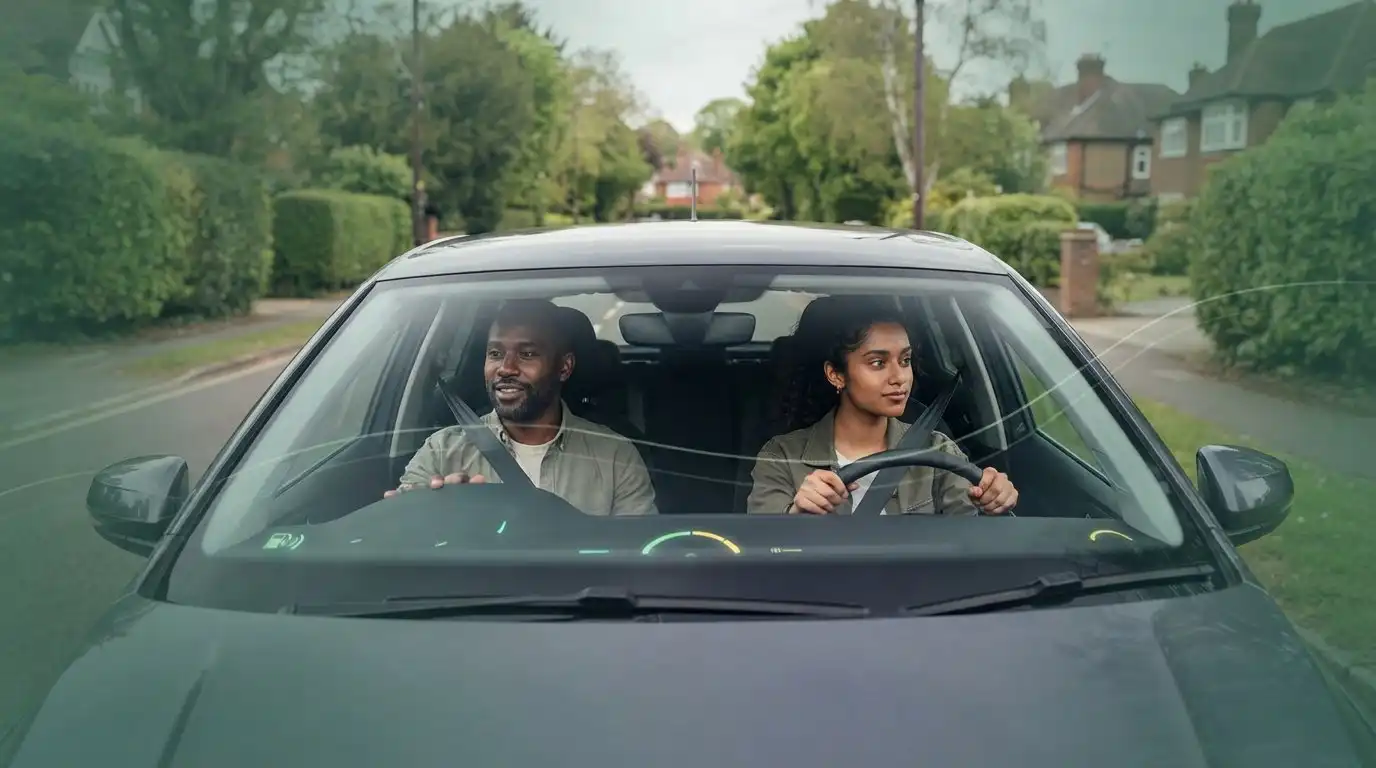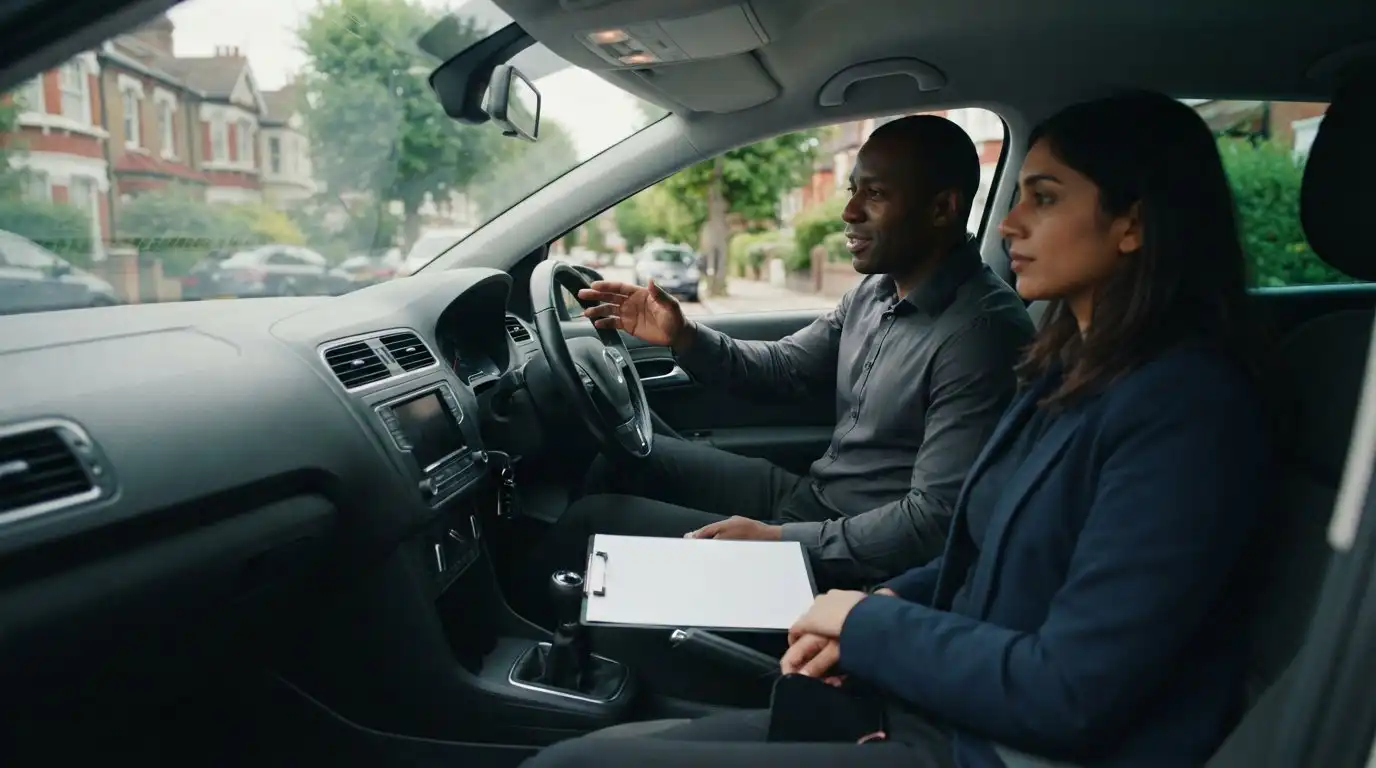
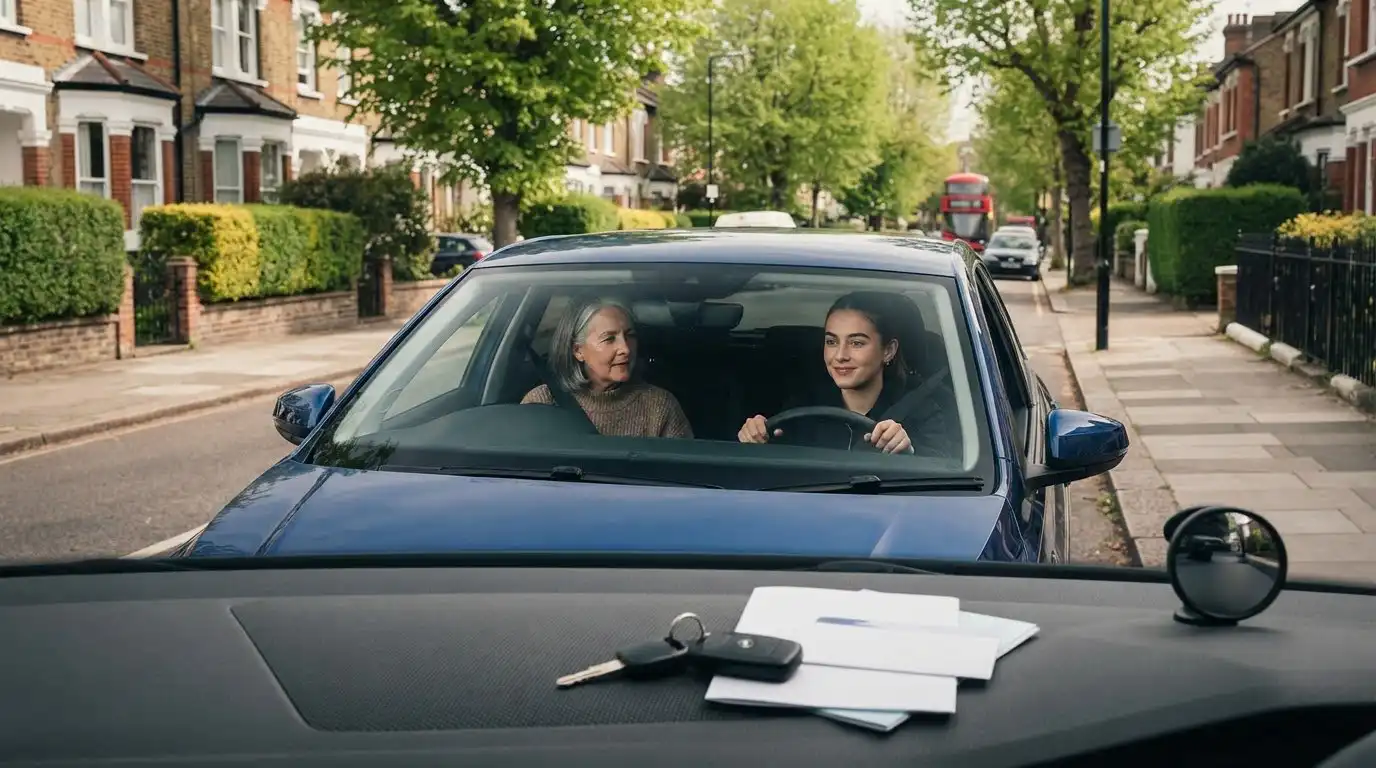
Practising in your own vehicle can cut weeks off your learning journey, but a single overlooked technicality can void your test before the engine even starts. If you find yourself asking, “can I learn to drive in my own car UK-wide?”, the answer is an absolute yes. You are legally permitted to practise and even take your practical driving test in your personal vehicle, provided both you and the car satisfy strict Driver and Vehicle Standards Agency (DVSA) criteria.
We understand the appeal of logging extra miles between formal lessons. Gaining familiarity in the car you will actually drive after passing builds genuine road confidence, yet untangling supervisor qualifications, learner insurance policies, and test-day vehicle restrictions can feel daunting. This guide delivers the exact legal rules, vehicle requirements, and insurance steps you must follow. Read on to discover how balancing private practice with structured professional coaching sets you up for a safe, successful first-time pass.
Key Takeaways
- Learn how the answer to “can I learn to drive in my own car UK” involves meeting clear DVSA guidelines on supervision, insurance, and vehicle roadworthiness.
- Identify the strict legal rules for supervising drivers and discover how dedicated learner insurance safeguards family policies from costly claims.
- Review the mandatory DVSA test-day checklist, including fitting an auxiliary examiner mirror and avoiding prohibited car models.
- Understand the vital safety advantages of dual-control professional tuition when paired alongside private practice in your own vehicle.
- Follow a structured syllabus to transition your private sessions smoothly from quiet side streets to demanding multi-lane roundabouts.
Can You Learn to Drive in Your Own Car in the UK?
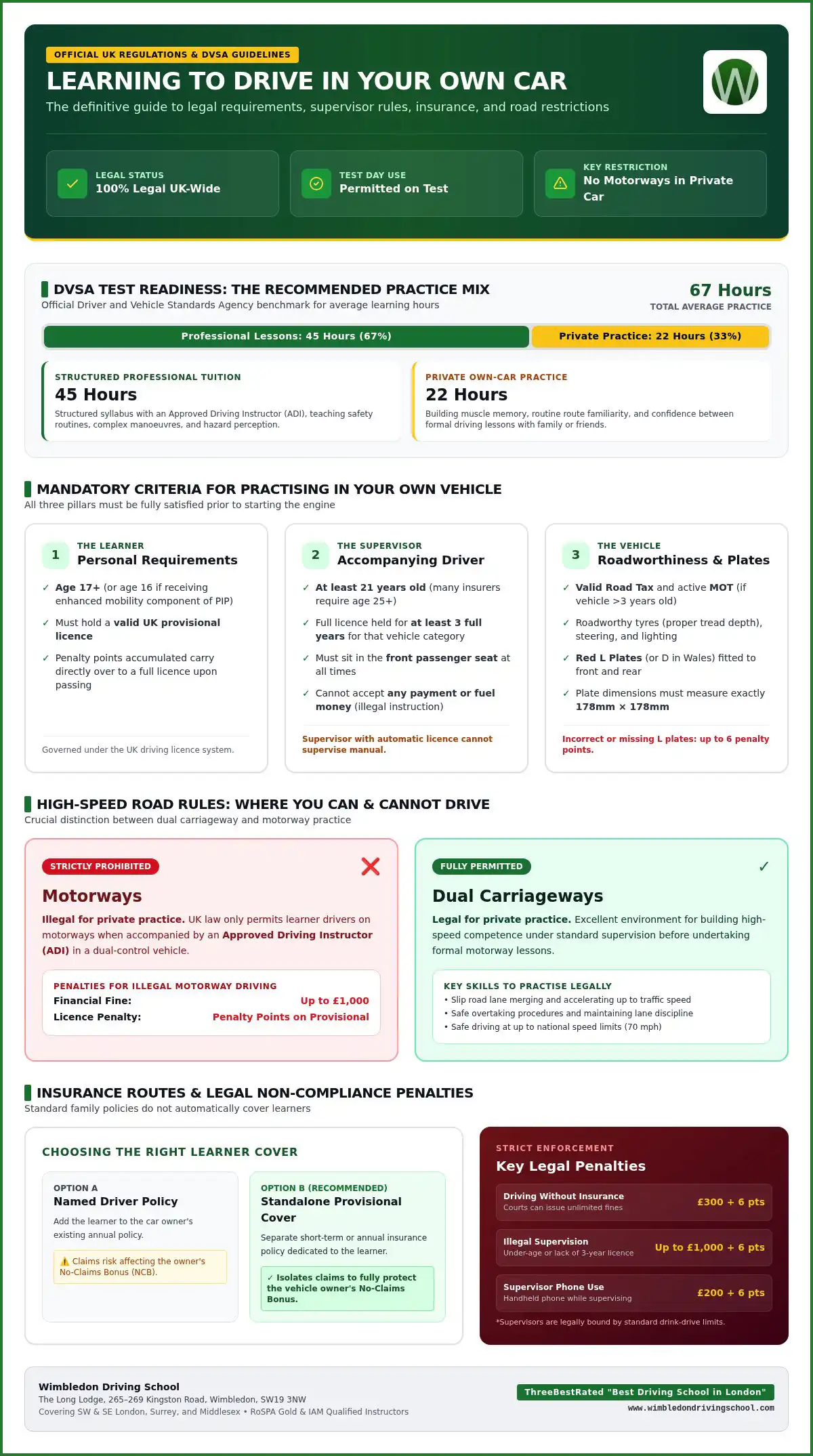
Yes, you can. When learners ask, “can I learn to drive in my own car UK regulations permit it?”, they are often relieved to hear that private practice is fully legal. The DVSA actively supports combining professional tuition with private driving practice. According to official DVSA data, the average learner requires roughly 45 hours of professional lessons alongside 22 hours of private practice to reach test readiness. Using your own vehicle, such as choosing a reliable VW Golf as a first car, allows you to build muscle memory and master daily driving habits between scheduled lessons.
Every learner must recognise the clear line between informal practice and professional teaching. Friends and relatives can supervise your practice, but they cannot legally charge you money. Accepting any form of payment, even money for fuel, constitutes illegal driving instruction unless the supervisor is a registered Approved Driving Instructor (ADI).
The Legal Status of Private Driving Practice
Before turning an ignition key outside an instructor’s car, you must satisfy essential legal requirements under the wider UK driving licence system. You must be at least 17 years old (or 16 if receiving the enhanced mobility component of PIP) and hold a valid UK provisional driving licence. Your vehicle must display red L plates (or D plates in Wales) measuring exactly 178mm by 178mm on both the front and rear. Failing to display these correctly risks up to six penalty points. Remember, points accumulated on a provisional licence carry directly over once you qualify.
Motorway Restrictions for Private Practice
Private practice gives you freedom to explore local routes, but motorways remain completely off-limits. UK law allows learner drivers onto motorways only when accompanied by an Approved Driving Instructor in a car fitted with dual controls. Practising on motorway carriageways with family or friends is illegal and carries severe penalties, including fines up to £1,000 and points on your provisional licence.
You can still build vital high-speed experience legally. Dual carriageways provide the perfect alternative for private sessions. They allow you to practise slip road lane merges, overtakes, and 70 mph driving safely under standard supervisor conditions before advancing to professional motorway training.
Legal Requirements for Practising in Your Own Vehicle
Taking your own motor out for road training demands strict legal compliance before you release the handbrake. While the question “can I learn to drive in my own car UK wide?” has a straightforward legal answer, staying compliant requires aligning the supervisor, the insurance policy, and the vehicle itself with government mandates.
Who Can Legally Supervise a Learner Driver?
Your accompanying driver holds immense legal responsibility while seated beside you. Under UK traffic law, any supervising passenger must satisfy non-negotiable criteria:
- Be at least 21 years old. Note that many private insurance policies require supervisors to be at least 25.
- Hold a full driving licence valid for the vehicle category you are driving, retained for a minimum of three full years. A supervisor with an automatic-only licence cannot supervise a manual car.
- Sit in the front passenger seat throughout the session.
- Comply fully with standard road laws. Supervisors cannot touch a handheld mobile phone or exceed drink-drive limits. Using a mobile phone carries a £200 fine and six penalty points.
Supervising without meeting these legal benchmarks risks an immediate fine of up to £1,000 and six points on your provisional licence.
Learner Driver Insurance Explained
A standard family insurance policy will not automatically cover private practice. You must secure dedicated cover either by adding the learner as a named driver to the owner’s policy or by taking out a standalone provisional insurance policy. Standalone cover is often the smarter route; it isolates any claims, protecting the car owner’s hard-earned no-claims bonus. Driving without valid insurance brings a £300 fixed penalty and six points, with courts having the power to issue unlimited fines.
Vehicle Roadworthiness and L Plate Rules
The car you drive must be legally compliant. It must have up-to-date road tax, an active MOT certificate if over three years old, roadworthy tyres with adequate tread, and flawless steering and lighting. You must also fix red L plates securely to the front and back of the vehicle, ensuring they never obstruct your view. Choosing a suitable car, such as a dependable VW Golf as a first car, gives you balanced handling, manageable insurance grouping, and straightforward visibility for tricky manoeuvres. Familiarise yourself with the official rules for using your own car for the driving test early to ensure your vehicle stays compliant from day one.
Before launching straight into private road sessions, consider arranging an assessment drive through our lesson booking portal. A session with an experienced instructor ensures you establish correct observational habits and clutch control from your very first outing.
Own Car vs Instructor’s Car: Weighing the Pros and Cons
Deciding between hours behind the wheel of an instructor vehicle and private mileage is not an either-or choice. If you are considering, “can I learn to drive in my own car UK tests require?”, evaluating the practical trade-offs between professional dual-control cars and your own vehicle helps you plan an efficient route to your full licence.
The Safety Advantage of Dual Controls
Dual controls provide an irreplaceable safety net. When you negotiate complex junctions or roundabouts across South West London and Surrey, an instructor can intervene instantly if a dangerous situation develops. Private vehicles lack secondary pedals, placing complete physical intervention solely on your reaction times. For nervous beginners, this initial safety net removes immense anxiety, letting you master steering, gear changes, and clutch control without the fear of unintended acceleration or stalling in active traffic.
Avoiding Outdated Habits from Well-Meaning Supervisors
Parents and friends mean well, but decades of driving experience often produce outdated habits. Experienced motorists frequently slip into coasting with the clutch depressed, crossing hands across the steering wheel rim improperly, or neglecting systematic mirror checks. Driving test examiners assess candidates against modern standards governed by the official Legal Requirements for Practising. Reviewing our 14 essential tips for learner drivers helps both you and your accompanying driver align private practice routines directly with modern DVSA criteria.
Creating a Blended Learning Strategy
A hybrid training approach yields the strongest results. Use professional instruction to learn core vehicle competencies, tackle complex road layouts, and absorb defensive driving principles. Then use private sessions in your own car for repetitive consolidation. Here is how both methods complement each other:
- Professional tuition: Introduces technical manoeuvres, corrects errors early, and benchmarks test standards.
- Private practice: Builds muscle memory on your vehicle clutch bite point, expands route familiarity, and lowers total lesson costs.
Blending both styles builds lasting driving competence. You develop true road perception during evening and weekend family runs, while professional lessons keep your driving crisp, disciplined, and free from bad habits.
Can You Take Your Driving Test in Your Own Car?
You can definitely present your personal vehicle for the practical exam. While resolving the question “can I learn to drive in my own car UK wide?” confirms your right to practise independently, the DVSA enforces uncompromising mechanical and safety criteria before an examiner will climb inside. Arriving unprepared risks an immediate cancellation, forfeiting your test fee without turning a wheel.
DVSA Vehicle Checklist for Test Day
Test centres enforce zero tolerance on mechanical readiness. To ensure your vehicle is accepted on test day, tick off every item on this essential checklist:
- Auxiliary rear-view mirror: You must supply and fit an extra interior mirror on the passenger side for the examiner. Standard vanity mirrors or factory wide-angle glass do not qualify.
- Dashboard indicators: The instrument cluster must remain completely clear of warning lights once the engine runs. An active airbag, ABS, or emissions light results in an instant refusal.
- Tyres and mechanics: All four tyres must exceed the 1.6mm legal minimum tread depth across the central three quarters, with zero cuts or bulges on the sidewalls. Space-saver spare tyres fitted to any hub are strictly prohibited.
- Cabin cleanliness: The interior passenger seat and footwell must be tidy, smoke-free, and fitted with an original, adjustable head restraint. Slip-on headrest cushions are rejected.
- Speedometer and reach: The speedometer must measure speed clearly in mph, and the car must be capable of reaching at least 62 mph.
Banned Vehicles and Manufacturer Recalls
Certain production models cannot be used for the practical driving test due to severe rear-quarter blind spots that restrict the examiner’s vision. Models historically excluded include specific convertible variants such as the Mini Convertible, Ford StreetKa, and Volkswagen Beetle Cabriolet, alongside certain compact vehicles like the Toyota iQ. Left-hand drive vehicles are also banned. Verify your vehicle status against our comprehensive driving test changes and vehicle guide. Additionally, check GOV.UK for outstanding safety recall notices; you must bring official manufacturer proof that required safety work was completed if your vehicle was recalled.
Test Day Logistics and Supervisor Rules
Logistics require careful planning. You cannot drive alone to or from the test centre. A legally qualifying supervisor must sit beside you on the outbound trip. Confirm that your insurance explicitly covers practical driving tests, as standard learner policies frequently exclude the exam period itself. Crucially, the moment you pass, your provisional licence status ends. Most temporary learner insurance policies terminate the instant you receive your pass certificate, meaning your accompanying driver must take over the wheel for the journey home.
How to Maximise Success When Practising in Your Own Car
Confirming that you can legally answer “can I learn to drive in my own car UK wide” is only your starting point. Transforming private practice into a confident, first-time pass requires purpose, structure, and calm communication behind the wheel.
Structuring Your Private Practice Sessions
Aimless driving rarely builds test-standard competence. Plan every outing around a specific objective, whether that involves perfecting reverse bay parking, mastering clutch hold on steep hills, or sharpening your lane discipline. Limit individual sessions to between 45 and 60 minutes. Mental fatigue sets in quickly during intense driving practice, leading to sloppy habits and frayed tempers. If you are learning without a clutch, study techniques for easier manoeuvres in an automatic car to master low-speed creep and systematic observations without rushing.
Mapping Local Test Routes in South West London and Surrey
Progress systematically from quiet industrial estates to challenging real-world road networks. In South West London and Surrey, test routes routinely shift from tight, car-lined residential streets to bustling high streets and fast multilane gyratories. Explore areas around local test centres like Morden and Croydon on quiet Sunday mornings, then return during weekday rush hours. Practising in heavy rain or after dusk develops critical hazard perception, teaching you to judge wet road grip and headlight glare long before your test.
The Value of a Professional Test-Readiness Check
Family members often fail to spot critical driving errors that lead to test failures. Before you commit to a test date, take a professional mock test with an Approved Driving Instructor. Our instructors at Wimbledon Driving School hold advanced qualifications from RoSPA Gold and the Institute of Advanced Motorists (IAM). An objective instructor assessment delivers several clear benefits:
- Identifies minor driving faults before they develop into dangerous habits.
- Replicates genuine test conditions to help you conquer test nerves.
- Audits your mirror checks, blind-spot routines, and junction speeds against current DVSA marking sheets.
Combining disciplined private practice with expert professional checks gives you the exact skills and road temperament needed to secure your full licence.
Master the Road: Your Next Steps to Driving Independence
Understanding the rules behind “can I learn to drive in my own car UK” gives you the freedom to build valuable road experience between formal lessons. Real test readiness comes from pairing strict vehicle compliance and legal private supervision with structured, professional driving habits rather than informal shortcuts.
Founded in 2006, Wimbledon Driving School brings over 18 years of driver training experience to South West London and Surrey. As a multi-year Best Driving School in London award winner on ThreeBestRated, our instructors hold elite RoSPA Gold and IAM advanced certifications. We help you audit your private driving habits, master complex junctions, and prepare thoroughly for test day.
You can also speak with our friendly team directly on 020 3524 7968 to schedule an assessment drive. Step behind the wheel with genuine confidence and turn your driving ambitions into reality.
Frequently Asked Questions
Is it cheaper to learn to drive in your own car in the UK?
It can reduce overall costs, but it isn’t automatically cheaper on its own. When considering can I learn to drive in my own car UK learners must weigh learner insurance, extra fuel, maintenance, and vehicle wear against professional packages. Without an instructor to teach proper technique, you might pick up faults that lead to test retakes, offsetting your savings. A blended training approach usually delivers the best overall value.
Can my mum or dad teach me to drive without professional lessons?
Yes, legally your parents can teach you without any professional lessons, provided they meet all DVSA supervisor criteria. They must be at least 21 years old and have held a full licence for at least three full years. However, passing without professional tuition is difficult. Parents often pass on outdated habits, which is why learners across South West London and Surrey combine parental practice with qualified instructor tuition.
What happens to my insurance if I pass my driving test in my own car?
Your provisional learner insurance policy becomes invalid the moment you pass your driving test. Because you are now a qualified full licence holder, provisional cover ceases immediately. You cannot legally drive yourself home from the test centre. Your accompanying supervisor must drive the car back, or you must arrange an active full-licence insurance policy before taking the wheel as a newly qualified driver.
Can I drive on the motorway in my own car as a learner?
No, you cannot drive on any UK motorway during private practice in your own car. Learners are only permitted on motorways if accompanied by a fully qualified Approved Driving Instructor in a dual-controlled car. Even if your private supervisor has decades of clean driving experience, taking a learner onto busy routes like the M25 or M3 is strictly illegal and incurs heavy fines and penalty points.
What extra equipment do I need to take the driving test in my own car?
You must fit an additional interior rear-view mirror on the passenger side specifically for the driving examiner. Alongside the examiner mirror, your car must display clearly visible red L plates on the front and rear without obscuring glass. It must also have four wheels, a working passenger seatbelt, a proper manufacturer-fitted head restraint, and a speedometer calibrated in miles per hour.
Can an examiner refuse to conduct a driving test in my own car?
Yes, examiners regularly refuse to test private vehicles if they fail to meet strict safety and mechanical requirements. Your test will be cancelled immediately if any dashboard warning light is illuminated, if tyres are below the 1.6mm legal tread limit, or if the cabin is excessively dirty. When asking, “can I learn to drive in my own car UK centres accept?”, checking vehicle recall notices beforehand is vital.
Does my supervisor have to sit in the front passenger seat?
Yes, your supervising driver must sit in the front passenger seat next to you at all times. Supervising from the rear seat is illegal under UK road traffic law. Your supervisor must be positioned to observe the road ahead, monitor your actions, and reach the handbrake if an emergency occurs. They are legally in charge of the vehicle alongside you and must stay alert throughout the drive.
Disclaimer
This article is provided for general informational purposes only and does not constitute professional driving, legal, or safety advice. While we aim to keep our content accurate and up to date, rules, prices, and DVSA test requirements can change — always check gov.uk or contact us directly at 020 3524 7968 for the latest guidance before making any decisions. Nothing in this article guarantees a specific outcome, including passing your driving test within any stated timeframe. For current pricing, course availability, and instructor details, please visit our Prices page or get in touch.