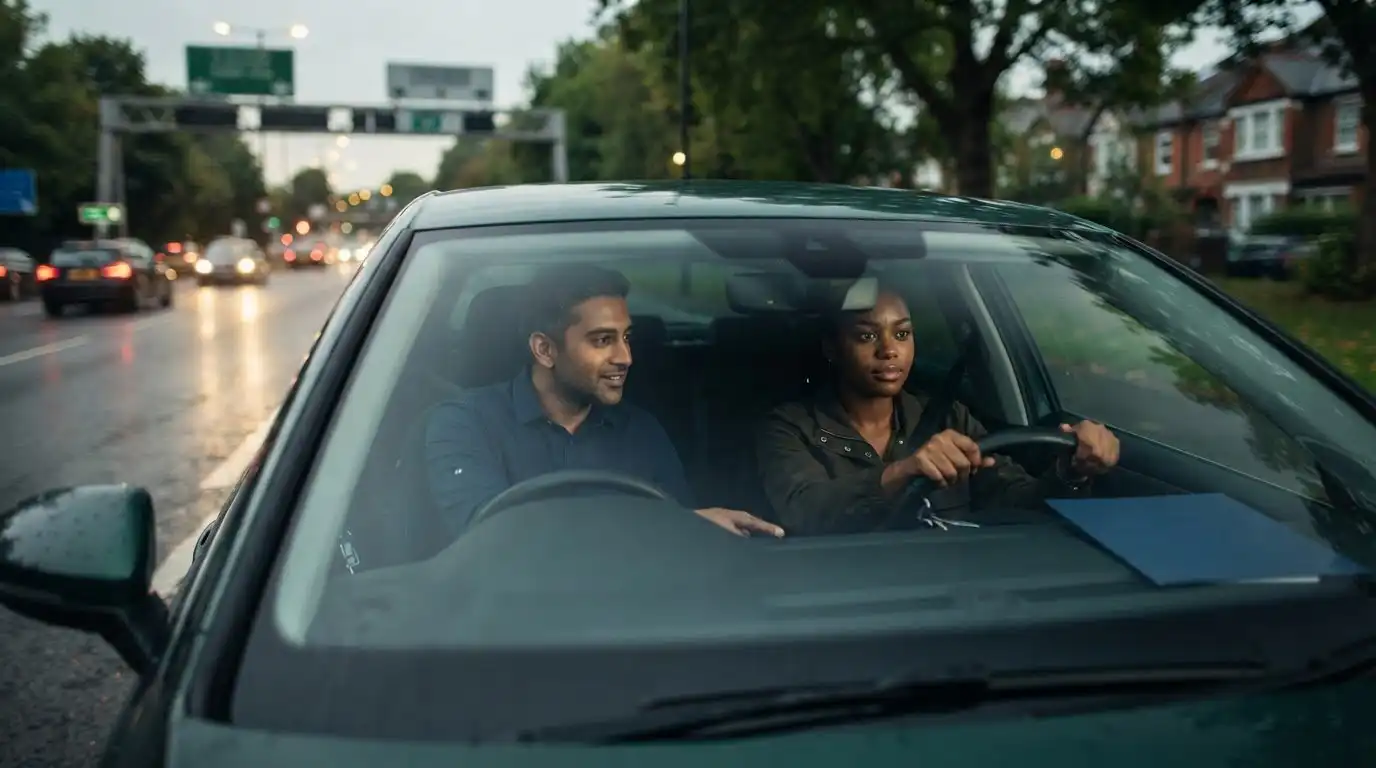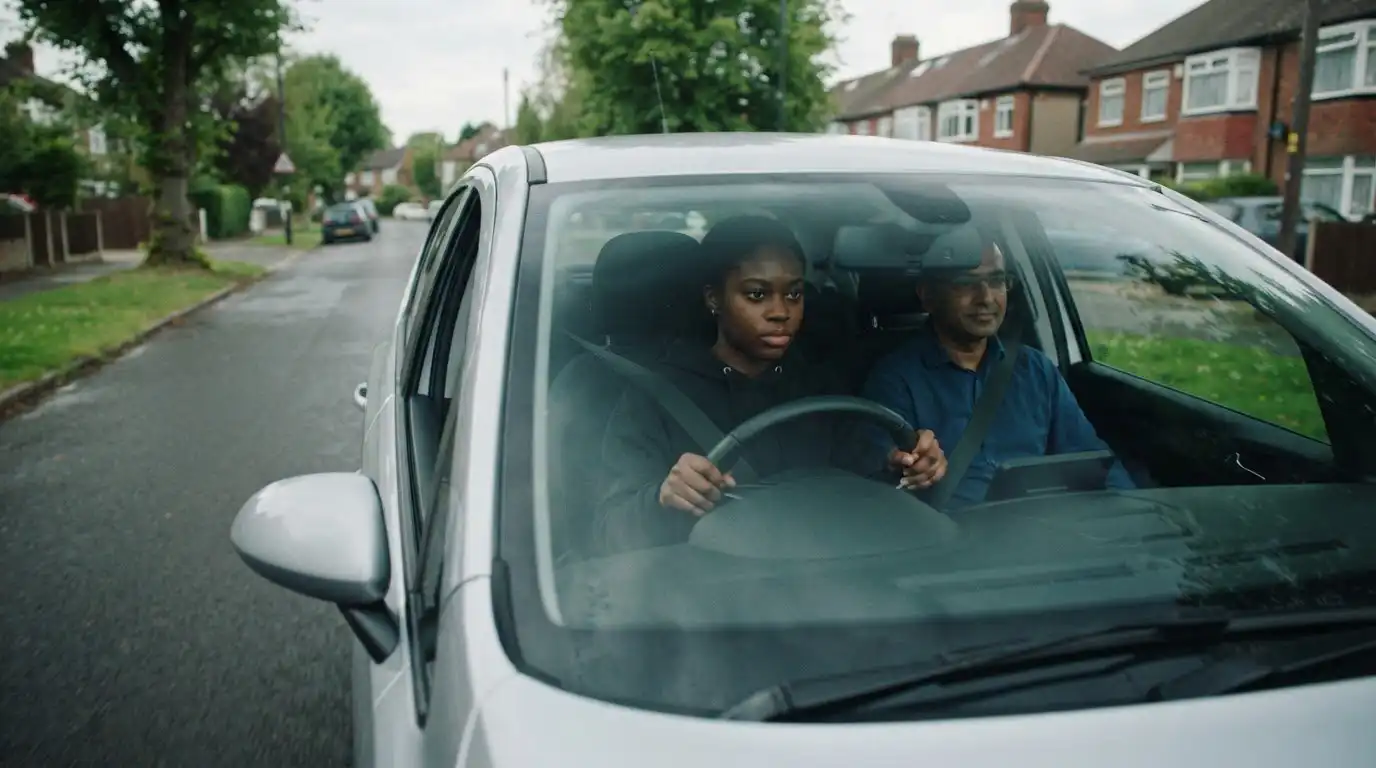
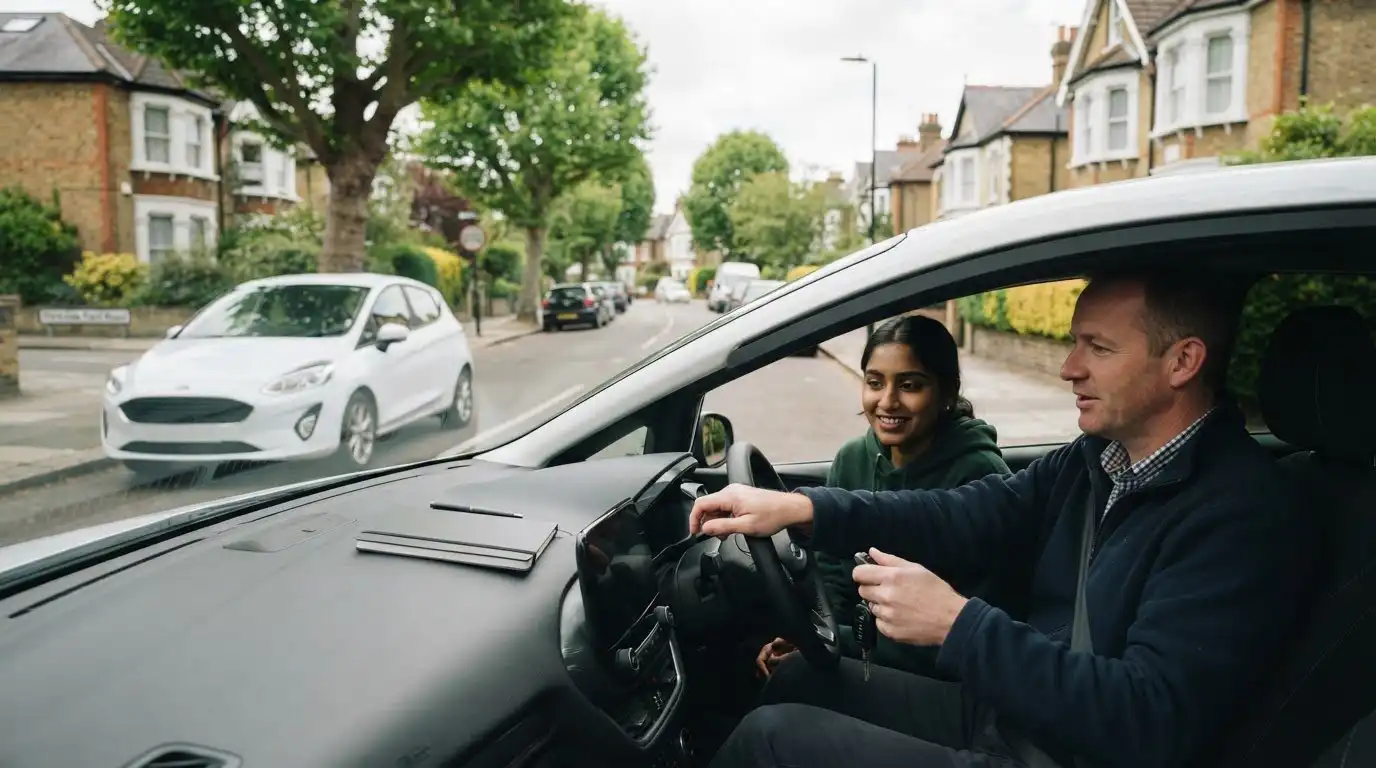
What if busy Wimbledon roads could become a place to build confidence, one manageable step at a time? If you’re weighing up driving lessons wimbledon has to offer, it’s natural to wonder what happens in your first lesson and how you’ll know you’re making progress.
Your lessons should suit your experience, confidence and goals. A supportive instructor can introduce the car and basic controls before helping you develop skills at a pace that feels manageable. As you gain confidence, tuition can build towards handling a wider range of local road conditions, without expecting you to master everything at once.
This guide explains what to expect from your first lesson, how progress can take shape and what to consider when choosing manual, automatic, intensive or refresher tuition. You’ll find practical guidance to help you choose an approach that fits your needs and take your next step with confidence.
Key Takeaways
- Your first lesson can start from your experience, goals and confidence, with a clear focus for each session.
- Choose between manual and automatic tuition based on how you prefer to learn, then consider other lesson formats as your needs change.
- With driving lessons wimbledon, you can build confidence on local roads progressively while developing observation, positioning and junction awareness.
- A simple cycle of setting a goal, practising, reviewing feedback and agreeing a next step can help you track your progress.
- Some Wimbledon Driving School instructors hold RoSPA Gold and IAM qualifications, supporting structured tuition tailored to your learning journey.
Driving lessons in Wimbledon: what should you expect?
Driving lessons begin with your current experience, goals and confidence, not a one-size-fits-all plan. Your instructor can use that first conversation to understand what you’re comfortable with and what you’d like to work towards, then shape each session around a clear, manageable focus.
Wimbledon Driving School is based at The Long Lodge, 265-269 Kingston Road, Wimbledon, SW19 3NW. That local base gives your tuition a clear connection to the area, but it doesn’t mean lessons follow a fixed route. Your instructor can choose suitable tasks and road situations as your skills develop, prioritising safe, focused practice over rushing to cover ground.
What happens in an initial driving lesson?
Your first lesson is a chance to talk openly about any experience you have, what feels daunting and what you hope to learn. If you’re a complete beginner, say so. If you’ve practised before or feel uneasy about a particular aspect of driving, that’s useful context too.
Your instructor can then introduce appropriate tasks at a pace that suits you, explaining what to focus on and giving you time to take it in. Lessons combine practical instruction with observation, feedback and reflection. For a broader overview of the purpose and approaches involved, see Driver’s education; the guide to what new drivers learn in their first few lessons offers examples of the foundations beginners can expect to develop.
Who can benefit from local driving tuition?
Local tuition can support you whether you’re starting from scratch, feeling nervous behind the wheel or returning to driving after a break. Parents can help by encouraging a learner to share their concerns and recognise progress, while leaving practical instruction and feedback to the lesson.
With driving lessons wimbledon learners can build familiarity with local driving conditions as their confidence grows. Your instructor can adapt the focus over time: an early session may centre on getting comfortable with the car, while later practice can develop your ability to manage more complex situations. The sequence should reflect your needs, not a timetable imposed on every learner.
Progress varies. Some skills feel natural quickly; others need more practice, and that’s a normal part of learning. Your instructor can help you identify what’s improving and what needs attention, but no instructor can guarantee a test result. A clear, supportive structure gives you a sound starting point while leaving room for your individual learning journey.
Choose Wimbledon driving lessons around your experience and goals
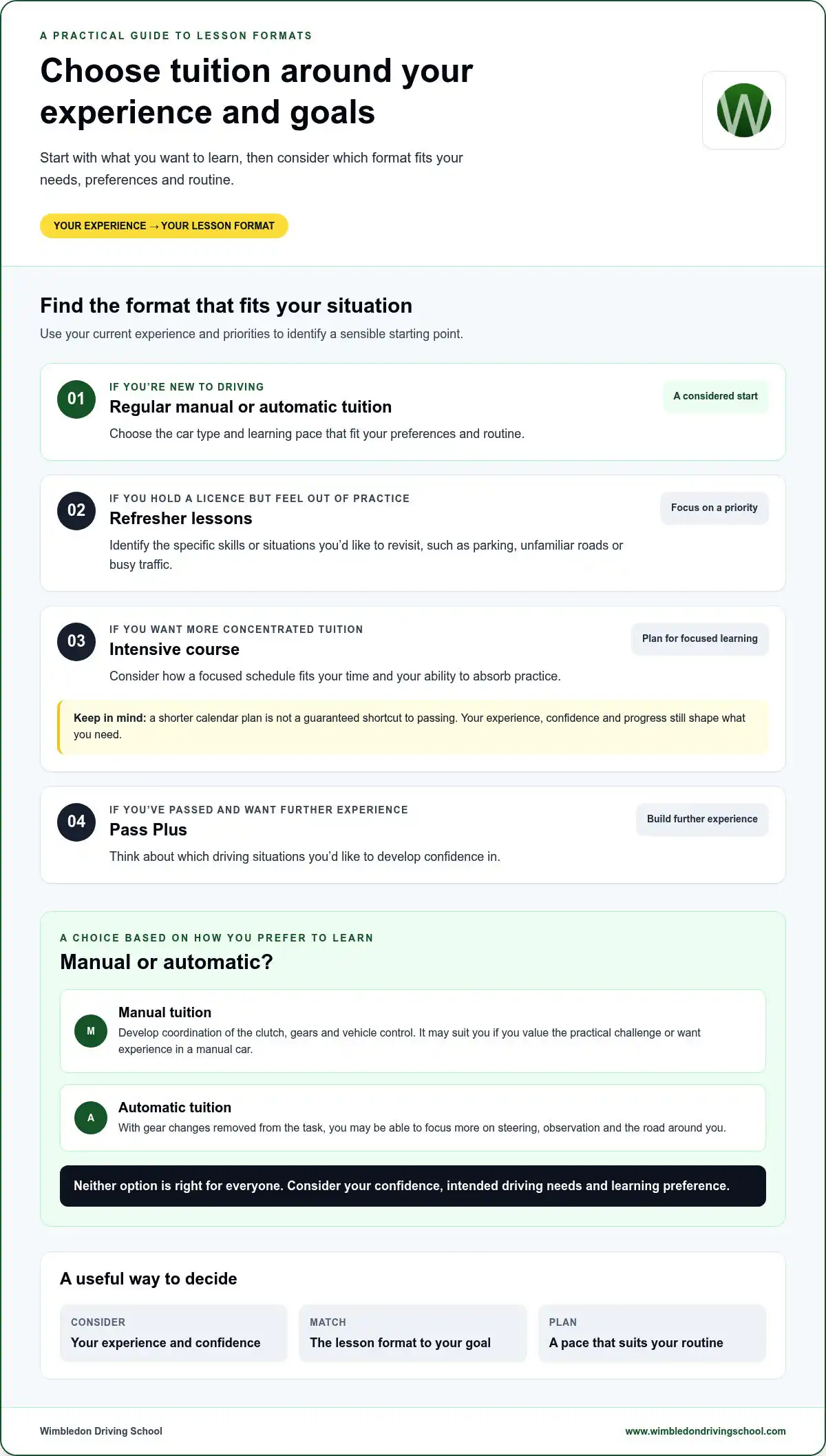
The right format depends on what you want from tuition and how you prefer to learn. Compare manual and automatic driving lessons by considering the experience behind the wheel, the type of car you hope to drive and what helps you stay focused. Neither option is right for everyone. Our guide to manual and automatic driving lessons can help you weigh up the differences.
Manual or automatic lessons: which might suit you?
Manual tuition teaches you to coordinate the clutch, gears and vehicle control. You may value that practical challenge, or want experience in a manual car. Automatic tuition removes gear changes from the task, which may let you concentrate more on steering, observation and the road around you. If that sounds closer to your learning preference, automatic lessons offer a way to focus on those aspects of driving. Think about your confidence and intended driving needs rather than assuming one choice is automatically easier or better.
Other formats address different stages and goals. Use this guide to compare the main considerations:
| Learner situation | Possible lesson format | Planning consideration |
|---|---|---|
| You’re new to driving | Regular manual or automatic tuition | Choose the car type and pace that fit your preferences and routine. |
| You hold a licence but feel out of practice | Refresher lessons | Identify specific skills or situations you want to revisit. |
| You want more concentrated tuition | Intensive course | Consider how a focused schedule fits your time and ability to absorb practice. |
| You’ve passed and want further experience | Pass Plus | Think about which driving situations you’d like to develop confidence in. |
When might refresher or intensive tuition make sense?
Refresher lessons can help if you’re a licensed driver returning after a break, or if a particular skill no longer feels comfortable. You might want to practise parking, build confidence on unfamiliar roads or feel more settled in busy traffic. A clear priority helps your instructor focus the session on what matters to you.
An intensive course brings tuition together in a concentrated format. It may suit you if you can commit to focused learning, but a shorter calendar plan isn’t a guaranteed shortcut to passing. Your experience, confidence and progress still shape what you need. Pass Plus is a post-test option for developing further experience; GOV.UK guidance on learning to drive is a useful source for official information about the wider learning and testing process.
As you consider driving lessons wimbledon, match the format to your current circumstances, not someone else’s timetable. Your priorities and learning preferences can help you decide which approach is a sensible starting point.
Build confidence on Wimbledon roads without rushing your progress
Confidence grows through practice that matches your current ability. Your instructor can introduce different driving situations in manageable steps, then adjust the challenge as your control and judgement develop. That might mean first concentrating on vehicle handling and observation, before practising more complex traffic conditions when you’re ready.
Wimbledon offers a varied local setting for learning, but no lesson needs to follow a fixed route. Your instructor can select appropriate roads and tasks based on your progress and the conditions on the day. This is about building skills you can use in unfamiliar places too, not memorising a particular journey or assuming you’ll practise on a test route.
How local practice can develop everyday driving skills
Each road environment gives you a chance to practise noticing what’s ahead and responding calmly. Your instructor can help you build observation, positioning, junction awareness and forward planning as connected habits, rather than isolated tasks. These skills transfer to new routes because they help you assess what’s happening around you and make considered decisions.
For broader context on the demands of city driving, Wimbledon learners can explore the school’s guide to driving lessons in London. Your own practice should still reflect your ability: a task that feels manageable one day may need more guidance in heavier traffic or less familiar surroundings.
What if busy roads make you nervous?
Feeling nervous doesn’t mean you can’t learn. Tell your instructor which situations feel stressful, whether that’s approaching a busy junction, sharing the road with cyclists or managing several things at once. Clear communication helps your instructor choose a suitable next step and explain what to focus on, rather than pushing you into a situation before you feel prepared.
You might build towards more demanding conditions by practising the component skills first. For example, work on scanning for hazards and choosing a safe road position before combining those skills in a busier setting. Your instructor can offer prompts, feedback and time to reflect between attempts. Advice from RoSPA on road safety can also reinforce the value of anticipation and considerate driving.
If your nerves rise during a lesson, say so. A short pause to discuss what you noticed and what comes next can help you refocus. You can also ask to revisit a skill before moving on. Progress isn’t measured by how quickly you tackle the busiest roads; it’s built through sound decisions repeated across appropriate situations.
With driving lessons in Wimbledon, aim to become capable in changing conditions, not simply familiar with one route. A steady, guided approach helps you carry observation, planning and sound judgement beyond your lessons and into everyday driving.
Make steady progress with a lesson plan that fits your life
A useful lesson plan gives you a clear focus without turning learning into a race. Agree a goal with your instructor, practise it, discuss what went well and what needs more work, then choose a sensible next step. This simple review cycle makes progress easier to understand and helps you see how one session connects to the next.
How to get more from each driving lesson
Before you start, think about what you’d like to practise and any questions left from your previous lesson. Your instructor can help set a specific aim, such as making observations earlier or approaching a junction with a clearer plan. You don’t need to perform perfectly first time; useful feedback gives you something practical to work on.
At the end, take a moment to discuss what felt more comfortable and what still needs attention. Agreeing a next step keeps the plan grounded in your experience. These tips for setting achievable driving lesson goals can help you make each aim clear and manageable.
Try this quick review after each session:
- Set a goal: Choose one skill or situation to focus on.
- Practise: Give yourself time to try it with your instructor’s guidance.
- Discuss feedback: Identify what worked and what you’d approach differently.
- Agree a next step: Decide whether to revisit the skill or build on it.
How to fit lessons around your schedule
Lesson frequency should work with your routine, concentration and budget. Wimbledon Driving School operates seven days a week, giving you options to plan tuition around other commitments. Regular practice may help you retain what you’ve learnt, but the right rhythm depends on your circumstances and doesn’t guarantee faster progress.
Think beyond the next booking. Consider how lessons fit alongside work, study, caring responsibilities and time to reflect between sessions. If budgeting matters, plan what you can comfortably set aside and avoid assuming you’ll need a particular number of lessons. Your progress and the skills you want to develop will shape the learning journey.
With driving lessons wimbledon, a realistic plan is one you can sustain and review. If your circumstances change, raise it with your instructor and adjust the focus or frequency together. A clear conversation can keep your learning structured without adding pressure to meet an arbitrary deadline.
Start driving lessons in Wimbledon with supportive, qualified instruction
Choosing an instructor is about more than finding a convenient lesson. You need tuition that takes your goals seriously, explains what you’re practising and gives you room to build confidence at a sensible pace. Wimbledon Driving School’s base is The Long Lodge in Wimbledon, serving learners across the local area and beyond.
Some instructors hold RoSPA Gold and IAM (Institute of Advanced Motorists) qualifications. The school has also received multi-year ThreeBestRated recognition under its “Best Driving School in London” award. These credentials offer useful context, but your lessons should still be centred on your experience, the skills you want to develop and clear feedback after practice.
What Wimbledon Driving School offers local learners
Your learning route can take different forms. Manual or automatic lessons give you a choice of car and learning experience, whilst an intensive course provides more concentrated tuition. If you already hold a licence but want to rebuild confidence, refresher lessons can focus on the situations you find challenging.
Other options can support different stages. Pass Plus and motorway lessons help you develop experience beyond everyday learner practice, while a mock driving test can help you understand which areas need more attention. Your instructor can help keep the focus practical and supportive, without promising a particular test result or timeframe.
How to take your next step
Before booking, think about what you want to achieve and what currently feels uncertain. You might be starting from the beginning, returning to driving after a break or deciding between manual and automatic tuition. Sharing this context helps set a useful starting point for your lessons.
It can also help to consider what you want from your first session: perhaps an introduction to the car, a calm assessment of your current skills or a chance to talk through nerves. You don’t need to have every detail of your learning plan worked out in advance. Start with your priorities, then use your instructor’s feedback to shape the next steps as you progress.
Good tuition is structured, attentive and responsive. Your instructor should explain the purpose of a task, help you practise it safely and discuss what to work on next. That steady process can make local driving lessons feel more manageable, whether your goal is to gain independence, regain confidence or prepare for a test. Progress varies from learner to learner, so focus on developing sound skills rather than chasing a guaranteed outcome.
If you’re ready to begin driving lessons in Wimbledon, call 020 3524 7968 to arrange a lesson and share what you’d like to work towards.
Take your first step towards confident driving
You don’t need to have your whole learning journey mapped out before you begin. Start with one practical aim, such as feeling more at ease behind the wheel or understanding what you’d like to practise first. A thoughtful conversation with your instructor can turn that aim into a manageable starting point.
Choosing driving lessons wimbledon is a chance to build skills that serve you well beyond a test. Stay curious, speak up when something feels uncertain and give yourself room to learn. Progress comes from practice and reflection, not from expecting every drive to be perfect.
Take the next step and book a lesson that fits your goals.
Every confident driver starts somewhere. Make this your starting point.
Frequently Asked Questions
Can I start driving lessons in Wimbledon before passing my theory test?
Yes. Once you have a provisional driving licence, you can start lessons before passing your theory test. Studying theory alongside practical tuition can help you connect road signs and hazard awareness with what you see from the car. If you’re unsure about eligibility or licence requirements, check the latest guidance on GOV.UK before arranging your first drive.
How often should I take driving lessons in Wimbledon?
Choose a rhythm you can maintain alongside work, study or family commitments. Some learners prefer a regular slot, while others need lessons to fit around changing schedules. After a gap, you might spend a few minutes revisiting a familiar skill before moving on. Discuss what works for you with your instructor, then adjust the spacing if you’re finding it hard to retain or build on practice.
Are driving lessons suitable if I feel nervous about busy roads?
Yes. Tell your instructor what makes you anxious, such as meeting traffic at a junction or sharing space with cyclists. You can discuss what would help you feel prepared before attempting a challenging situation. If you feel overwhelmed during practice, say so; your instructor can help you refocus and consider a manageable next step. Nervousness doesn’t mean you’re unable to learn.
Can I switch from manual to automatic driving lessons?
Yes, you can move to automatic tuition if you decide that suits your learning preferences better. Tell your instructor what you’ve already practised and which parts feel comfortable or difficult. Familiar road awareness can still support your learning, while the car’s controls and lesson focus will differ. Wimbledon Driving School provides both manual and automatic tuition, so your next steps can reflect your preferred transmission.
What should I expect during my first driving lesson?
Expect your instructor to find out what you already know and what you’d like help with, then shape the session accordingly. Depending on your experience, you may start by getting familiar with the car’s seating position, mirrors and controls before trying a simple task. You don’t need to arrive knowing how to drive. Wear comfortable footwear and mention any questions or worries at the start.
Do driving lessons in Wimbledon include practice on local roads?
Yes. Lessons can include practice on suitable roads in and around Wimbledon, with the choice guided by your current ability and the learning focus. You might develop a skill on a quieter stretch before applying it in more complex traffic. Routes aren’t a promise of access to specific test roads, and learning to respond to changing conditions is more useful than memorising a journey.
Can overseas drivers take driving lessons to adapt to UK roads?
Yes. Tuition can help you get used to UK road conditions and develop confidence with situations that may feel unfamiliar, such as driving on the left or reading local signs. You can explain your previous driving experience and identify what you want to practise. Wimbledon Driving School teaches across South West London, South East London, Surrey and Middlesex, supporting learners adapting to local driving.
Disclaimer
This article is provided for general informational purposes only and does not constitute professional driving, legal, or safety advice. While we aim to keep our content accurate and up to date, rules, prices, and DVSA test requirements can change — always check gov.uk or contact us directly at 020 3524 7968 for the latest guidance before making any decisions. Nothing in this article guarantees a specific outcome, including passing your driving test within any stated timeframe. For current pricing, course availability, and instructor details, please visit our Prices page or get in touch.