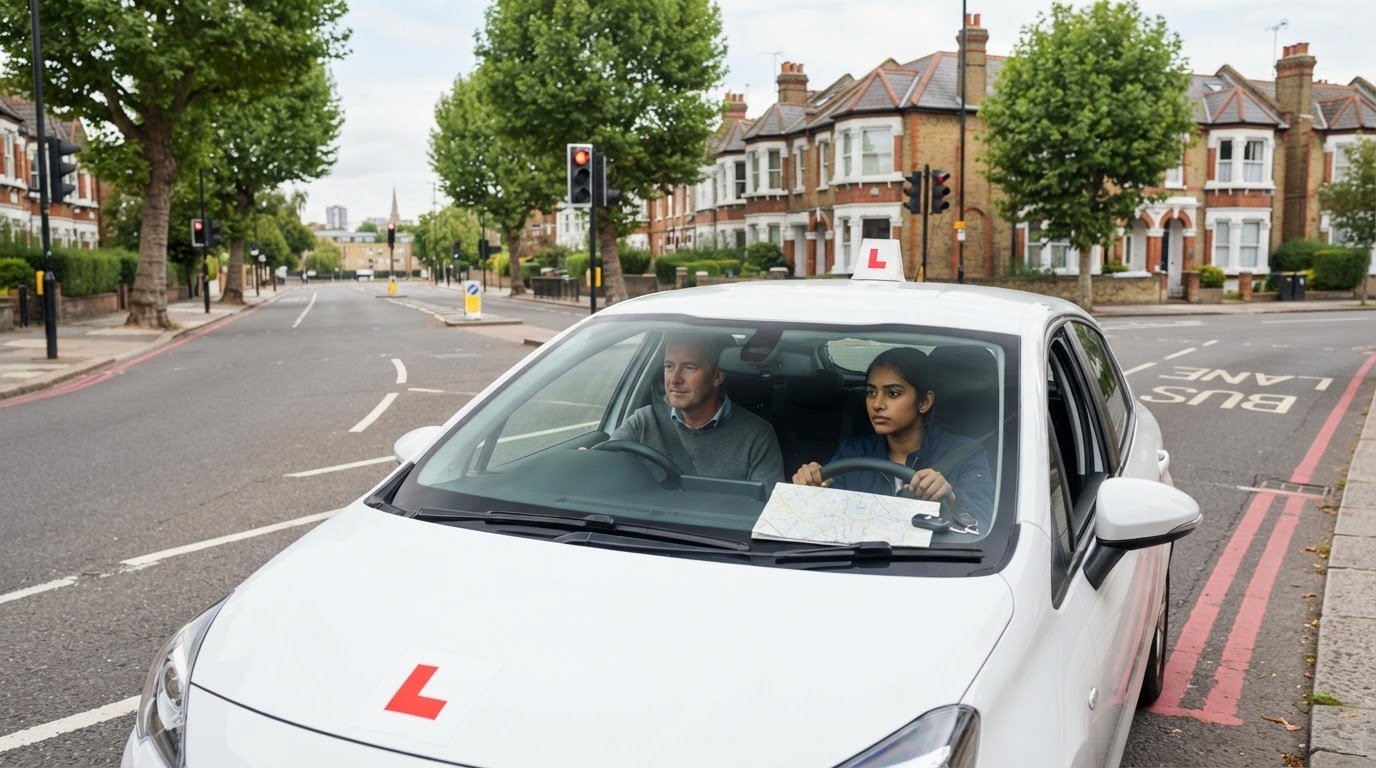
Your first drive in London doesn’t have to mean making every decision at the last moment. The most useful driving in London for the first time tips start with a simple idea: plan your route and key decisions before you set off, rather than trying to master every road at once.
It’s understandable to feel uneasy about busy traffic, unfamiliar junctions and signs that can be easy to miss. A little preparation can help you stay focused, leave room to respond and keep calm if your route changes.
This guide covers how to plan a straightforward journey, what to look for around bus lanes, red routes and busy junctions, and where to check current restrictions and charges. Take the journey one step at a time, and London’s roads can start to feel more manageable.
Key Takeaways
- Separate learning to drive from adapting to a new city, then prepare for the experience you’re facing.
- Use a steady observation routine to notice developing hazards and changes in visibility.
- Good driving in London for the first time tips focus on safe, timely decisions, not instant perfection or memorising every junction.
- Use a simple prepare, set off, observe, respond and review sequence to make each trip more manageable.
- Build familiarity progressively with structured local practice focused on awareness and decision-making.
Before your first London drive: prepare for the journey, not the pressure
Feeling nervous is understandable. An unfamiliar city can add new decisions to a drive you already know how to manage, from lane choices to changing traffic. You don’t need to memorise every street before setting off. Focus on the essentials, then leave yourself time and space to respond safely.
There’s a difference between your first-ever drive and your first drive in London. If you’re a new driver, choose a journey that suits your current experience and make sure your arrangements meet the requirements for driving on public roads. If you’re experienced but new to London, focus on local road features and restrictions rather than revising basic controls.
Route preparation reduces avoidable decisions on the road, but it can’t remove every surprise.
Plan a route that leaves room to think
Choose a straightforward route, even if it isn’t the shortest. Review the main turns before departure and allow extra time for traffic, unfamiliar junctions and a safe place to stop if you need to regroup. Set your navigation before moving. If you miss a turn, don’t make a sudden manoeuvre to get back on track. Continue safely and let the route recalculate.
If you can, begin on roads that feel familiar or are less demanding, then build towards busier areas as your confidence grows. A quieter start gives you time to settle into the journey before dealing with denser traffic. For more on the specific challenges of the city centre, explore these essential tips for learning to drive in Central London.
Check signs, restrictions and journey details
Before leaving, check Transport for London (TfL) guidance for current ULEZ and Congestion Charge information, as well as restrictions that could affect your route. Requirements can depend on where you travel, your vehicle and the time of your journey, so check the details for your specific trip rather than relying on memory. For a broad introduction to UK driving laws and regulations, use Wikipedia as background and verify current rules with official sources.
Keep your checks practical. Confirm your destination and route, consider expected conditions, and identify a suitable place to stop. Make sure the vehicle is ready to use, including checking that you have enough fuel or charge for the journey. If you’re driving from Surrey towards London, the Cobham and Surrey driving guide offers relevant local context.
- Vehicle: Check it’s ready for the trip before setting off.
- Destination and route: Review the journey and key turns in advance.
- Conditions: Consider traffic and anything that could affect your drive.
- Restrictions: Check current TfL guidance for your route and vehicle.
- Stopping point: Identify somewhere suitable to pause if needed.
These driving in London for the first time tips are about preparation, not predicting every moment. A clear plan gives you a sound starting point, while calm attention on the road helps you adapt when the journey changes.
London traffic and road features: what to notice as you drive
London traffic can change quickly, but you don’t need to watch everything at once. Look well ahead, check your mirrors regularly and respond early to developing hazards. This can help you notice a bus pulling out, a cyclist approaching alongside or a pedestrian near the kerb before you need to act.
Give yourself time to read the road. A bus may block your view of a junction or crossing, while parked vehicles can obscure people near the kerb. Cyclists may be harder to see beside larger vehicles, so check your surroundings before changing position or turning. For more on observation and anticipation, see these driving test observation skills.
Read markings and signs before reaching them
Scan ahead for signs, lane arrows and road markings rather than waiting until you’re beside them. A bus lane sign may show when restrictions apply, while red route markings and signs indicate stopping restrictions. Don’t stop in a live lane to interpret a sign. For current information about London’s charging schemes, consult TfL’s Congestion Charge and ULEZ guidance.
A yellow box junction has a yellow criss-cross pattern. In plain English, don’t enter unless your exit is clear, except when turning right and held up only by oncoming traffic or vehicles waiting to turn right. Check the relevant Highway Code guidance for the full rule.
Stay aware around buses, cyclists and pedestrians
Keep checking your mirrors, especially before changing lanes, turning or moving around a parked vehicle. Check for road users in blind spots, and don’t assume a clear view will stay clear. A bus can conceal a crossing or junction, and a busy kerbside can mean pedestrians come into view late. Leave appropriate space and avoid rushing a decision to keep pace with traffic.
Read the whole scene, not just the vehicle in front. A bus signalling to pull away may affect your progress, while a cyclist near a junction may continue straight as you prepare to turn. Wait until you can see what’s happening and choose a safe response. These driving in London for the first time tips are about noticing early and acting deliberately, not reacting to every movement.
Is London too difficult for a first-time driver? Common worries in perspective
London can feel demanding, but a busy city doesn’t require instant perfection. Your task is to make safe, timely decisions, not to predict every move or keep pace with the most impatient driver. If you need more time to assess a situation, prioritise control and safety over pressure from traffic behind you.
There’s a difference between preparing and trying to plan away every uncertainty. It’s useful to understand your route and the kinds of roads you’ll encounter. Trying to memorise every junction, lane change and possible diversion can overload you before the journey even begins. Traffic conditions vary, so no particular time or route is guaranteed to feel quiet.
If you’re new to driving altogether, a familiar, simpler route can give you a more manageable place to build experience. If you already drive confidently elsewhere, you may prefer to approach a more complex area gradually rather than making a busy central route your first London journey. Choose a challenge that fits your experience, and adjust your plan if conditions feel different from what you expected.
What feels challenging, and what you can control
Traffic density, unfamiliar signs, navigation and sharing road space can all compete for your attention. You can’t control how busy the road is, but you can reduce pressure by reviewing the main decisions in advance, allowing flexibility and responding to what’s in front of you. If you miss a turn, don’t make a rushed manoeuvre to recover it. Continue safely and reassess when you can.
Other drivers may seem impatient. Don’t let that set your speed or make you take a gap you’re unsure about. Keep your attention on the road, follow signs and make decisions when you have enough information. A missed turn or a slower moment is manageable; an unsafe decision made under pressure can create a bigger problem.
When nerves affect concentration
Nerves can make familiar tasks feel harder, especially if you’re trying to follow navigation while processing traffic and signs. Keep your focus on driving, and leave route changes until you can deal with them safely. If you feel overwhelmed, plan to pause at a suitable place away from moving traffic. Don’t stop in a live lane or somewhere that obstructs others.
Confidence can grow through gradual practice. A learner can work with a qualified driving instructor on familiar roads first, then build towards more complex conditions as their skills develop. Wimbledon Driving School’s tips for overcoming driving anxiety offer further ideas for managing nerves. The aim isn’t to feel perfectly calm at every moment; it’s to recognise when you need time and make a safe choice.
Keep these driving in London for the first time tips in perspective: you don’t have to master the whole city in one trip. Start at a level that suits you, learn from each journey and build familiarity one experience at a time.
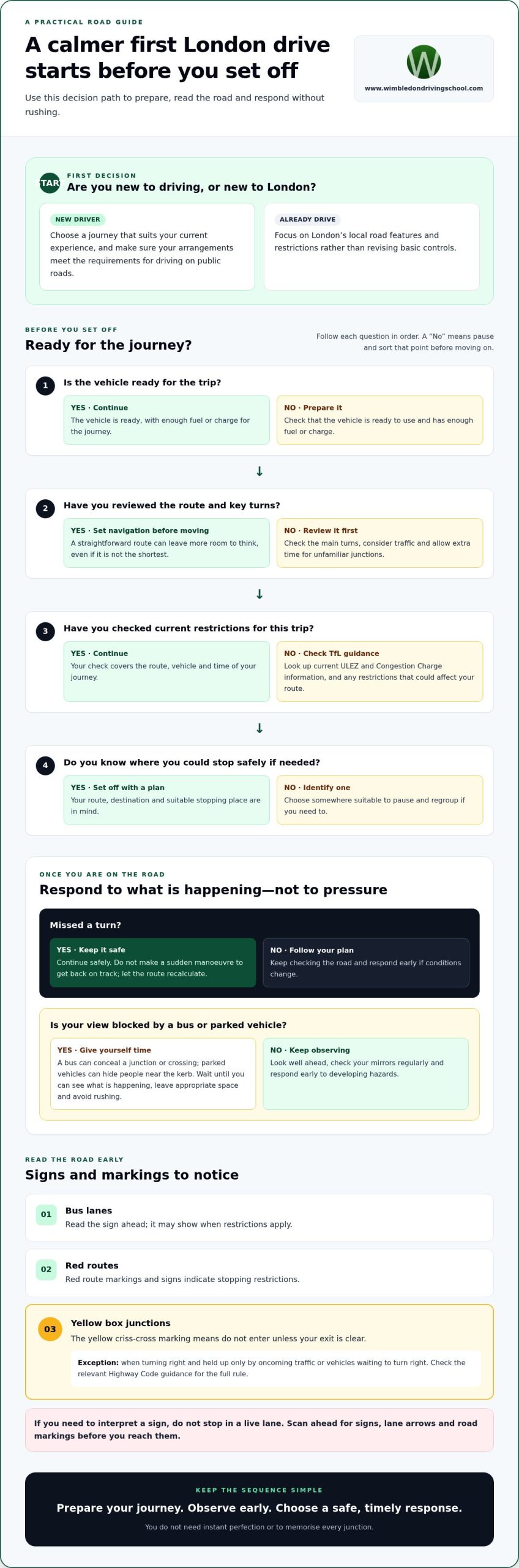
A first-time London driving checklist for before, during and after your trip
A short routine can turn preparation into practical decisions without trying to script every moment. Work through the stages in order, then adapt to the road in front of you. The aim is to start ready, stay observant and learn something useful from the journey.
Before setting off
Check your destination, route and any current restrictions that apply to your journey. TfL’s Congestion Charge and ULEZ guidance provides current information about these schemes. Make sure your vehicle is ready to use, set your navigation before moving and identify a suitable place to pause if you need a break.
- Prepare: Confirm your destination and review the route, including key turns and a suitable stopping option. Check your vehicle and use official sources for current restrictions.
- Set off: Begin when you’re ready to concentrate. Keep navigation instructions easy to follow, and don’t adjust the route whilst driving.
- Observe: Scan ahead, check your mirrors and notice how other road users and conditions are affecting the space around you.
- Respond: Base each decision on what you can see. If you miss a turn, continue safely and let navigation recalculate rather than making a sudden manoeuvre.
- Review: Once parked safely, identify one thing that went well and one road feature or skill to focus on next time.
While driving and once you arrive
Use the sequence as a prompt, not a rigid script. A junction may be busier than expected, or your route may need to change. Keep your attention on driving and respond to the conditions around you rather than focusing only on the next navigation instruction.
If you’re unsure about a road rule or marking, don’t rely on memory alone. Check the current Highway Code on GOV.UK after you’ve parked. Reviewing an unfamiliar sign or junction afterwards can turn a confusing moment into a useful point to learn, without dividing your attention during the drive.
Keep the routine simple: prepare, set off, observe, respond and review. You don’t need to judge the whole trip as a success or failure. Recognising one thing you handled well and choosing one thing to practise gives your next journey a clear focus. These driving in London for the first time tips are a practical way to build experience from one trip to the next.
Build London driving confidence with calm, structured practice
You don’t have to learn every London road in one go. Confidence grows as you practise different situations, notice how they develop and make decisions with time to act. Focus on building useful habits rather than trying to follow a perfect script.
Local lessons give you the opportunity to work on observation, anticipation and road positioning with an instructor. You can concentrate on one challenge at a time, such as preparing for a junction or choosing a safe position. Practice can build familiarity, but no lesson can guarantee a test result.
Practise the skills that make city driving manageable
Look ahead, check your mirrors before changing position and make decisions in good time. An instructor can adapt practice to your confidence and experience, helping you develop these skills progressively. Wimbledon Driving School provides manual and automatic driving lessons across South West London, South East London, Surrey and Middlesex. Its instructors hold RoSPA Gold and IAM qualifications.
Take your next step at your own pace
Progress might mean feeling more prepared at a junction, recognising a developing situation earlier or making a considered choice when plans change. Notice those steps and use them to choose what to practise next. You don’t need to master every London road at once.
If you’re learning, work with your instructor on the situations you’d like to practise. A clear, manageable focus can help you make steady progress and build confidence through experience.
Make your next drive a confident step forward
Your first London journey doesn’t need to define every drive that follows. Treat it as a starting point: choose one skill to build, practise it deliberately and let familiarity grow with each experience. The most useful driving in London for the first time tips are the ones that help you make thoughtful choices when the road feels unfamiliar.
Structured support can give you the chance to practise at a pace that suits your experience and work towards greater confidence behind the wheel.
Take the journey one step at a time. With practice, London’s roads can become more familiar and manageable.
Frequently Asked Questions
Is driving in London difficult for the first time?
London can feel demanding on a first drive, but it isn’t beyond your ability if you prepare and make safe decisions. Several demands may arrive together, such as a lane choice, a sign and a busy kerbside. These driving in London for the first time tips work best as reminders to prioritise the road over navigation prompts. Judge progress by how you handled situations, not by whether every turn went exactly to plan.
What should I check before driving in London?
Check that your destination and route suit the journey, and that your vehicle is ready to use. TfL provides current information on charges and restrictions, so check the details for the date and areas you’ll travel through. If you’re a learner, make sure your arrangements meet the latest requirements on GOV.UK. Keep route changes for a safe moment, not while handling a demanding stretch of road.
Can I drive in Central London as a learner?
Yes, provided your learning arrangements meet current legal requirements. These cover who may supervise you and what conditions apply to the vehicle and learner. Check the latest GOV.UK learner-driver guidance before driving on public roads, rather than relying on someone else’s experience. If you’re learning with an instructor, they can help you build city-driving experience progressively within the applicable requirements.
Do I need to pay a London driving charge?
It depends on your journey and vehicle, so don’t assume a charge applies or doesn’t. Check TfL’s official guidance for your planned date, location and vehicle details, and review any payment or exemption information that applies. The Congestion Charge and ULEZ are separate schemes, so check each relevant section rather than relying only on a route app or an old journey plan.
What should I do if I miss a turn in London?
If navigation announces a turn too late, follow the road layout rather than crossing lanes abruptly to reach it. If you’ve passed the junction, continue until you can safely follow an alternative route. If your device loses signal or gives confusing instructions, follow the signs and give driving your full attention. Adjust the route only when it’s safe to do so.
Is it better to avoid busy roads on my first London drive?
A familiar start may help, but choose a route based on your experience and the conditions, not on an assumption that it will be quiet. If you already drive elsewhere, try a manageable journey that introduces one new challenge, such as a busier junction, rather than several at once. A learner can build up through lessons, adding more complex situations as familiarity and confidence develop.
Build confidence with local practice in South West London, South East London, Surrey or Middlesex. Book a driving lesson with Wimbledon Driving School.
Disclaimer
This article is provided for general informational purposes only and does not constitute professional driving, legal, or safety advice. While we aim to keep our content accurate and up to date, rules, prices, and DVSA test requirements can change — always check gov.uk or contact us directly at 020 3524 7968 for the latest guidance before making any decisions. Nothing in this article guarantees a specific outcome, including passing your driving test within any stated timeframe. For current pricing, course availability, and instructor details, please visit our Prices page or get in touch.