What if the key to smoother starts isn’t moving your feet faster, but noticing a small change in the car? If it stalls, judders or moves off unevenly, it can be hard to tell whether you’ve found the biting point or how to repeat it. Learning how to practice clutch control is about building that feel gradually, not getting every start perfect straight away.
This guide takes you from recognising the biting point to practising smooth starts and controlled low-speed movement. You’ll learn what to notice as the clutch comes up, how to coordinate it with the accelerator, and how to build towards more demanding situations such as hills, traffic and manoeuvres.
Start with simple, deliberate practice with an instructor, then use each attempt to understand how the car responds. If you’re learning in a manual, calm, specific feedback can help you work through the moments that feel difficult and build confidence as you progress.
Key Takeaways
- Clutch control is about managing how engine power reaches the wheels. Pay attention to how the car responds as you lift the pedal.
- Build familiarity with the pedals in a suitable practice setting before progressing to more demanding situations.
- Use cues such as a change in engine sound or the car beginning to respond to help recognise the biting point. These cues can differ between cars.
- On hills and during manoeuvres, adapt your timing to the situation and follow your instructor’s guidance for the car you’re learning in.
- A stall is useful feedback. Once the car is safe, your instructor can help you identify one adjustment to try next.
What clutch control means and when you use it
To learn how to practise clutch control, work gradually: make one small pedal adjustment, notice how the car responds, then repeat the action with your instructor’s guidance. Clutch control means managing how engine power reaches the wheels through the clutch pedal. It helps you move away smoothly, stop without a jolt and keep the car moving slowly when the situation calls for careful control.
You use clutch control when moving off, stopping, manoeuvring and travelling at low speed. It’s related to changing gear, but the skills are different: selecting a gear chooses a ratio, while clutch control manages the connection between the engine and wheels. Repetition is a normal part of learning, not a sign that you can’t drive a manual car.
Clutch control is especially noticeable when you’re moving slowly or starting from a stop. In each situation, keep your attention on the road and your surroundings as well as the pedals. The aim is to make controlled adjustments without rushing or letting the controls take your attention away from what’s happening around you.
This video shows clutch use in traffic and on a hill:
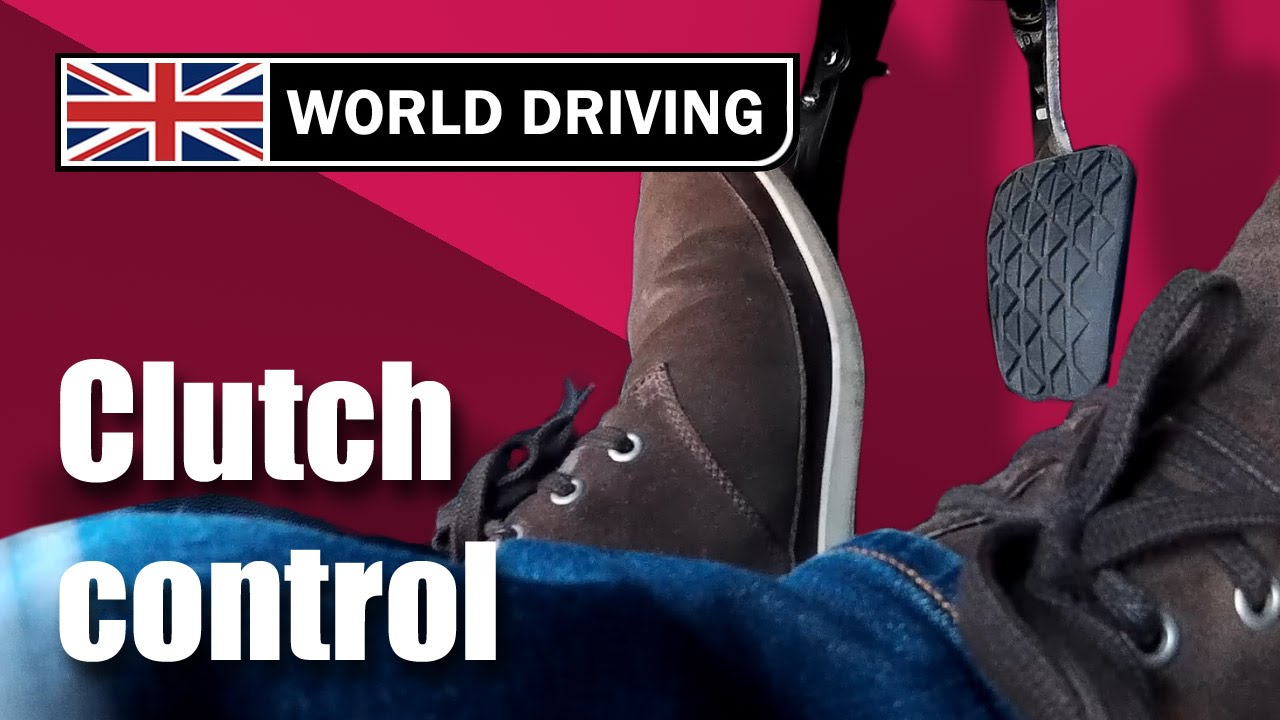
What the clutch pedal does when you move off
Pressing the clutch pedal down separates the engine’s drive from the wheels so you can select a gear or stop without the engine being driven by the wheels. As you release the pedal, the connection returns progressively and the car can begin to move. Releasing too quickly can make the car judder or stall. A gradual release gives you time to notice the car’s response and adjust.
The exact feel can differ between cars. Follow your instructor’s explanation for the vehicle you’re practising in rather than expecting every clutch pedal to respond identically. For a broader overview of understanding clutch control, you can also explore how the skill applies in different driving situations.
Why learners need clutch control at low speeds
At low speed, small pedal movements can make a noticeable difference. Controlled clutch use gives you time to coordinate the pedals instead of rushing them, helping the car move away without a sudden lurch. It also supports a steady stop when you need to slow down or halt.
In a suitable practice setting, you can apply the same basic awareness when creeping forward or carrying out a manoeuvre. Pay attention to the car’s movement and make adjustments calmly, with your instructor guiding you on when to move and when to stop. The aim is to control the car, not to keep it moving at all costs.
Clutch control is one part of manoeuvring well. As you develop the skill, it supports the careful positioning and low-speed movement used in key driving manoeuvres. Practise each action in a suitable setting, and ask your instructor to explain what the car is doing if a start feels uneven. Clear feedback helps you decide what to adjust on your next attempt.
How to find the biting point and coordinate the pedals
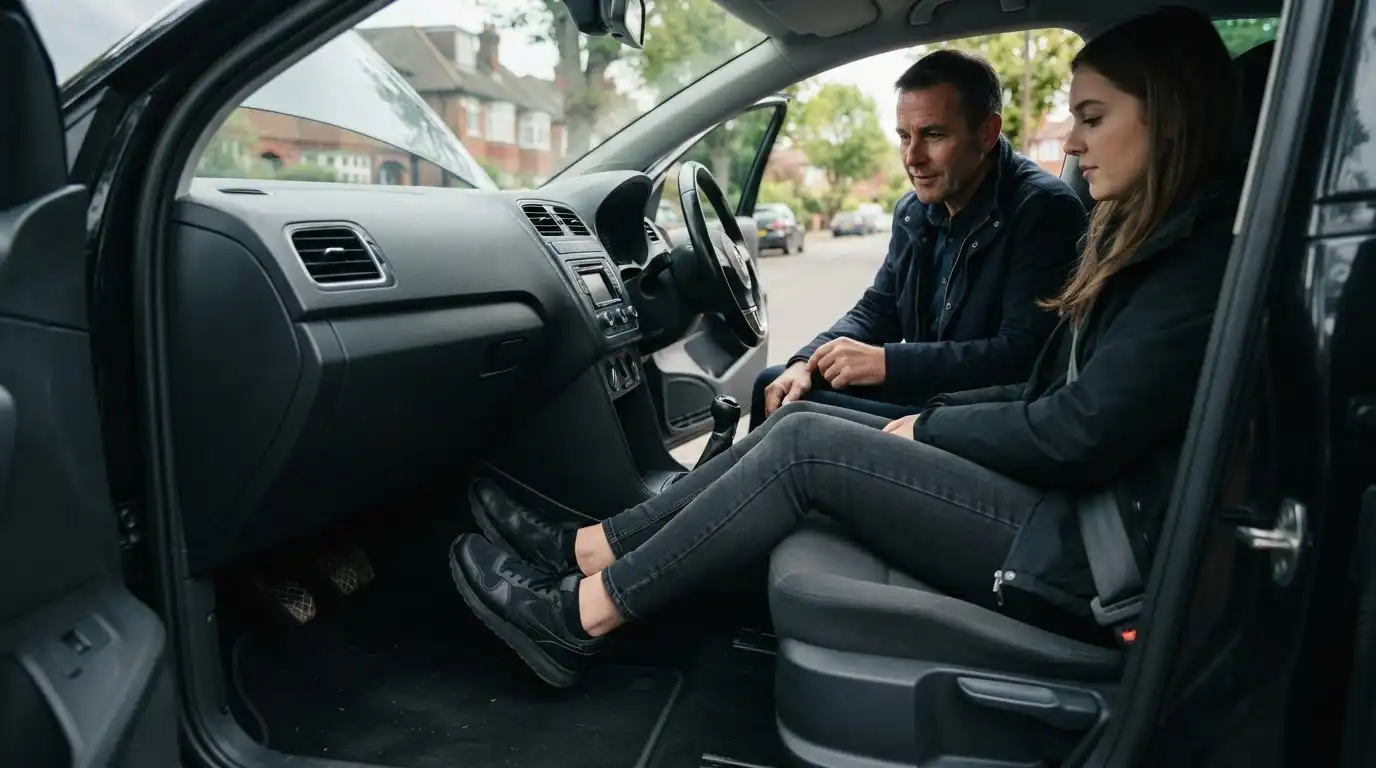
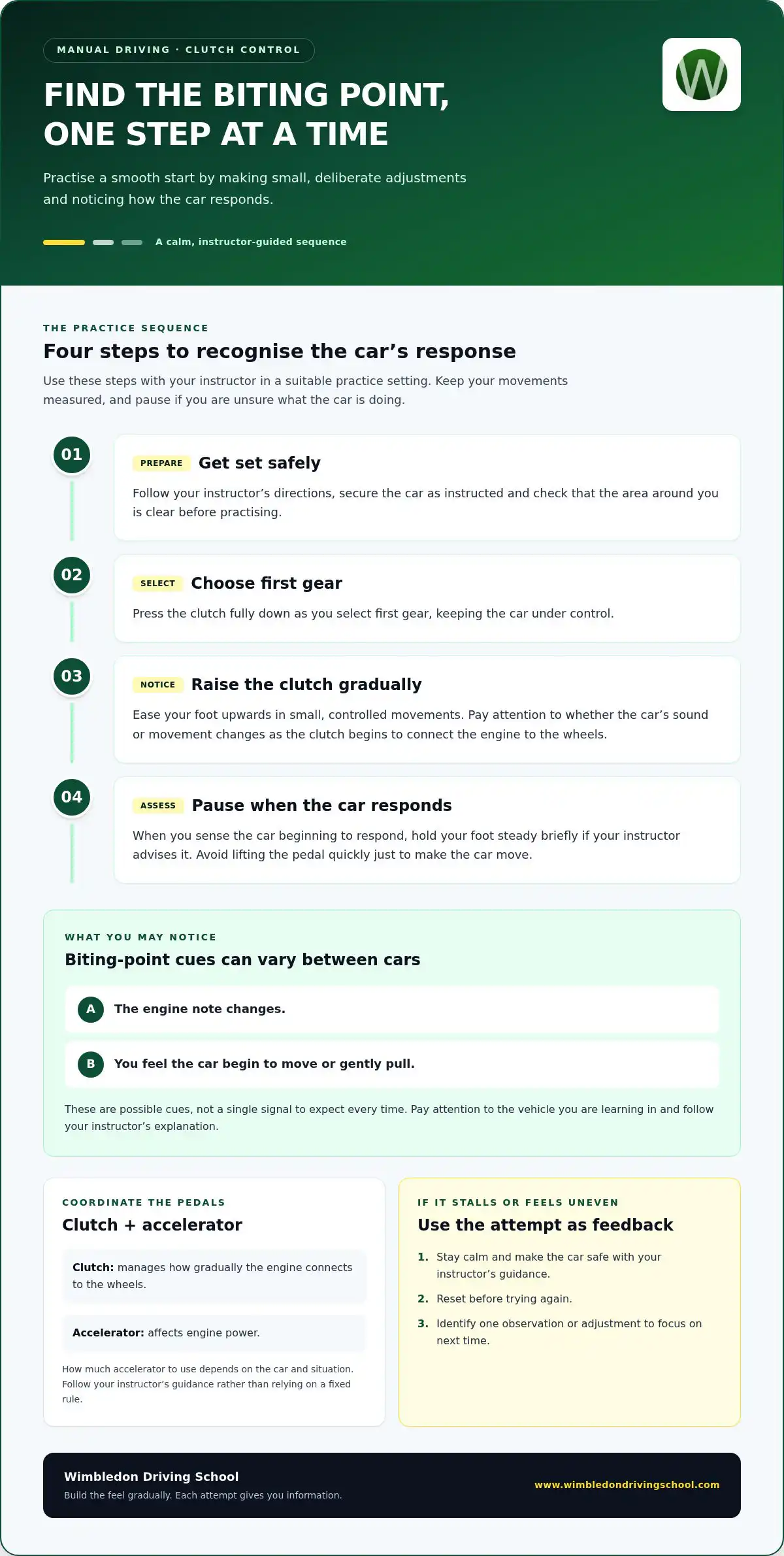
The biting point is where the clutch begins to connect the engine to the wheels and the car starts to respond. With your instructor, get settled safely, select first gear, then raise the clutch slowly enough to notice any changes. You may hear the engine note change or feel the car begin to move. These cues vary, so pay attention to the vehicle you’re learning in rather than expecting one sign every time.
Use this sequence with your instructor in a suitable practice setting. Keep your movements measured, and pause if you’re unsure what the car is doing.
- Prepare safely. Follow your instructor’s directions, secure the car as instructed and check that the area around you is clear before practising.
- Select first gear. Press the clutch fully down as you select the gear, keeping the car under control.
- Raise the clutch gradually. Ease your foot upwards in small, controlled movements. Notice whether the car’s sound or movement changes.
- Pause and assess. When you sense the car beginning to respond, hold your foot steady briefly if your instructor advises it. Avoid lifting the pedal quickly just to make the car move.
Recognising the biting point without rushing
Move the clutch slowly enough to notice what happens through the pedal and observe the car’s response. You might feel a gentle pull or notice a change in engine note, but no single cue is guaranteed in every vehicle. If the engine stops, stay calm, make the car safe with your instructor’s guidance, then reset before trying again.
Each attempt gives you information. Did you release the clutch too quickly? Did you notice the car respond before lifting further? Ask your instructor to help you focus on one observation at a time. This makes your next attempt more purposeful than simply repeating the same movement faster.
Try to describe what you noticed in plain terms, such as “the car started to pull when I lifted the pedal” or “I didn’t notice a change before it stalled”. That gives you and your instructor something specific to work with. Don’t worry if you can’t identify the biting point immediately; it can take repeated practice to recognise the response.
Coordinating clutch release with the accelerator
The clutch controls how gradually the engine connects to the wheels; the accelerator affects engine power. A smooth start comes from coordinating both with care, not stamping on one pedal or rushing the other. How much accelerator to use depends on the car and situation, so follow your instructor’s guidance rather than relying on a fixed rule.
Notice how one pedal movement affects the car before adding more input. If the car feels jerky, pause and review the timing with your instructor. For broader beginner support, the manual driving guide puts clutch use in the context of learning a manual car.
How to practise clutch control step by step
Build the skill in stages, with your instructor guiding practice in an appropriate, safe setting. Start by noticing how the car responds, then repeat simple starts before adding stopping and moving again. Move on when the current action feels controlled, not because you think you should be progressing faster.
Deliberate repetition helps you recognise consistent responses from the car and make each attempt more purposeful. Focus on one adjustment at a time. If a start feels uneven, don’t change your foot position, timing and accelerator use all at once. First describe what happened, then agree with your instructor what to try next.
Begin with a controlled first exercise
Ask your instructor to explain the exercise and identify what to notice, such as a change in sound or the car beginning to respond. Keep the first attempts simple, without adding traffic or hill-start pressure before you’re ready. If the engine stalls, take a calm pause and reset under your instructor’s direction. A stall is information to learn from, not a verdict on your ability.
Before each attempt, listen to the instructions and make sure you understand what you’re practising. If you feel confused, say so before moving off. A short pause to clarify the exercise is more useful than trying to remember several new steps while the car is moving.
Build from individual attempts to repeatable starts
Once you’re comfortable with the basic exercise, practise moving off and stopping repeatedly as your instructor directs. After each attempt, describe what you felt before changing your technique. Was the movement smooth? Did the car respond earlier or later than you expected? This reflection helps you build a clearer sense of what to repeat and what needs a small adjustment.
A useful progression is:
- Familiarise yourself. Settle into the car and follow your instructor’s explanation of the controls and exercise.
- Practise one action. Work on the initial movement without trying to add extra challenges.
- Repeat a start. Move off, then stop when instructed, keeping your attention on the same points each time.
- Link the actions. Once each part feels controlled, practise starting, moving briefly and stopping again.
- Review before progressing. Tell your instructor what you noticed and agree one change, if needed, for the next attempt.
Focused learning habits help beyond clutch work, too. In its guide to crucial driving practices, Wimbledon Driving School explores ways to make learner practice more considered. Keep each clutch exercise manageable, and let your instructor decide when it’s appropriate to build on it.
Using clutch control on hills, in traffic and during manoeuvres
The basic clutch skill stays the same, but the situation changes how you use it. On a hill, you’re managing the car on a slope; in traffic, you’re responding to gaps and changing movement; during a manoeuvre, you need precise low-speed control alongside careful observation. Build on familiar skills with your instructor rather than trying to master every challenge at once.
Adapting clutch control for a hill start
A slope can make moving off feel different from level ground because the car may begin to roll if it isn’t secured. Your instructor will demonstrate the appropriate method for the vehicle, including how to coordinate the clutch with the brake or handbrake. Follow that sequence rather than relying on a universal formula. Start on a manageable slope, then build confidence before practising in more demanding conditions.
Notice what needs attention. If you feel hurried, aren’t sure whether the car is secure or lose track of the pedal movements, pause with your instructor and reset. A controlled practice setting gives you room to understand the technique before adding pressure from traffic or a steeper gradient.
Keeping control in slow traffic
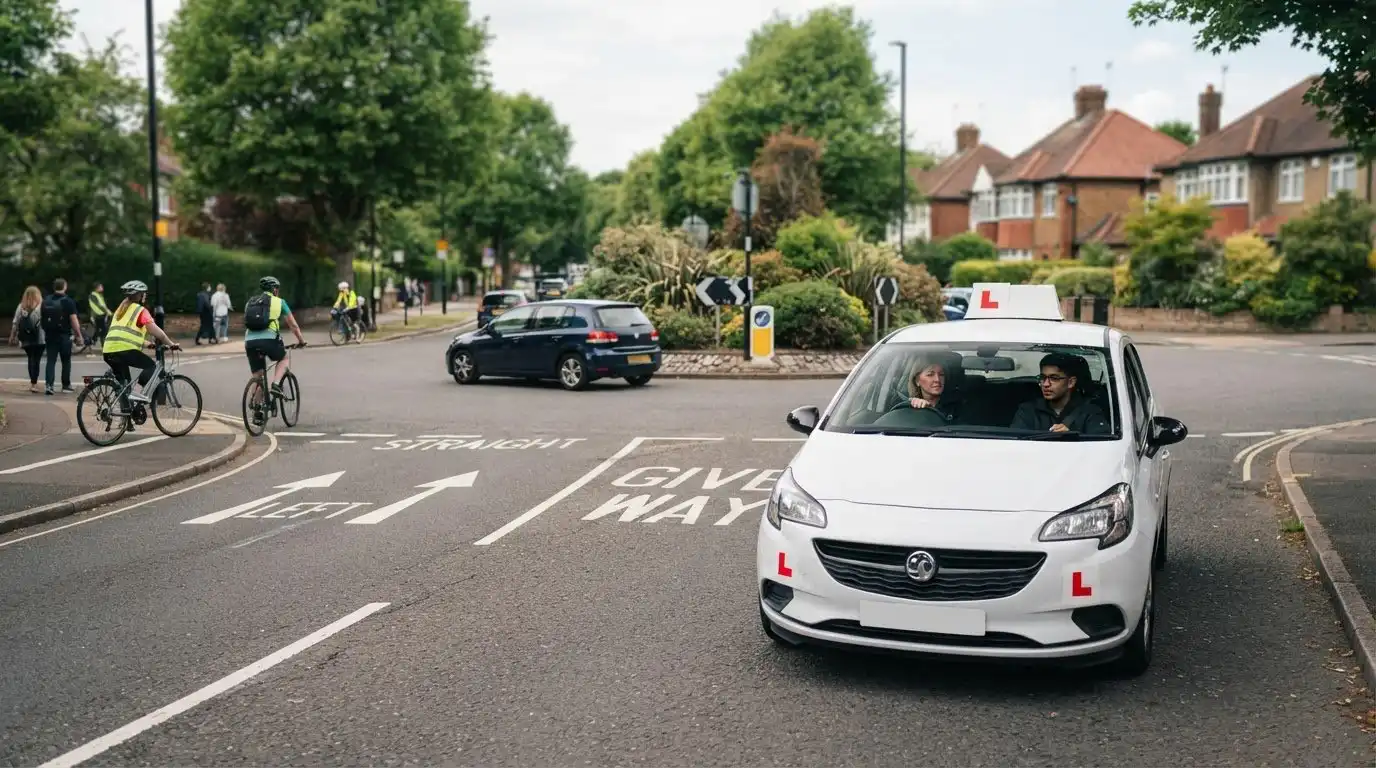
Traffic can prompt learners to rush, especially when the car ahead moves and stops repeatedly. Resist the urge to chase every small gap. Look ahead, leave time to respond and follow your instructor’s direction about whether to move, stop or wait. Clutch movements should support a measured response, not distract you from what other road users are doing.
If the car judders or you feel you’re concentrating only on your feet, use that as a cue to slow the task down with your instructor. The challenge may be timing, observation or coordinating the pedals. Identifying which part feels difficult gives you a clearer focus for the next attempt. This is particularly helpful when practising in busy South West London or South East London traffic, where changing conditions can demand attention well beyond the pedals.
Applying low-speed control during manoeuvres
Manoeuvres require you to move the car carefully whilst keeping awareness of your surroundings. Use clutch control as part of a wider routine: check around the vehicle, respond to what you can see and listen to your instructor’s guidance on movement and stopping. Don’t let watching the pedals replace observation. If you want broader advice on manoeuvring, the guide to key driving manoeuvres covers situations learners often find challenging.
To work out what needs practice, consider what happened just before the car felt unsettled. Did the slope affect your timing? Did traffic draw your attention away? Did you focus on the controls instead of checking around you? Share what you noticed with your instructor. A specific observation can help them suggest one adjustment, without changing several parts of your technique at once.
Remember the distinction: clutch control is the core skill; adapting it means applying that skill with the right timing and attention for the surroundings. Your instructor can help you practise each setting at a suitable pace, building up to more complex situations as your control and awareness develop.
How an instructor can help you improve clutch control
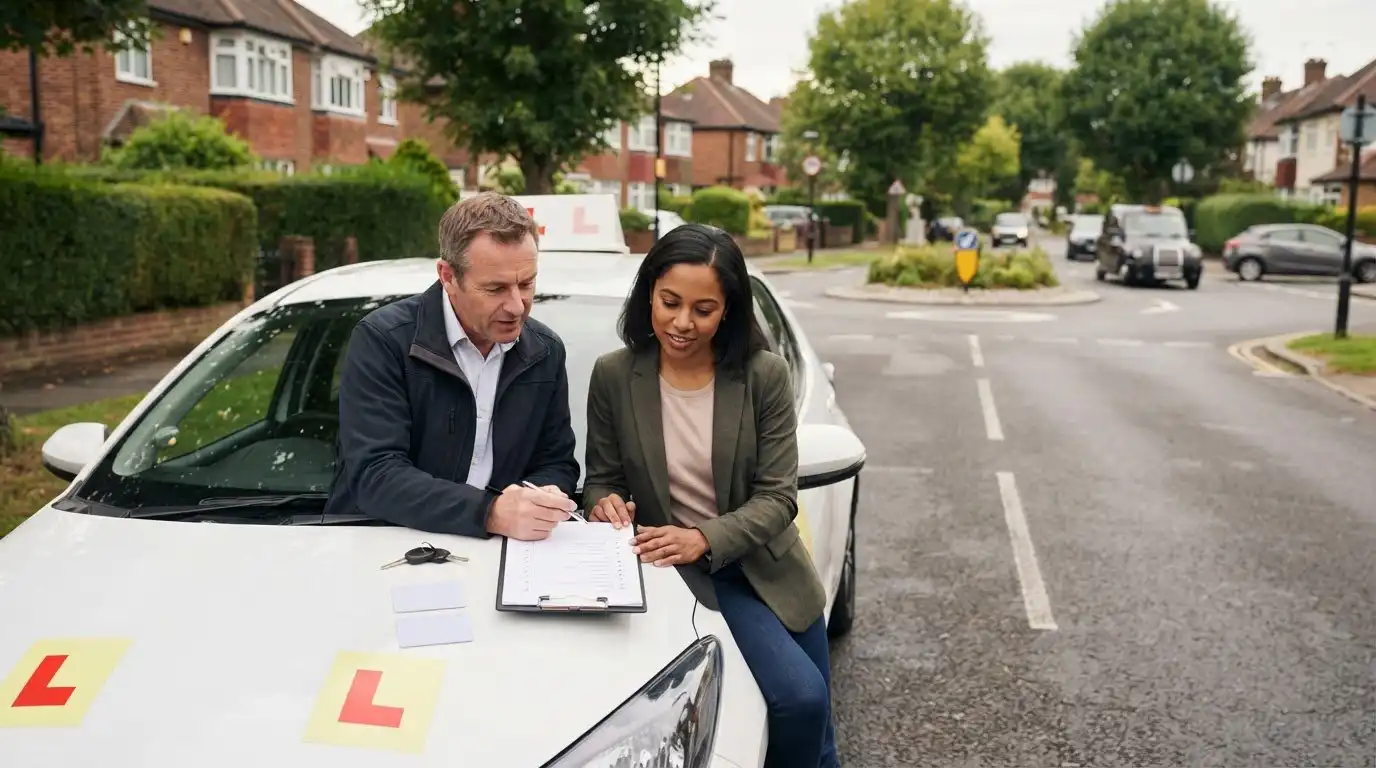
Clutch control can feel difficult when you’re trying to manage your feet, listen to the engine and watch what’s happening around you at the same time. An instructor can observe how you coordinate the pedals and how the car responds, then give you one clear adjustment to focus on. That turns a vague feeling of “getting it wrong” into something specific you can work on.
Good feedback is individual. One learner may need to slow their clutch release; another may benefit from taking a moment to understand what the car did before changing anything. Your instructor can help identify the next useful step without asking you to alter several parts of your technique at once.
Turning repeated stalls into useful feedback
A stall can be unsettling, especially if it happens more than once. It’s useful information, not proof that you can’t learn to drive a manual car. Tell your instructor what happened just before the engine stopped: what you were doing with the pedals, what you noticed and whether you felt rushed. That account gives you both a clearer starting point for the next attempt.
Your instructor can watch the sequence and help work out whether timing, attention or confidence needs more practice. Perhaps you lifted the clutch before the car had begun to respond, or your attention shifted away from the task. You don’t need to diagnose it alone. Reset calmly, listen to the guidance and try one focused change when it’s safe to continue.
When guided manual practice could help
Consider instructor support if the biting point feels inconsistent, starts are often jerky, or you’re unsure what to adjust after a stall. A lesson gives you a chance to explain what you find difficult, practise in a suitable setting and receive direct feedback as you go. If nerves are making you rush, your instructor can help keep the exercise manageable and bring your attention back to one task at a time.
Wimbledon Driving School provides manual driving lessons across South West London, South East London, Surrey and Middlesex. Its instructors hold RoSPA Gold and IAM qualifications. During guided practice, you can discuss the specific clutch-control situations you find challenging and work through them with your instructor’s feedback. There’s no need to expect every start to feel identical straight away; the aim is to understand your responses and build on them through practice.
If you’re considering how to practise clutch control with support, note what tends to happen before a stall or uneven start. Sharing that detail helps your instructor focus on the part of the task that needs attention, rather than repeating general advice. With patient, specific feedback, each attempt can give you something useful to take into the next one. You can find information about booking a manual driving lesson with Wimbledon Driving School.
Take your next step with confidence
Make your next practice session more focused by choosing one situation to pay attention to. After driving, note what felt demanding and what the car did just before you adjusted. Share that observation with your instructor next time. It gives you a clear point to work on, rather than a vague goal to “get better”.
If you’re still working out how to practise clutch control, keep the aim manageable: notice one response, make one considered adjustment and reflect on what changed. Confidence grows through understanding, not by forcing yourself to tackle every situation at once. An uneven start doesn’t undo your progress; it can help you choose what to focus on next.
Learning to drive a manual is a journey, and each thoughtful attempt gives you another opportunity to build your skills. Stay patient with yourself and keep moving forward at a pace that feels right for you.
Frequently Asked Questions
How long does it take to learn clutch control?
There’s no set time, as learners become comfortable with clutch control at different rates. Your progress can depend on how often you practise, your previous experience and how familiar you are with the car. You might manage basic starts before you feel equally confident in busy South West London traffic. Focus on whether you can explain what the car is doing, rather than measuring progress against another learner.
Can you practise clutch control without a car?
You can rehearse the order of actions mentally, such as picturing yourself checking the area, selecting a gear and responding calmly to the car. This can help you feel more prepared, but it can’t recreate the pedal’s resistance or the vehicle’s response. Treat it as preparation, not a substitute for practical instruction. Use time with an instructor to understand how the car you’re learning in behaves.
Does clutch control feel different in every car?
Yes, the clutch pedal and the point at which the car responds can feel different between vehicles. After changing cars, give yourself time to become familiar with that vehicle instead of relying on the exact pedal movement you learnt before. For example, a start that felt smooth in your lesson car may need different timing in another manual car. Your instructor can help you adjust safely.
Is clutch control needed in an automatic car?
In a conventional automatic, you don’t operate a clutch pedal, so manual clutch control isn’t part of your driving routine. The car manages gear changes for you, and you use the controls fitted to that vehicle as instructed. If you later drive a manual car, you’ll need to learn how to coordinate its clutch and other controls. Don’t assume automatic experience alone prepares you for manual starts.
Can a learner practise clutch control without an instructor?
Don’t practise driving alone on public roads. If you’re considering practice in another car, check the current learner-driver requirements on GOV.UK and make sure the arrangement follows them before setting off. A qualified instructor can provide structured feedback and help you work out what to change after an uneven start. This is especially useful if you’re uncertain about the car’s response or what to do next.
What is the difference between clutch control and riding the clutch?
Clutch control means using the pedal deliberately when the situation calls for it. “Riding the clutch” usually describes keeping your foot on the pedal so the clutch remains partly engaged for longer than needed. That can cause unnecessary wear. For instance, a brief, controlled adjustment during a low-speed manoeuvre is different from resting your foot on the pedal throughout a drive. Follow your instructor’s advice for the car and situation.
Disclaimer
This article is provided for general informational purposes only and does not constitute professional driving, legal, or safety advice. While we aim to keep our content accurate and up to date, rules, prices, and DVSA test requirements can change — always check gov.uk or contact us directly at 020 3524 7968 for the latest guidance before making any decisions. Nothing in this article guarantees a specific outcome, including passing your driving test within any stated timeframe. For current pricing, course availability, and instructor details, please visit our Prices page or get in touch.