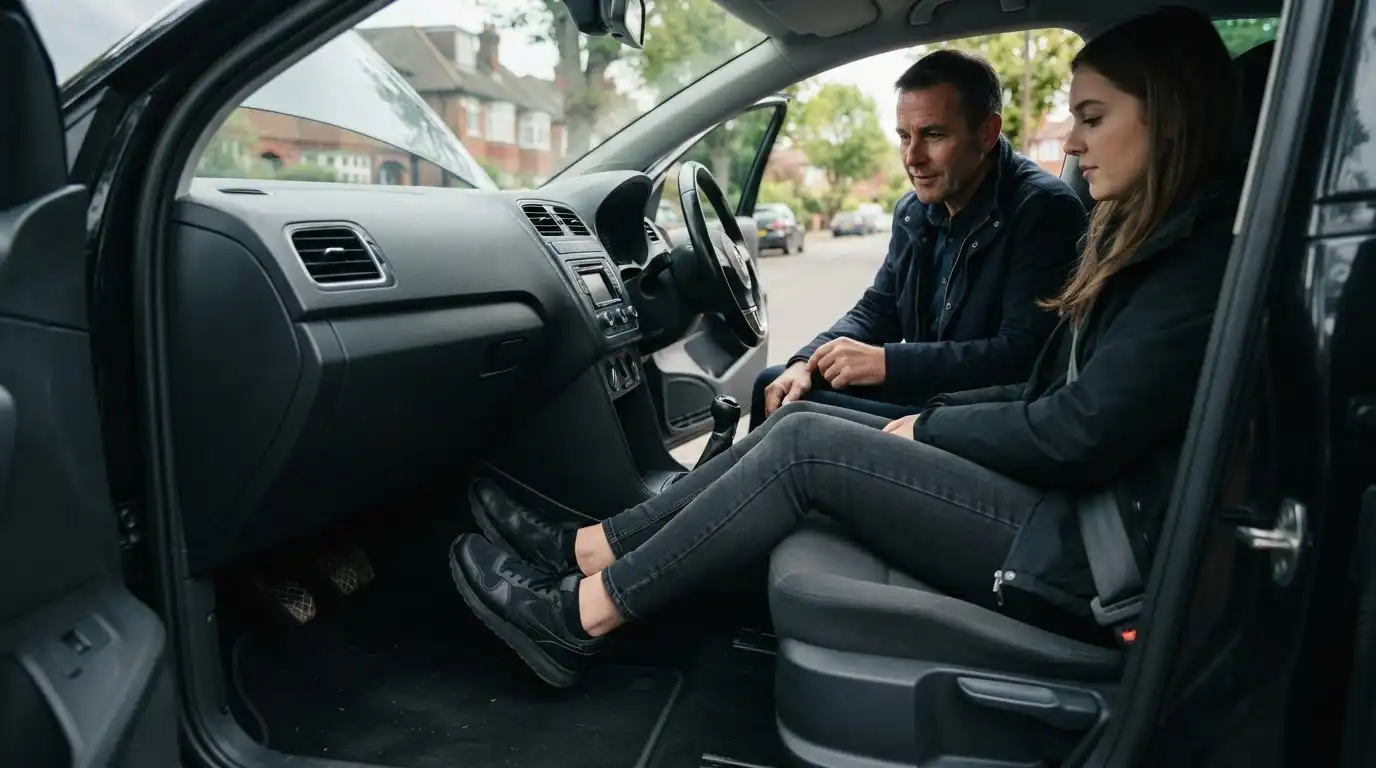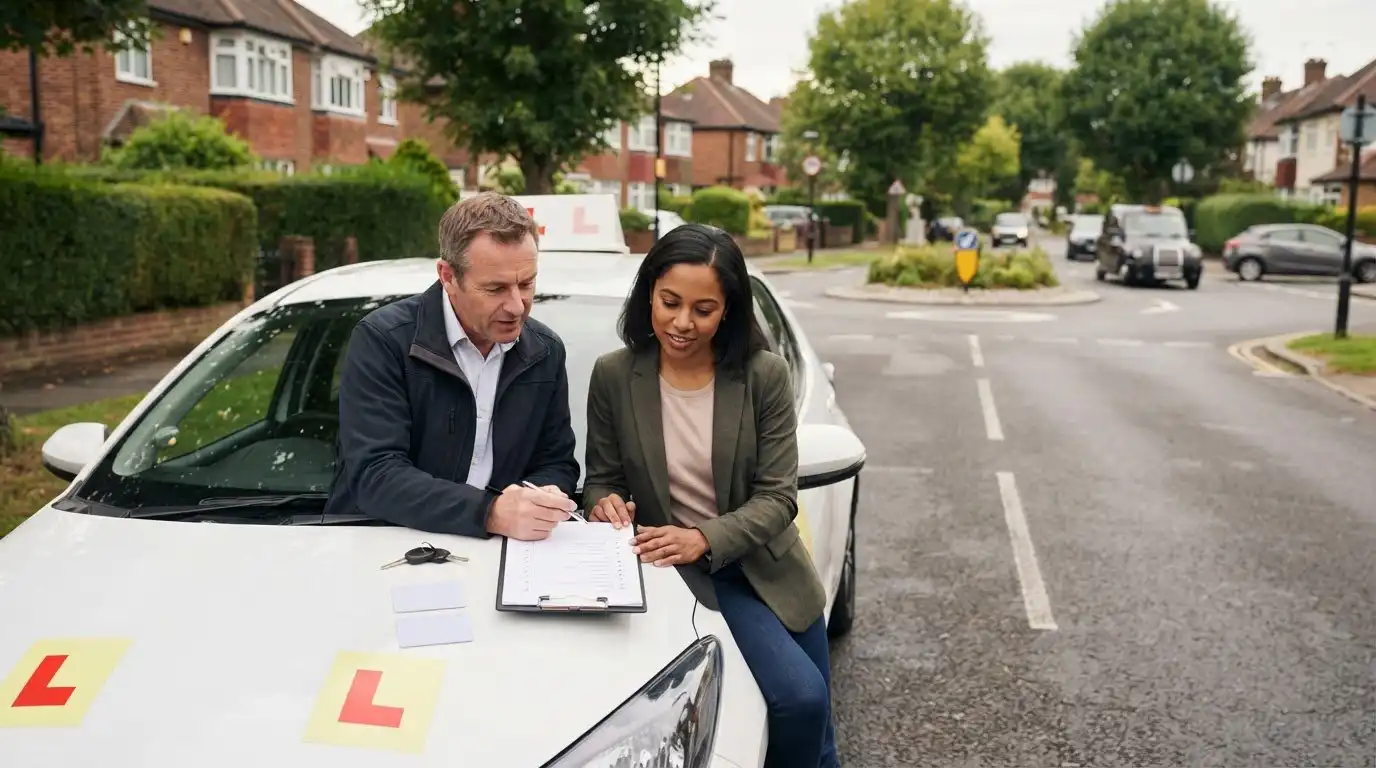

Smooth steering starts with where you look, not how hard you grip the wheel. If you tense up at bends, glance down at your hands or make a sudden correction near a parked car, learning how to improve steering control can make driving feel calmer and more predictable.
It’s understandable to focus on the wheel when you’re unsure, but your eyes need to lead your decisions. Look ahead along your intended path, keep a relaxed grip and consider your speed before a turn. These habits give you more time to steer smoothly instead of reacting at the last moment.
This guide explains how to practise gentle corrections and approach turns with a repeatable method. You’ll also learn how to respond when nerves affect your steering and when to pause for guidance. With patient practice and clear feedback, you can build confidence while keeping safety in focus.
Key Takeaways
- To learn how to improve steering control, notice when turns feel late, corrections become frequent or the car drifts from your intended path.
- Use your view of the road ahead to guide your steering, rather than watching your hands.
- Consider how your speed and starting position affect the steering adjustment you need.
- Practise a simple steering routine on a suitable route with a qualified instructor or in an appropriate supervised setting.
- Ask your instructor for specific feedback, then work on one steering habit at a time before adding complexity.
How to improve steering control starts with understanding what feels difficult
Smooth steering develops through practice, observation and measured inputs. If you turn late, make several corrections, grip the wheel tightly or find the car drifting from your intended path, treat these as useful clues, not proof that you can’t steer well. Noticing when they happen is the first step in understanding how to improve steering control.
Steering doesn’t work in isolation. Your speed, road position and view ahead all affect when and how much you need to turn the wheel. If you approach a bend too quickly or look only at the road immediately in front of the car, you have less time to choose a smooth line. The steering movement you notice may be the result, while the useful focus for practice could be observation, speed or positioning.
Steering control is the ability to make accurate, smooth adjustments that keep your car on its intended path. The vehicle’s steering system turns your input into a change of direction. Your task as the driver is to make that input in response to the road. The Steering overview explains the system itself, while this guide focuses on the practical skills you develop behind the wheel.
After a drive, think about what you noticed and where it happened:
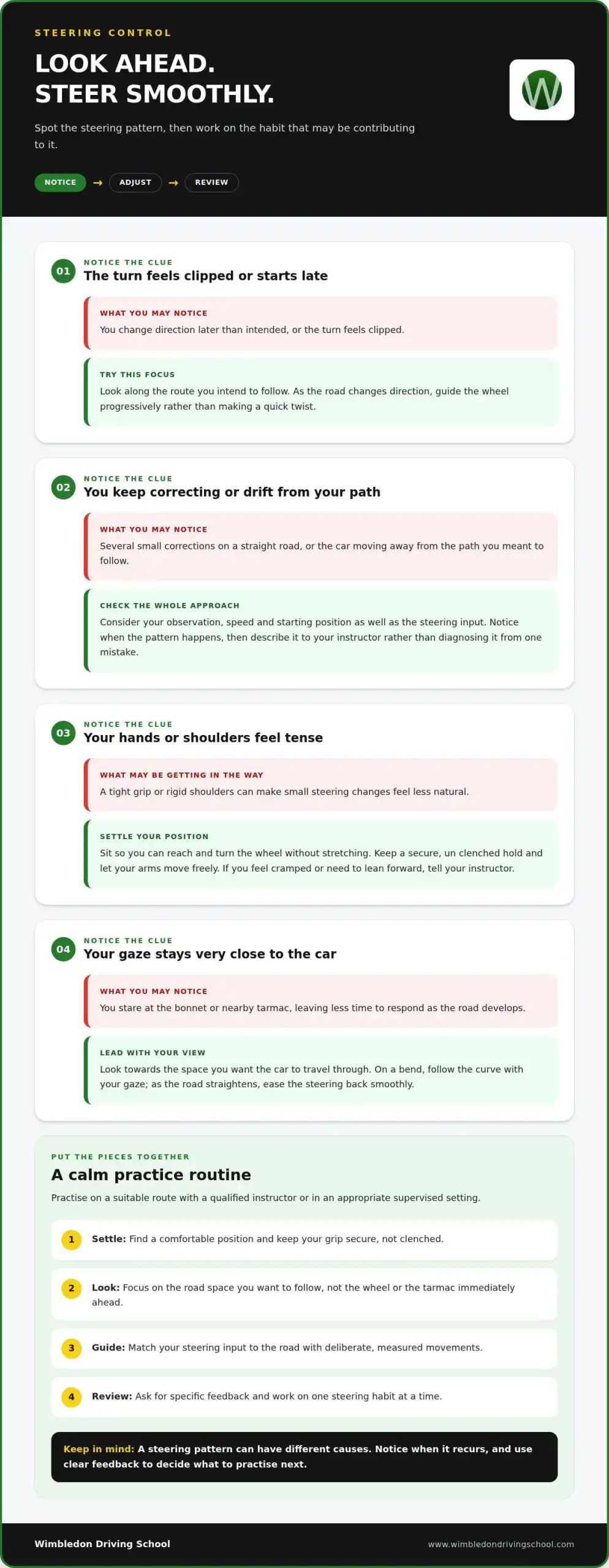
- A turn felt clipped or began late.
- You made several small corrections along a straight road.
- Your hands or shoulders felt tense during a bend.
- The car drifted from the path you meant to follow.
Signs you may be steering too abruptly or too late
A twitchy correction can feel like a quick turn of the wheel followed by an immediate adjustment back. A clipped turn may mean you change direction later than intended, while inconsistent positioning can make the car wander within its path. These patterns can have different causes, so don’t diagnose yourself from one mistake. Notice whether they recur at bends, junctions or during low-speed manoeuvres, then describe the situation to your instructor.
Why tension and close-looking can make control harder
Rigid shoulders and a tight grip can make small steering changes feel less natural. Staring at the bonnet or the tarmac just ahead also leaves you less time to respond as the road develops. Practise lifting your gaze towards where you intend to travel, while keeping your hands controlled rather than clenched. New movements may feel awkward at first, and guided practice can help you develop a steadier response.
Look for a pattern, not a reason to criticise yourself. If steering feels rushed mainly at junctions, for example, tell your instructor what you see and when you begin turning. They can help you work out whether your observation, approach speed, starting position or steering input needs attention. If you’re learning around Cobham, the Cobham driving guide offers local context for developing your skills on familiar roads.
Build better steering control with grip, vision and smooth inputs
A comfortable grip helps you make small, accurate movements without fighting the wheel. Keep your hands secure but not clenched, and let your arms move freely as you steer. There isn’t one hand position that suits every situation, so follow your instructor’s guidance on what works for the vehicle and the task.
Good steering also depends on what you look at. Focus on the road space you want the car to follow, rather than fixing your gaze on the wheel or a nearby kerb. Your hands can then respond to what’s coming instead of making a late correction when the turn is already upon you.
Settle your posture and hold the wheel comfortably
Before moving off, sit so you can reach and turn the wheel without stretching or locking your arms. Let your shoulders rest naturally, then check that you can maintain a secure hold while making a smooth movement. If you feel cramped or have to lean forward, tell your instructor. They can help you adjust your position and find a comfortable hand placement for the exercise.
Think of steering as a controlled movement, not a quick twist. As the road changes direction, begin the input steadily and let the car respond. Avoid snatching at the wheel or adding several rapid movements to correct one turn. If you need to adjust, make each change deliberate and measured so the car’s path stays predictable.
On a gentle bend, for example, keep your view on the route ahead and guide the wheel progressively to follow it. As the road straightens, ease the steering back rather than letting go or making a sudden return movement. The aim isn’t to hold the wheel rigidly still. It’s to match your input to the curve of the road and the car’s response.
Look through the route rather than at the steering wheel
Direct your gaze towards the space the car needs to travel through. On a bend, look along the curve as it opens up. Near a junction, take in the road you plan to enter while continuing to observe what’s around you. Looking ahead gives you more time to judge the route and make measured adjustments. Your instructor can help you practise this on turns, and the school’s tips for improving turning offer related guidance.
Look ahead, keep your hands relaxed and make each steering adjustment smoothly. This connection between vision and movement is a practical starting point for how to improve steering control. Build it gradually with feedback, focusing on one change at a time rather than trying to correct everything at once.
Steering control improves when speed, positioning and observation work together
A steering difficulty can begin before you touch the wheel. If you spot a bend late, approach faster than feels manageable or start from an awkward position, you may need a sharper correction to follow the road. Follow your instructor’s guidance on a safe, appropriate speed and position, then plan your route through the turn before steering.
Consider the whole situation, not just the movement of the wheel. A correction won’t replace checking what’s around you or planning where the car needs to go. Your instructor can help you separate these parts of the task and identify whether to focus on observation, speed, position or steering timing.
Use the pattern to choose a practice focus
One mistake doesn’t tell the whole story. Notice what happened just before the steering felt difficult, then discuss the pattern with your instructor. These examples can help you describe what you experienced without blaming yourself or jumping to a conclusion.
| What you notice | Possible focus for practice |
|---|---|
| You begin turning late | Look further ahead and identify the route earlier |
| The turn feels rushed | Discuss an appropriate approach speed with your instructor |
| You make a sharp input | Practise beginning the steering movement progressively |
| You need repeated corrections | Review your starting position and intended path |
Match your steering input to speed and path
Speed affects how much time you have to make a decision and how controlled a steering movement feels. There’s no single speed that suits every bend or junction, so follow your instructor’s advice for the road, conditions and exercise. If the approach feels rushed, discuss what you could do earlier rather than trying to solve it with a sharp turn at the last moment.
Once you’ve chosen an appropriate approach, steer in stages that follow the road’s shape. Start the input smoothly, observe how the car responds and adjust progressively if needed. Planning the path before the turn helps you avoid treating the wheel as an emergency fix.
Keep observation active during manoeuvres
Observation and steering are separate skills, but they support safe control together. Check your surroundings, including mirrors and areas around the vehicle, before and during a manoeuvre, following your instructor’s guidance. If something changes, pause your planned movement and reassess rather than focusing only on correcting the car’s direction.
Calm attention can make it easier to notice the road developing without rushing your response. The school’s guide to mindfulness techniques in driver training explores ways to support focus behind the wheel.
Smooth steering depends on anticipating your path and adjusting progressively. This is a practical principle for how to improve steering control: plan first, then make a measured input while continuing to observe. Ask your instructor which part of the sequence to practise next.
Practise steering control safely with a simple step-by-step routine
Build a repeatable routine with a qualified instructor or in an appropriate supervised setting. Don’t practise steering skills alone in a moving vehicle. Your instructor can choose a suitable place and exercise for your current ability, then help you focus on one clear adjustment at a time.
Use a repeatable routine before moving or turning
Before each attempt, settle your position, grip and attention. Ask your instructor to set the exercise and explain what to focus on. Afterward, use their feedback to choose one practical adjustment for the next attempt, rather than trying to change several habits at once.
- Prepare with your instructor. Get comfortable in the seat, check that you can reach the controls without stretching and listen to the plan. Agree where to look and what steering action you’ll practise.
- Observe before starting. Take in the surroundings and follow your instructor’s directions about checks and when it’s appropriate to move. If anything is unclear, pause and ask before continuing.
- Begin on a suitable route. Start with an exercise that matches your experience, such as following a gentle curve under your instructor’s guidance. Keep your attention on the route and make a gradual steering movement.
- Notice the car’s response. Pay attention to whether your input follows the intended path, without making extra corrections just because you feel uncertain. Your instructor can help you judge what needs adjusting.
- Review and repeat. Once your instructor says it’s safe to pause, discuss what felt controlled and what felt difficult. Choose one focus for the next attempt, such as beginning earlier or easing tension in your hands.
Review mistakes without rushing to correct everything
A pause with your instructor gives you time to understand what happened before trying again. Consider whether your view of the route, timing, approach speed or tension may have played a part. These are possible areas to explore, not automatic explanations for a mistake. Work through the feedback calmly and let your instructor guide the next attempt.
If nerves make it harder to concentrate, tell your instructor. Feeling anxious can affect how settled you feel, but it isn’t the only reason steering may seem difficult. These tips for overcoming driving anxiety offer further ways to approach lessons with more confidence.
Progress comes from clear practice, useful feedback and safe repetition, not from pushing through when you feel overwhelmed. If you’re unsure what to do next, pause and let your instructor guide you. A focused lesson can help you practise steering at a pace that suits your development and build a reliable routine.
Improve steering control with calm, instructor-led practice
Steering can feel different from one situation to another, so repeated difficulty is a good reason to get tailored guidance rather than trying to correct everything on your own. During a lesson, an instructor can observe how you hold the wheel, where you look, how you position the car and when you begin steering. That wider view can help identify which part of the task needs attention.
Useful feedback is specific and progressive. Your instructor might ask you to focus on looking further along the road, then practise that skill before adding a more demanding turn or manoeuvre. Working on one element at a time makes it easier to understand what changed and how it affected the car’s path. It also gives you space to ask questions and build confidence without rushing.
When a driving lesson can help you make progress
Consider guided support if steering difficulty keeps returning, makes you anxious or affects your confidence on the road. A lesson can be shaped around your current ability and the situations you want to work on, whether that means practising turns or improving control during other parts of a drive. If you’re returning to driving after a break, refresher lessons can help you rebuild familiarity at a suitable pace.
To make feedback useful, describe what you find difficult as clearly as you can. You might say that you tend to turn late at junctions, feel tense on bends or aren’t sure when to make a correction. Your instructor can observe the task, explain what they notice and agree a manageable focus for practice. If one approach doesn’t feel clear, ask for the explanation in a different way.
Take your next step towards smoother driving
The core method is straightforward: look ahead, keep your body relaxed, adjust the wheel progressively and use feedback to guide your next attempt. Progress may involve returning to a simpler exercise before moving on. That’s a sensible part of learning, not a setback. A calm, repeatable approach can help you build reliable habits for different road situations.
Use your next lesson to focus on one steering habit you’d like to understand better. Notice what your instructor observes, ask questions and give yourself time to apply the feedback. Each considered practice drive can help you move towards smoother, more confident driving.
Keep building confidence with every practice drive
You don’t need to perfect every steering movement at once. Choose one useful focus for your next lesson, such as looking further ahead or making a calmer adjustment, and give yourself time to practise it with guidance. That steady approach is a practical way to keep improving.
Learning how to improve steering control is less about forcing the wheel and more about developing trust in your observations and decisions. If a turn feels awkward, treat it as information to discuss with your instructor, not a reason to lose confidence. Each lesson can help you understand your habits and take another considered step towards driving with greater ease.
Wimbledon Driving School provides manual and automatic driving lessons across South West London, South East London, Surrey and Middlesex. Lessons are delivered by instructors holding RoSPA Gold and IAM certifications, with guidance tailored to your experience and confidence.
Keep practising patiently. Smooth, confident driving grows one well-guided decision at a time.
Frequently Asked Questions
How can I stop oversteering when turning?
To reduce oversteering, avoid adding more steering before noticing how the car responds to your first input. On a bend, for example, don’t keep winding the wheel simply because the turn feels unfamiliar. Ask your instructor to help you practise at a suitable pace, then discuss where the car went compared with the path you intended. If you feel you’re losing control, follow your instructor’s directions.
Where should I look when steering a car?
Look towards the road space you plan to travel through while continuing to take in the wider surroundings. On a bend, let your gaze follow the curve rather than fixing on the kerb beside you. Near a junction, check the road you intend to enter and watch for changing hazards. Your instructor can help you choose useful reference points for a particular route or manoeuvre.
Should you keep both hands on the steering wheel?
Keep both hands on the wheel whenever possible, as advised by The Highway Code, so you can maintain control. There may be moments when you need to operate a control, but avoid leaving a hand away longer than needed. Return it to the wheel when you can do so safely. Your instructor can show you how to manage controls while staying aware of the road.
Is it better to grip the steering wheel tightly?
No. Hold the wheel securely, but avoid squeezing it so hard that your arms and shoulders become rigid. Excess tension can make it harder to make a comfortable adjustment, particularly through a series of bends. If your hands ache or your shoulders lift while driving, mention it to your instructor. They can check your seating position and help you find a grip that feels controlled without strain.
Can I practise steering control on my own?
Don’t practise steering skills alone in a moving vehicle. Build them with a qualified instructor or in an appropriate supervised setting, where someone can guide the exercise and respond if you’re unsure. You can reflect on feedback after the drive, but don’t attempt a moving-vehicle exercise without supervision. If you’re unclear about suitable practice, discuss it with your instructor before trying it.
Why does my steering feel jerky?
Jerky steering can have several possible causes, such as tension, looking too close to the car, turning late or trying to correct too much at once. One awkward turn isn’t enough to identify the reason. Notice when it happens and describe the situation to your instructor, such as a tight junction or a bend with parked cars nearby. They can observe your approach and help you work out what to practise.
How can I feel less nervous about steering during lessons?
Tell your instructor which situations make you nervous, such as turning at a busy junction or passing parked cars. They can adapt practice to your confidence and help you focus on one manageable task at a time. If you start to feel overwhelmed, say so and follow your instructor’s guidance about pausing safely. Feeling uncertain is something you can discuss, not something you need to hide.
Disclaimer
This article is provided for general informational purposes only and does not constitute professional driving, legal, or safety advice. While we aim to keep our content accurate and up to date, rules, prices, and DVSA test requirements can change — always check gov.uk or contact us directly at 020 3524 7968 for the latest guidance before making any decisions. Nothing in this article guarantees a specific outcome, including passing your driving test within any stated timeframe. For current pricing, course availability, and instructor details, please visit our Prices page or get in touch.