In the UK, 1 in 10 people who fail their driving test say nerves were mostly responsible. To learn how to overcome driving test failure anxiety, check that you’re genuinely ready, practise calming your mind, protect your sleep and focus on the drive rather than the result. Preparation won’t remove every nerve, but it can help you feel steadier and make clear decisions behind the wheel.
It’s understandable to worry about making a mistake or having to take the test again. Feeling nervous doesn’t automatically mean you’re not ready. The key is to build confidence through practice and a clear plan. This guide explains how to assess your readiness, use mindfulness, sleep well before test day and talk with your instructor about managing nerves. You’ll also find practical ways to stay positive and focused, so you can approach the test feeling calmer and better prepared.
Key Takeaways
- Use your driving practice and mock tests to judge whether you’re ready, rather than letting nerves alone decide.
- Try simple mindfulness techniques to bring your attention back to the road and the task in front of you.
- Plan for restful nights before test day so tiredness is less likely to add to your stress.
- Talk with your instructor about the situations that make you anxious and practise a clear plan for handling them.
- If you need more support behind the wheel, manual driving lessons with Wimbledon Driving School can help you build confidence through practice.
1. Checking readiness before booking or taking the test
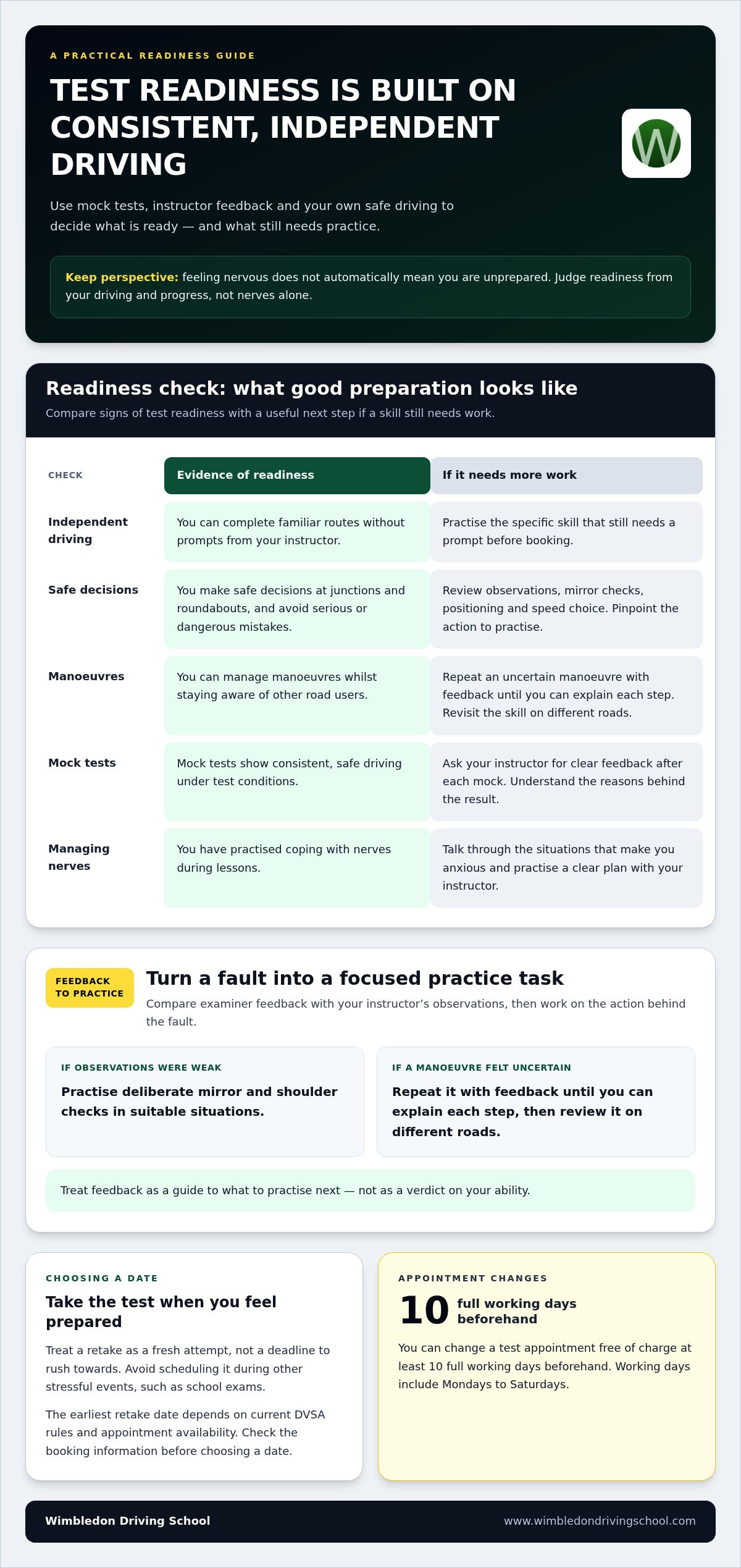
After failing, book another UK practical test through GOV.UK. The earliest retake date depends on current DVSA rules and appointment availability, so check the booking information before choosing a date. Treat the next test as a fresh attempt, not a deadline to rush towards.
Start with your driving, not your nerves. Take the test when you feel fully prepared, rather than because a date is available. Avoid scheduling it during other stressful events, such as school exams. If your plans change, you can change a test appointment free of charge at least 10 full working days beforehand. Working days include Mondays to Saturdays.
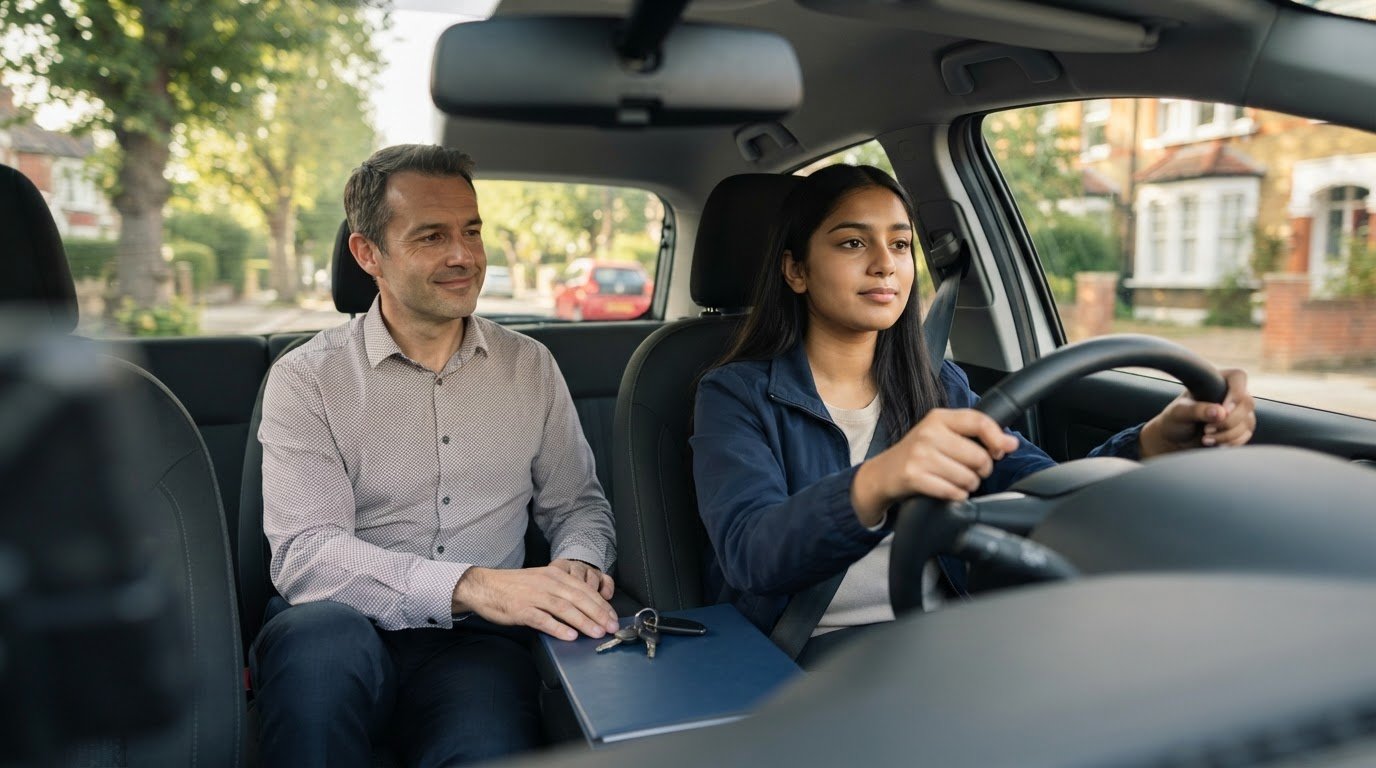
Use a mock test to see whether your skills hold up under test conditions. You should be able to drive without prompts from your instructor, avoid serious or dangerous mistakes and handle the usual demands of the test. Ask your instructor for clear feedback after each mock. The result matters, but understanding the reasons behind it matters more.
Review possible trouble spots such as junction observations, mirror checks, positioning, speed choice and manoeuvres. These are areas to investigate, not a fixed ranking of UK test failures. Compare your examiner’s feedback with your instructor’s observations, then pinpoint the action to practise, such as checking your mirrors before changing direction.
- Can you complete familiar routes without prompts?
- Do you make safe decisions at junctions and roundabouts?
- Can you manage manoeuvres while staying aware of other road users?
- Have mock tests shown consistent, safe driving?
- Have you practised coping with nerves during lessons?
To prepare for the parts that caused your failure, turn each fault into a practice task. If observations were weak, practise deliberate mirror and shoulder checks in suitable situations. If a manoeuvre felt uncertain, repeat it with feedback until you can explain each step. Review the same skill on different roads, not just one familiar route.
Practical steps can reduce anxiety: choose a test date when you feel ready, practise realistic mock tests, and discuss nerves with your instructor. Avoid too much caffeine beforehand if it makes you jittery. For further ideas, explore guidance on learning to drive with anxiety.
Ask your instructor whether your driving is test-ready. Their view should reflect consistent independent driving, safe decisions and progress on earlier feedback. If you still need prompts for a skill, strengthen it in lessons before booking. This evidence-based approach helps you prepare without treating a failed test as a verdict on your ability.
Book another practical test through GOV.UK. The earliest retake date depends on current DVSA rules and appointment availability, so check the booking information and choose a date when you feel prepared.
2. Learning mindfulness techniques
Mindfulness means noticing what’s happening inside and around you, moment by moment. Before a lesson, you might notice tense shoulders, quick breathing or thoughts about failing. You don’t have to force those feelings away. Name what you notice, then bring your attention to the task in front of you.
Practise while parked, before starting the engine. Sit comfortably with your hands resting in your lap. Notice where your body meets the seat and feel your feet against the floor. Listen to nearby sounds, such as traffic or birds. When your mind jumps to the test, acknowledge the thought and return your attention to one sound.
Breathing can give you a simple focus. Keep your eyes open and breathe naturally, noticing each inhale and exhale. Don’t force a deep breath or hold it. If thoughts interrupt, quietly label them, for example, “worry about the test”, then return to your next breath. Try this before setting off, not while handling a difficult road situation.
During a lesson, practise mindful attention through everyday driving tasks. At a junction, notice your speed, road position, mirrors and the traffic around you. Then make the observation and decision your instructor has taught you. This isn’t a separate relaxation exercise. It’s a way to focus on driving instead of replaying an earlier mistake.
Keep the practice short and repeatable. Choose one familiar moment before each lesson, such as sitting in the parked car. Follow the same sequence: notice your feet, relax your shoulders, observe your breathing, then identify your first driving task. Repeating a simple routine gives you a clear starting point when thoughts about test day crowd in.
- Name it: “I’m worried about the roundabout.”
- Notice it: Feel your hands on the wheel while parked.
- Refocus: Identify the next safe action your instructor taught.
Mindfulness doesn’t promise that anxiety will disappear. Studies show it can help with stress and anxiety, and regular practice gives you a practical way to respond when worry appears. Notice what happens after each attempt. For example, write down which thought distracted you and what helped you return to the present.
Keep safety central. Never close your eyes, count breaths or write notes while driving. Use focused breathing only when safely parked, then give the road your full attention once moving. If you want structured practice behind the wheel, you can book a driving lesson and work on staying present during familiar tasks.
Treat mindfulness as one part of readiness, not as proof that it’s time to book. Take a driving test when you can drive without prompts from your instructor, avoid serious or dangerous mistakes, pass mock tests, practise managing nerves and have your instructor’s agreement that you’re ready. Consider these conditions together: feeling calmer during a parked exercise doesn’t replace meeting them. If you’re still working towards any of these points, keep practising and discuss your readiness with your instructor before booking.
3. Mindfulness for stress and anxiety
Mindfulness is paying attention to what’s happening inside and around you, moment by moment. It can help you notice anxiety before it takes over your attention. Studies show mindfulness can help with stress and anxiety. Use it to recognise a feeling, then deliberately return your focus to the task at hand.
Start by noticing your personal signs of stress. You might feel a tight jaw, tense shoulders or sweaty hands, or find your thoughts racing ahead to the examiner. Give the feeling a simple name, such as “worry” or “tension”. Naming it can create a pause before you react, instead of letting the thought dictate what happens next.
Try a grounding exercise before a lesson or test. With the car parked, notice your feet on the floor, your back against the seat and the sounds outside. Then name what you can see, such as a sign or another parked car. This brings your attention back to your surroundings instead of imagined test mistakes.
While driving, notice when your attention drifts. If you start replaying an earlier error, acknowledge the thought without judging yourself. Then return your attention to the road, your speed and the next decision. Keep your eyes open and follow your instructor’s directions. Mindfulness should support safe driving, never distract you from it.
Build mindfulness into specific moments rather than waiting for intense nerves. Before moving off, notice whether your shoulders are raised and release unnecessary tension. At a red light, if it’s safe and appropriate, notice your breathing while staying alert to traffic and signals. Practise during lessons so the routine feels familiar.
After a lesson, take a moment to review what happened. Write down the situation that triggered worry, what you noticed physically and what helped you refocus. For example, you might note that a busy junction made your hands tense, and that focusing again on your instructor’s directions helped. Use these observations to guide your next practice.
If anxiety affects your driving safety or causes panic attacks, tell your instructor and stop driving when you can do so safely. Don’t continue a lesson if panic prevents you from concentrating. If panic attacks recur, speak with your GP about appropriate support before getting back behind the wheel.
Mindfulness doesn’t mean pretending you feel calm. It means recognising stress without letting it become the only thing you notice. For more practical advice on learning to drive with anxiety, focus on manageable steps and practise them during lessons. A steady routine can help you return your attention to the drive, one decision at a time.
Planning can also reduce avoidable pressure. Candidates are advised not to schedule their test when other stressful events, such as school exams, are happening. If you can, choose a time when you have space to focus on preparing and practising, rather than managing several demands at once.
Candidates are advised to get a few good nights of sleep before their driving test because tiredness can increase stress. Keep your final preparation manageable and use the routines that help you refocus on the drive. If nerves arise, acknowledge them and concentrate on the next safe step.
4. Sleep before the driving test
A few good nights of sleep before your test can support a calmer start. Tiredness can increase stress and make ordinary worries harder to manage. After a failed test, you might replay mistakes, fear another disappointment or feel pressure to pass quickly. Those thoughts can make it harder to wind down, so create a simple evening routine before test day.
Keep your pre-test routine familiar. Choose a regular time to wind down, prepare your clothes and travel details earlier, then put away test-related notes. If you usually read or listen to quiet music, keep that habit. Avoid turning the evening into another revision session. A clear stopping point can prevent last-minute preparation from becoming another source of worry.
Write down concerns before bed instead of repeatedly trying to solve them in your head. For example, note, “I’m worried about the reverse park”, then add the practical step you’ll take in your next lesson. Put the note aside. This separates a useful plan from repetitive worry and gives your mind a place to return to the issue.
On the night before, prepare the morning in advance. Set out what you need, plan your journey and leave time for an unhurried start. Keep the plan realistic. If you wake early, avoid checking the clock repeatedly or mentally reviewing every possible mistake. Return to a quiet activity and let your routine guide you.
- Keep your usual evening habits where possible.
- Prepare clothes and journey details before winding down.
- Write worries and practical next steps on paper.
- Leave test practice for lessons, not bedtime.
- Give yourself a calm, organised start in the morning.
After a failed test, anxiety often comes from disappointment and uncertainty about what happens next. You may also worry that the same error will happen again. Treat the result as feedback: identify the specific skill to practise, discuss it with your instructor, then set the task aside for the evening.
Seek professional help if anxiety repeatedly causes panic, disrupts sleep or makes it difficult to practise safely. Speak with your GP about the anxiety, and tell your instructor when nerves affect your concentration. Don’t drive if panic prevents you from focusing on the road. You can also use this advice on managing driving test nerves to identify practical next steps.
Sleep is one part of preparation, alongside focused practice and support. Aim for a few restful nights rather than demanding one perfect night. If your sleep is unsettled, follow your familiar routine the next evening instead of adding pressure. A steady plan gives you something practical to rely on, even if test-day nerves remain.
5. Staying positive and focused
Staying positive doesn’t mean telling yourself you’ll definitely pass. It means choosing what deserves your attention during the drive. Learning how to overcome driving test failure anxiety also means defining success through actions you control, such as listening carefully and responding safely. The result matters, but the road in front of you provides a clearer guide for each decision.
Before test day, prepare a calm response to other people’s expectations. If relatives ask whether you’ll pass, try saying, “I’m focusing on driving safely.” That answer sets a boundary without inviting more predictions. It can help when encouragement starts to feel like pressure, even if the person asking wants to support you.
Be careful about comparing yourself with other learners. Someone else’s test date, practice routine or result doesn’t measure your readiness. Their route, experience and circumstances are different. If conversations with friends turn into scorekeeping, steer them towards a neutral topic. You can protect your focus without explaining or defending your progress.
During the test, don’t treat the examiner’s silence as a hidden judgement. They may be listening, observing or preparing the next direction. Part of overcoming driving test failure anxiety is letting neutral moments stay neutral. Listen to the instruction, check the road and make your next decision without guessing what the examiner thinks.
Give yourself permission to be a learner taking a test, not a performer seeking approval. You don’t need to impress the examiner with confidence or conversation. Aim to communicate clearly when needed, follow directions and consider other road users. That practical role is more useful than trying to read facial expressions or seek reassurance.
- Use a boundary: “I’m concentrating on safe driving, not predicting the result.”
- Skip comparisons: Keep other learners’ outcomes separate from your preparation.
- Stay with the task: Respond to instructions instead of interpreting silence.
- Choose your measure: Focus on careful decisions, not approval.
After the test, give yourself time before discussing the outcome with everyone who asks. You can say, “I’ll talk about it later,” then choose when you feel ready. This protects your headspace and lets you decide whose feedback is genuinely useful. You’re allowed to keep the result private while you gather your thoughts.
When test pressure starts shaping every conversation, return to your own reasons for learning. Perhaps you want more independence or easier journeys to work. Remembering that wider goal can put one test into perspective and help you keep moving towards the life you want, at a pace that supports safe driving.
Wimbledon Driving School: Manual Driving Lessons
Wimbledon Driving School provides manual driving lessons across South West London, South East London, Surrey and Middlesex. If test nerves make particular situations difficult, focused practice and instructor feedback can help you strengthen the skills you want to improve.
A mock test gives you a chance to practise responding to test-style directions and decisions. Afterwards, review where you felt less certain and agree what to work on next. This provides a practical way forward after a disappointing result, without treating another test date as a measure of your ability.
Contact Wimbledon Driving School to discuss manual lessons and plan your next steps.
Take your next step with confidence
A practical way to overcome driving test failure anxiety is to make your next step manageable. Choose one area to work on and agree a clear practice goal with your instructor. Focus on building steady habits rather than expecting perfection from yourself.
Use your next lesson to build on what you’ve learned and identify where focused practice could help. Consistent, thoughtful preparation can help you feel more confident behind the wheel.
If you’re ready to plan your next step, book a lesson and discuss what you’d like to practise.
Book a driving lesson
Each focused drive is an opportunity to keep moving forward. Take it one step at a time.
Frequently Asked Questions
Can mock tests or extra lessons help overcome fear of failing again?
Yes. A mock test lets you practise responding to test-style directions and decisions, while extra lessons can target skills that still feel uncertain. Ask your instructor to recreate a challenging situation, such as approaching a busy roundabout, then discuss your observations afterwards. Agree on a clear goal for the next drive, such as making timely checks before changing direction. This makes practice purposeful and helps you approach your next test with a stronger routine.
Disclaimer
This article is provided for general informational purposes only and does not constitute professional driving, legal, or safety advice. While we aim to keep our content accurate and up to date, rules, prices, and DVSA test requirements can change — always check gov.uk or contact us directly at 020 3524 7968 for the latest guidance before making any decisions. Nothing in this article guarantees a specific outcome, including passing your driving test within any stated timeframe. For current pricing, course availability, and instructor details, please visit our Prices page or get in touch.