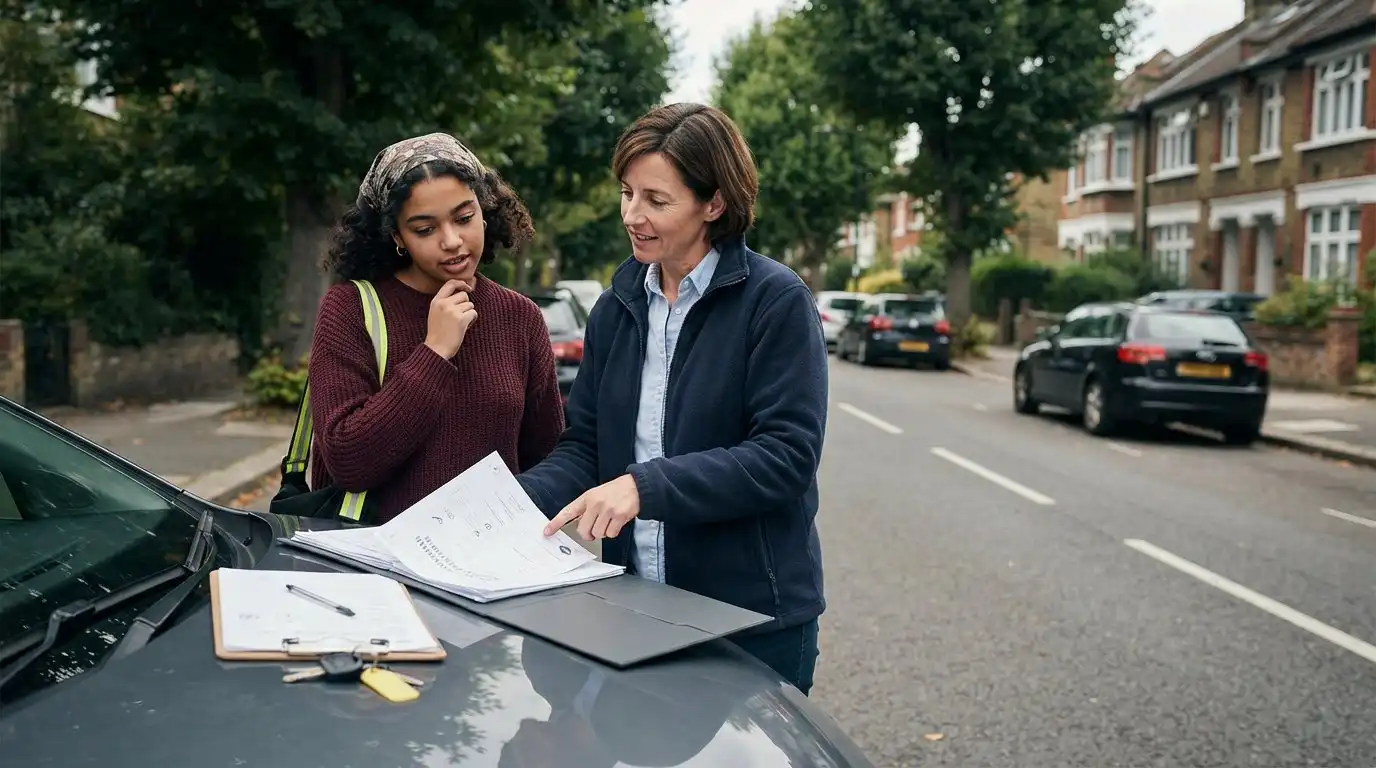

Confidence grows through calm, purposeful practice, not pressure. A driving confidence course gives you guided time behind the wheel to rebuild skills, get comfortable with challenging situations and develop a steadier approach to driving in London. Refresher lessons don’t require a test at the end.
If nerves make driving harder, you’re not alone. Confidence takes time to develop, and the right support should meet you where you are, whether you’re returning after a break or want to feel more at ease in busy traffic.
This guide explains what confidence-building lessons can involve, how to choose support that suits your experience and what to expect as you learn. You’ll also see how focused practice can help you prepare for everyday journeys, from local roads to situations you’ve been avoiding.
Key Takeaways
- Start by identifying which driving situations cause the most anxiety, then focus practice on those situations at a manageable pace.
- Build confidence on London roads by practising observation, planning and calm decision-making in changing traffic conditions.
- Review common driving habits so you can recognise what needs attention and make adjustments deliberately.
- Choose lessons that match your experience and goals, whether you’re returning to driving or developing your skills as a learner.
- Find out how Wimbledon Driving School’s manual lessons can support your next step towards feeling more assured behind the wheel.
Support for nervous drivers
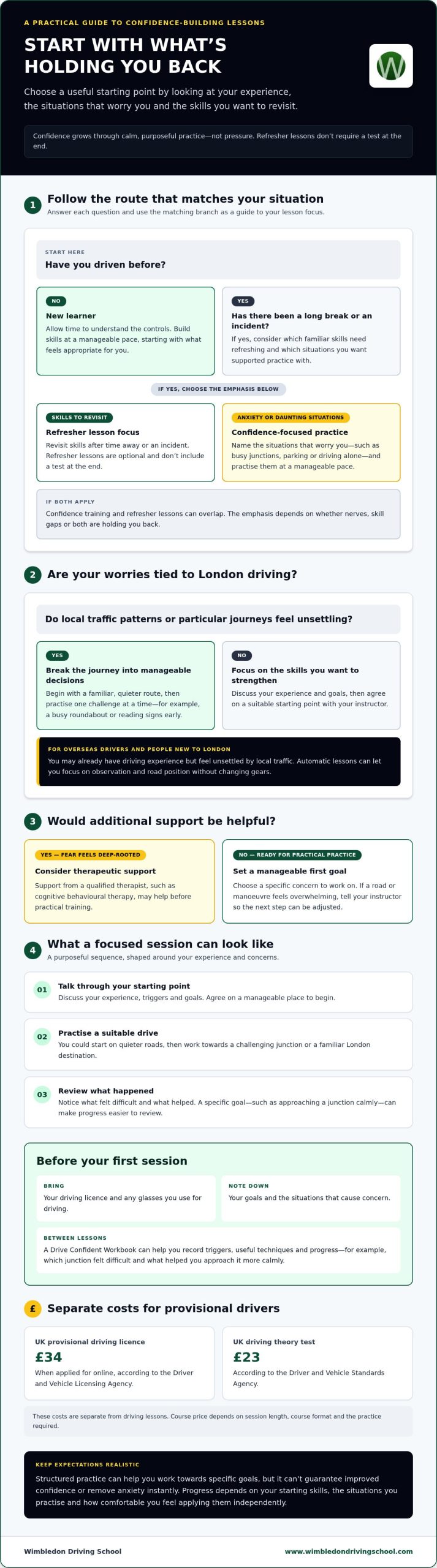
Nerves can affect new learners, experienced drivers and people returning after a long break. A driving confidence course focuses on situations that feel difficult, using calm, practical lessons to help you build skills safely. Start by naming what triggers worry, such as busy junctions, parking or driving alone.
Different ages and abilities call for different approaches. A new learner may need time to understand the controls, while someone with limited mobility may benefit from a suitable car and lesson plan. If anxiety feels deep-rooted, support from a qualified therapist, such as cognitive behavioural therapy, may help before practical training.
For provisional drivers, costs are separate from lessons: according to the Driver and Vehicle Licensing Agency, a UK provisional driving licence costs £34 when applied for online. The Driver and Vehicle Standards Agency states that the UK driving theory test costs £23. Planning these steps alongside driving lessons can make the route into learning feel clearer.
Overseas drivers and people new to London may already have driving experience but feel unsettled by local traffic patterns. Begin with a familiar, quieter route, then practise one challenge at a time, such as negotiating a busy roundabout or reading signs early. Automatic driving lessons in South London can provide a way to focus on observation and road position without changing gears: automatic lessons in South London.
After a break, confidence often depends on which skills remain familiar and which need refreshing. Someone who has not driven for over a decade may want to revisit basic routines, while a driver anxious after an accident may prefer supported practice on specific routes. Refresher lessons are optional and don’t include a test at the end. A brief list of concerns helps an instructor shape each session around your priorities.
How do driving confidence courses compare with refresher driving lessons? Confidence-focused training centres on easing anxiety and practising daunting situations; refresher lessons revisit skills after time away or an incident. The two can overlap. The right emphasis depends on whether nerves, skill gaps or both are holding you back.
Bring your driving licence, any glasses you use for driving and a short note of your goals. At the first session, discuss your experience and concerns, agree on a manageable starting point, then practise with your instructor’s guidance. A Drive Confident Workbook can help you record triggers, useful techniques and progress between lessons. For example, note which junction felt difficult and what helped you approach it more calmly.
Confidence building for London driving
London practice works best when you break intimidating journeys into manageable decisions. Choose a route, identify its challenges, then build up your driving skills through focused sessions.
Choosing and Booking a Course
Choose a course that begins with your experience, concerns and specific goals. For example, after an accident, you might want supported practice with junctions before tackling busier roads. Ask how instructors adapt the session, what each lesson includes and how progress is reviewed. The price depends on session length, course format and the practice required; it is provided after a quote request.
Before booking, describe the situations that make you anxious and discuss how they can shape your learning plan. This helps clarify whether you want to rebuild everyday driving skills or practise particular journeys.
Course Length and Structure
There is no single course length that suits every driver. Confidence training can be structured in different ways, while refresher lessons can focus on the skills you need to revisit. Your experience, comfort level and learning goals determine how much practice is useful.
A session might begin with a conversation about your concerns, followed by a suitable drive and a review of what happened. You could start on quieter roads, then work towards a challenging junction or a familiar London destination. This step-by-step approach keeps each lesson purposeful rather than rushed.
Finding a Local Course
When choosing lessons, consider your area and the type of driving you want to practise, such as busy town centres or residential streets. Look for an instructor whose approach suits your needs and who explains the lesson structure and progress clearly. Local practice in South West London, South East London, Surrey or Middlesex can focus on relevant journeys, including difficult roundabouts or parking near home.
When you’re ready to discuss a suitable starting point, arrange a lesson booking and explain which London roads feel challenging.
Risks, Limitations and Outcomes
A course provides structured practice, but it can’t guarantee improved confidence or remove anxiety instantly. Progress depends on your starting skills, the situations you practise and how comfortable you feel applying them independently. If a road or manoeuvre feels overwhelming, tell your instructor so you can adjust the next step.
Confidence training also has limits: it isn’t a substitute for therapeutic support when fear is deeply rooted, or for practising skills between sessions. Set a realistic goal, such as approaching a particular junction calmly, and review what helped afterwards. This gives you a practical way to measure progress beyond simply asking whether you feel confident.
Road awareness, observation and anticipation
Road awareness means noticing what is happening around your vehicle and anticipating what may happen next. In London, practise scanning parked cars, junctions and traffic lights instead of focusing only on the vehicle ahead. If you feel anxious behind the wheel, use a repeatable routine: look ahead, check mirrors, assess hazards and choose a safe response.
Build observation skills by practising specific situations. As you approach a side road, look for vehicles emerging and people preparing to cross. Near parked cars, watch for doors opening or pedestrians stepping into the road. At a busy junction, identify your exit early and check for cyclists or motorcyclists before changing position. Your instructor can help you review what you noticed and what you missed.
Anticipation gives you more time to respond. Keep a safe following distance, leaving at least three seconds between vehicles to allow for sudden stops. If traffic slows ahead, ease off the accelerator early instead of braking sharply. In stop-start traffic, leave enough room to see the road beyond the vehicle in front and spot a developing queue.
Motorway driving calls for steady observation across several lanes. White studs mark lane dividers, red studs mark the left edge, amber studs mark the central reservation, and green studs mark slip roads and lay-bys. Use these markers to orient yourself while checking signs and traffic before changing lanes. Before a motorway trip, IAM RoadSmart advises checking fuel, tyres and washer fluid.
Practise one new challenge at a time. If you feel comfortable on quieter roads, work towards a multi-lane roundabout, then a busier route. In an automatic vehicle, you can focus on observation, speed and positioning without coordinating gear changes. The vehicle type doesn’t remove the need to scan, plan and leave space.
- Look ahead: Notice traffic lights, bends and queues before reaching them.
- Check around: Use mirrors and observations before changing speed or direction.
- Plan space: Keep a suitable gap and avoid following too closely.
- Review the drive: Identify one decision that went well and one skill to practise.
Turn general advice into useful practice by asking your instructor to explain hazards as they appear, then discussing your choices once the situation has passed. If a route feels demanding, repeat a simpler section before adding another challenge. Consistent practice on familiar and unfamiliar roads can help you become more observant and deliberate around South West London, South East London, Surrey and Middlesex.
On UK motorways, red studs mark the left edge of the road. Use that marker as one reference point while continuing to observe traffic and plan your position.
Correcting common driving mistakes
Repeated mistakes are easier to correct when you identify the trigger and practise a clear alternative. During lessons, ask your instructor what they observed, then agree on one change to focus on. For example, if you approach a junction too quickly, practise easing off earlier and reassessing your speed before turning.
Late mirror checks can leave you reacting instead of planning. Make a habit of checking mirrors before slowing, changing direction or moving around a parked vehicle. If you realise you checked late, don’t rush to compensate. Regain a safe position, look around again and make your next decision deliberately.
At junctions, nervous drivers may focus so closely on one vehicle that they miss another road user. Practise a consistent routine: look for approaching traffic, check both directions, assess whether the gap is suitable, then move only when ready. Your instructor can help you review what you saw and whether your decision suited the situation.
Speed control is another useful area to review. Driving too quickly towards a bend can make steering feel rushed; slowing too early on an open road can disrupt your progress. Choose a clear reference point, adjust speed smoothly and keep checking the road ahead. With appropriate motorway tuition, practise steady speed and lane awareness before tackling more demanding conditions.
Stalling in a manual vehicle can unsettle a learner, especially when traffic is waiting. Pause, secure the vehicle and restart using the steps you’ve practised with your instructor. Repeating the routine somewhere quiet can make it more familiar before you try it in normal traffic. Automatic lessons avoid gear changes, though observation and planning still need active practice.
- Spot the pattern: Note where the mistake happens, such as a roundabout approach or hill start.
- Choose one correction: Practise an earlier mirror check or smoother speed adjustment.
- Review the result: After the drive, discuss what changed and what needs more practice.
A refresher lesson can help if a driving habit has returned after time away. It can also give you a structured way to revisit a specific skill without treating every part of driving as a problem. The benefits of refresher driving lessons include focused practice on the areas you want to improve.
Keep your notes specific: record the road situation, the choice you made and what you’ll adjust next time. For example, write, “checked the left mirror before pulling out from behind a parked car”. This turns feedback into a practical plan, helps you track progress and gives your next driving lesson a clear focus.
What does a UK driving confidence course cover?
A useful course focuses on the driving situations you find difficult, then builds practice around them. Your plan might cover vehicle control, observation, road positioning and decision-making, using familiar routes as a practical starting point.
Start by identifying what you want to handle more comfortably. You might choose roundabouts, reversing, driving alone or joining faster roads. Your instructor can observe your current approach and help you choose a suitable practice sequence, rather than trying to tackle every concern at once.
Sessions can develop core skills as well as confidence. Practise moving off smoothly, maintaining a steady speed and choosing a safe position before turning. Once these actions feel more settled, apply them to a busier junction or an unfamiliar route. A short review after each drive helps you identify what worked and what needs more practice.
Some drivers want support in particular conditions. All-weather refresher lessons can teach you how to deal with winter conditions such as ice and snow. You can also practise responding calmly to rain, reduced visibility or changing traffic, focusing on appropriate speed, space and observation.
Motorway practice may help if joining, leaving or changing lanes causes concern. Work through the decisions in sequence: check signs, assess traffic, choose your position and act when there’s a safe opportunity. If you’re newly qualified, Pass Plus offers a separate way to gain experience. The Driver and Vehicle Standards Agency recognises Pass Plus as a six-hour driving course.
- Starting point: Discuss your experience and name the situations you want to practise.
- Core practice: Review control, observation, positioning and safe decision-making.
- Focused routes: Build towards challenging roads, manoeuvres or driving conditions.
- Session review: Note what felt manageable and choose a clear next step.
The aim is practical progress, not covering every road type in one sitting. A driver returning after a break may prioritise everyday journeys, while someone anxious about motorways may focus on those decisions. Keep the plan specific and build each session around skills you can apply on your next drive.
One practical detail to clarify is the car arrangement on test day: the course includes three hours of car hire on test day. Consider how you want to use that time in relation to the driving situations you have been practising, and raise any questions about the arrangement before committing. Keeping this detail in view can help you decide whether the course matches the kind of support you are looking for.
Use the planning conversation to connect the car hire with your own priorities rather than treating it as a separate extra. If familiarity with a vehicle affects your confidence, explain that when discussing your aims; if your main concern is a particular road situation, keep that at the centre of the practice plan. A clear understanding of what is included can make it easier to choose a focused next step.
Wimbledon Driving School: Manual Driving Lessons
Wimbledon Driving School can help you turn confidence-building advice into practical progress through manual driving lessons. If you’re nervous about learning in a manual car, instructors can support you as you practise vehicle control, observation and London road situations at a manageable pace.
Choose automatic lessons if managing gears adds to your anxiety, or consider an intensive course if you prefer a concentrated learning schedule. After passing, Pass Plus can help you build experience in different driving conditions. Each option supports a different stage of your journey, so focus on the skills and situations you want to work on.
For a supportive next step, contact Wimbledon Driving School to discuss lessons that suit your needs.
Take your next step at your own pace
Confidence is built through decisions you can practise and repeat. Choose one journey that matters to you, then make it your next learning goal, whether that means handling local traffic more calmly or preparing for a new route. A driving confidence course can turn that goal into focused practice, with lessons shaped around your experience.
Wimbledon Driving School offers manual and automatic lessons, as well as intensive driving courses. Consider which format suits the way you learn and the skills you want to develop. Choose a clear goal to guide your progress, and take the next step when you feel ready.
Every calm, considered drive is progress. Keep building towards the journeys you want to make.
Frequently Asked Questions
What are the benefits of becoming an advanced driver?
Advanced driver training develops technique beyond the basics needed for everyday driving. It can help you make smoother decisions, manage vehicle positioning and respond more deliberately to changing conditions. You might practise choosing a suitable position before a turn or maintaining control on an unfamiliar road. This is separate from addressing nervousness, so choose advanced training when you want to refine your driving technique.
What does confidence-focused driver training involve in the UK?
A driving confidence course is practical tuition focused on a personal driving goal, rather than a formal advanced-driving qualification. Define success in observable terms, such as completing a familiar route without directions or parking in a particular space. This gives you and your instructor a clear way to review the session and distinguish confidence practice from training for a formal driving award.
Who can take this training, and do you need a full UK driving licence?
A full UK licence isn’t always necessary; some confidence training accepts provisional licence holders as well as full licence holders. The important distinction is the kind of driving you’re preparing to do. A learner can focus on developing supervised driving habits, whilst an experienced licence holder may want to practise a specific independent journey. Make your licence status and learning aim clear when arranging tuition.
Can these lessons help after an accident or a long break from driving?
A planned course can help you assess which parts of driving feel manageable now and which need more attention. After an accident, consider whether your concern relates to a particular road feature, such as merging traffic or a junction. After a long break, think about whether vehicle controls, route planning or parking feel unfamiliar. These details help you set a useful learning objective without assuming past experience reflects your current comfort.
How much do driving confidence courses cost in the UK?
The price depends on session length, course format and practice required, and is provided after a quote request.
Disclaimer
This article is provided for general informational purposes only and does not constitute professional driving, legal, or safety advice. While we aim to keep our content accurate and up to date, rules, prices, and DVSA test requirements can change — always check gov.uk or contact us directly at 020 3524 7968 for the latest guidance before making any decisions. Nothing in this article guarantees a specific outcome, including passing your driving test within any stated timeframe. For current pricing, course availability, and instructor details, please visit our Prices page or get in touch.