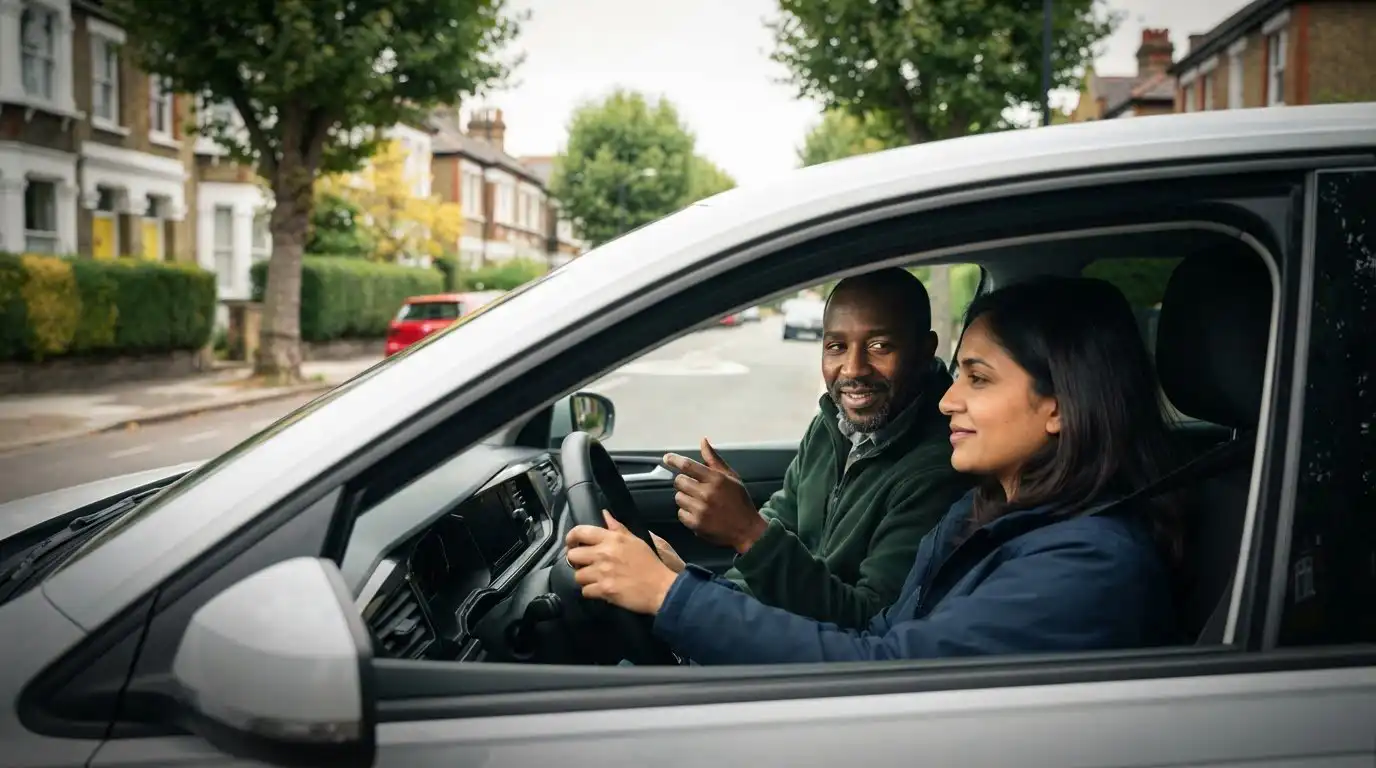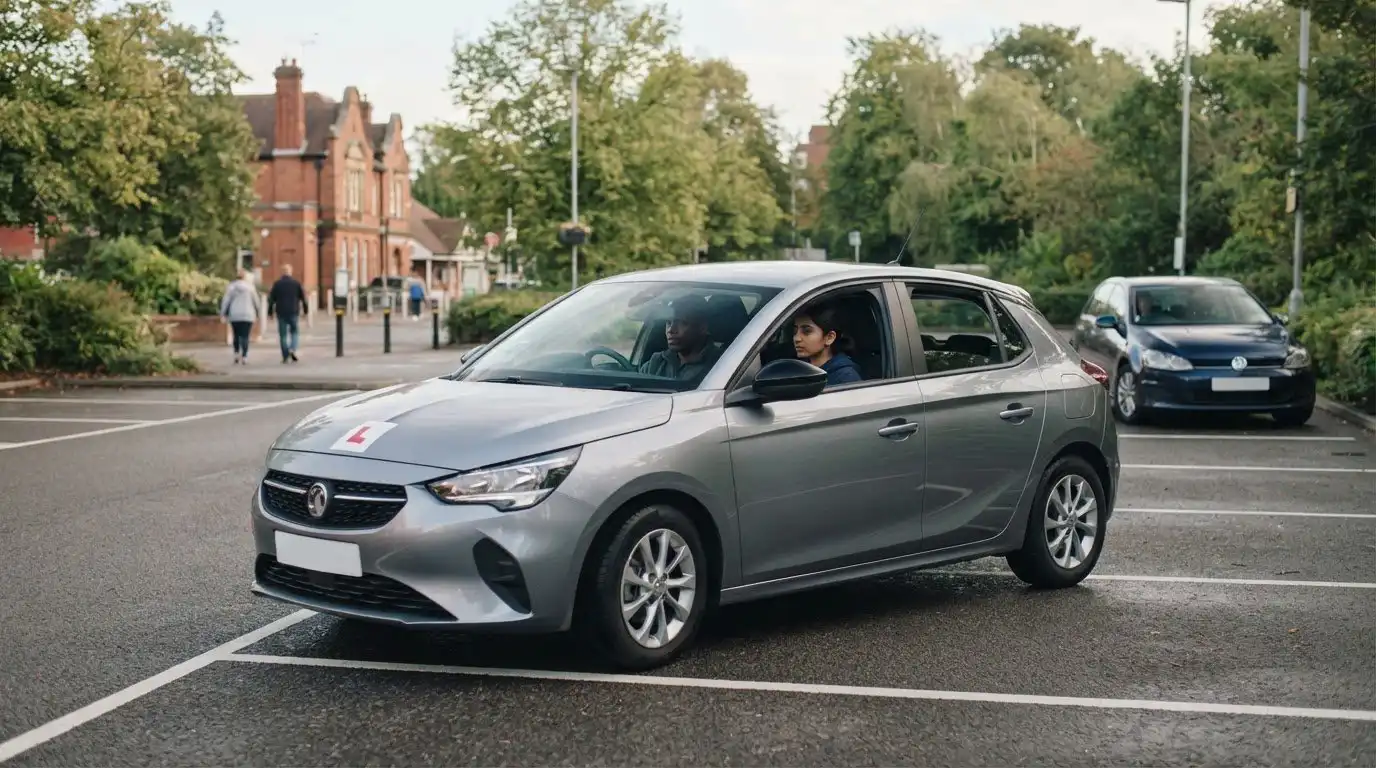
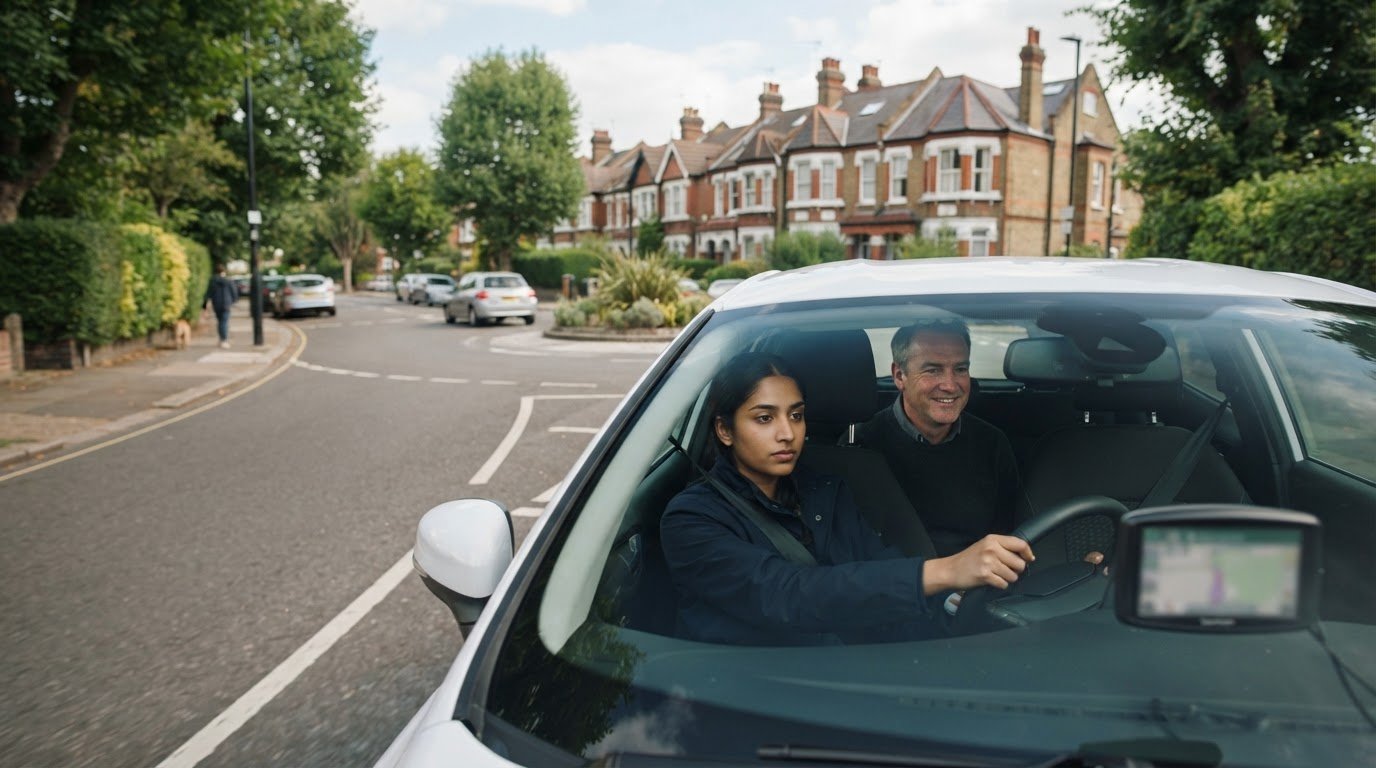
What if taking a wrong turn doesn’t automatically mean you’ve failed? The independent driving section is about making safe decisions, not memorising a route. These driving test independent driving section tips will help you keep that in mind.
It’s understandable to worry about missing a sat nav instruction, overlooking a road sign or losing your place while concentrating on the road. The key is to stay in control and avoid rushed corrections. If you miss a turn, continue safely and legally. The examiner can redirect you, and a safe wrong turn isn’t an automatic fail.
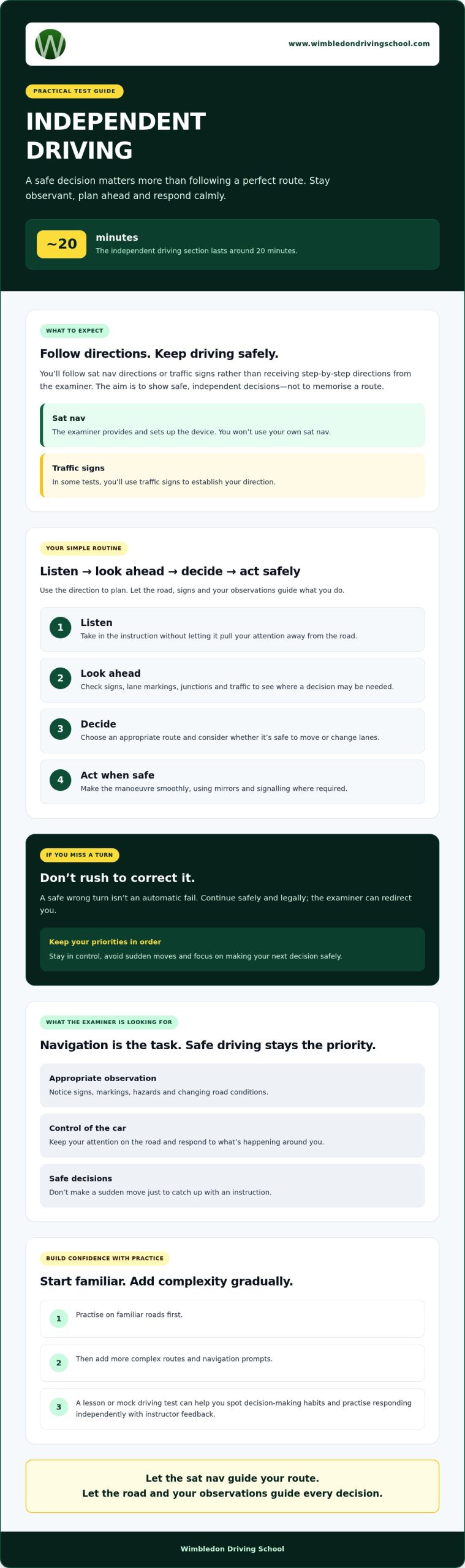
The independent driving section lasts around 20 minutes. You’ll follow sat nav directions or traffic signs while showing that you can plan ahead, respond to the road and make sensible decisions independently. This guide explains what the examiner is looking for and gives you a clear routine for following directions, prioritising signs and recovering if you go the wrong way. With practice, you can focus less on finding a perfect route and more on driving safely.
Key Takeaways
- Build a simple routine: listen to the direction, scan ahead, decide and act when it’s safe.
- Use road signs and lane markings to prepare for turns while keeping your attention on traffic and hazards.
- If you lose your place, avoid rushed corrections and focus on making your next decision safely.
- Build confidence gradually by practising on familiar roads before adding more complex routes and navigation prompts.
- A lesson or mock driving test can help you identify decision-making habits and practise responding independently with instructor feedback.
What happens during the independent driving section of your practical test?
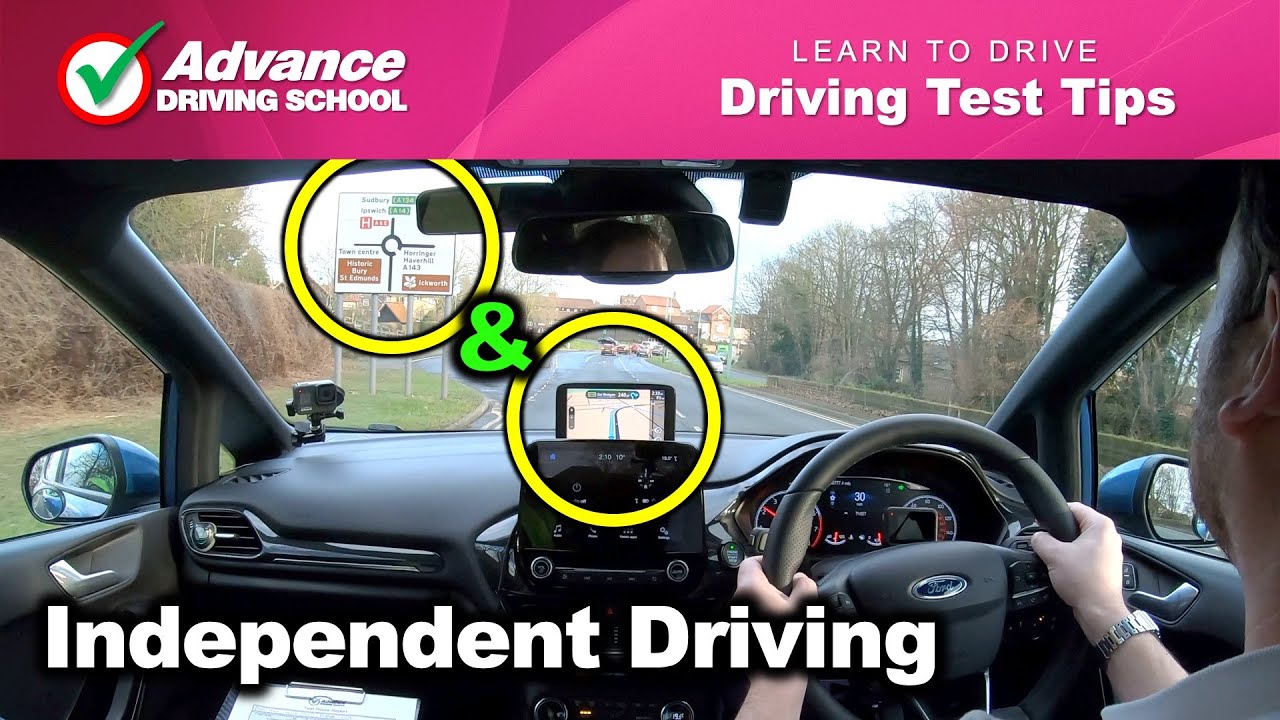
The independent driving section is the part of your practical test where you drive for around 20 minutes by following sat nav directions or traffic signs, rather than receiving step-by-step directions from the examiner. It assesses whether you can make safe, independent decisions on the road, not whether you can memorise a route.
Current DVSA guidance says the examiner will ask you to follow a sat nav in most tests. In other tests, you’ll follow traffic signs. The examiner provides and sets up the sat nav, so you won’t use your own device. Whichever method you’re given, keep your attention on the road and respond to what’s happening around you.
See the section in action:
What does the examiner want to see?
Your usual driving standard still matters. The examiner looks for appropriate observation, control of the car and safe decisions as you respond to directions and changing road conditions. Navigation is the task, but safe driving remains the priority.
You’re not being assessed on how well you know local roads or whether you can recall a route from memory. If you’re unsure where to go, don’t make a sudden move to catch up with an instruction. Keep driving safely and follow any further direction from the examiner.
Sat nav directions or traffic signs: what’s the difference?
With sat nav directions, you follow prompts from the device supplied for the test. With traffic signs, you use the signs to establish your direction. Both methods require you to plan ahead while maintaining control and awareness. Glance at the sat nav when appropriate, then return your attention to the road. Don’t let a prompt distract you from a sign, marking, hazard or developing situation.
For a wider overview of the test, read about the UK driving test structure and check the current practical test guidance on GOV.UK. You can also review questions you may be asked during your driving test to understand other parts of the experience. The key is to listen, observe and choose a safe response, rather than trying to follow a route perfectly.
Driving test independent driving section tips for following sat nav directions
A sat nav instruction is information to help you plan, not a command to follow at any cost. Listen for the next direction, check what the road is telling you and act only when you can do so safely. That balance is at the heart of good independent driving.
Use this short routine each time a prompt comes through:
- Listen. Take in the instruction without letting it pull your attention away from the road.
- Look ahead. Check signs, lane markings, junctions and traffic to identify where you may need to make a decision.
- Decide. Work out which route is appropriate and whether it’s safe to move or change lanes.
- Act when safe. Make the manoeuvre smoothly, using your mirrors and signalling where required.
For example, if the sat nav says to turn left ahead, check the road layout and signs so you can anticipate the junction. If lane markings show that you need to move across, plan the change in good time and check around you before moving. Don’t stare at the device, rush across traffic or make an abrupt turn because you think you’re running out of time.
Use a calm routine, not a fixed script
The steps are a way to organise your thinking, not a sequence of words or actions you must repeat exactly. Mirror checks and signalling should suit the manoeuvre and traffic conditions. Stay observant, make checks at the appropriate time and choose a safe gap before changing direction or position.
Let the sat nav guide your route, but let the road and your observations guide every driving decision.
What if you miss a turn or hear an instruction late?
Don’t swerve, brake sharply or cross a lane at the last moment to follow the original direction. Continue safely and legally. The sat nav may recalculate the route, or the examiner may give you another direction. Missing a turn matters less than how safely you respond.
If you’re unsure what the examiner has asked, keep control of the car and avoid guessing in a way that could put anyone at risk. For more context on instructions during the test, see this guide to questions you may be asked. GOV.UK also explains what happens during the test, including the independent driving section.
Practise this routine with an instructor so you can make decisions while staying focused on the road. Book a driving lesson to work on navigation and independent decision-making.
Does a wrong turn fail the independent driving section?
No, taking a wrong turn by itself doesn’t automatically mean you’ve failed. DVSA guidance focuses on how safely you drive, not whether you follow the intended route perfectly. If you miss an exit or turn, the examiner can give you further directions or the sat nav may reroute. Your response still matters: an unsafe manoeuvre to get back on course could affect your result.
Choosing an unintended route is different from making a dangerous decision because you’re worried about being off route. Don’t cut across a lane, turn where it isn’t safe or ignore signs to recover the original route. Continue safely and legally instead. These tips aren’t a promise that every mistake will have no effect; the examiner assesses the whole drive.
How should you recover after a missed instruction?
First, keep control of the car and respond to traffic, signs and the road layout. Don’t focus on correcting the route until you can do so safely. If the intended turn has passed, accept that the route may change and listen for the next direction. Continuing calmly gives you space to make a considered decision. A sudden correction can create risk for you and other road users.
If you’re unsure what to do, don’t guess with a last-second manoeuvre. Continue safely and wait for the sat nav to reroute or the examiner to guide you. The practical test assesses your driving, not your ability to retrace a route under pressure.
What if you feel nervous or lose concentration?
Notice the nerves, then bring your attention back to the immediate task. Breathe normally, check what’s happening around you and make the next safe decision. You don’t need to solve the whole route at once. Nervousness alone doesn’t determine the result. Focus on your driving and deal with one situation at a time.
Practising this reset during lessons can make it easier to use on test day. For more ideas, read these practical tips for relaxing before your driving test. Check the current GOV.UK guidance for the latest explanation of how the test is assessed.
How to practise independent driving before test day
Build independent driving skills gradually with an instructor. Start on familiar roads, where you can focus on noticing signs and planning ahead. Then practise in less familiar areas with more complex junctions and changing traffic conditions. The aim isn’t to learn a route by heart. It’s to make sound decisions as the road changes.
Build confidence with supported practice
Ask your instructor to reduce prompts as your confidence grows. You might begin with reminders to look for signs, then progress to following directions with fewer cues. Practise both navigation prompts and traffic signs while staying aware of other road users, hazards and the road layout.
After each drive, review your decisions calmly with your instructor:
- What signs, markings or hazards did you notice in time?
- What options did you consider, and why did you choose one?
- Where could you have planned earlier or made a smoother decision?
Practise responding to a missed prompt in different situations too. Your instructor can help you review whether you stayed focused on driving and how you handled the next direction. A mock driving test can show which areas need more work, such as observation, navigation or managing nerves. Treat it as practice and feedback, not a guarantee of a particular result.
Use local roads without relying on memorised routes
Knowing local roads can help you recognise layouts and anticipate features, but it can’t replace independent decision-making. Test routes can vary, so use familiarisation drives to practise reading signs and responding to what you encounter, rather than rehearsing turns as if they’re fixed.
If you’re preparing around Morden, this Morden driving test route guide can offer local context for practice. It isn’t a guaranteed test route. If you’re preparing in Surrey, practise on roads and in conditions relevant to your area, while still making decisions based on signs, markings and the live road situation.
Consistent, supported practice helps turn these tips into habits you can use beyond the test. You’ll build confidence by learning to assess each situation, not by trying to predict the route.
Get individual feedback on your independent driving skills
It can be difficult to spot your own driving habits while concentrating on the road. An instructor can observe how you respond to directions, where you look before a junction and whether you plan lane changes in good time. Specific feedback turns general advice into practical areas to work on.
For example, you might follow directions accurately but spend too long looking at the sat nav, or notice a sign but leave yourself little time to choose a safe lane. Your instructor can help you identify when you could make a decision earlier, then practise it again. The aim is clearer, safer decision-making, not simply remembering a route.
When can a mock driving test help?
A mock driving test gives you a chance to practise following directions in test-like conditions and receive feedback afterwards. It can show whether you’re managing navigation alongside observation and control, or whether nerves make it harder to plan ahead. It’s practice, not a prediction or guarantee of your practical test result.
Use the feedback to agree a focused next step with your instructor. That could mean practising sign-led directions, building confidence at unfamiliar junctions or working on how you respond when an instruction comes late. Review what happened and why, then take those points into your next drive.
Choose the next step that fits your preparation
Talk with your instructor about how confident you feel making independent decisions before your test. You could practise during a lesson or use a mock test to experience a longer period of following directions with fewer prompts. Ask for feedback on specific moments, such as scanning ahead, choosing a lane or maintaining awareness while navigating.
Choose the car and lesson type that match your needs. Wimbledon Driving School provides manual and automatic lessons, as well as mock driving tests, for learners across South West London, South East London, Surrey and Middlesex. Good practice builds on your current skills and addresses the areas you and your instructor identify, without promising a particular result.
With calm, individual feedback, you can make a clear plan for your next stage of learning. Book a lesson to practise independent driving.
Take your independent driving confidence onto the road
The key tips are simple: listen to directions, keep scanning the road and make each move only when it’s safe. You’re not expected to memorise a route. If you miss a turn, stay calm and focus on driving safely rather than making a rushed correction.
Practise following sat nav prompts and traffic signs with an instructor, then use clear feedback to decide what to work on next. A mock driving test can help you experience test-like conditions and identify specific skills to strengthen, but it can’t guarantee a result. Wimbledon Driving School offers lessons and mock tests across South West London, South East London, Surrey and Middlesex.
Take it one decision at a time. With steady practice, you can build confidence to handle the road ahead.
Frequently Asked Questions
How long is the independent driving section of the UK practical test?
The independent driving section lasts approximately 20 minutes. During this part of the practical car test, you’ll follow sat nav directions or traffic signs while continuing to drive safely and respond to the road. You aren’t expected to memorise a route. The examiner assesses your driving and decision-making, not your ability to navigate perfectly. Check GOV.UK for the latest practical test information before test day.
Can you fail your driving test for taking a wrong turn?
A wrong turn on its own isn’t an automatic fail. The examiner assesses how you drive, so a safe, legal turn onto an unintended road is different from making an unsafe manoeuvre to correct it. Don’t rush across lanes or turn suddenly to get back on course. The effect of any driving fault depends on the circumstances and your overall drive, so a particular result can’t be promised.
Can you ask the examiner to repeat an instruction?
Yes. If you didn’t hear or understand an instruction, you can ask the examiner to repeat it. Keep your attention on the road and maintain control while you ask. Don’t make a sudden manoeuvre because you’re unsure. If the instruction comes too late to follow safely, continue safely rather than rushing to carry it out. The examiner can provide further direction as the drive continues.
Do you have to follow a sat nav during independent driving?
No, not on every test. Current guidance says most candidates follow directions from a sat nav provided and set up by the examiner; some are asked to follow traffic signs instead. You won’t need to use your own device. Whichever method you’re given, keep watching the road, signs and traffic. Treat navigation as guidance, not a reason to make an unsafe move.
What happens if the sat nav gives directions that do not match the road signs?
Follow the road signs and markings if they conflict with a sat nav prompt. For example, if the device suggests a turn but signs prohibit entry, don’t take that road. Continue safely and wait for the sat nav to reroute or for the examiner to give another instruction. A navigation prompt never replaces your responsibility to observe the road and choose a safe, lawful response.
How can I practise the independent driving section before my test?
Ask your instructor to practise following traffic signs and navigation prompts, starting on familiar roads and gradually adding less familiar routes or busier junctions. Keep your attention on traffic and hazards, then review your decisions with your instructor: what you noticed, what you chose and what you could improve. These tips apply across South West London, South East London, Surrey and Middlesex, where Wimbledon Driving School provides lessons.
Is independent driving part of every practical driving test?
Yes, the independent driving section is included in every UK practical car driving test. You’ll be asked to follow either sat nav directions or traffic signs, depending on the test. The precise route and method can vary, so practise making safe decisions rather than learning one route by heart. Check the practical driving test information on GOV.UK for current details about the test format.
Disclaimer
This article is provided for general informational purposes only and does not constitute professional driving, legal, or safety advice. While we aim to keep our content accurate and up to date, rules, prices, and DVSA test requirements can change — always check gov.uk or contact us directly at 020 3524 7968 for the latest guidance before making any decisions. Nothing in this article guarantees a specific outcome, including passing your driving test within any stated timeframe. For current pricing, course availability, and instructor details, please visit our Prices page or get in touch.