Imagine sitting at a congested South West London junction; the lights turn green, and instead of moving, your car judders to a halt whilst the traffic behind you begins to swell. It’s a high-pressure moment that every learner fears, often caused by a lack of confidence in your gear shifting technique. Whether you’re worried about looking down at the stick or crunching through the gate, these hurdles can make the journey to your licence feel unnecessarily daunting.
We understand that mastering the manual gearbox is about more than just moving a lever. It’s about developing a rhythmic dialogue with your car that ensures every transition is effortless and precise. This guide provides the professional techniques you need to eliminate stalling and drive with total authority on British roads. You’ll gain the same high-level proficiency taught by our RoSPA Gold and IAM certified instructors, setting you on the path to a first-time pass.
We will break down the specific gear-to-speed ratios, the “palm” method for flawless selection, and the latest 2026 updates regarding first aid and test booking. By the end of this article, you’ll have the knowledge to navigate busy junctions with ease and secure your unrestricted UK driving licence with absolute confidence.
Key Takeaways
- Master the precise physical sequence required for fluid transitions between gears without ever needing to look down at the lever.
- Adopt the modern “Gears to go, Brakes to slow” approach to maintain superior vehicle control and safety in all traffic conditions.
- Refine your gear shifting rhythm to eliminate the frustration of stalling at busy junctions and protect your gearbox from wear.
- Learn how to interpret engine RPM signals so you can choose the most efficient gear for every speed range instinctively.
- Discover how professional guidance from elite instructors can transform your manual driving experience and accelerate your journey to a full licence.
Understanding the Basics of Gear Shifting in a Manual Car
Mastering a manual car begins with understanding that gear shifting is essentially a rhythmic conversation between your engine and the road. It’s the process of selecting the precise gear ratio to match your engine’s speed, ensuring the vehicle operates at peak efficiency without straining the mechanical components. Unlike an automatic, a manual car requires you to actively manage the balance between torque (the pulling power needed to start moving) and speed. This foundational knowledge is essential for anyone looking to move beyond basic operation toward true driving proficiency. You can find more technical details in this Comprehensive Guide to Manual Transmissions.
Every gear in your vehicle serves a distinct, functional purpose. First gear provides the immense torque needed to move the car from a standstill or tackle steep inclines, whilst higher gears like fifth or sixth are designed for fuel-efficient cruising at motorway speeds. Between these active gears sits the neutral position; it is the safe haven for the gear stick where no gears are engaged. It allows the engine to run without transferring power to the wheels, acting as a vital reset point during your journey.
To better understand this concept, watch this helpful video:
The Role of the Gear Stick and Clutch
The clutch pedal acts as the vital bridge in the transmission process. When you press it down, you temporarily disconnect the engine from the wheels, which allows you to move the gear stick into a new position without damaging the internal teeth of the gears. Most UK cars feature a standard H-pattern gearbox layout where odd numbers are usually at the top and even numbers at the bottom. Mastering the biting point, the exact moment the engine and wheels begin to reconnect, is the secret to smooth transitions. It’s a physical skill that, once learned through professional guidance, makes the car feel like a natural extension of your own body.
Why Manual Mastery Matters in 2026
Securing a manual licence in 2026 remains a prestigious milestone for any learner. It grants you the freedom to drive any car without restrictions, a flexibility that automatic-only drivers simply don’t possess. Beyond the legal benefits, manual mastery provides superior vehicle control in challenging environments. You can use engine braking on steep hills or maintain better traction in winter snow by selecting the right gear yourself. This level of expertise is exactly what we provide through our Expert Manual Driving Lessons, where our RoSPA Gold and IAM certified mentors help you achieve total road authority and long-term safety.
The Mechanics: How the Clutch and Gearbox Coordinate
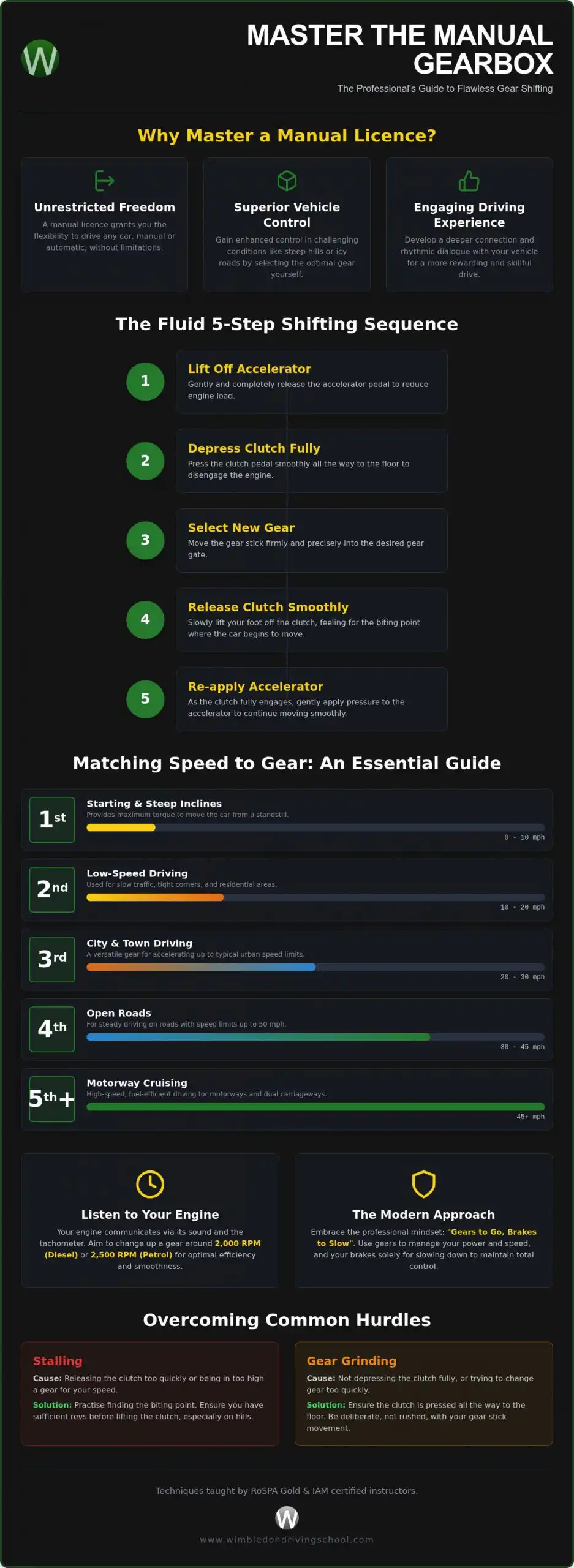
Successful gear shifting relies on a precise physical choreography between your left foot and your left hand. To achieve a seamless transition, you must follow a disciplined five-step sequence: lift off the accelerator, depress the clutch fully, select your new gear, release the clutch smoothly through the biting point, and gently reapply the gas. This cycle ensures the engine and transmission are synchronised before they reconnect, preventing the jarring movements that often unsettle nervous learners. Refining this coordination is much easier with a mentor by your side, which is why many students prefer to book a professional session to get it right from the start.
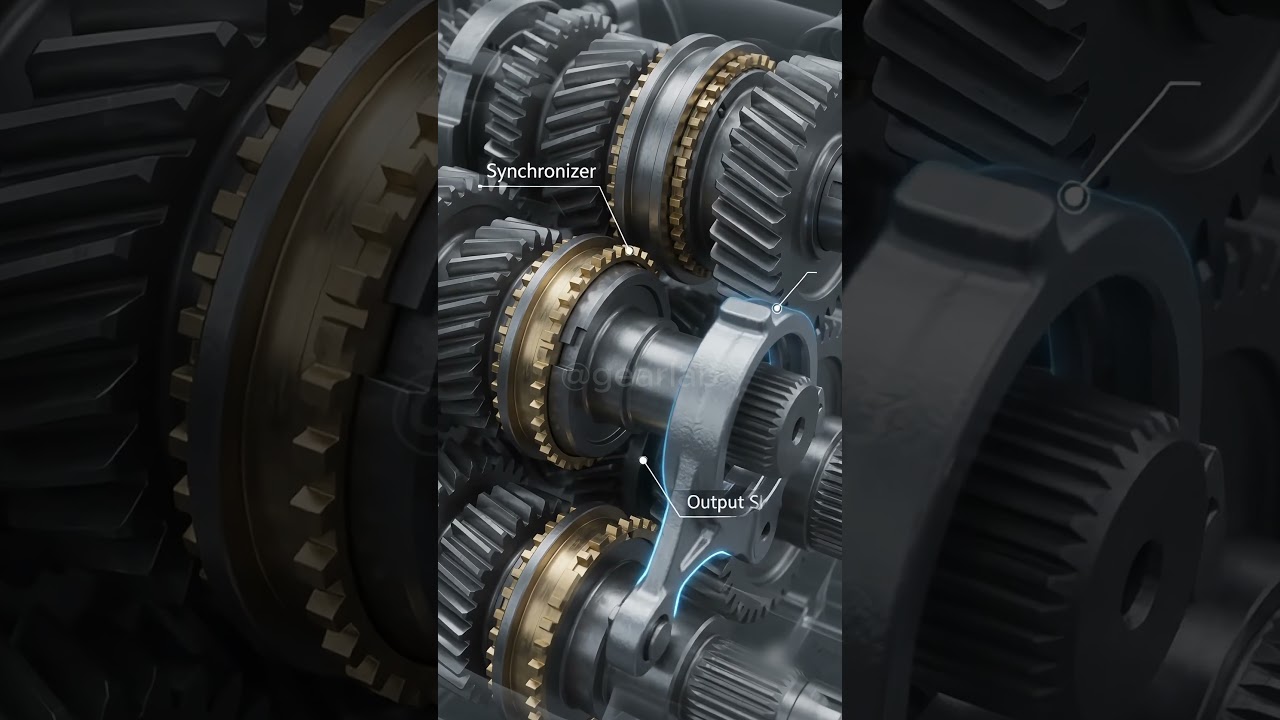
Your engine communicates its needs through Revolutions Per Minute (RPM), which you can see on the tachometer. In most modern petrol cars, the “sweet spot” for an upshift is typically around 2,500 RPM, whilst diesel engines usually require a change at approximately 2,000 RPM. Inside the gearbox, moving the stick slides a collar into place to lock a specific gear to the output shaft. To understand the complex synchronisation of these internal components, you can refer to MIT’s Explanation of a Manual Transmission. When you time the shift correctly, these parts align effortlessly, resulting in a silent and smooth transition.
The “Palm” Technique for Precision
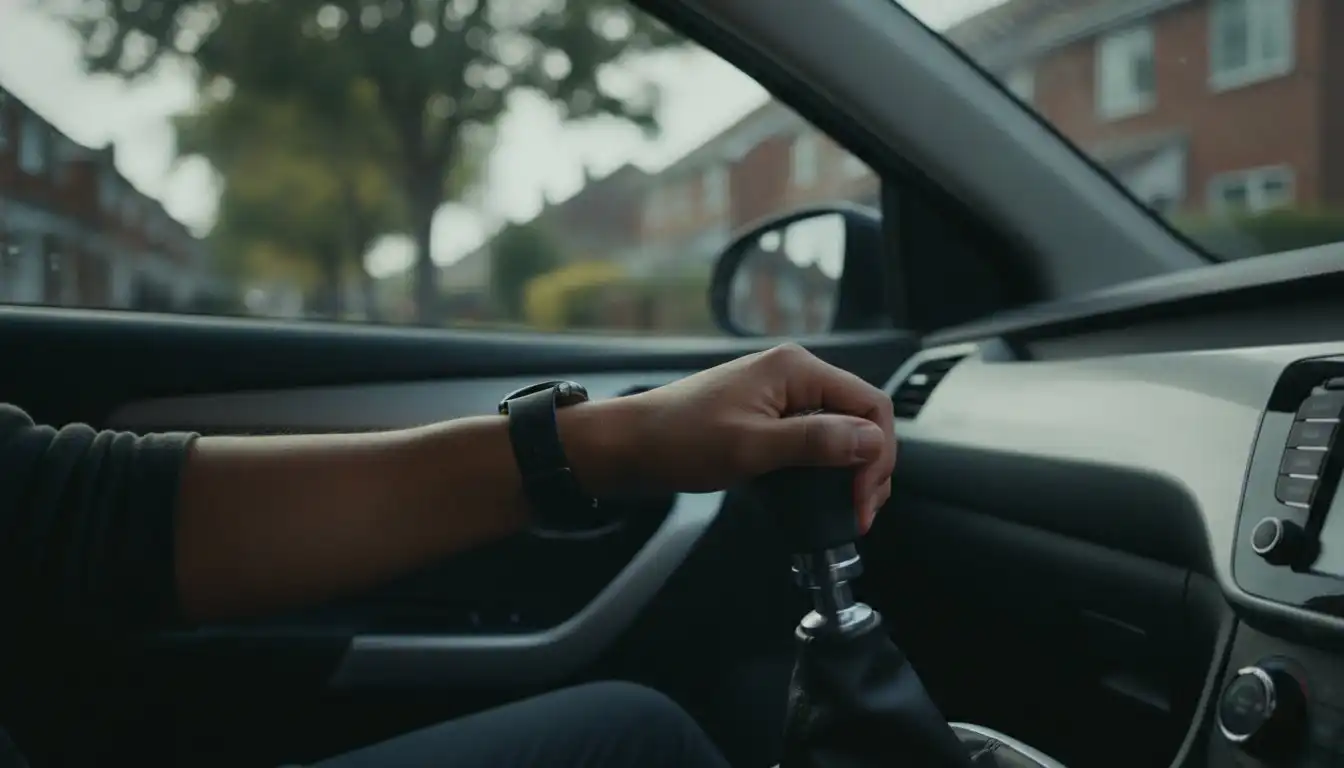
Precision comes from a light touch, not a firm grip. You should never clasp the gear stick like a joystick; instead, use the palm of your hand to guide it. For first and second gear, turn your palm away from you and push the lever to the left. For third and fourth, rely on the gearbox’s internal centring spring. If you move the stick into neutral and let go for a fraction of a second, the spring automatically aligns the lever directly beneath third gear. This professional method eliminates the risk of selecting the wrong gear and keeps your eyes firmly on the road ahead.
Smooth Clutch Release: Avoiding the Jolt
The most common cause of passenger discomfort is “popping” the clutch, which happens when the pedal is released too quickly. To avoid this, adopt a two-stage release technique. Bring the pedal up to the biting point, pause for a split second to allow the engine speeds to match, and then finish the release smoothly. You don’t need to look at the dashboard to know when to shift. Listen to the engine; a high-pitched whine suggests it’s time to upshift, whilst a low, struggling rumble indicates you need to move down a gear to maintain momentum.
Matching Speed and Gear: When to Upshift and Downshift
Matching your road speed to the correct gear is a skill that transforms driving from a mechanical task into a fluid experience. Whilst every car differs slightly, a reliable speed guide for standard manual vehicles is as follows:
- 1st Gear: 0-10 mph (Moving off and very slow manoeuvres)
- 2nd Gear: 10-20 mph (Turning into junctions and slow-moving traffic)
- 3rd Gear: 20-30 mph (Urban driving and residential roads)
- 4th Gear: 30-40 mph (Main arterial roads)
- 5th/6th Gear: 40+ mph (Dual carriageways and motorways)
The modern DVSA philosophy prioritises “Gears to go, Brakes to slow.” This means you use your footbrake to reduce speed to the desired level before selecting the gear needed to move away or negotiate the hazard. It replaces the outdated method of using the gearbox to slow the car down. This approach keeps the vehicle stable and reduces unnecessary clutch wear. It also simplifies your workload as you approach complex roundabouts or junctions.
Advanced learners also master “block changing,” which involves skipping intermediate gears when the situation allows. If you are braking from 50 mph to enter a side road at 15 mph, you don’t need to cycle through every gear. Once you’ve reached the correct speed, you can shift directly from 5th to 2nd. This technique shows a high level of gear shifting competence and is a key requirement for passing the practical test with a clean sheet.
Upshifting for Fuel Efficiency and Speed
Moving up through the gears early is the cornerstone of eco-safe driving. Aim to upshift at approximately 2,000 to 2,500 RPM to maximise fuel efficiency and minimise environmental impact. You’ll know it’s time to shift when the engine sound becomes more pronounced or “strained.” When joining fast-moving South West London traffic, such as the A3 or A24, prompt upshifting allows you to build momentum smoothly. This ensures you merge at a safe speed without over-revving the engine, making your drive both professional and relaxed.
Downshifting for Power and Control
Downshifting is your primary tool for maintaining authority over the vehicle. Mastering this aspect of gear shifting is vital for safety. If you’re navigating the steep inclines of the Surrey Hills, shifting to a lower gear provides the torque needed to climb without the engine labouring. On steep descents, a lower gear provides engine braking. This controls your speed naturally and prevents your brakes from overheating. As you approach a hazard, shifting down to 2nd gear ensures the car is responsive the moment you need to accelerate. Our Learning Centre provides more detailed breakdowns of these techniques for those preparing for their test.
Troubleshooting: Overcoming Stalling and Gear Grinding
Stalling at a busy South West London junction is often the primary source of anxiety for new drivers. It occurs when the engine is forced to work harder than its current power output allows, typically due to releasing the clutch too quickly or failing to apply enough accelerator. You might also stall if you inadvertently attempt to pull away in a high gear, such as third or fourth, rather than first. Whilst it feels like a significant event, stalling is simply a mechanical mismatch that you can resolve with a calm, disciplined approach.
The dreaded “grinding” sound is another common hurdle. This noise happens when the gear teeth haven’t fully synchronised before you attempt to engage the gear. It usually signals that the clutch pedal wasn’t depressed fully to the floor or that the gear stick was moved too aggressively. If you select the wrong gear, such as fourth instead of second when approaching a roundabout, the car will likely shudder and lose power. If this happens, don’t panic. Simply depress the clutch, re-select the appropriate gear for your speed, and continue your gear shifting sequence smoothly.
Eliminating the Fear of Stalling
During a driving test, a stall is not an automatic fail. The examiner looks at how you handle the recovery. If you stall, follow this professional sequence: apply the handbrake to secure the car, select neutral, restart the engine, and then prepare to move off again with a full observation. Managing the “panic” response is vital. Take a deep breath and remember that traffic can wait whilst you safely reset. For more advice on navigating high-pressure scenarios, see our Practical Driving Test 2026 Guide.
Preventing Gear Grinding and Wear
Consistency is the enemy of mechanical wear. To prevent grinding, ensure your seat is adjusted so you can comfortably push the clutch pedal all the way to the floor. Rushing the gear stick often leads to “crunching” because the internal synchronisers haven’t had a split second to align. A patient, deliberate movement is always superior to a fast, jerky one. Regular maintenance ensures your gearbox remains responsive, but the best protection for your vehicle is a refined gear shifting technique. If you want to eliminate these habits and drive like a professional, book your manual driving lessons with our RoSPA Gold certified mentors today.
Elevating Your Driving: Professional Manual Lessons with Wimbledon Driving School
Transitioning from understanding gear shifting theory to executing it perfectly on the road requires a mentor who balances technical expertise with genuine empathy. Wimbledon Driving School provides access to instructors holding the highest industry accolades, including RoSPA Gold and IAM certifications. This level of qualification ensures you aren’t just learning to pass a test; you’re developing a sophisticated driving style that prioritises safety and vehicle longevity. Our training programmes are meticulously designed to transform nervous learners into confident, unrestricted licence holders who feel at home behind the wheel.
Professional tuition is the most effective way to overcome the psychological hurdles of manual driving. We specialise in helping students who struggle with the coordination of the clutch and gearbox, providing a calm environment where mistakes become valuable learning opportunities. By choosing a premier provider, you benefit from a structured curriculum that has led to consistently high pass rates across South West London. We offer flexible scheduling to suit your lifestyle, with instructors available throughout Surrey and Middlesex to ensure your education fits seamlessly into your week.
Why Local Knowledge Matters
Navigating the intricate roundabouts of Morden or the high-volume junctions in Tolworth demands more than just basic car control. Our instructors use their deep familiarity with local test routes to create realistic practice scenarios that mirror exactly what you’ll face on the day of your practical exam. This targeted approach helps you build the specific muscle memory needed for smooth gear shifting under pressure. Practising in real-world London traffic ensures that by the time you reach the test centre, your mechanical actions are instinctive, allowing you to focus entirely on hazard perception and road positioning.
Start Your Journey Today
We believe that elite driving education should be accessible to everyone. Our competitive pricing and attractive block booking discounts make it easier to commit to the full course of instruction required for a first-time pass. Whilst we pride ourselves on our manual expertise, we also provide premium automatic driving lessons for those who prefer an alternative route to the road. Every lesson is an investment in a lifetime of safe, independent travel. Take the definitive step toward your personal milestone and book your first lesson with Wimbledon Driving School to experience the highest standard of driver training in the UK.
Secure Your Freedom on the Road
Mastering the manual gearbox is a transformative skill that unlocks the full potential of your UK driving licence. By understanding the physical mechanics of the clutch and adopting the “Gears to go, Brakes to slow” philosophy, you move from being a hesitant learner to a confident pilot. We’ve explored how to eliminate the fear of stalling and how to use engine signals to time your transitions with absolute precision. These techniques ensure your vehicle remains stable and efficient, regardless of the traffic conditions in South West London.
Since 2006, we’ve been trusted by nervous learners across London and Surrey to turn these technical challenges into intuitive habits. Our high pass rates are a testament to the expertise of our RoSPA Gold and IAM certified instructors. They act as confident mentors, guiding you through every stage of your journey with professional authority and encouraging warmth. It’s time to leave the frustration of crunching gears behind. Book Your Manual Driving Lessons with South West London’s Experts and start your journey toward total road authority today. With the right guidance, effortless gear shifting will soon become your second nature.
Frequently Asked Questions
How do I know which gear to be in without looking at the stick?
You should rely on the engine’s sound and the car’s physical feedback rather than your eyes. A high-pitched, straining engine noise signals that it is time to upshift, whilst a low, vibrating rumble suggests the engine is labouring and needs a lower gear. With professional guidance, you will develop the muscle memory to find each gear position instinctively by the feel of the stick’s resistance.
What happens if I accidentally put the car in the wrong gear?
The car will typically react with a noticeable jerk if the gear is too low or a lack of power if it is too high. If this occurs, don’t panic; simply depress the clutch pedal fully to disconnect the transmission. Re-evaluate your current road speed, select the appropriate gear, and release the clutch smoothly to continue your journey. It’s a common learning experience that rarely causes damage if corrected promptly.
Is it better to change gears at a certain RPM?
Most modern petrol engines operate most efficiently when you upshift at approximately 2,500 RPM, whilst diesel vehicles usually require a change at 2,000 RPM. Shifting at these points supports eco-safe driving, which is a core component of the UK practical test. Using your tachometer as a visual aid in early lessons helps you calibrate your hearing to the engine’s natural rhythm.
What is block changing and is it allowed on the driving test?
Block changing involves skipping intermediate gears, such as shifting from 5th directly to 2nd when approaching a junction. This gear shifting technique is fully supported and encouraged by the DVSA. It reduces your physical workload and minimises wear on the clutch. Demonstrating this skill during your test shows the examiner that you have a sophisticated understanding of vehicle control and speed management.
Why does my car jerk when I change gears?
Jerking is almost always caused by releasing the clutch pedal too quickly or failing to match the engine speed to the new gear. To achieve a smooth transition, use the “two-stage” release method. Bring the pedal to the biting point, pause for a fraction of a second to allow the synchronisers to align, and then finish the release. This deliberate pause is the secret to professional, seamless transitions.
Can I skip gears when downshifting?
You can certainly skip gears when downshifting, provided you have used your brakes to reach the correct speed for the new gear first. This is a vital part of modern gear shifting and is particularly useful when slowing down for roundabouts or traffic lights. As long as the car remains stable and the engine doesn’t over-rev, skipping gears is considered a safe and efficient driving practice.
How do I stop my car from stalling when moving off in 1st gear?
Prevent stalling by finding the biting point and setting the “gas” before you attempt to move. Hold the clutch pedal perfectly still at the biting point as the car begins to crawl forward. Only release the pedal fully once the car has gained enough momentum, usually after travelling several metres. This coordinated balance ensures the engine has sufficient power to move the car’s weight from a standstill.
Should I always go back to 1st gear when I stop at traffic lights?
Yes, you should select 1st gear once you have come to a complete halt so you are prepared to move off the moment the lights change. If you anticipate a long wait, apply your handbrake and select neutral to give your left foot a rest. This disciplined routine prevents the risk of accidentally pulling away in a higher gear, which is a frequent cause of stalling at busy junctions.
Disclaimer
This article is provided for general informational purposes only and does not constitute professional driving, legal, or safety advice. While we aim to keep our content accurate and up to date, rules, prices, and DVSA test requirements can change — always check gov.uk or contact us directly at 020 3524 7968 for the latest guidance before making any decisions. Nothing in this article guarantees a specific outcome, including passing your driving test within any stated timeframe. For current pricing, course availability, and instructor details, please visit our Prices page or get in touch.