While most learners reach for their phones to cancel at the first sign of a drizzle, a wet forecast is actually your greatest advantage on the road to a full licence. It’s completely natural to feel a surge of anxiety when heavy spray hits the windscreen or the threat of aquaplaning looms over a busy junction. However, choosing to embrace driving lessons in the rain london offers more than just a damp commute. It provides the elite-level training required to handle the capital’s most challenging conditions with total composure.
We understand that navigating reduced visibility and slippery surfaces feels daunting, but mastering these elements now is your secret weapon for passing the UK driving test. This guide transforms that nervous energy into professional proficiency. You’ll learn exactly how to configure your wipers and demisters for maximum clarity, how to adjust your braking distances, and why rainy-day tuition is the definitive way to build the confidence you need. We’ll show you how to turn a gloomy London afternoon into a transformative milestone in your driving journey.
Key Takeaways
- Understand why wet-weather tuition is a vital part of your training and how it prepares you for the realities of year-round driving in the capital.
- Master technical car controls and visibility settings during driving lessons in the rain london to ensure you remain safe and compliant during your practical test.
- Identify and navigate unique urban hazards like unpredictable pedestrian behaviour and hidden obstacles caused by heavy downpours.
- Discover how our RoSPA Gold and IAM-qualified instructors use a structured approach to transform nervous learners into confident, all-weather drivers.
- Gain the technical knowledge to manage braking distances and demisting systems so you can approach your test with total composure.
Why Driving Lessons in the Rain in London are Essential for Learners
London residents know that a clear morning can transform into a heavy downpour within minutes. Attempting to time your education around sunny intervals is not only impractical but also detrimental to your development as a safe driver. Mastering driving lessons in the rain london is a non-negotiable requirement for anyone serious about navigating the capital’s complex road network. Instead of viewing a wet forecast as a reason to postpone, treat it as a premium training opportunity that most fair-weather learners miss out on.
Rainy conditions act as a high-intensity classroom for your reflexes. When the tarmac is slick, your margin for error narrows; this forces you to develop a more sophisticated level of hazard perception. You learn to read the road surface for standing water, anticipate the erratic behaviour of other road users, and manage your vehicle’s secondary controls with precision. Every puddle and every blurred brake light ahead is a lesson in proactive safety that you simply cannot replicate on a dry day.
To better understand how these conditions look from the driver’s seat, watch this helpful video:
The Advantage of Learning in Real-World British Weather
The UK climate is famously unpredictable, and your practical test is just as likely to occur during a storm as it is in the sunshine. By committing to driving lessons in the rain london, you ensure that you aren’t caught off guard when it matters most. This experience is vital for those preparing for the Practical Driving Test 2026, as examiners specifically look for your ability to adapt your speed and positioning to the environment. Integrating these challenges into your tuition aligns with core road safety principles by teaching you to respect the physical limits of your vehicle. According to the Highway Code, you must at least double your following distance to four seconds when driving on wet roads to account for increased stopping distances.
Overcoming Rainy Day Driving Anxiety
It’s perfectly natural to feel a sense of apprehension whilst the rain is lashing against the windows. Many nervous learners worry about skidding or losing control, but our “Confident Mentor” approach is designed to replace that fear with technical mastery. Our elite team of instructors, many of whom hold prestigious RoSPA Gold certifications, provide a secure environment where you can test these conditions safely. We don’t just tell you to drive slower; we explain the physics of tyre grip and the mechanics of your vehicle. This professional guidance ensures that you remain calm, focused, and entirely in control, no matter what the London sky decides to do.
Mastering Car Control: Braking and Visibility Whilst Training
Safe driving in wet weather requires more than just a slower pace; it demands a technical understanding of how water affects your vehicle’s mechanics. When you attend driving lessons in the rain london, one of the first things you will notice is the change in “road feel.” Steering can suddenly become light or unresponsive if your tyres lose contact with the tarmac, a sensation often associated with the early stages of aquaplaning. Developing a sensitive touch for these physical cues is what separates a competent driver from a novice who is merely reacting to the environment.
Our instructors focus on the “See and Be Seen” principle to ensure you remain safe during London’s frequent low-light afternoons. This involves mastering the car’s secondary controls until their use becomes instinctive. You must learn to anticipate the need for these adjustments before your visibility is compromised. Following The Highway Code rules for adverse weather ensures you are not only driving safely but also meeting the high standards expected by DVSA examiners.
Managing Your Car’s Visibility Settings
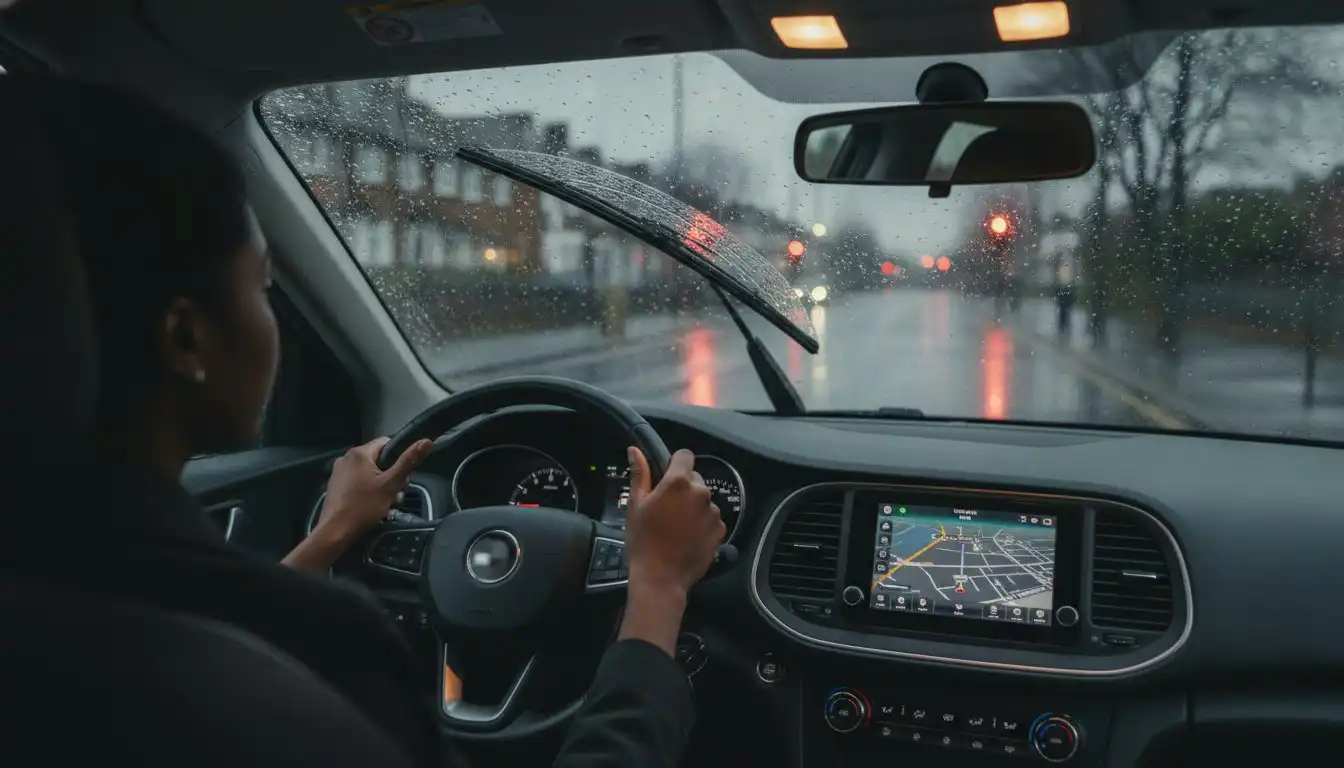
Effective visibility starts with your windscreen wipers. You should be comfortable toggling between intermittent, slow, and fast settings as the intensity of the rain fluctuates. Equally important is the use of demisters. Rain often causes a rapid temperature drop outside, leading to a “steamed-up” interior that can blind a driver in seconds. You must know how to balance the air conditioning and heater to maintain a crystal-clear view. Regarding lighting, dipped headlights are essential in heavy rain to ensure other road users can spot you through the spray, though you should avoid fog lights unless visibility drops below 100 metres.
Braking Distances and Speed Adjustment
The most critical adjustment in the wet is your following distance. Whilst the two-second rule is sufficient for dry roads, you must expand this to a minimum of four seconds when it’s raining. This extra space provides the “buffer” needed for progressive braking. Instead of sharp, sudden movements that might trigger the ABS or cause a skid, you should apply gentle, increasing pressure to the brake pedal. This technique keeps the car stable and prevents the wheels from locking. On faster London dual carriageways like the A3 or A4, the risk of aquaplaning increases significantly as tyres struggle to displace large volumes of water at high speeds.
When navigating urban streets, be mindful of large puddles. Driving through standing water too quickly can cause “water hammer” in the engine or, more commonly, drench pedestrians on the pavement. Practising these technical adjustments under the guidance of a professional ensures you are prepared for any eventuality, so don’t hesitate to schedule your next session even if clouds are gathering. Mastering these skills now ensures that you remain a calm, authoritative presence behind the wheel, regardless of the British weather.
Navigating London’s Unique Rainy Day Hazards
London’s urban landscape requires a specific brand of vigilance that only develops through experience. When a storm breaks over the capital, the environment doesn’t just become wetter; it becomes significantly more unpredictable. Taking driving lessons in the rain london allows you to navigate these complexities under professional supervision. You’ll move beyond basic car control and start reading the subtle, high-stakes changes in human behaviour and road physics that define London’s wet-weather traffic. This is where your hazard perception skills are truly forged.
Cyclists, Pedestrians, and Vulnerable Road Users
Urban rain creates a sense of urgency in pedestrians that often overrides basic road safety. In busy shopping districts like Wimbledon or Richmond, people frequently dart across the road to catch a bus or reach a shop entrance without a second glance. Umbrellas are a major hazard; they create significant blind spots for the person carrying them, meaning they might not see your vehicle approaching. You must develop a “sixth sense” for these movements, slowing down significantly in high-footfall areas to account for sudden, erratic dashes.
Vulnerable road users like cyclists and e-scooter riders are particularly exposed in these conditions. Rain makes it harder for them to see, and they often have to swerve abruptly to avoid deep puddles or slippery debris. You must offer them at least as much space as you would a car when overtaking. A minor wobble on a slick manhole cover could lead to a serious incident if you are too close. Adhering to the official Highway Code guidance for driving in wet weather ensures you maintain the safety margins necessary to protect everyone on the road.
London Road Surfaces and Markings
The very markings designed to keep us safe can become hazards in a downpour. The painted surfaces of bus lanes, cycle superhighways, and large directional arrows are notoriously slick. They offer far less traction than the standard road surface, making it easy for wheels to lose grip if you accelerate or brake too harshly whilst crossing them. Smooth, progressive inputs are essential to maintain stability over these painted sections.
You should also watch for “rainbow” patches on the tarmac. These oil slicks are common after a dry spell followed by rain, indicating areas where the road is exceptionally greasy. Additionally, London’s side streets are often plagued by potholes. During a storm, these deep craters fill with water, appearing as harmless, shallow puddles. Striking one at speed can damage your suspension or cause a sudden loss of steering control. Learning to distinguish between a surface-level puddle and a disguised hazard is a vital skill we prioritise. Exploring the areas we cover will show you how we tailor our instruction to these specific local challenges.

What to Expect During Your Rainy Day Driving Lesson and Test
When you attend driving lessons in the rain london with Wimbledon Driving School, the session begins with a technical briefing before you even pull away from the kerb. Your instructor will guide you through a pre-drive inspection, ensuring you understand how to manage the vehicle’s auxiliary systems. This isn’t just about getting from A to B; it’s about demonstrating total authority over the car’s environment. You’ll learn to assess the intensity of the downpour and select the appropriate wiper speed and lighting configuration before entering the flow of traffic.
Our structured approach ensures you aren’t just reacting to the weather but are actively managing it. Instructors will identify specific local routes where rain causes the most disruption, such as junctions with poor drainage or areas where heavy spray from larger vehicles is common. This preparation is designed to build the muscle memory required for the practical test, where every decision you make regarding visibility and speed is under scrutiny by the examiner.
Does the DVSA Cancel Driving Tests for Rain?
A common misconception amongst learners is that a wet forecast will lead to a cancelled appointment. In reality, the DVSA almost never cancels a test due to rain alone. While extreme conditions like flooding, thick fog, or dangerous high winds may stop play, standard British rain is considered a routine part of the driving environment. Decisions regarding cancellations are often made only one or two hours before the scheduled time, so you should always attend your appointment unless told otherwise.
Examiners expect you to “drive to the conditions.” This means you must proactively reduce your speed below the posted limit if the road is slick or visibility is restricted. Sticking rigidly to a 30mph limit when the rain is torrential could be marked as a fault if it’s deemed unsafe for the environment. Crucially, failing to use your windscreen wipers or neglecting to clear a misted rear window can result in a serious fault, as it demonstrates a fundamental lack of awareness regarding road safety.
Your Rainy Lesson Checklist
Preparation is the ultimate antidote to anxiety. Use this checklist to ensure you are physically and mentally ready for your session:
- Footwear: Wear comfortable shoes with plenty of grip. Always dry your soles on the car carpet before you start driving to prevent your feet from slipping off the pedals during a critical manoeuvre.
- External Lights: Confirm with your instructor that all lights are functional. Remember that dipped headlights are your primary tool for being seen by others in heavy spray.
- Show Me, Tell Me: Rehearse the questions regarding tyre tread depth and the operation of demister controls. These are high-probability questions during a rainy test day.
- Speed Awareness: Mentally prepare to stay well below the speed limit if the conditions demand it. The examiner is looking for safety and composure, not your ability to reach the maximum allowed speed.
For more comprehensive resources on handling adverse weather and mastering the 2026 test standards, visit our Learning Centre. If you’re ready to gain a competitive advantage and master the roads regardless of the forecast, book your next driving lesson today and start your journey toward a first-time pass.
Building All-Weather Confidence with Wimbledon Driving School
Wimbledon Driving School has established itself as the premier choice for students seeking more than just a basic pass. We believe that a wet forecast shouldn’t be a reason to stay indoors; rather, it’s the ultimate finishing school for what we call the “prestige” driver. By choosing driving lessons in the rain london with our elite team, you’re aligning yourself with the highest industry standards. Our high pass rates aren’t accidental; they’re the direct result of a comprehensive curriculum delivered by a team of instructors who are as serious about your safety as you are about your success.
The calibre of our staff is what truly sets us apart in a competitive London market. Many of our instructors hold prestigious RoSPA Gold or IAM advanced certifications, meaning they possess a technical depth that goes far beyond the standard ADI requirements. This expertise allows us to transform nervous learners into composed, authoritative drivers who don’t just survive a storm but master it. We frame every rainy session as a transformative journey toward a personal milestone, ensuring you feel supported and secure at every stage of your education.
Expert Instruction Tailored to Your Needs
Whether you require manual driving lessons or prefer automatic driving lessons, our training is meticulously adapted to the day’s conditions. Our instructors possess an intimate, professional knowledge of local test routes in Morden, Tolworth, and Mitcham. We know exactly where the road markings become obscured during a downpour or which junctions in South West London require a more conservative approach when the tarmac is slick. This level of local insight gives you a definitive advantage on test day. With our 7-day-a-week availability, you can maintain the momentum of your training regardless of the British weather.
Start Your Journey Today
Don’t let a few clouds hold you back from achieving your goals. Mastering the London roads in all conditions is the hallmark of a truly competent driver, and we’re here to guide you through that process with confidence and warmth. We recommend booking a block of lessons to secure a consistent schedule, which is essential for building the muscle memory needed to handle adverse weather instinctively. You can view our competitive rates on our pricing page and select the package that best fits your needs. Take the first step toward becoming an elite, all-weather driver and join the thousands of successful students who have trusted us to help them reach their destination.
Master the Elements and Secure Your Pass
Transforming a rainy forecast into a successful pass certificate is a matter of professional mindset and technical mastery. You now understand that precision with vehicle controls and a proactive approach to London’s unique urban hazards turns a challenging afternoon into a superior training opportunity. Embracing driving lessons in the rain london is the definitive way to build the resilience and expertise required for a lifetime of safe driving in the capital.
Our elite instructors, many of whom hold RoSPA Gold and IAM certifications, specialise in helping nervous drivers gain absolute confidence. We take pride in maintaining one of the highest pass rates in the UK by ensuring our students are prepared for every reality of the road. Your journey toward a full licence is a transformative milestone, and we provide the safest, most effective path to reaching it. Don’t let the weather dictate your progress; embrace the challenge and join a community of high-achieving drivers.
Book your London driving lessons with our expert instructors today and secure your place with a premier provider. We look forward to seeing you behind the wheel, rain or shine.
Frequently Asked Questions
Will my driving lesson be cancelled if it rains in London?
Driving lessons in the rain london are almost never cancelled unless the weather poses a severe safety risk like flooding or extreme gales. We view wet weather as a premium training opportunity that most learners miss. It allows you to master real-world skills under the guidance of our expert instructors, ensuring you aren’t a fair-weather driver who struggles when the clouds break. Embracing these conditions now builds the elite confidence you’ll need for your test.
How much slower should I drive in the rain during my test?
You must adapt your speed to the environment rather than strictly following the maximum limit. If visibility is poor or the road surface is heavy with standing water, reducing your speed by a sensible margin is often necessary. The examiner prioritises safety and composure over speed. They want to see that you recognise that stopping distances double on slick tarmac, requiring a proactive and disciplined approach to your journey.
What happens if I aquaplane during a driving lesson?
Stay calm, ease off the accelerator, and keep the steering wheel straight if you feel the car begin to slide. You should avoid braking suddenly, as this can cause a skid once the tyres regain grip. Our RoSPA Gold-certified mentors prepare you for these specific moments, turning a potentially frightening experience into a controlled lesson in vehicle physics. Mastering this composure is what separates a prestige driver from a novice who merely reacts to the road.
Do I need to use my headlights during a rainy daytime lesson?
Use dipped headlights during the day if the rain is heavy enough to restrict your view. This ensures other road users can see your vehicle through the heavy spray and low light common in the capital. Failing to use appropriate lighting when visibility is low is a common reason for faults during the practical test. Your instructor will teach you to make these technical adjustments instinctively before your view is compromised.
Can I fail my driving test for splashing a pedestrian?
Splashing a pedestrian is a serious fault that will likely result in an immediate test failure. It’s also an offence under the Road Traffic Act 1988 for driving without reasonable consideration for others. You must remain vigilant and adjust your road position or speed to avoid large puddles near pavements or bus stops. Demonstrating this level of empathy and awareness is a key part of becoming a safe, professional driver.
Is it harder to pass a driving test in the rain?
Passing in the rain is entirely achievable if you demonstrate that you can adapt your driving style. Many students find that the extra focus required for driving lessons in the rain london actually sharpens their hazard perception skills. The examiner isn’t looking for perfection in the weather; they are looking for your ability to manage the car’s controls and maintain safety margins. Professional preparation makes a wet-weather pass a definitive badge of honour.
What should I do if my windows mist up whilst driving?
Act immediately by using the vehicle’s heater and air conditioning to clear the glass. You should direct the airflow toward the windscreen and activate the heated rear window button to maintain 360-degree visibility. Misted windows are a significant safety hazard and a frequent cause of test faults. Your instructor will ensure you are familiar with these controls so you can operate them confidently without taking your eyes off the road or losing focus.
Are automatic cars easier to drive in the rain than manual cars?
Automatic vehicles simplify the process by removing gear changes, allowing you to focus more mental energy on hazard perception. This is particularly useful in heavy downpours where steering and visibility demand your full attention. However, the core safety principles like increased following distances and gentle braking apply to every vehicle. Whether you choose manual or automatic, our instructors ensure you develop the technical mastery required for London’s wet roads.
Disclaimer
This article is provided for general informational purposes only and does not constitute professional driving, legal, or safety advice. While we aim to keep our content accurate and up to date, rules, prices, and DVSA test requirements can change — always check gov.uk or contact us directly at 020 3524 7968 for the latest guidance before making any decisions. Nothing in this article guarantees a specific outcome, including passing your driving test within any stated timeframe. For current pricing, course availability, and instructor details, please visit our Prices page or get in touch.