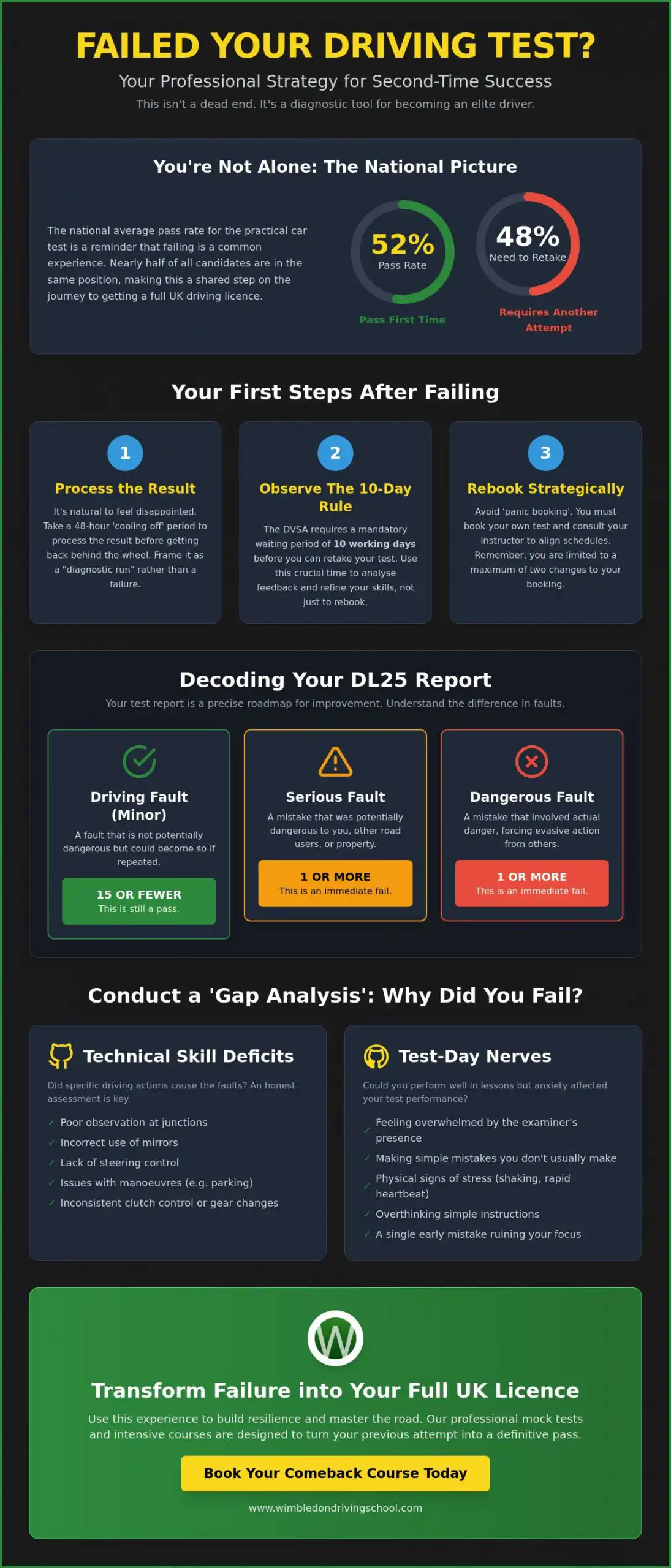
Did you know that the national average pass rate for the practical car test currently sits at approximately 52 per cent? This means that nearly half of all candidates are in the exact same position as you right now. If you have failed driving test what to do next uk learners need a clear, professional strategy to return to the road with confidence. It is natural to feel a sting of embarrassment or worry about the financial stress of rebooking, but this result is not a dead end. It is a transformative milestone in your journey toward becoming a safe, elite driver.
We understand the frustration of feeling ready only to be tripped up by a single serious fault or a bout of test-day nerves. It feels like a setback, but your DL25 report is actually a high-fidelity diagnostic tool that guarantees a stronger second attempt if analysed correctly. This guide provides the professional authority you need to process your result and build a strategic plan to secure your full UK driving licence.
We will show you how to decode examiner feedback, navigate the mandatory 10-working-day waiting period, and master the 2026 booking regulations to ensure your next attempt is an absolute success.
Key Takeaways
- Understand why you must observe the mandatory 10-working-day waiting period and avoid the common mistake of ‘panic booking’ without expert guidance.
- Discover how to decode your digital DL25 report to distinguish between minor driving faults and serious safety errors.
- Perform an honest gap analysis to determine if you failed driving test what to do next uk learners should focus on technical skill deficits or managing test-day nerves.
- Utilise professional mock tests to simulate the formal examiner environment and build the resilience needed for a successful second attempt.
- Explore how specialised instruction and intensive courses can transform past failure into a definitive path toward your full UK driving licence.
Immediate Steps: Processing the Result and Rebooking Rules
The moment the examiner says “I’m sorry, you haven’t passed today” is undeniably tough. However, elite drivers view this not as a defeat, but as a critical diagnostic phase in the UK driving test process. When you’ve failed driving test what to do next uk candidates often feel a rush to fix the mistake immediately. Whilst this ambition is admirable, the DVSA mandates a deliberate pause. You must wait at least 10 working days before you can sit another practical test. This period is not a punishment; it’s a vital window to refine your technique and ensure your next attempt is your definitive success.
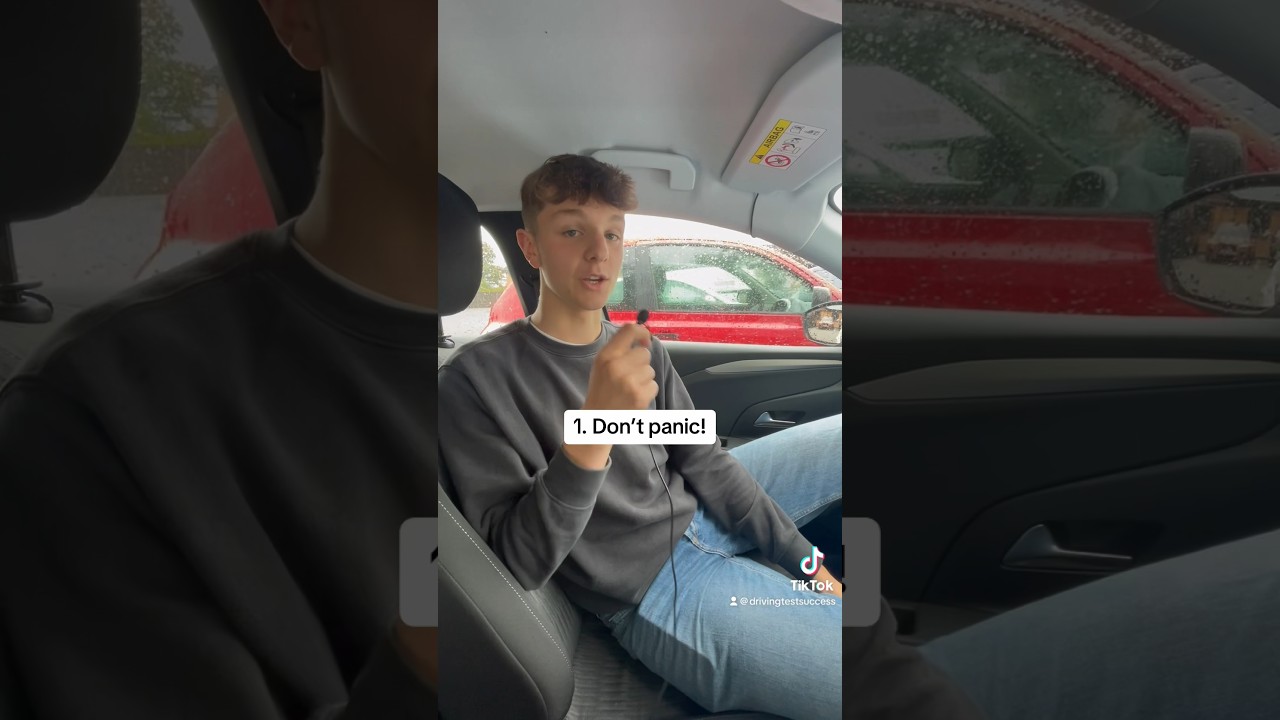
To help you process the initial shock and understand your immediate options when you’ve failed driving test what to do next uk learners should watch this helpful guide:
The 10-Day Rule and Booking Strategy
The 10-day rule refers specifically to working days. This includes Saturdays but excludes Sundays and bank holidays. In 2026, the booking landscape has changed significantly to ensure fairness for all learners. You are now legally required to manage your own booking through the official DVSA service. Professional instructors and third-party services are no longer permitted to book on your behalf. Additionally, you are limited to a maximum of two changes to your booking. You can only move your test to one of the three nearest test centres to your original choice. These regulations make ‘panic booking’ a dangerous gamble. Instead of grabbing the first available slot, consult your instructor to ensure the date aligns with their availability. For those aiming for a rapid recovery, exploring a fast-track intensive driving course can be the most effective way to secure a new date whilst the skills are still fresh.
Managing the Emotional Aftermath
Failing a test is a common rite of passage amongst UK learners. It doesn’t define your ability as a driver; it simply highlights specific areas that need professional polish. Take a 48-hour ‘cooling off’ period before getting back behind the wheel to process the disappointment. When discussing the result with friends or family, frame it as a “diagnostic run” to reduce social pressure. If you choose to practise privately during this time, remember the legal essentials. Your supervisor must be over 21 and have held a valid licence for three years. The vehicle must display L-plates and have the correct learner insurance. This grounded approach ensures you return to your lessons with the right mindset for achievement.
Decoding Your DL25: Understanding Why You Failed
The examiner’s verbal debrief and the subsequent digital report are the most objective assessments of your driving you’ll ever receive. When you have failed driving test what to do next uk candidates often find the DL25 report in their inbox shortly after the test ends. This document isn’t merely a record of a setback; it’s a precise diagnostic tool that highlights exactly where your performance fell short of the required standard. Whilst the official rebooking rules dictate when you can try again, the DL25 dictates how you should prepare.
To pass, you must demonstrate a high level of proficiency across all categories. The DVSA categorises faults into a clear hierarchy. Driving Faults, commonly known as ‘minors’, are not potentially dangerous on their own, but a tally of 16 or more results in a fail. However, a single ‘Serious’ or ‘Dangerous’ fault ends your hopes of passing immediately. Understanding the nuance between these marks is the first step in your journey back to the test centre.
Serious vs. Dangerous Faults
A Serious fault represents a mistake that was potentially dangerous. For example, failing to check a blind spot at a quiet junction is ‘Serious’ because a cyclist could have been there. A Dangerous fault is an action that forced the examiner or another road user to take evasive action. Common ‘Serious’ marks often involve junction observations, signal timing, and steering control. These are frequently the result of repeated minor habits that went unchecked during your initial training.
Analysing Fault Clusters
Identifying patterns is crucial. If you have multiple minors in one category, like ‘mirrors’, it signals a habit that will eventually lead to a serious fault. Distinguishing between a ‘one-off’ nerves-based error and a fundamental skill gap is easier when you look at these clusters. Share the report with your instructor to create a targeted lesson plan that addresses these specific weaknesses. By transforming the examiner’s data into a tailored training plan, you ensure that your next test isn’t just another attempt, but a guaranteed success.
Conducting a ‘Gap Analysis’ on Your Driving Skills
A professional gap analysis is the bridge between your current performance and the National Standard for Driving Cars. Once you have failed driving test what to do next uk learners should prioritise an honest self-assessment over emotional frustration. The most dangerous trap a candidate can fall into is believing they were “just unlucky” with a particular examiner or a busy junction. This mindset is a significant predictor of second-time failure because it prevents you from addressing the underlying habits that led to the fault. Luck rarely determines a result; consistent, safe behaviour does.
To move forward, you must compare your test experience against the most common driving test faults recorded by the DVSA. If your serious fault involved junction observations or mirror use, it’s highly likely this was a recurring issue during your lessons that finally manifested under pressure. Professional tuition is far more effective than private practice for fixing these “Serious” faults. Whilst a family member can help with mileage, only a qualified instructor can identify the subtle mechanical or observational errors that an examiner will spot immediately.
Skill Deficit vs. Performance Anxiety
You must distinguish between not knowing a rule and failing to execute it due to pressure. If you failed because you didn’t understand who had priority at a complex roundabout, you have a skill deficit. This requires a return to The Highway Code and focused technical lessons. Conversely, if you stalled or missed a blatant road sign because your heart was racing, you are dealing with performance anxiety. Addressing “Hesitation” faults often requires building the confidence to take safe gaps, a skill best honed through a structured intensive driving course that keeps your momentum high.
Targeted Refresher Lessons
Even if you only received one serious fault, we recommend booking at least 5 to 10 hours of professional tuition before your next attempt. This isn’t about learning to drive from scratch; it’s about surgical refinement. Use this time to focus on the specific test routes and junctions that caused issues during your first run. You should also use these sessions to perfect your “Show Me, Tell Me” questions. Starting the test with a confident, correct answer sets a positive tone for the next 40 minutes. By treating your return to the road as a professional upgrade rather than a simple retake, you ensure you meet the high standards required for success in 2026.
The Power of Mock Tests and Strategic Preparation
A standard driving lesson is a collaborative dialogue between you and your mentor. A professional mock test, by contrast, is a solitary performance designed to expose any lingering vulnerabilities in your technique. When you’ve failed driving test what to do next uk candidates often find that their technical skills are sufficient, but their ability to perform under the clinical silence of an exam environment is not. Strategic preparation requires more than just more hours on the road; it demands a high-fidelity simulation of the test day itself.
The psychological benefit of ‘failing’ a mock test cannot be overstated. It is far better to identify a serious fault during a practice run than during the actual exam. By simulating the formal examiner environment, which includes strict silence, formal instructions, and zero assistance, you build the mental resilience required to stay calm. This process transforms the unknown into the familiar, ensuring that when you arrive for your real appointment, you feel like you are simply repeating a successful routine.
What a Professional Mock Test Involves
To truly master the ‘stranger’ element of the exam, we recommend taking a mock test with a different instructor. This removes the comfort of your usual mentor and forces you to adapt to a new personality, just as you will on the day. During these sessions, we often record specific manoeuvres to review body language and observation patterns later. We encourage our students to aim for a ‘Pass Plus’ standard during these trials. By setting a higher margin of safety than the DVSA requires, you ensure that even if nerves cause a slight dip in performance, you still remain well within the passing threshold.
Test Centre Specific Strategy
Success often depends on your ability to master specific regional hazards. Whether you are booked at Morden, Tolworth, or Mitcham, each centre has its own ‘hot spots’ where learners frequently pick up minors. For instance, navigating the complex roundabouts in Sutton requires precise lane discipline and early observations that differ from the quieter routes in rural areas. Understanding local traffic flow and how it changes during peak hours is essential for a confident second attempt. For a deeper dive into current requirements, read our Practical Driving Test 2026: The Ultimate Guide to Passing First Time.
Mastering these local nuances is the final piece of the puzzle. If you want to ensure your next run is your last, you can book a professional mock test with our expert team today to identify exactly where you can improve.
The Wimbledon Driving School Approach to Second-Time Success
Securing your licence after a setback requires more than just persistence; it requires a partnership with an industry leader. At Wimbledon Driving School, we specialise in turning a previous fail into a definitive pass. If you have failed driving test what to do next uk learners often find that their previous instruction lacked the rigour needed for 2026 standards. Our approach replaces failure trauma with professional confidence. We ensure you return to the test centre not just hoping for a result, but expecting one. We don’t just promise instruction; we frame your service as a transformative journey toward a personal milestone.
Our Refresher and Intensive Courses
We don’t believe in generic, “one size fits all” lessons. When you have failed driving test what to do next uk candidates need a mentor who can translate data into action. Your path to success starts with a clinical analysis of your DL25 report. We use this data to tailor a bespoke training plan that eliminates wasted time and focuses purely on your growth areas. Whether you require manual driving lessons to master gear control or automatic driving lessons to focus on complex South West London junctions, our curriculum is adaptive. For those who need to secure their licence rapidly, our Intensive Driving Course London: The 2026 Buying Guide to Passing Fast provides a high-impact solution that fits around your professional or academic commitments.
Why Experience Matters
Our status as a premier provider is rooted in a legacy of excellence that dates back to 2006. We take pride in our elite team of instructors, many of whom hold prestigious RoSPA Gold and IAM certifications. This level of professional authority is amongst the highest in the country. It provides you with a sense of security that smaller schools simply cannot match. Whilst some providers offer basic instruction, we deliver a comprehensive service that includes rigorous mock testing and ADI-certified expertise. We understand the specific logistical needs of modern learners in South West London and Surrey, offering flexible booking options that respect your time. Our high pass rates are a direct result of this disciplined and accommodating approach.
The journey to your full UK driving licence is a transformative experience. Make the safest and most effective choice for your education by choosing a mentor who understands the gravity of the requirement. This is the highest industry standard. Book your assessment lesson with Wimbledon Driving School today and take the definitive step toward your achievement.
Secure Your Full Licence on the Next Attempt
A failed test is not the end of your driving journey; it is a vital recalibration. By decoding your DL25 report and conducting a rigorous gap analysis, you transform a temporary setback into a clear blueprint for achievement. When you have failed driving test what to do next uk learners must choose a strategic path that prioritises professional refinement over repetitive, unguided practice. Mastering the clinical environment of the test centre through high-fidelity mock tests ensures your next appearance is a calm, successful formality.
Wimbledon Driving School provides the elite expertise required to cross the finish line with confidence. Our instructors hold prestigious RoSPA Gold and IAM certifications, offering a level of professional authority that is amongst the highest in the country. We are specialists in supporting nervous learners and proudly maintain one of the highest pass rates in the UK. By choosing the highest industry standard, you ensure your education is both safe and definitive.
Book Your Refresher Lessons with Wimbledon Driving School today to begin your journey toward success. You have the potential to be an elite driver; now it’s time to secure the result you deserve.
Frequently Asked Questions
How long do I have to wait to rebook my driving test after failing?
You must wait at least 10 working days before you can take another practical driving test in the UK. This mandatory period includes Saturdays but excludes Sundays and bank holidays. It is designed to ensure you have sufficient time to reflect on your performance and undertake the necessary professional training to correct your faults.
Do I need to take more lessons if I only failed on one serious fault?
Yes, we strongly recommend booking additional professional tuition even if your result was decided by a single serious fault. One serious error is often the result of deep-seated habits or a lack of confidence under pressure that only a qualified instructor can identify. Taking 5 to 10 hours of refresher lessons ensures you don’t repeat the same mistake during your next attempt.
Can I book a driving test at a different test centre than the one I failed at?
You can choose a different location, but 2026 regulations now limit your flexibility to ensure fairness. You are only permitted to move a booking to one of the three nearest test centres to your original choice. This change encourages candidates to master their local road networks and regional hazards rather than searching for perceived “easier” routes elsewhere.
What is a DL25 report and where can I find mine?
The DL25 is your official digital driving test report which categorises every fault recorded during your exam. If you have failed driving test what to do next uk candidates will receive this document via email shortly after the test concludes. It serves as a precise diagnostic map that your instructor will use to tailor your future lessons.
Will my driving instructor charge me more for a second test?
Instructors do not charge a “failure fee”, but you will need to pay for their professional time on the day of your next test. This usually includes a final warm-up lesson and the hire of the dual-controlled vehicle for the duration of the exam. You should also factor in the standard DVSA rebooking fee, which remains higher for weekend or evening slots.
How many times can you fail a driving test in the UK before you have to stop?
There is currently no legal limit on the number of times you can attempt the practical driving test in the UK. As long as you observe the 10-working-day waiting period between tests, you can continue to try until you succeed. However, if you find yourself failing multiple times, it is often more effective to switch to an intensive driving course to build consistent momentum.
Is it easier to pass the driving test in an automatic car after failing in a manual?
Switching to an automatic car can be a transformative choice if your failures were caused by gear selection, stalling, or clutch control. By removing the mechanical demands of a manual gearbox, you can dedicate 100 per cent of your mental energy to observation and road positioning. Many learners find this significantly reduces the anxiety that leads to serious faults.
Should I change driving instructors if I fail my test?
You should only consider changing instructors if you feel your current mentor is unable to help you overcome the specific faults listed in your DL25. Sometimes a fresh perspective from a RoSPA Gold or IAM certified professional can identify subtle errors that have become habitual. A new instructor can offer a different teaching style that might better align with your learning needs for your second attempt.
Disclaimer
This article is provided for general informational purposes only and does not constitute professional driving, legal, or safety advice. While we aim to keep our content accurate and up to date, rules, prices, and DVSA test requirements can change — always check gov.uk or contact us directly at 020 3524 7968 for the latest guidance before making any decisions. Nothing in this article guarantees a specific outcome, including passing your driving test within any stated timeframe. For current pricing, course availability, and instructor details, please visit our Prices page or get in touch.