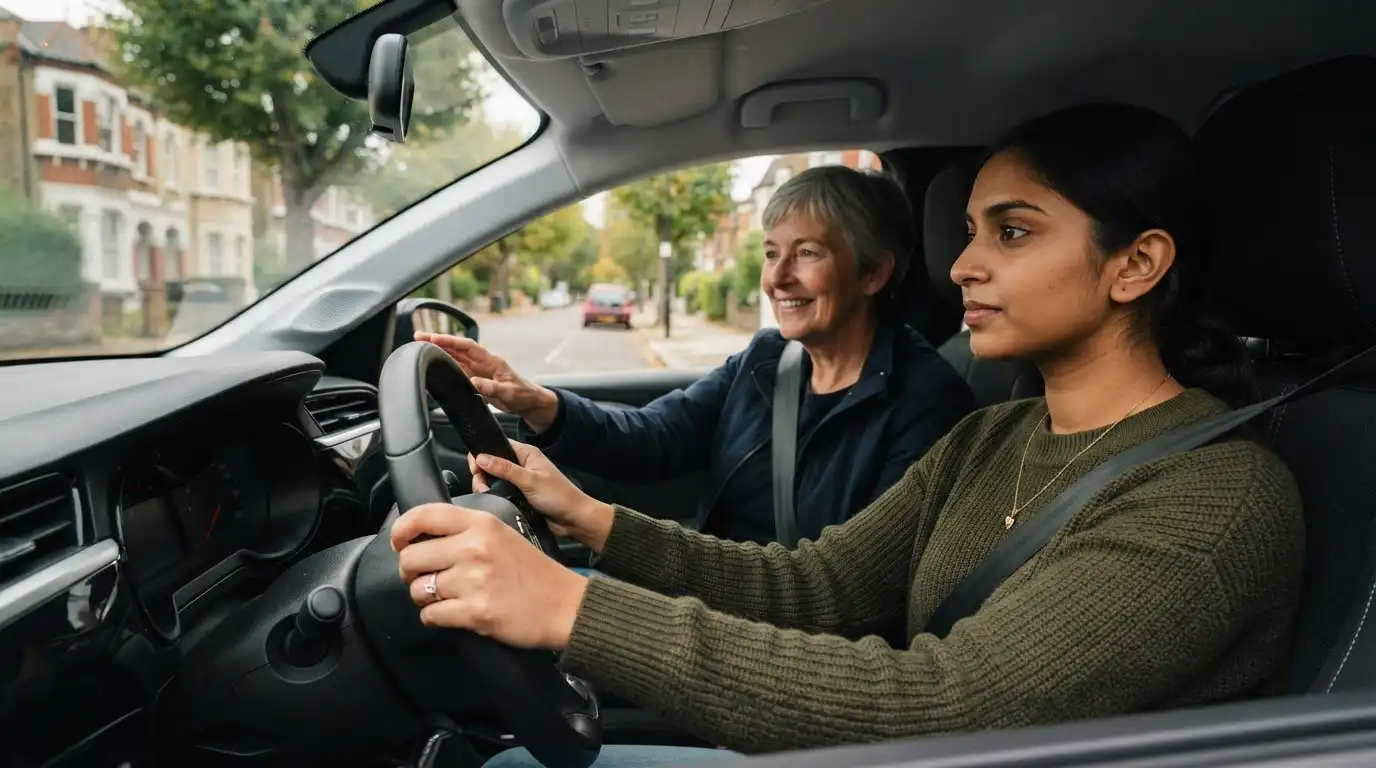
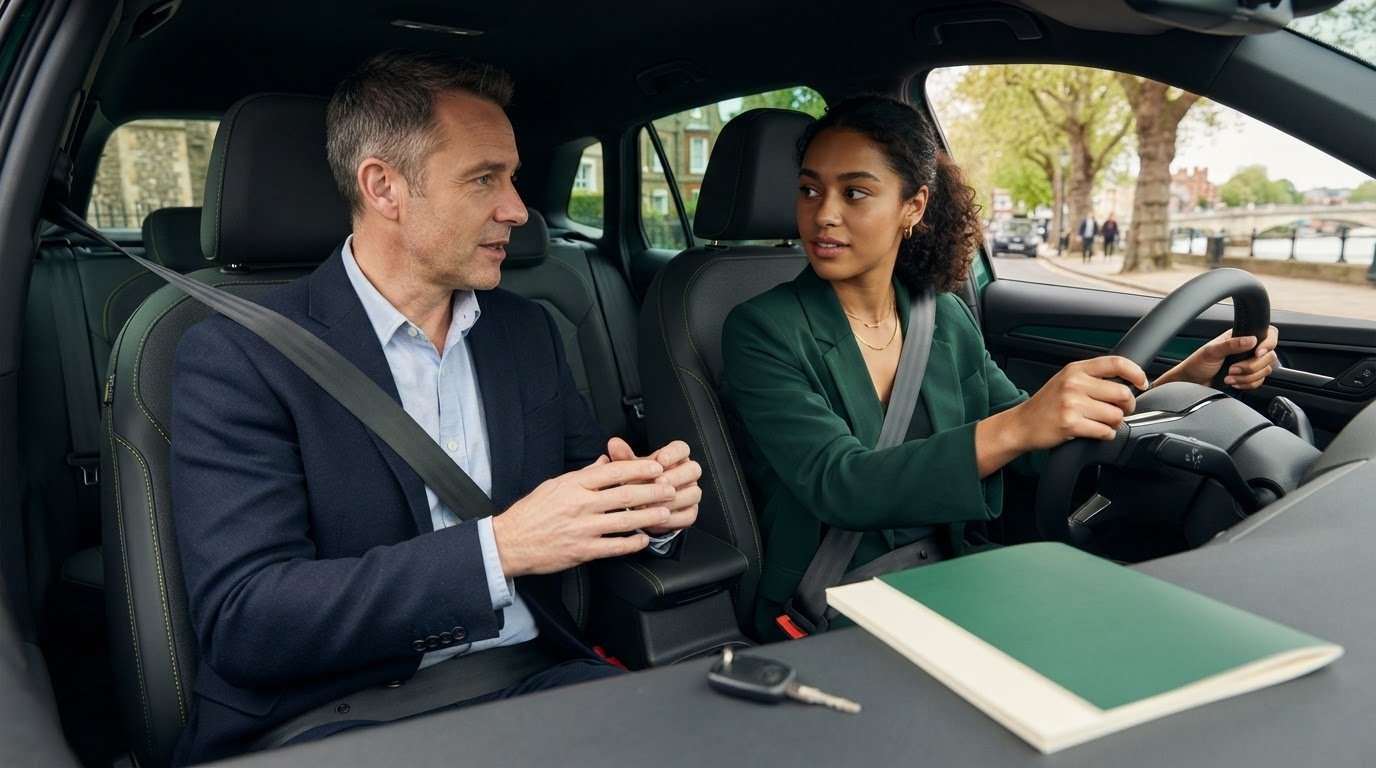
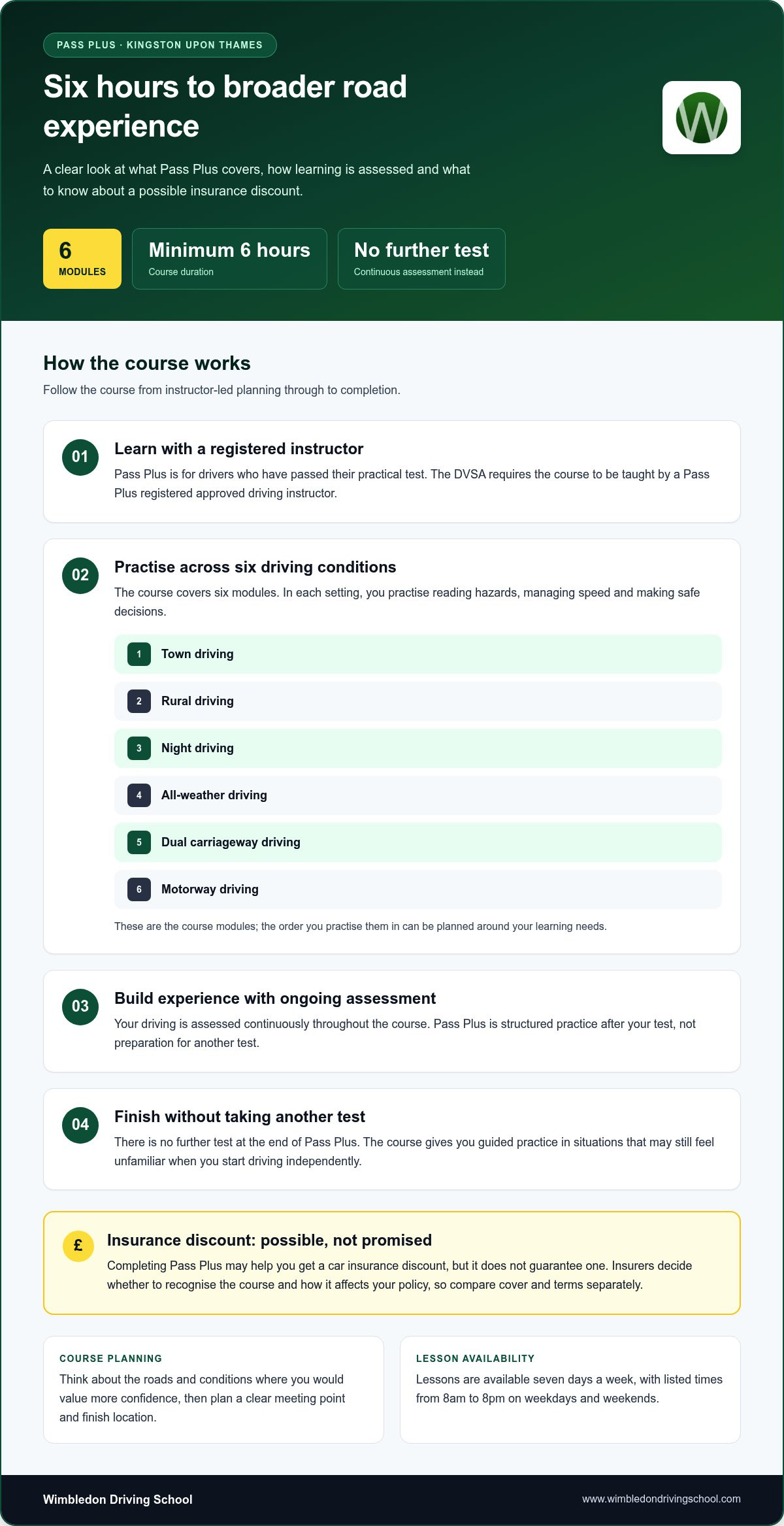
Passing your test is the start of learning to drive independently. A Pass Plus course in Kingston upon Thames takes a minimum of 6 hours and covers six modules, including town, rural, night, all-weather, dual carriageway and motorway driving. Completing it may help you get a car insurance discount, but it doesn’t guarantee one.
It’s natural to want more experience before tackling unfamiliar roads or driving conditions alone. A Pass Plus course gives you structured practice after your test, with continuous assessment throughout and no further test at the end.
You’ll learn what each module involves, how assessment and certification work, and what to consider when weighing the course cost. We’ll also explain how to find Pass Plus lessons in Kingston upon Thames and nearby areas, and how to choose training that suits your goals. This will help you decide whether the course is the right next step.
Key Takeaways
- Consider whether extra practice with unfamiliar roads and driving conditions would help you feel more prepared after passing your test.
- Compare insurance cover on its own terms, as completing the course may be relevant to a discount but insurers’ decisions can differ.
- Choose lesson arrangements that fit your travel needs and help you practise in the areas where you want more confidence.
- Understand how your instructor assesses your driving and what steps follow successful completion before you begin.
- Explore Pass Plus lessons in Kingston upon Thames and nearby areas to find a practical next step for your driving journey.
How Can You Benefit from Pass Plus?
Passing your test gives you a licence, but experience in varied conditions helps build confidence. Pass Plus provides structured practice across six modules: town, rural, night, all-weather, dual carriageway and motorway driving. In each setting, you practise reading hazards, managing speed and making safe decisions.
The modules can help you identify situations that still feel unfamiliar. For example, a new driver comfortable on familiar West London streets may want guided practice on rural roads or motorways. Lessons develop practical skills for these conditions rather than prepare you for another test.
A possible financial benefit is an insurance discount. Successfully completing Pass Plus may help a UK driver obtain a car insurance discount, but it does not guarantee one. Insurers set premiums individually, and completing the course does not replace comparing policy cover and terms.
Treat a possible discount as one factor, not the whole value of the course. Your insurer’s approach, personal circumstances and chosen policy all matter. A lower premium may offset some of the training cost, but don’t assume it will cover the full amount.
Keep insurance discounts separate from block booking discounts. An insurer decides whether to offer a policy discount; a block booking discount applies to tuition bought in advance. These are different types of savings and are not interchangeable.
Pre-paid tuition packages can offer a reduced hourly rate when you purchase 10 or more hours in advance. That arrangement concerns lesson costs, not the price of your car insurance. It may suit someone planning regular driving lessons, but it is separate from Pass Plus insurance benefits.
To assess the cost, weigh the course fee against any possible change to your premium and the value of extra practice. Consider which driving conditions you want to handle more confidently. If you’ve never driven on a motorway, for example, supervised experience may be worthwhile even if insurance savings aren’t your main reason.
Pass Plus is available to drivers after they’ve passed their practical test. In the UK, the Driver and Vehicle Standards Agency (DVSA) requires a Pass Plus registered approved driving instructor to teach the course. This gives you a structured way to build experience with an instructor.
For drivers around Kingston upon Thames, the main benefit is a broader range of coached experience after passing. Consider the six modules, your confidence in each setting and the separate costs involved. That makes it easier to decide whether a Pass Plus course in Kingston upon Thames fits your driving goals.
Lesson duration and collection arrangements
A Pass Plus course in Kingston upon Thames takes a minimum of 6 hours to complete. Plan the meeting point, travel needs and lesson times before arranging your training.
Lesson duration and collection
The minimum course duration is 6 hours, covering practical driving across the Pass Plus modules. Treat that as the total course time, not an assumption that every session follows the same format. Your diary, travel arrangements and the areas you want to practise can all shape how you plan the lessons.
When planning where to meet, have your full Kingston address or another clear meeting point ready. Consider where you’ll finish, too, especially if you need to get to work, home or a station afterwards. A precise postcode helps distinguish nearby streets and plan a practical start and finish for your lessons.
Before booking, think about the conditions you want to practise. You might want to work on busier town roads, then take a suitable route towards a dual carriageway. Setting a clear priority helps you use the course time purposefully.
Weekend and evening availability
Lessons are available seven days a week, with listed lesson times from 8am till 8pm on weekdays and weekends. That gives you options around work, study or family commitments, including early starts and evening slots.
Choose a lesson time that suits the driving you want to practise. An evening session, for example, can provide experience driving after dark, while a daytime lesson may suit a particular route or travel plan. Allow enough time to reach the meeting point and get home.
Kingston upon Thames and nearby areas offer varied local roads for practice. Coverage extends beyond a single postcode, so use your full address when planning lessons in Kingston or the surrounding area. Depending on your schedule, a convenient meeting point might be near home, work or public transport.
Both manual and automatic driving lessons are available. If you already hold a licence, choose the car type that matches the vehicle you drive or expect to use. Refresher lessons can also help returning drivers rebuild confidence before tackling busy junctions, unfamiliar roads or motorway journeys.
To organise your lesson times and meeting arrangements, book driving lessons around your schedule and preferred starting point.
Will taking a Pass Plus course reduce my insurance costs?
Pass Plus may help you qualify for a car insurance discount, particularly after passing your test. The Association of British Insurers lists taking the course among its top five ways to reduce motor insurance costs. However, the course doesn’t set your premium. Insurers decide whether to recognise it and how it affects your policy.
For newly qualified drivers, the course provides further training after the test, when independent driving may still feel unfamiliar. You practise in different conditions, including at night, on rural roads and on motorways. This experience builds on the skills assessed during your test and helps you make considered decisions when driving alone.
The first year after passing is an important time to gain experience. Newly qualified drivers are more likely to have an accident during this period. Pass Plus is designed mainly for new drivers, though you can take it later. It may be particularly useful if you’ve recently passed and want guided practice.
Who can take it? You must have passed your practical driving test before starting Pass Plus. You can take the course at any time after passing, although it’s designed mainly for newly qualified drivers.
Advanced driver training gives you the chance to practise situations that may not have featured often in ordinary lessons. For example, someone who has only driven around town can gain experience on dual carriageways and motorways. The aim is to strengthen observation, planning and control across different roads, not to prepare for another test.
If you’re a nervous driver, identify the situations that concern you most before training begins. You might feel uneasy joining a motorway, driving after dark or meeting traffic on a narrow rural road. Naming these concerns gives your instructor a clear focus, so practice addresses specific gaps rather than repeating driving-test preparation.
There are limitations to consider. Completing Pass Plus doesn’t require an insurer to reduce your premium, and the training fee is separate from your motor insurance. Ask your insurer how it treats Pass Plus before including a possible discount in your budget. The course’s value also depends on whether its driving practice suits your needs.
An intensive driving course helps you prepare before a test, while Pass Plus is for drivers who have already passed. If you’re newly qualified, weigh the possible insurance benefit against the practical experience you want. This distinction helps you choose training for your current stage, rather than simply because a discount might be available.
Continuous assessment and course certification
Pass Plus involves continuous assessment across its six modules, rather than a separate test at the end. Your instructor observes your driving during the training and assesses whether you meet the required standard in every module. Completing only some modules is not enough to complete the course successfully.
The six modules cover town, all-weather, rural, night, dual carriageway and motorway driving. Each gives your instructor a different setting in which to assess your decisions and control. For example, motorway practice shows how you handle that environment, while night driving focuses on driving after dark.
This differs from preparing for a driving test. Pass Plus does not include another theory or practical test for qualified drivers. Instead, your instructor assesses your driving as you work through the course, measuring successful completion against the required standard across all six modules.
If you need more practice in a particular area, your instructor can focus on the driving conditions covered by that module. You need to meet the required standard in all six; strong performance in five cannot make up for the remaining module. Discuss your experience and learning priorities before the course begins.
Certification involves a training report form. Once it has been signed, send it to the Driver and Vehicle Standards Agency (DVSA) to receive your certificate by post. Finishing the driving sessions alone does not complete the process: the signed report form is the step that leads to your certificate.
The report form should be sent to the DVSA at The Axis Building, 112 Upper Parliament Street, Nottingham, NG1 6LP. Copy the address carefully when preparing the form, and make sure it is signed before posting. The certificate is then sent by post, so keep the course paperwork safe while you wait for it.
For learners, this means course completion depends on both assessed driving and the report form. Pass Plus is not a pass-or-fail practical test appointment, and there’s no extra test to book at the end. Intensive courses and theory preparation serve different purposes: Pass Plus builds experience after you qualify.
Before starting, ask your instructor how progress across the six modules will be recorded and what happens if a skill needs more practice. This will help you understand the assessment and plan your learning. Keep the signed report and certificate details together, especially if you plan to tell an insurer you’ve completed the course.
Pass Plus courses in Kingston upon Thames and nearby areas
Pass Plus courses are available in Kingston upon Thames and nearby areas. A useful first step is to choose a meeting point that fits your regular journeys. Consider whether you’ll travel from home, work or another familiar place, then decide which roads you want to practise on.
Kingston has a mix of town driving and routes leading beyond the centre. You may want to practise handling busy junctions, build confidence on faster roads or work on longer journeys. Set these goals before lessons begin so your instructor can focus on the situations most relevant to you.
Nearby coverage is useful if you live or work outside central Kingston. Give your full postcode when arranging lessons, and identify a practical starting point if your address is difficult to reach. A station or familiar landmark can make meeting arrangements clearer, while your planned route can include roads you expect to use after training.
A local driving instructor can structure practice around your experience as a newly qualified driver. You may already feel comfortable on familiar town streets but want guided motorway experience. Another driver may want more confidence on rural roads or at night. Specific aims make each part of the course more purposeful.
Before choosing a course, consider these practical points:
- Starting point: Choose a Kingston meeting place that works with your daily travel.
- Driving priorities: List the road types or conditions you want to practise.
- Travel area: Share your postcode if you live beyond the town centre.
- Instructor approach: Look for clear feedback that links practice to your learning goals.
These steps help you assess local arrangements without relying on broad claims such as “excellent” tuition or promised discounts. Focus instead on whether the learning plan meets your needs, from busy Kingston streets to journeys farther afield. If you’re still learning, ordinary lessons prepare you for your test; Pass Plus is for drivers who have passed.
For a pass plus course in Kingston upon Thames, match your meeting point and practice priorities to the journeys you want to handle independently, then book Pass Plus lessons to plan your next step.
Wimbledon Driving School: Manual Driving Lessons
Wimbledon Driving School offers Pass Plus Courses for drivers who want guided experience after passing their test. If you’re still learning, its Manual Driving Lessons can help you build the skills you need before your practical test. Choose the next step that matches your stage, whether you’re preparing to qualify or building confidence on unfamiliar roads.
Pass Plus offers guided practice in varied conditions, while manual lessons focus on learning to drive a manual car. This distinction helps you choose training that suits your goals. To plan your next step, contact Wimbledon Driving School about lessons in Kingston upon Thames.
Make your next driving step count
Your licence opens the door to independent journeys, but the routes you choose next can shape your confidence. Think about where you want to drive more comfortably, then use that goal to guide your training. A Pass Plus course in Kingston upon Thames may be a practical next step if you want supported experience after your test.
Wimbledon Driving School also offers Manual Driving Lessons, Automatic Driving Lessons and Intensive Driving Courses, helping you choose training that matches your stage and goals. Whether you’re building skills before your test or developing as a newly qualified driver, take the next step at a pace that works for you.
A confident journey starts with a clear decision. Choose the support that suits you and keep moving towards the roads you want to travel.
Frequently Asked Questions
Do I have to take a test?
There’s no separate test appointment. Treat the course as practical driver development, not another hurdle after your practical test. Before lessons begin, tell your instructor which situations you’ve experienced least. If you’ve avoided unfamiliar routes since passing, for example, that’s a useful starting point for planning practice and setting a clear personal goal.
What will I learn?
You’ll practise applying safe driving habits across a range of driving situations. For instance, you can work on spotting risks beyond the vehicle ahead, adjusting speed when visibility changes and planning decisions earlier. Ask for feedback on a specific skill after each drive, so you can reflect on what worked and what to improve next.
Will I receive a certificate for completing the course?
Yes, successful completion leads to a certificate. Keep it with your important driving documents and retain a clear record of your course details. If you discuss your driving history with an insurer, the certificate can help explain the training you completed. Store it somewhere accessible rather than relying on memory when updating policy information.
What is the Pass Plus course and what does it cover?
Pass Plus is practical training for drivers who have passed their test. It helps you broaden your experience beyond the roads and situations you encountered most during learner tuition. An instructor guides your practice as you apply sound judgement in varied conditions. The course is not a replacement for everyday driving or a route to a different licence category.
Which driving schools offer Pass Plus in Kingston upon Thames?
Wimbledon Driving School offers Pass Plus Courses in Kingston upon Thames. When arranging local training, give a clear starting point and explain which journeys you expect to make regularly. This helps your instructor understand your needs, such as travelling from home to work or visiting family. The school also serves drivers across South West London, South East London, Surrey and Middlesex.
How long does Pass Plus training take and how is it scheduled?
Plan the timetable with your instructor around your commitments and learning priorities. Before agreeing dates, consider travel to the meeting point, work or study commitments, and whether you’d prefer to concentrate practice into fewer visits or spread it out. Share any fixed diary constraints early so the schedule can be organised around your available time.
How does Pass Plus training and assessment work?
Your instructor reviews how you handle the situations covered by the course through practical driving. Make the most of feedback by asking what to repeat and what to change next time. If, for example, you need to observe earlier at a junction, practise the same routine consistently. This turns each lesson into a clear step forward.
Can Pass Plus reduce car insurance premiums in the UK?
Some insurers may take Pass Plus into account, so use your policy details to decide whether it’s relevant. Before renewing or changing cover, tell your insurer you completed the course and ask how it affects your quote and what evidence is required. Compare the full policy terms as well as the premium, since excesses, cover limits and optional extras also affect value.
Disclaimer
This article is provided for general informational purposes only and does not constitute professional driving, legal, or safety advice. While we aim to keep our content accurate and up to date, rules, prices, and DVSA test requirements can change — always check gov.uk or contact us directly at 020 3524 7968 for the latest guidance before making any decisions. Nothing in this article guarantees a specific outcome, including passing your driving test within any stated timeframe. For current pricing, course availability, and instructor details, please visit our Prices page or get in touch.