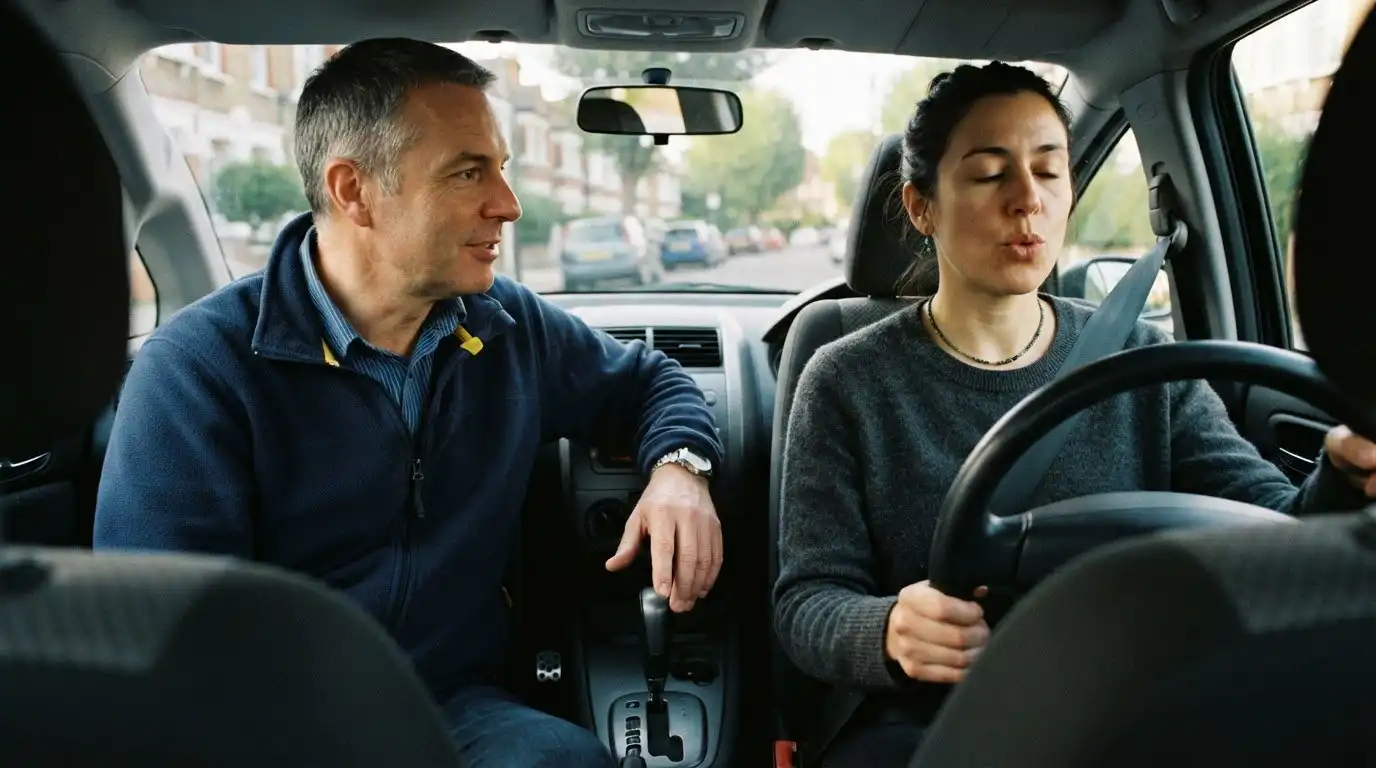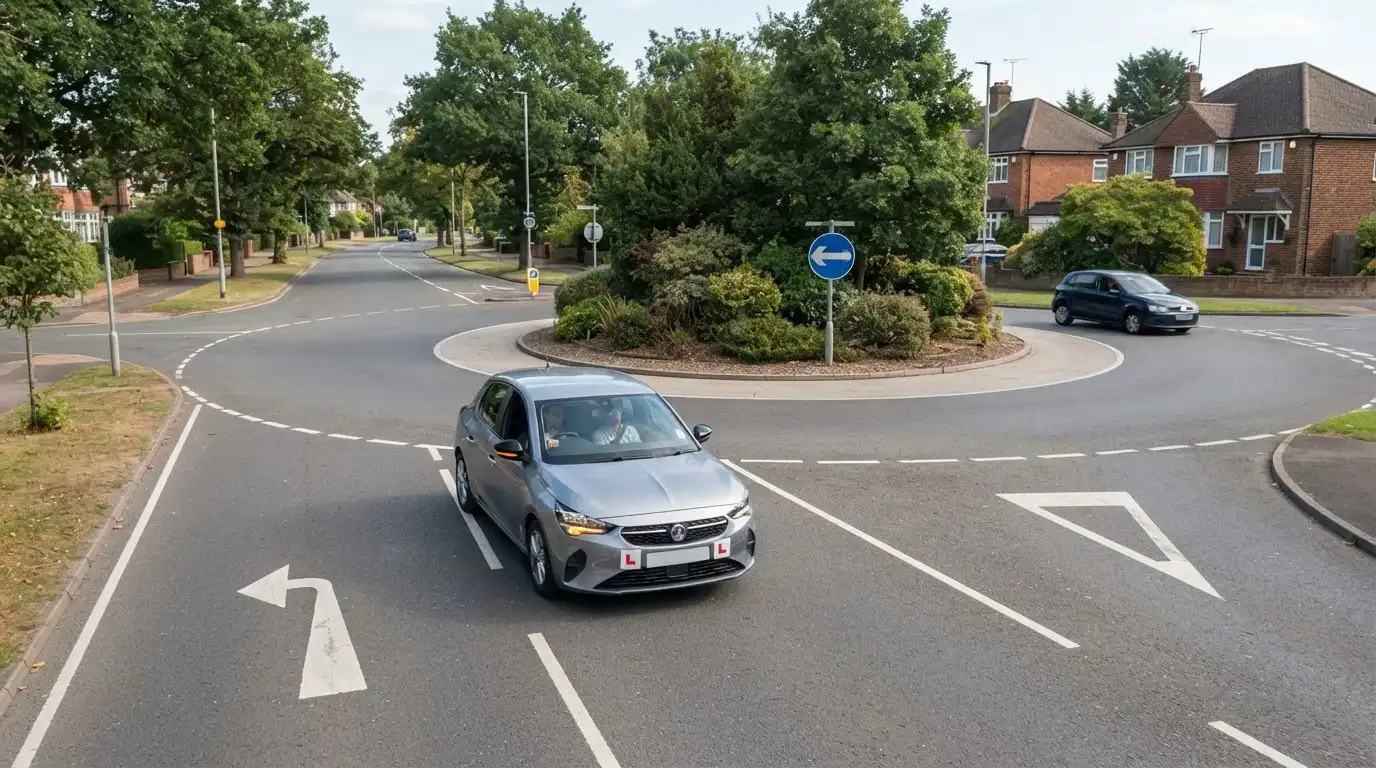
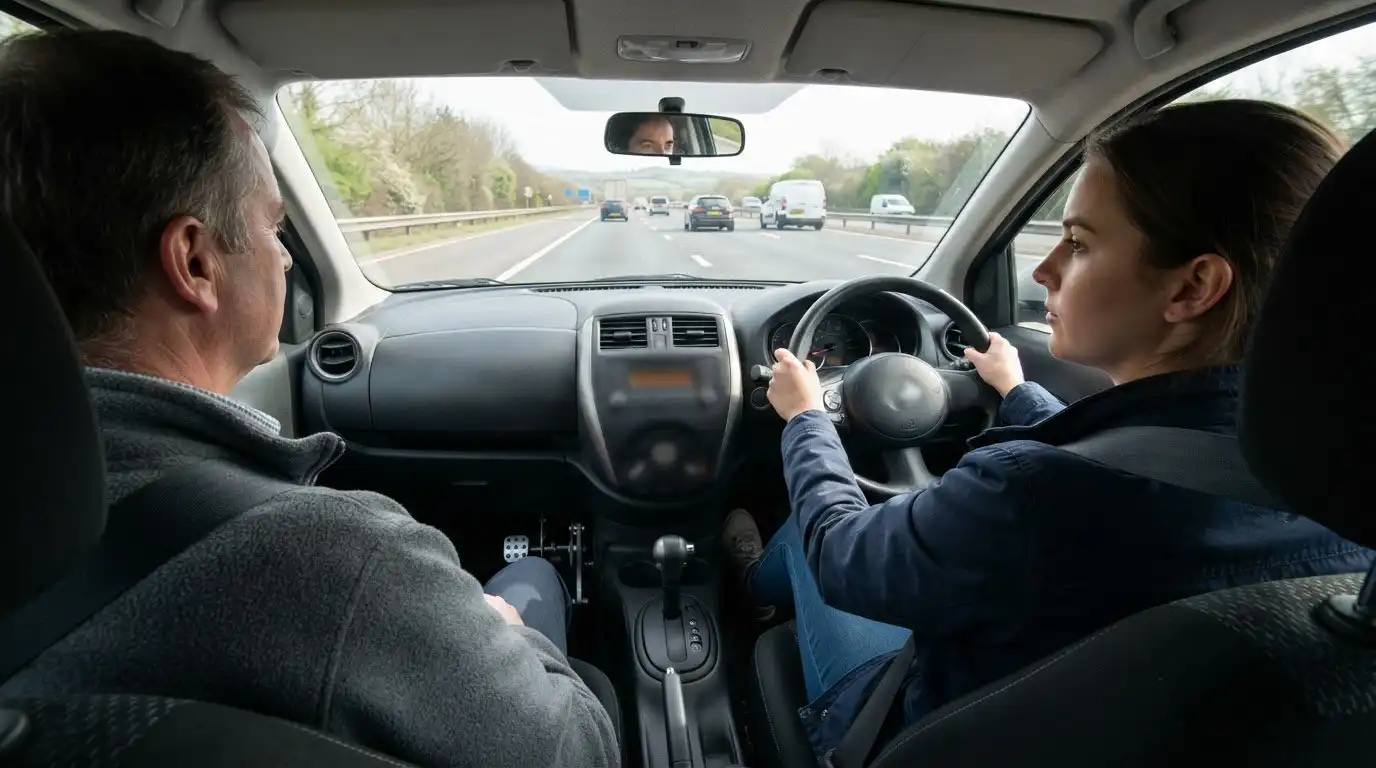
Passing your test is the start of independent driving, not the end of learning. A Pass Plus course in London gives you practical experience across six modules, including motorways, night driving and different weather conditions, with at least six hours of training. According to the Driver and Vehicle Standards Agency (DVSA), the course must be delivered by a fully qualified, DVSA-registered driving instructor.
It’s sensible to weigh up the cost alongside what you’ll gain: more experience in situations you may not have faced during lessons, and a chance to build confidence behind the wheel. The price depends on the training required and is provided after a quote request; course length, lesson structure and where the training takes place can affect the cost.
This guide explains what Pass Plus covers, how your instructor assesses your driving and how to obtain your certificate. It also explains how a possible insurance discount depends on your insurer, and what to consider when choosing training in London so you can decide whether Pass Plus is the right next step.
Key Takeaways
- See how Pass Plus training can build experience across six areas of driving, from motorways to night-time conditions.
- Understand the course duration and why your instructor’s DVSA registration matters.
- Find out how instructors assess your progress and what happens when you complete the course.
- Learn what to consider when comparing course costs and planning training in London.
- Discover how to raise your Pass Plus completion with your insurer when arranging cover.
Insurance discounts and how to claim them
Pass Plus provides broad post-test training across different driving situations, while other lessons may focus on particular skills. You can complete the course in a manual or automatic car. Any insurance benefit depends on whether your insurer recognises Pass Plus and offers a discount.
Potential Insurance Discounts
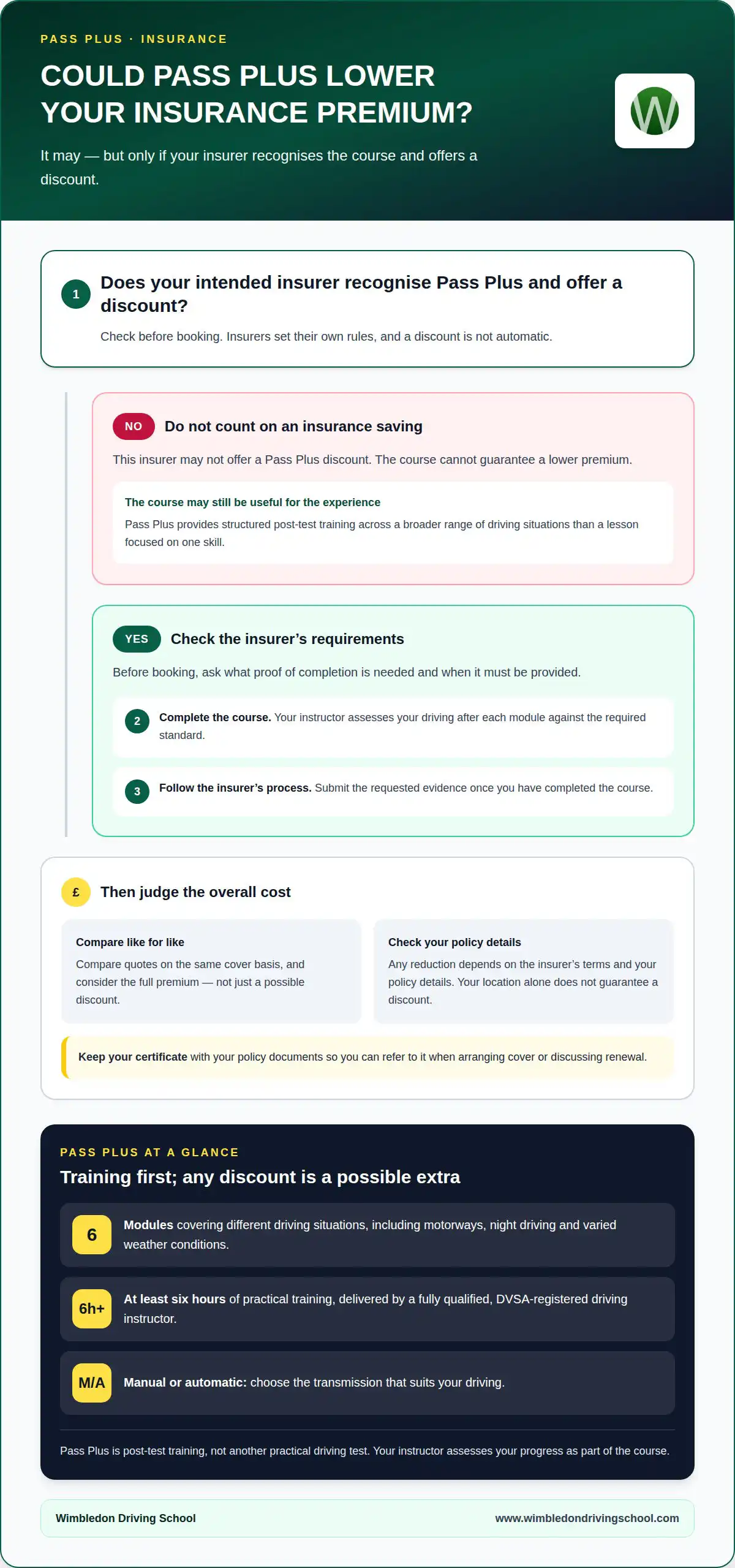
Some UK insurers may offer a car insurance discount after you complete Pass Plus, but a reduction is not automatic. Insurers set their own eligibility rules, and some do not offer a Pass Plus discount. The course cannot guarantee a lower premium.
Before booking, ask your intended insurer whether it recognises Pass Plus and how that affects your policy. Find out what evidence it requires and when to provide it. This will help you judge whether a possible discount matters to your decision.
Course Value and Insurance Benefits
Insurance is only one part of the course’s value. Pass Plus gives you structured experience after your test, while a discount is only a possible extra benefit. Unlike a lesson focused on one skill, the course covers a broader range of driving situations.
Can a Pass Plus course reduce car insurance costs in London? It may, if your insurer recognises the course and offers a discount. Your location does not guarantee a reduction: the premium depends on the insurer’s terms and your policy details.
To claim a discount, take these steps:
- Ask your intended insurer whether it offers a Pass Plus discount.
- Check what proof of completion it requires and when to provide it.
- Once you’ve completed the course, follow the insurer’s process and submit the requested evidence.
Keep your certificate with your policy documents so you can refer to it when arranging cover or discussing renewal. Compare quotes on the same cover basis, and consider the full premium rather than focusing only on a possible discount. This helps you assess the financial impact while also considering the practical experience you want from training.
The course is available in manual and automatic cars, so you can choose the transmission that suits your driving. Its wider training focus may suit you if you want guided experience across several types of driving, rather than extra practice in just one area. You can explore the Pass Plus course content when weighing those priorities.
Pass Plus course duration and DVSA recognition
Pass Plus is post-test training for drivers who have passed their practical test. Course listings include 6, 10 and 12-hour options, with delivery by a qualified instructor.
Course Duration and Structure
The practical training takes at least 6 hours. It can be spread across 2 or 3 sessions, helping you organise training around work, study or other commitments. A suggested structure is three two-hour blocks, giving each session time for practical driving and discussion.
Course length can differ between providers and arrangements. Before booking, establish the total training hours and how sessions will be divided. A 6-hour course meets the stated minimum, while 10- and 12-hour listings offer longer formats. Consider how much experience you want in each module when choosing a structure.
Think about your routine before choosing session times. If you work during the day, evening sessions may suit you; if your commitments vary, splitting training across different days may be easier. A workable schedule helps you concentrate and gives you time to reflect on your progress between drives.
DVSA Recognition
The Driver and Vehicle Standards Agency (DVSA) requires Pass Plus to be delivered by a fully qualified driving instructor registered with the agency. This requirement identifies who can provide the training; Pass Plus is not another practical driving test.
Ask about the instructor’s DVSA registration and how the course will cover its training modules. A recognised instructor can guide you through the programme and assess your driving as you build experience. The course’s structure, not simply its name, should explain what training you’ll receive.
You can take Pass Plus after passing your practical driving test. There is no requirement to start immediately, so choose a time that fits your circumstances. If your driving routine has changed, perhaps because you now make unfamiliar journeys, consider whether structured practice would be useful.
Use these points to plan your sessions:
- Choose a total duration that suits the areas where you need more practice.
- Decide whether 2 or 3 sessions fit your schedule and support your learning.
- Allow time between sessions to reflect on feedback and apply it during everyday driving.
Pass Plus is available in a manual or automatic car, so you can choose the transmission that suits you. If you passed in an automatic, training in one lets you build experience in the type of car you drive. Your certificate is valid whether you complete the course in a manual or automatic car.
Give each session a clear purpose. You might plan a drive around a time of day when you usually travel, then use another session to practise a different route or condition. Discuss your priorities with your instructor beforehand so the plan reflects your experience and confidence.
Pass Plus certificates and assessments
Pass Plus does not end with a separate driving test. Your instructor assesses your driving after each module against the required standard. Assessment is part of the training, not a single final examination. You receive feedback as you practise, so you can work on skills that need more attention before moving on.
To complete the course, you need to reach the required standard across all modules. Strong performance in one area does not make up for skills that need more work in another. For example, confident motorway driving alone is not enough if another module still needs development. Your instructor will identify where you meet the standard and where more practice is needed.
How the assessment works
After each module, your instructor assesses your driving against its required standard. The focus is on demonstrating the skills covered, not passing a separate test. If an element needs more work, use the instructor’s feedback to guide further practice and focus your learning.
Keep track of the modules you have completed and the feedback you receive. If you are unsure whether you have met the required standard, ask your instructor which skills need more practice. For example, you might review how you plan ahead on motorways or respond to changing conditions. Clear feedback gives you a practical focus for your next session.
Receiving your certificate
Once you complete the training successfully, the signed training report form is the next step. Send it to the Driver and Vehicle Standards Agency (DVSA) to receive your Pass Plus certificate. Completing the sessions and submitting the form are separate parts of the process, so keep the paperwork safe and follow the instructions provided with it.
- Complete the course modules and reach the required standard in each one.
- Make sure your training report form is signed after successful completion.
- Send the signed form to the DVSA to receive your certificate.
Your certificate remains valid whether you took the course in a manual or automatic car. The transmission you choose does not affect its validity, although your instructor still assesses your performance throughout the training. Keep the certificate accessible in case you need evidence of completion, including when discussing Pass Plus with your insurer.
Pass Plus is practical learning, not an advanced driving test or a new driving licence category. Its certificate records successful course completion; it does not replace your full licence. If you’re considering training, book a Pass Plus course and make time to review your instructor’s feedback after each module.
Pass Plus course content and practical training
Pass Plus is practical training across six modules, designed to help you build experience beyond the situations covered before your test. The modules address different roads, conditions and demands, from motorway lane changes to driving at night.
- Town driving: practise awareness around busy traffic, complex junctions and lane changes, such as choosing a safe position before a turn.
- All-weather driving: develop handling in sunshine, fog, rain, ice and snow, with attention to changing visibility and road conditions.
- Out-of-town roads: build confidence on country lanes by negotiating bends and passing horses, cyclists and slow-moving vehicles safely.
- Night driving: work on awareness after dark and selecting suitable headlight settings for the conditions.
- Dual carriageways: practise using faster roads, including during busier periods when traffic and joining decisions need careful attention.
- Motorways: develop skills such as changing lanes, maintaining a safe speed and responding to road signs.
Training is primarily practical, giving you the chance to apply each skill behind the wheel with an instructor. Depending on local conditions, some elements may be discussed rather than practised in real conditions. For example, if the weather prevents practice in a particular situation, your instructor can discuss how to respond.
For nervous drivers, Pass Plus can provide structured experience in situations that feel unfamiliar after passing. You may feel comfortable on familiar town routes but less confident joining a motorway or driving after dark. Identify the situations that make you most uncertain and discuss them with your instructor.
Pass Plus can also help drivers build confidence through guided practice after their test. It is not limited to newly qualified drivers, so you can take it later if you want to strengthen your skills in particular settings. Its value is in practising a range of road situations, not simply repeating familiar lessons.
Make each module purposeful by noticing what needs the most attention. On a country lane, that might mean reading bends early and allowing space around cyclists. In town, it could mean planning lane changes around junctions. On a motorway, focus on signs, speed and safe positioning rather than leaving decisions until the last moment.
The six-module structure gives you broad practical experience, and your instructor’s feedback helps you understand your handling and awareness in each setting. Think about which roads and conditions you encounter most, and which feel least familiar. This can help you get more from each session and understand your progress.
Course prices and availability in London
In London, you can plan sessions around your routine and choose training that suits your post-test driving goals.
Course Prices
Use this figure to plan your budget, and check that you’re comparing the same course duration and transmission when reviewing options. A course with a different structure may not be directly comparable.
All prices listed on this page reflect our current and active pricing. Prices are subject to change at any time without prior notice. Any prices mentioned on old or outdated materials, whether online, printed, or otherwise, are no longer valid.
Think about value as well as the fee. If you want more confidence on motorways, consider whether the course gives you the opportunity to work towards that goal. Any possible insurance discount is separate from the course fee and depends on your insurer’s terms.
London Availability and Booking
You can arrange Pass Plus training on weekdays, at weekends or in the evenings. Choose a time that fits your commitments and lets you focus fully on driving. Share your preferred schedule and the situations you want to practise when arranging the course.
Pass Plus must be delivered by a fully qualified instructor registered with the Driver and Vehicle Standards Agency (DVSA). When arranging your course, agree on the session schedule and details, including whether you’ll train in a manual or automatic car.
To arrange the course, decide which transmission you prefer and what session times suit you, then book with Wimbledon Driving School. If you’ve recently passed your test, consider which journeys you expect to make most often. For regular motorway trips, for example, you may want to focus on building confidence on faster roads.
Scheduling can affect how easily you fit training into everyday life. Weekday sessions may suit a flexible routine, while evenings or weekends can work around daytime commitments. Choose a schedule that gives you time to concentrate instead of squeezing practice into a rushed part of your day.
Wimbledon Driving School: Manual Driving Lessons
Wimbledon Driving School offers Pass Plus Lessons to help you build practical experience after passing your test. If you’re still learning, Manual Driving Lessons can help you develop control and confidence before your test. Automatic Lessons and Intensive Driving Courses are also available to suit different learning needs.
Choose Pass Plus if you want guided practice across varied roads and conditions, or manual lessons if you’re working towards your driving test. The right next step depends on where you are in your driving journey.
Contact Wimbledon Driving School on 020 3524 7968 to discuss the right course for you.
Take your next step with confidence
Use your next drive as a guide. Notice which situations feel routine and where you would value more support, such as unfamiliar routes or busy traffic. These observations can help you choose further training thoughtfully, rather than booking simply because you feel you should.
A Pass Plus course in London can be a practical way to keep developing after your test. Think about the driving situations you want to feel more prepared for, then discuss those priorities when arranging your training. A clear goal gives each session direction and helps you focus on skills that matter in everyday journeys.
You’re in control of the next step. Take the time you need, and choose a course that fits your driving goals and learning preferences.
Every journey builds experience. Keep learning at a pace that feels right for you.
Frequently Asked Questions
What is Pass Plus?
Pass Plus is practical post-test training for drivers who want experience beyond their driving test preparation. It develops your approach to less familiar situations, such as motorway travel or driving at night. If you’ve only driven in familiar town traffic, for example, the course can give you structured practice in other settings. It is training, not a replacement driving test or a different type of licence.
What are the benefits of becoming an advanced driver?
Further driver training can help you become more observant, plan ahead and respond calmly to changing road conditions. Practising how to approach a busy junction, for example, can help you spot hazards and make decisions earlier. Pass Plus develops practical experience across varied situations; it does not confer an advanced driving qualification. Choose training based on the journeys you make and the skills you want to strengthen.
What will I learn on the advanced driving courses?
Course content depends on the programme. Pass Plus develops practical skills for situations such as motorway travel, night driving and changing weather. If you feel unsure about joining a motorway, for example, you can focus on observation, lane changes and reading signs. Before choosing a course, consider whether you need broad experience across different settings or concentrated practice in one driving situation.
What is the Pass Plus course and who is it for?
Pass Plus is designed for drivers who have passed their practical test and want more guided experience. You do not have to take it immediately after qualifying. It may suit you if you have had limited experience on faster roads, in poor weather or after dark. Think about the situations you have encountered since passing, then decide whether this training fits your next driving goals.
Which driving schools offer Pass Plus courses in London?
Wimbledon Driving School offers Pass Plus Courses across South West London, South East London, Surrey and Middlesex. Pass Plus must be delivered by a fully qualified instructor registered with the Driver and Vehicle Standards Agency (DVSA). Before booking, discuss the situations you want to practise, such as unfamiliar routes or motorway journeys, so your training reflects your priorities.
How much does a Pass Plus course cost in London?
This is the course fee, not a promised insurance saving; any premium reduction depends on your insurer’s terms. All prices listed on this page reflect our current and active pricing. Prices are subject to change at any time without prior notice. Any prices mentioned on old or outdated materials, whether online, printed, or otherwise, are no longer valid.
How long does the Pass Plus course take and what does it include?
Wimbledon Driving School lists its Pass Plus course as 6 hours of training. The sessions are practical and cover driving situations you may not have experienced much since your test. For example, if you’ve rarely driven after dark, that module can help you practise in that setting. Ask how your sessions will be arranged and consider which areas deserve extra attention during your training.
What are the six modules covered in Pass Plus?
The six modules cover town driving, all-weather driving, country roads, night driving, dual carriageways and motorways. Each focuses on different demands: country-road practice can include handling bends and passing cyclists, while motorway training covers lane changes and signs. All-weather training explores conditions such as rain, fog, ice and snow. Together, the modules let you practise a broader range of driving situations than familiar everyday routes alone.
Disclaimer
This article is provided for general informational purposes only and does not constitute professional driving, legal, or safety advice. While we aim to keep our content accurate and up to date, rules, prices, and DVSA test requirements can change — always check gov.uk or contact us directly at 020 3524 7968 for the latest guidance before making any decisions. Nothing in this article guarantees a specific outcome, including passing your driving test within any stated timeframe. For current pricing, course availability, and instructor details, please visit our Prices page or get in touch.