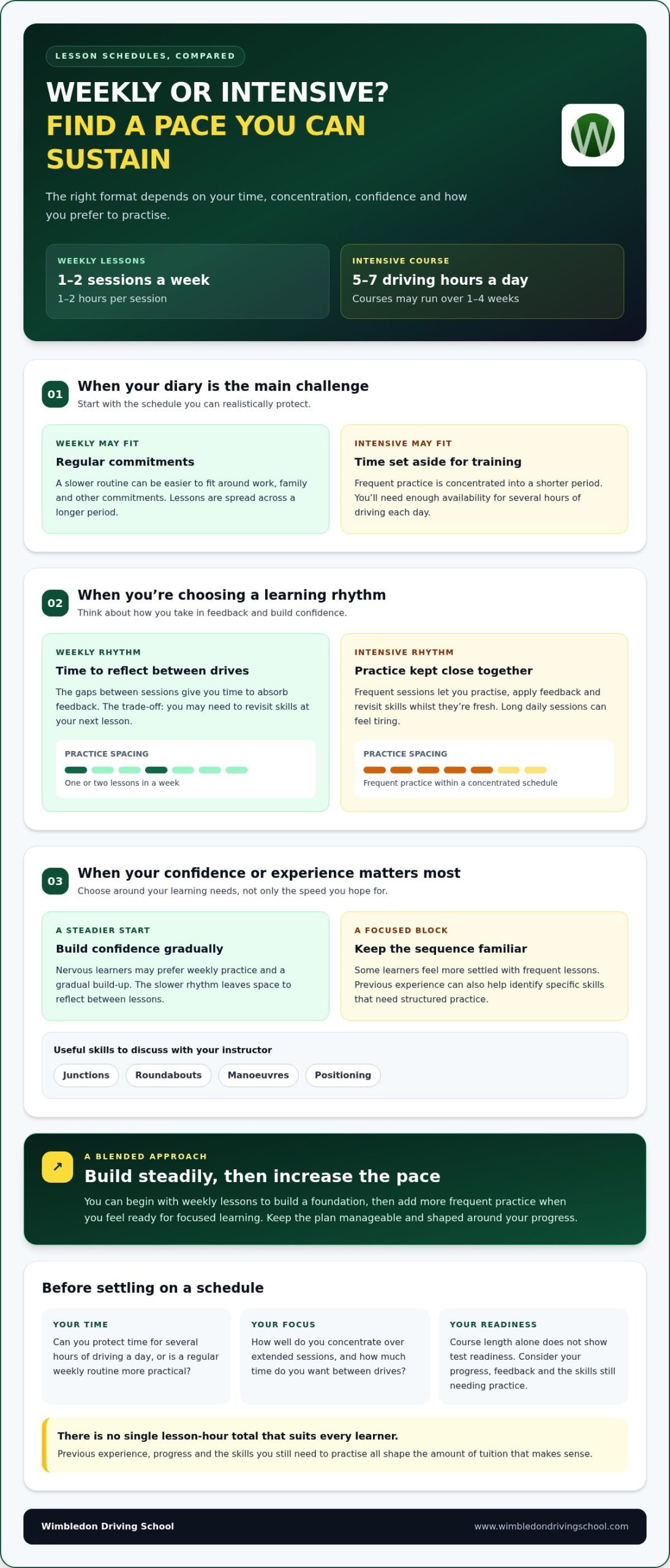
The pros and cons of weekly versus intensive lessons come down to pace and continuity: weekly lessons typically happen once or twice a week for one to two hours, while intensive courses concentrate learning over one to four weeks. A slower rhythm gives you time between sessions to absorb feedback; a more concentrated schedule keeps practice close together. Combining the two can also be a practical way to build steady progress before focusing your learning.
It’s natural to think an intensive course will suit you if you want to learn quickly, or that weekly lessons are easier to fit around life. In practice, your concentration, confidence, commitments and preferred pace all matter. A run of frequent lessons can feel demanding, while longer gaps may mean revisiting skills at your next session.
This guide compares the pros and cons of weekly vs intensive lessons, including how each format affects continuity and learning pace. You’ll also see when a blended approach may work, helping you choose a schedule that feels manageable and keeps you moving towards your goal.
Key Takeaways
- Match lesson frequency to your concentration, confidence and commitments, not just how quickly you hope to progress.
- Consider whether you learn best with time to reflect between sessions or with frequent practice to reinforce new skills.
- Weigh the practical demands of concentrated tuition against the flexibility of spreading lessons over time.
- A blended approach can help you build a steady foundation, then increase lesson frequency when you’re ready for focused practice.
- Use your current experience and learning needs to decide which schedule feels sustainable and keeps you progressing.
What Is an Intensive Driving Course?
An intensive driving course concentrates practical learning into a shorter period than a weekly schedule. In the UK, courses may run over 1-4 weeks, with 5 to 7 hours of driving per day. This creates frequent opportunities to practise, apply feedback and revisit skills while they’re fresh. The trade-off is a demanding timetable, so consider your energy, availability and experience before choosing.
For another perspective on intensive courses, watch Conquer Driving’s video:

Your schedule is a practical starting point. Several hours behind the wheel each day require time in your diary and enough focus for sustained learning. If work or family commitments make a concentrated week difficult, weekly lessons may fit more comfortably. If you can set aside several days, an intensive timetable brings practice closer together and reduces long gaps between sessions.
Your previous experience also affects the pace that makes sense. You may already understand basic controls, yet still need structured practice with junctions, roundabouts or manoeuvres. An assessment or discussion of your driving experience can identify what needs attention, rather than treating a returning learner like a complete beginner.
Weekly lessons commonly take place once or twice a week, with sessions lasting one to two hours. This slower rhythm gives you time to reflect on feedback between drives. Intensive lessons provide more frequent practice, but long daily sessions can be tiring. Consider how well you concentrate over extended periods, not only how quickly you want to learn.
| Option | Typical pattern | Learning pace | May suit you if |
|---|---|---|---|
| Weekly lessons | One or two sessions per week, lasting one to two hours | Steady, with time between drives | You prefer a slower routine around regular commitments |
| Intensive course | 5 to 7 driving hours per day over a concentrated period | Frequent practice and less time between sessions | You can protect time for focused training |
Choose the schedule that matches your available time and ability to stay focused across each session. Nervous learners may prefer weekly practice and gradual confidence-building; others feel more settled when frequent lessons keep the sequence familiar. Neither style suits everyone. If you’re comparing intensive driving courses with weekly tuition, weigh continuity against the pace you can sustain, and include previous driving experience in that decision.
Your decision should reflect your learning style, commitments and preferred pace. Intensive courses condense tuition into a shorter period, while weekly lessons spread it out over time.
Intensive driving course duration
An intensive course concentrates tuition, but the plan should reflect your starting point and practical test arrangements. Compare the schedule with the time you can sustain, and understand the terms for changing lessons.
Course Lengths for Beginners and Refresher Learners
Intensive courses in the UK commonly run for 5 to 10 days. A beginner may need a broader programme, while a refresher learner can focus on specific skills, such as positioning or manoeuvres. The course length should follow the learner’s needs, not a one-size-fits-all timetable.
Before training starts, discuss your previous driving, confidence and goals. A useful plan identifies the skills to develop and allows time to review feedback. If long sessions affect your concentration, a more spread-out schedule may be more productive than compressing every learning need into consecutive days.
Weekly and Intensive Course Timelines
Weekly lessons distribute practice across a longer period; an intensive schedule gathers it into a shorter block. Either way, your practical test appointment affects when training can lead to a test. Don’t treat the final tuition day as automatic proof of readiness, especially if your test date is later.
Before booking, read the written terms for cancellations, rescheduling and refunds. Check how the timetable responds to a moved test appointment and whether use of a training car for the test is included. Clear course details and terms help you plan around these arrangements.
Lesson Hours Before Passing
There isn’t a single number of lesson hours that suits every learner. Previous experience, progress and the skills still needing practice all shape how much tuition you need. Look for a learning plan that connects lesson hours to specific goals, rather than choosing a package solely by its advertised duration.
Review feedback after each session and note which skills you can perform consistently. For example, if you still need prompts at junctions, allow time to practise those decisions before treating a test date as suitable. This also helps nervous learners distinguish between finishing a course and feeling prepared to drive independently.
An intensive timetable can bring preparation closer to a test, but that compression is not automatically right for every learner. Intensive driving courses may prepare learners for a driving test within a couple of weeks, and some UK providers claim that a complete beginner can become test-ready in under 2 weeks. Treat those claims as possibilities rather than guarantees: a fast-paced course paired with an imminent test can add pressure, so readiness should remain more important than completing a tightly packed schedule.
An instructor can shape a schedule around your ability and target test date, setting a suitable pace rather than relying on a fixed template. Intensive learners practise more frequently, but the course may require several days set aside for learning. Consider whether you can sustain that routine and absorb feedback between sessions. If the pace feels too demanding, discuss adjustments before committing, and make sure the plan allows time to work on skills that need attention. A shorter calendar does not remove the need to assess your progress honestly or ensure the test timing feels appropriate.
What Are Weekly Driving Lessons?
Weekly lessons spread tuition costs across your learning journey instead of requiring payment for a concentrated course upfront. This can suit a beginner balancing lessons with work, study or family commitments. A longer timeline may also make budgeting easier, although your total spend depends on your experience and how much tuition you need.
Compare the full learning plan, not just the cost of one session. Weekly lessons involve separate payments over time, while an intensive option may require a larger upfront payment for a block of tuition. Neither payment pattern determines the eventual total: progress, lesson frequency and any additional practice all affect how much instruction you use.
The price depends on the course, lesson format and tuition plan, and is provided after a quote request. Ask for the planned lesson duration, what the quoted tuition covers, and how payment is arranged. Also understand the terms for moving or cancelling a session, so an unexpected change doesn’t disrupt your budget. A clear breakdown makes it easier to compare like with like.
Build a realistic budget with these steps:
- Set an amount you can regularly put towards lessons without affecting essential commitments.
- Keep a record of lessons taken, skills covered and feedback, then review your plan with your instructor.
- Allow room for changes to your learning plan, such as extra practice on manoeuvres or busy junctions.
For example, a beginner might prefer regular lesson payments during a longer learning period. Someone with previous driving experience may choose a more concentrated block if their schedule and budget allow. Before deciding, consider whether the larger initial commitment feels manageable or whether spreading payments better suits your circumstances.
Weekly tuition can make costs easier to plan over time, though a longer learning period may mean paying for lessons over more weeks. An intensive course concentrates tuition and payment, which may suit someone able to reserve both time and budget. Your final cost reflects the tuition you need, so compare the proposed total and payment terms rather than assuming either format is automatically cheaper.
Use a driving lesson cost guide to organise the questions you’ll ask about your budget. Then decide which payment rhythm fits your commitments and learning plan. The right option is one you can sustain without rushing practice or stretching your finances.
Potential loss of continuity between weekly lessons
Weekly driving lessons spread practice over time, creating space to reflect but also leaving gaps. After a week between sessions, you may need to revisit skills before progressing.
Forgetting Skills Between Lessons
After time away from the car, you may need to recall a routine covered previously. For example, your next lesson might begin by practising clutch control or junction observations again. That refresher can be useful, but it may leave less time for new road situations during the session.
Make the gap more productive by reviewing your instructor’s feedback soon after each lesson. Note one skill to practise mentally, such as checking mirrors before changing position. Suitable private practice with family or friends can reinforce supervised lessons, but a brief reminder is no replacement for proper instruction.
Memory Retention Between Lessons
Weekly lessons offer a pause for reflection that daily tuition doesn’t provide in the same way. You can revisit feedback, study a manoeuvre’s steps and return with questions at your next session. For instance, after practising a roundabout, note where you hesitated and ask your instructor to focus on that decision next time.
Intensive lessons keep driving skills close together, so you can practise a routine again before it becomes less familiar. That continuity can suit learners who benefit from repetition. Weekly sessions can suit those who prefer time to process each drive. After every lesson, note the road situation, the feedback and one next step.
Retention and Test Pass Rates
Weekly and intensive lessons offer different opportunities to retain and reinforce skills, but neither schedule guarantees a higher test pass rate. Intensive practice keeps lessons close together; weekly tuition gives you more time to consider feedback between drives. Test readiness depends on applying what you’ve learnt consistently, not simply choosing a particular timetable.
Use each session to identify a practical next step. If your instructor highlights late mirror checks, focus on that habit during the following lesson. If a manoeuvre feels inconsistent, revisit it before adding the pressure of a mock test. This turns feedback into purposeful practice, whether your lessons are weekly or intensive.
To make weekly lessons more continuous, keep a short learning log and bring it to your next session. Record the skill covered, your instructor’s feedback and a question to resolve. A clear note about one junction or parking manoeuvre helps you arrive prepared, rather than spending the opening of each lesson recalling what needs work.
Combining weekly and intensive lessons
A blended schedule combines the steady foundation of weekly lessons with a focused period of frequent practice. It gives you room to build core skills first, then concentrate on areas that need more attention before your practical test.
Start with regular lessons while learning the basics. Use each session to develop vehicle control, observation and decision-making on familiar routes. Once your instructor identifies the skills that still need work, add a concentrated block of driving. For example, you could focus on roundabouts, parking manoeuvres or responding calmly in heavier traffic.
This approach may also help if you’re nervous about spending several days learning intensively. Weekly sessions let you build confidence gradually, while a later intensive course brings practice closer together. Give the change of pace a clear purpose: reinforce skills, address specific gaps or prepare for a test date, rather than adding lessons without a plan.
Use these steps to make the combination purposeful:
- Build a foundation: use weekly lessons to develop basic control and safe routines.
- Review progress: ask your instructor to identify skills that need more consistent practice.
- Set a focus: choose specific goals for the intensive block, such as independent driving or manoeuvres.
- Assess readiness: review your progress after the block before deciding whether you’re prepared for the practical test.
Keep theory preparation moving alongside practical tuition. Understanding road signs and rules can support decisions behind the wheel, but practical driving still needs focused practice. If you’ve passed your theory test and have a practical test date, plan lesson frequency around the skills you need to demonstrate. A shorter training schedule doesn’t mean you’re automatically ready.
A combined plan may be less suitable if changing pace disrupts your concentration or weekly lessons already fit your commitments. It also needs coordination: agree when the intensive period starts, what it will cover and how progress will be reviewed afterwards. The benefit is flexibility, not a guaranteed reduction in training time. A learner with previous experience may use the focused block differently from a beginner building skills from scratch.
Choose a blended schedule by matching each stage to a learning need. If you need time to settle into driving, begin steadily; if a particular skill needs repetition, concentrate practice on it. Use your instructor’s feedback and your progress to decide when to change pace, keeping the goal clear: becoming a capable, prepared driver.
Wimbledon Driving School: Manual Driving Lessons
Wimbledon Driving School offers manual driving lessons for learners who want to build their skills through a steady schedule or focused tuition. Discuss your experience, availability and learning goals with an instructor to shape a practical route towards your driving test.
Choose manual or automatic lessons, or an intensive driving course if a concentrated schedule suits your circumstances. Pass Plus Lessons offer further learning after you’ve passed. Consider what you want to learn and how you prefer to practise, then choose a pace that fits your journey.
Choose a learning rhythm that can grow with you
Your learning plan doesn’t have to stay the same from your first drive to your practical test. As your confidence and skills develop, review your progress with your instructor and adjust the pace to suit what you need next. Weighing the pros and cons of weekly vs intensive lessons is a starting point, not a decision you’re locked into.
Wimbledon Driving School offers manual and automatic driving lessons, as well as intensive driving courses, across South West London, South East London, Surrey and Middlesex. Consider which format fits your experience, diary and preferred way of learning, then take the next step with a clear goal. Discuss your plan with the school and choose a pace that helps you build towards becoming a capable, independent driver.
Choose a pace you can commit to, and keep moving forward one skill at a time.
Frequently Asked Questions
Which Option Offers Better Value?
Better value depends on how much tuition you need and how well the timetable fits your life. Compare the full plan, not just the cost of a single lesson: check lesson hours, scheduling terms and whether test-related costs are separate. For example, a learner in South West London with previous experience may need a different plan from a beginner with no time behind the wheel at Wimbledon Driving School.
What are the pros and cons of weekly driving lessons versus an intensive course in the UK?
Weekly lessons can be easier to organise around work, study or family, and leave you time to reflect after each drive. The trade-off is a longer learning journey, with gaps between sessions. An intensive course brings practice closer together, which can help reinforce skills, but its concentrated schedule may feel tiring. Choose based on your available time, concentration and preferred pace, rather than assuming one format suits everyone.
How long does an intensive driving course usually take in the UK?
Many intensive driving courses run for 5 to 10 days, with duration shaped by your experience, confidence and progress. A learner returning to driving may need a different timetable from someone starting from scratch. Course length also isn’t the same as the time needed to secure a practical test appointment, so consider both the tuition schedule and test timing when planning.
How can learners choose between weekly lessons and an intensive course based on budget, schedule and experience?
Start by deciding how much you can comfortably budget at once, then consider whether regular sessions or a concentrated block better fits your diary. Next, think about your driving experience: someone who has practised before may need a different plan from a beginner. In South East London, Surrey or Middlesex, factor in your journey to lessons too, so travel and tuition remain manageable alongside other commitments.
How much do weekly driving lessons and intensive driving courses cost in the UK?
Prices vary depending on your location, instructor availability and whether you require a manual or automatic vehicle. Weekly lessons are typically paid for hourly or in smaller block bookings, spreading the financial commitment over several months. Intensive courses are usually paid upfront as a comprehensive package that bundles a large number of hours together, often including the practical driving test fee. While intensive courses require a higher initial outlay, they can sometimes save money on total hours needed if information is retained quickly.
Disclaimer
This article is provided for general informational purposes only and does not constitute professional driving, legal, or safety advice. While we aim to keep our content accurate and up to date, rules, prices, and DVSA test requirements can change — always check gov.uk or contact us directly at 020 3524 7968 for the latest guidance before making any decisions. Nothing in this article guarantees a specific outcome, including passing your driving test within any stated timeframe. For current pricing, course availability, and instructor details, please visit our Prices page or get in touch.