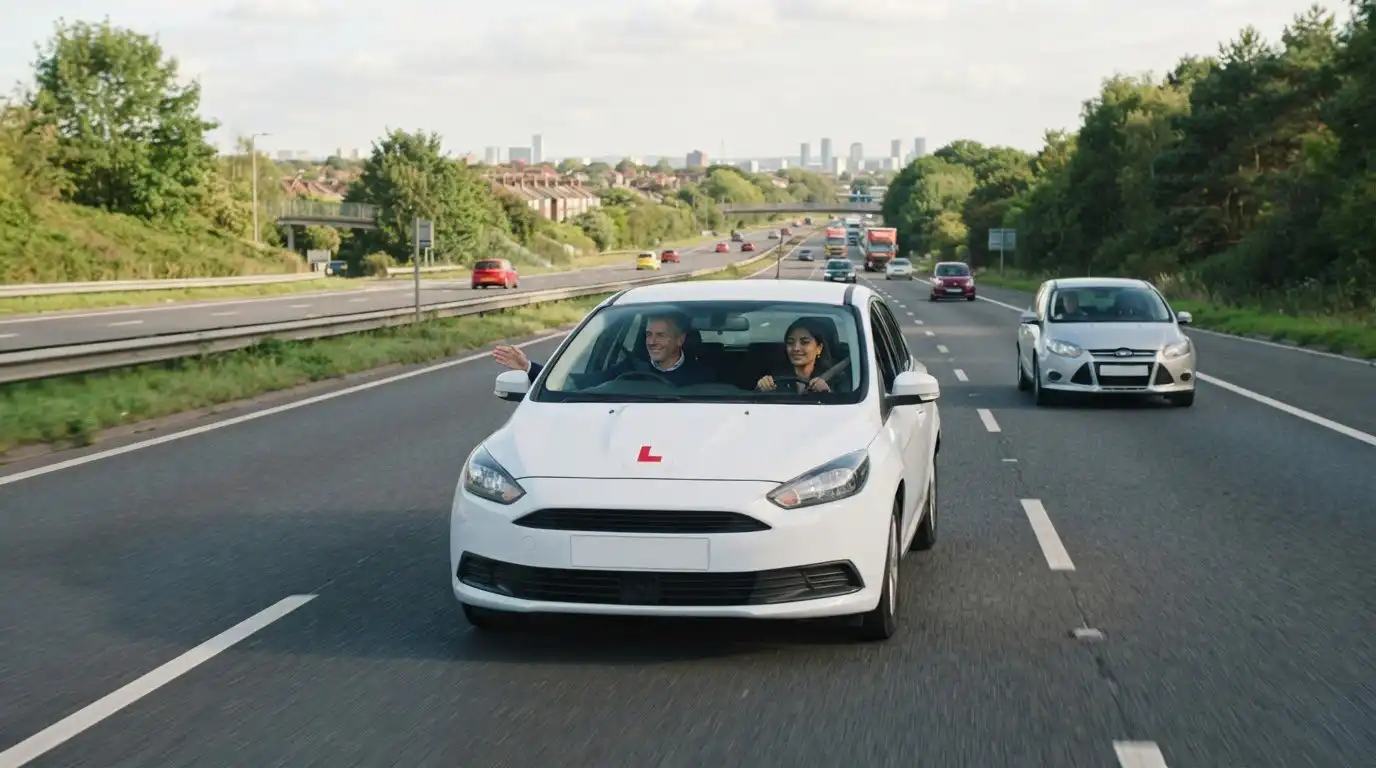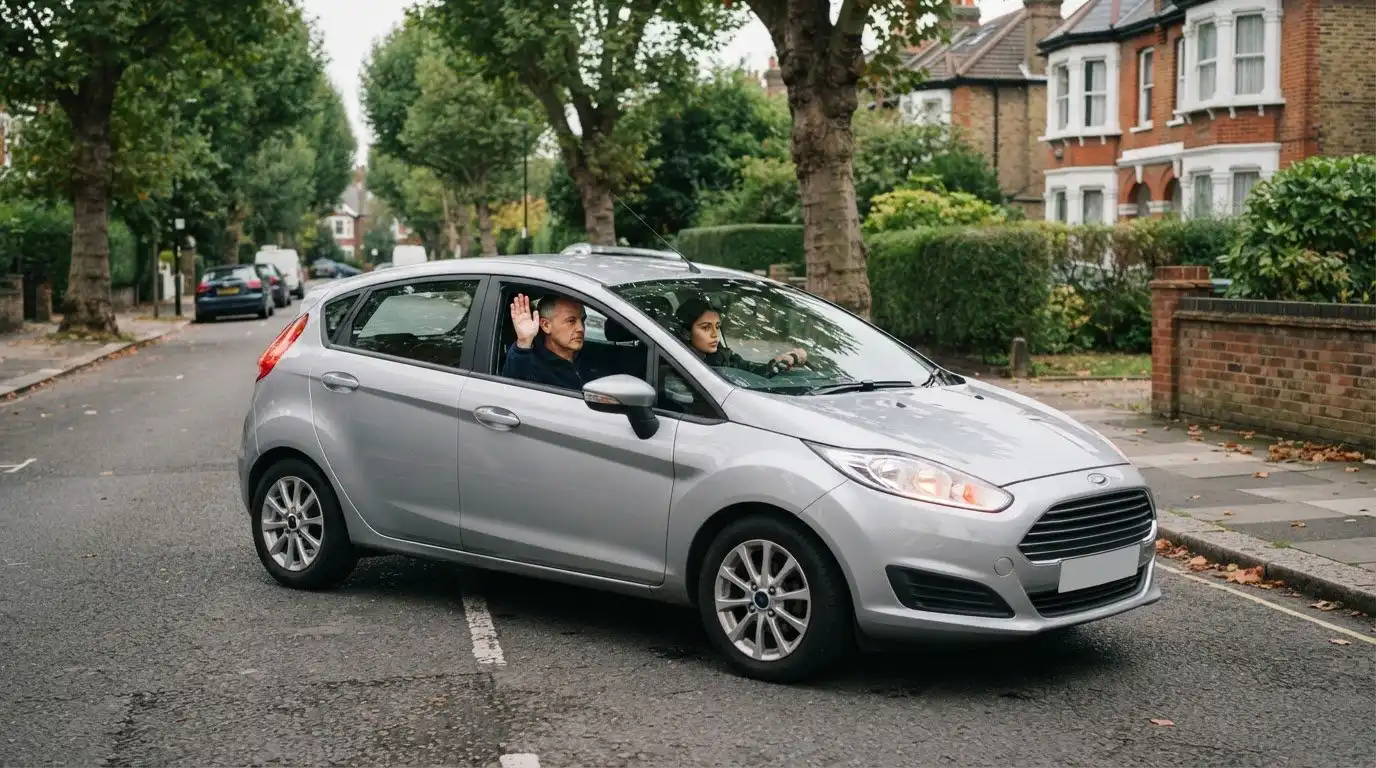
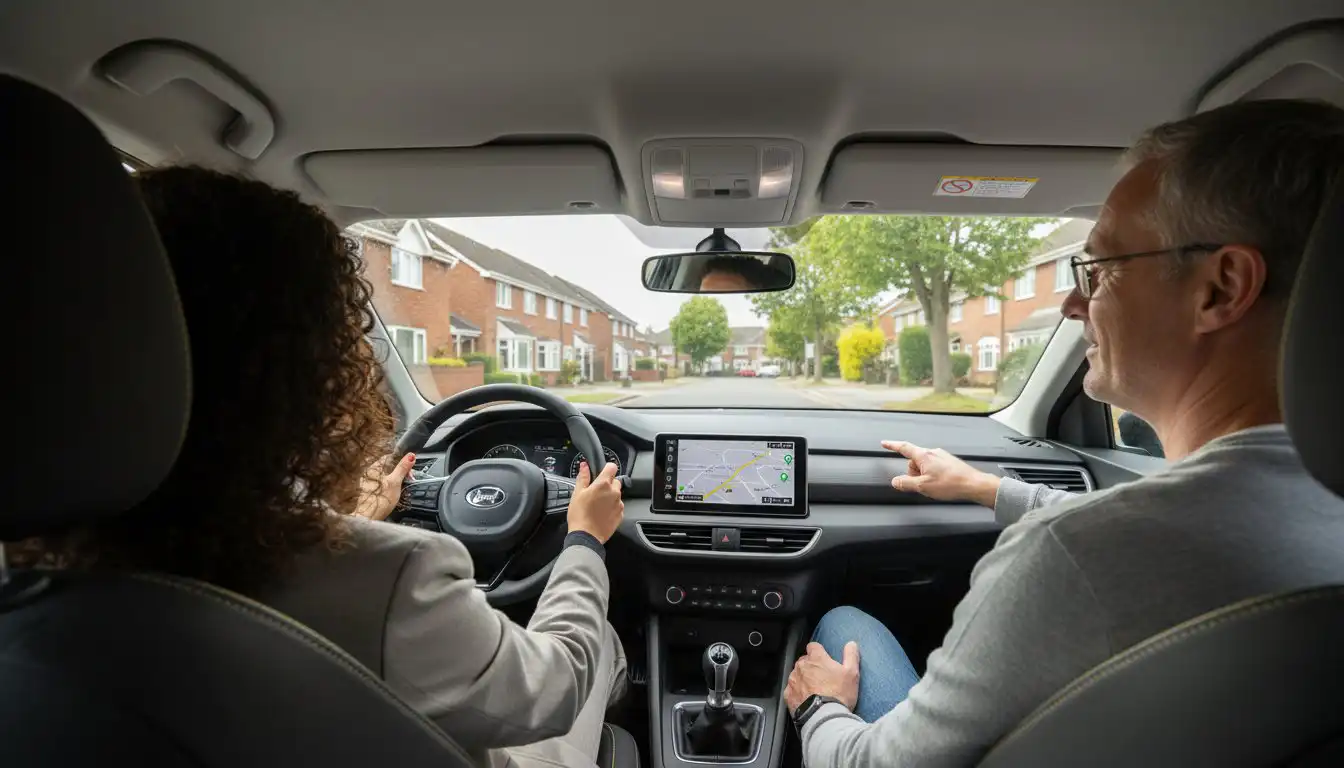
Did you know that nearly half of all learners fail their practical driving test on the first attempt? With the national pass rate currently between 48% and 52.2%, the margin for error feels incredibly slim. You’ve likely felt a spike of anxiety thinking about the £62 booking fee or the pressure of navigating busy junctions under an examiner’s watchful eye. It’s natural to feel concerned about the strict 2026 DVSA booking limits and the challenging 20 minute independent driving section.
We’re here to transform that nervous energy into professional competence. You deserve a clear path to success that respects your time and your investment. This guide provides the definitive roadmap to mastering every manoeuvre and regulation required to secure your full licence with absolute confidence. We’ll break down the latest booking restrictions, highlight how to avoid common major faults, and prepare you to handle the 80% of tests that now rely on sat nav technology. Whether you’re preparing via intensive driving courses or refining your skills with mock driving tests in London, this is your essential first step toward driving independence.
Key Takeaways
- Master the five essential segments of the practical driving test, including the eyesight check and “Show Me, Tell Me” vehicle safety questions.
- Navigate the updated 2026 DVSA booking regulations by understanding the strict two-change limit and the 24-week planning window.
- Learn the critical distinction between minor driving faults and serious majors to ensure your performance remains within the passing threshold.
- Adopt a “Confident Mentor” mindset to conquer test-day nerves and demonstrate the high-level technical proficiency examiners demand.
- Discover how professional mock driving tests can transform your anxiety into a successful first-time result.
What is the Practical Driving Test? Understanding the Standard
The practical driving test is a rigorous evaluation of your ability to manage a vehicle independently and safely without any verbal or physical prompts from an instructor. It’s the final gatekeeper to your driving freedom. During this examination, you’ll spend approximately 40 minutes demonstrating that you can navigate various traffic conditions whilst adhering strictly to the rules of the road. For those required to take an extended test, usually following a disqualification, this duration increases to 70 minutes. You must prove that you can handle the car with technical precision whilst maintaining a high level of awareness for everything happening around you.
Success requires more than just basic vehicle control. It demands a deep, instinctive application of The Highway Code. Examiners look for a high standard of safe driving behaviour that protects both you and other road users in real-world scenarios. This comprehensive UK driving test overview highlights how the assessment has evolved to meet modern safety standards. You’ll be tested on your observations at junctions, your reaction to developing hazards, and your ability to make sound decisions under pressure. The standard is high because the responsibility of holding a licence is significant.
The 27 Essential Skills Framework
The DVSA “Ready to Pass” framework organises your training into 27 key driving skills. These categories cover everything from moving off and stopping to complex junction management and lane discipline. Modern examinations place a heavy emphasis on “independent driving,” which now accounts for about half of the test time. This shift ensures you can follow road signs or sat nav directions without guidance. As you progress through your manual driving lessons, these technical skills must become second nature. You need to transition from the stage of “learning to drive” to “demonstrating mastery” of the vehicle in any environment.
When Are You Truly Ready to Book?
Booking your practical driving test too early is a common mistake that leads to unnecessary failure and lost fees. You’re only truly ready when you can complete a full lesson with “no prompts.” If your instructor still needs to remind you to check a blind spot or adjust your speed, you aren’t exam-ready. Consistency is your best indicator of success. Aim to perform every manoeuvre and junction perfectly for at least five consecutive lessons. This level of repetition builds the muscle memory required to handle test-day nerves. Before you even consider a test date, ensure you have a valid provisional driving licence and have mastered the foundational theory that underpins your practical actions.
Booking Your Test: Navigating the 2026 DVSA Regulations
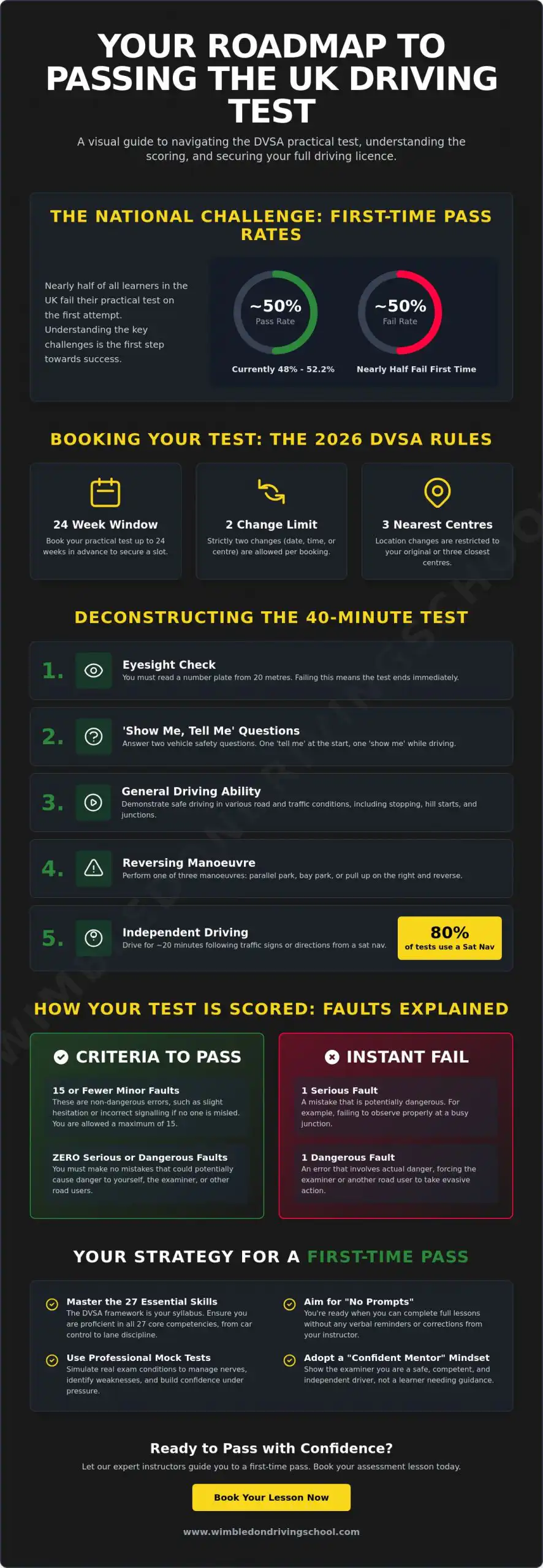
Securing a practical driving test slot has evolved into a strategic exercise. You can currently book your appointment up to 24 weeks in advance through the official DVSA portal. However, the flexibility learners once enjoyed has been replaced by stricter, fairer guidelines. As of March 31, 2026, you are restricted to a maximum of two changes to your booking. This limit applies to any modifications regarding the date, time, or test centre. It’s a definitive move by the DVSA to ensure that only those who are genuinely prepared occupy these precious slots.
Before you commit to a specific date, you must verify your instructor’s availability. There is little point in securing a prime morning slot if your instructor’s vehicle is already promised to another student. Coordination is vital to avoid vehicle conflicts on the day. If you are pursuing your licence via an intensive driving course in London, your schedule is likely even more time-sensitive. Always confirm that your mentor is free before you hit the final confirmation button on the GOV.UK website.
The Impact of the 2026 Booking Restrictions
The DVSA introduced these stringent limits to combat the persistent test backlog and eliminate the use of automated bots. A critical update effective from June 9, 2026, is the “Three Nearest Centres” rule. This mandate restricts any location changes to your original test centre or one of the three closest alternative hubs. For learners in South West London, your options will likely be limited to local hubs like Morden, Tolworth, and Mitcham. If you’re planning to sit your test at one of these locations, our detailed Morden driving test centre guide provides the tactical local knowledge you need to navigate the area’s specific hazards with confidence. This regional focus ensures you are tested in environments you’ve actually practised in. Additionally, as of May 12, 2026, only the learner driver can book the test; instructors are no longer permitted to book on your behalf. If you realise you aren’t ready, remember that you must provide at least three working days’ notice to cancel and receive a refund of your fee.
Using the Official DVSA Booking Service
The GOV.UK portal remains the only legitimate platform to secure your slot, operating daily from 6 am to 11:40 pm. You will need your provisional licence number, your theory pass certificate number, and your instructor’s reference number if you wish to align with their schedule. Avoid “cancellation finder” apps at all costs. These third-party services often harvest personal data and can lead to your booking being flagged or cancelled by the DVSA. Gaining a clear understanding of what happens during the driving test will help you judge whether you are truly ready to enter the booking system. Once you feel confident in your technical ability, you can secure your lesson time with us to refine your skills before the big day arrives.
The Five Sections of the Practical Driving Test
The practical driving test is structured to assess your safety and independence in a logical, 40-minute sequence. It begins the moment you meet your examiner at the test centre and concludes with a definitive result back at the same location. Understanding the flow of these five sections allows you to mentally prepare for the transition between technical manoeuvres and general road management. Before you head to the official portal to Book your driving test, you must ensure you’ve practised each of these stages until they feel like second nature. Each part is designed to see how you apply the rules of the road whilst maintaining total vehicle control.
Your assessment starts with a basic eyesight check where you’ll be asked to read a vehicle number plate from a distance of 20 metres. Failing this ends the test immediately, so ensure your prescription is current. Following this, you’ll move into the vehicle safety questions, general driving through various urban and rural road types, and one specific reversing manoeuvre. The examiner will choose either a parallel park on the road, a park in a bay, or pulling up on the right-hand side of the road and reversing. The final, most substantial stage is the 20-minute independent driving section.
Mastering the “Show Me, Tell Me” Questions
The examiner will ask you two vehicle safety questions to test your basic maintenance knowledge. The “Tell Me” question occurs at the very start, where you explain how you’d carry out a task like checking your tyre tread depth or ensuring your headrest is correctly adjusted. The “Show Me” question happens whilst you’re actually driving. You might be asked to operate the horn, clean the windscreen using the wipers, or turn on the rear demister. These are designed to be simple, provided you know where your controls are. You can access a full, updated list of these questions in our Learning Centre to ensure you aren’t caught off guard.
Independent Driving: Sat Nav vs. Traffic Signs
The independent driving portion has been extended to 20 minutes, constituting approximately half of your total practical driving test. Verified data shows that 80% of candidates will follow directions from a Sat Nav provided by the examiner, whilst the remaining 20% must follow road signs. It’s a common misconception that taking a wrong turning leads to an automatic fail. If you miss a turning, stay calm and continue driving safely. The examiner is assessing your safe driving behaviour, not your memory of the route. At Wimbledon Driving School, we simulate these exact conditions during our lessons, teaching you to handle navigation prompts with the same confidence you apply to your steering and observations.
Scoring and Faults: Why 50% of Learners Fail
Understanding the scoring system is the most effective way to demystify the practical driving test. With a national pass rate hovering between 48% and 52.2%, the difference between success and failure often comes down to a few split-second decisions. Examiners categorise mistakes into three distinct levels: driving faults, serious faults, and dangerous faults. Whilst the pressure is high, remember that the examiner isn’t looking for a perfect driver. They’re looking for a safe, competent, and predictable road user who can manage the vehicle without posing a risk to others.
You are permitted up to 15 driving faults, commonly known as “minors.” These are smaller errors that don’t put anyone in immediate danger, such as a slightly late signal or a minor steering inaccuracy. However, if you accumulate 16 or more minors, you’ll fail the test. A serious fault, or “major,” is a significant error that could have been dangerous. A single major results in an immediate fail. Dangerous faults are the most severe, occurring when the examiner has to intervene physically or verbally to prevent an accident. These also result in an instant fail and usually indicate that the candidate requires more time with a mentor before they’re ready for the road.
The Top 10 Reasons for Failure in London
Navigating the capital presents unique challenges that often trip up even the most confident learners. Inadequate observation at T-junctions and roundabouts remains the number one cause of failure. In high-pressure environments like Morden or Tolworth, learners often rush their checks or misjudge the speed of approaching traffic. Incorrect positioning is another frequent issue, especially at complex multi-lane junctions where choosing the wrong lane can lead to a serious fault. You must also remain vigilant about London-specific hazards, such as cycle boxes and bus lanes. Failing to check your blind spots when moving off or changing lanes is a mistake that examiners simply cannot ignore in such a densely populated driving environment.
How the Examiner Records Your Result
Gone are the days of paper clipboards; examiners now use digital tablets to record your faults in real-time. This ensures a consistent and transparent assessment process. One area where many learners struggle is “Progress.” Driving too slowly or being overly hesitant at junctions can be just as penalised as speeding, as it disrupts the flow of traffic and encourages other drivers to take risks. At the end of your 40-minute drive, you’ll receive a digital debrief. Whether you pass or fail, listen intently to this feedback. It provides a professional analysis of your driving behaviour and highlights exactly where you need to improve. To ensure you are performing at the required standard, we recommend taking a mock driving test in London to identify any hidden faults before the real exam.
The Wimbledon Driving School Strategy for Success
Achieving success in your practical driving test requires more than just technical skill. Our “Confident Mentor” philosophy focuses on creating a transformative journey where technical mastery meets mental resilience. We specialise in helping nervous drivers manage the inevitable surge of adrenaline on the big day through grounded, aspirational instruction. Our instructors possess unparalleled expertise in South West London and Surrey test routes. We understand the specific quirks of centres like Morden, Mitcham, and Tolworth, from the complex multi-lane roundabouts to the high-pressure urban junctions that often catch out the unprepared. For those on a tight schedule, our intensive driving course in London provides a structured, fast-track route to your licence without compromising on safety or the depth of professional knowledge required to pass first time.
The Power of the Professional Mock Test
Unlike generic advice found on government websites, we believe the professional mock test is the ultimate dress rehearsal. We don’t just ask your regular instructor to mark you harder; we recommend conducting these sessions with a different member of our team. This shift in environment perfectly simulates the psychological pressure of driving with a stranger. We use the digital data gathered from these sessions to “polish” your final five hours of tuition. By targeting specific weaknesses identified under exam conditions, we consistently achieve pass rates that sit significantly above the national average of 48% to 52.2%. It’s about moving beyond just knowing how to drive to performing with total composure under scrutiny.
Your Test Day Checklist
Your final journey toward independence starts with a clear, organised checklist. Ensure you have your provisional licence and theory pass letter ready for inspection. Using your instructor’s car is a vital part of this strategy. Familiarity with the specific bite point, steering weight, and dashboard layout of your training vehicle breeds the confidence you need to succeed. On the day, try to treat the examiner like a Sat Nav that talks back. They aren’t there to trick you; they’re simply there to observe your safe driving behaviour. Maintain a positive mindset, stay focused on your observations, and remember that every junction is just another opportunity to demonstrate your competence. You’ve done the work, now it’s time to secure the result you deserve.
Secure Your Driving Independence in 2026
Mastering the practical driving test is about more than just steering; it’s about navigating the new landscape of 2026 DVSA regulations with technical precision and mental clarity. By understanding the strict two-change booking limit and perfecting the five core test sections, you’re already ahead of the curve. You’ve discovered how to identify major faults before they happen and why local expertise in South West London and Surrey is your greatest asset.
Our team of RoSPA Gold and IAM certified instructors are dedicated specialists in supporting nervous and first-time drivers. We take pride in maintaining some of the top pass rates in the region, turning anxious learners into confident, safe motorists. This is your personal milestone, and choosing the right mentor makes all the difference. Ready to begin your transformative journey toward the road? Book Your Success: Explore Our Driving Lesson Packages today. Your full licence is within reach; we’re here to ensure you achieve it with absolute confidence.
Frequently Asked Questions
How much does the practical driving test cost in 2026?
The standard fee for a car practical driving test on a weekday is £62. If you choose to take your test during the evening, at a weekend, or on a bank holiday, the price increases to £75. These fees have remained the industry standard since 2009. Remember that you must also have passed your theory test, which currently carries a separate fee of £23.
Can I take my driving test in an automatic car?
You can certainly take your test in an automatic vehicle. We provide specialist automatic driving lessons for students who prefer this modern, simplified approach to driving. It is important to note that passing in an automatic car grants you a restricted licence. This means you will not be legally permitted to drive manual vehicles unless you sit a separate test later.
What happens if I fail my driving test?
If you don’t pass, you must wait at least 10 working days before you can sit another practical driving test. You will need to book a new slot and pay the fee again. We recommend using this interval to review your examiner’s feedback and book a few refresher driving lessons to ensure those specific faults are corrected before your next attempt.
How long is the waiting list for a driving test in London?
Waiting times vary across different London hubs such as Morden, Tolworth, and Mitcham. The DVSA allows you to book up to 24 weeks in advance through their official portal. Due to high demand in the capital, we advise students to be proactive. Check the booking system regularly at 6 am when new slots are often released to secure your preferred date.
Can I use my own car for the practical driving test?
You are allowed to use your own vehicle provided it meets all DVSA requirements. This includes having valid insurance, a current MOT, L-plates, and an additional interior rear-view mirror for the examiner. Most of our students prefer using their instructor’s car. Familiarity with the vehicle’s specific controls and dimensions provides a significant boost to your confidence during the exam.
Do I need to pass my theory test before booking the practical?
Yes, you must pass your theory test before you can book a practical driving test. The booking system requires your unique theory pass certificate number to proceed. This ensures every candidate has a firm grasp of The Highway Code and hazard perception before they are assessed on their physical driving ability in real-world traffic conditions.
What is the “Three Nearest Centres” rule introduced in 2026?
Starting June 9, 2026, the DVSA implemented a restriction on changing test locations. You can now only move your test to your original centre or one of the three closest alternative centres. This regulation aims to stop candidates from booking tests in unfamiliar rural areas just to find an earlier date, ensuring learners are tested in environments they actually know.
How many minor faults am I allowed to have?
You are permitted to have up to 15 minor driving faults during your test. If you record 16 or more minors, you will unfortunately fail. However, a single serious or dangerous fault results in an immediate fail regardless of how many minors you have. Maintaining consistent, safe driving behaviour is the best way to keep your fault count to a minimum.
Disclaimer
This article is provided for general informational purposes only and does not constitute professional driving, legal, or safety advice. While we aim to keep our content accurate and up to date, rules, prices, and DVSA test requirements can change — always check gov.uk or contact us directly at 020 3524 7968 for the latest guidance before making any decisions. Nothing in this article guarantees a specific outcome, including passing your driving test within any stated timeframe. For current pricing, course availability, and instructor details, please visit our Prices page or get in touch.