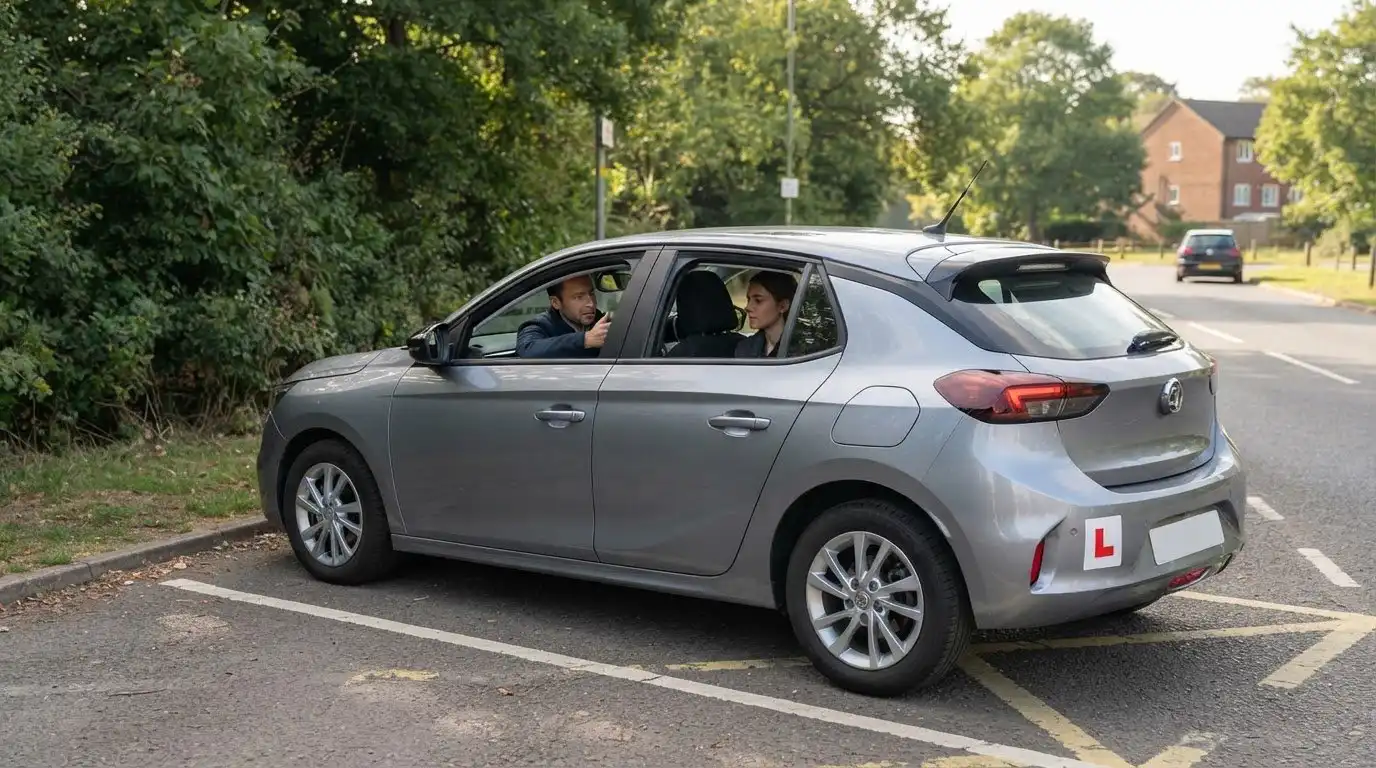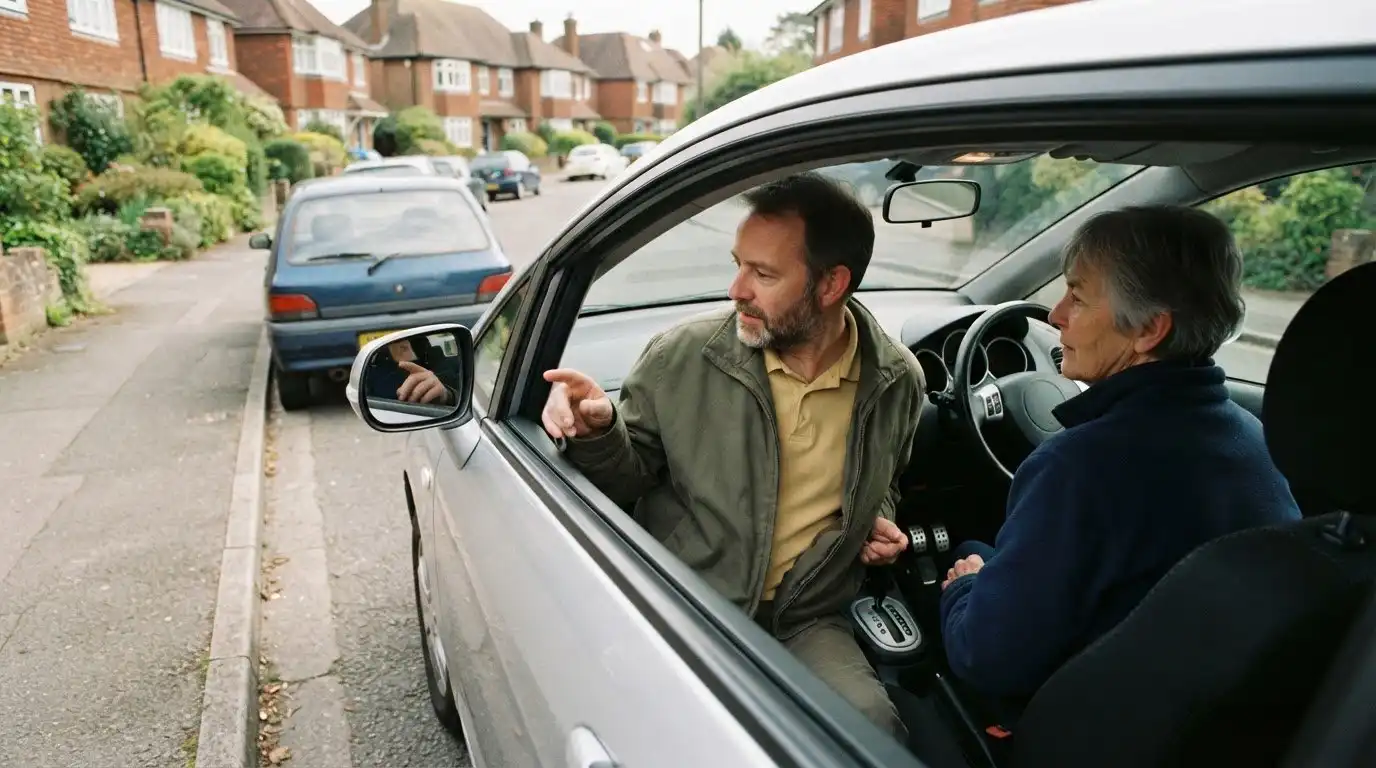
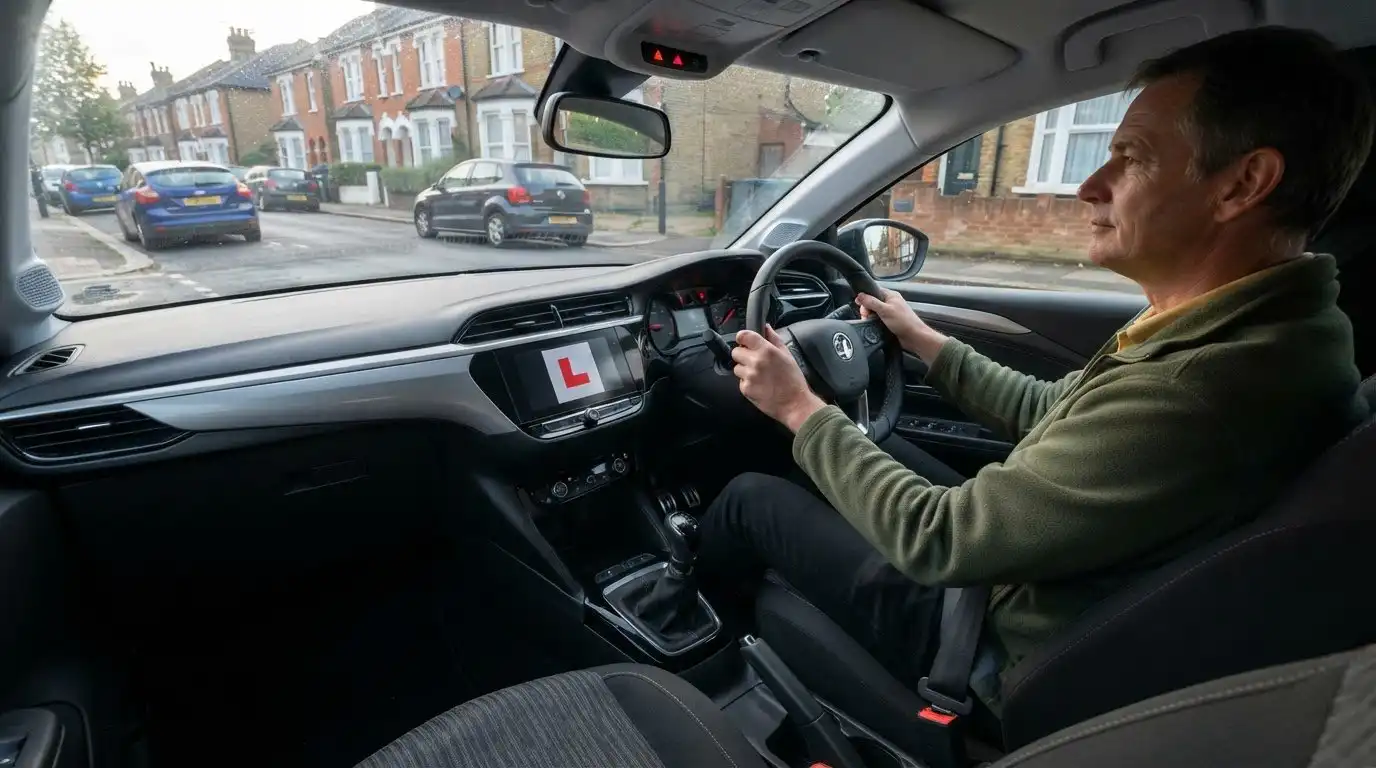
A stall during your driving test doesn’t automatically mean you’ve failed. If you’re wondering what to do when stalling in a manual car, stay calm, secure the car with the handbrake and switch on the hazard warning lights if you’re stopped in a position where other road users need warning. Restart only when it’s safe to do so.
It’s understandable to worry that one mistake could end your test, but the outcome depends on how you respond and whether you keep control of the car. A single stall handled safely is usually treated as a minor fault; repeated stalling or losing control can make it more serious.
This guide explains how to restart and rejoin traffic safely, find the clutch biting point and reduce the chance of stalling again. You’ll also learn what to do if it happens during your test, so you can respond calmly and continue when it’s safe.
Key Takeaways
- Recognise the clutch biting point by feeling the car begin to pull, then pause there briefly before moving off.
- Coordinate gentle acceleration with a gradual clutch release to reduce the chance of stalling.
- If stalling keeps happening despite smooth clutch control, consider whether a mechanical issue may be involved.
- After a stall, secure the car before restarting, then check your surroundings before moving back into traffic.
- A stall during your driving test doesn’t automatically mean failure; calm, safe control matters.
What is the biting point on a clutch?
The biting point is where the clutch begins transferring engine power to the wheels. Find it gradually, then hold the pedal steady as the car begins to pull.
-
Recognise the biting point
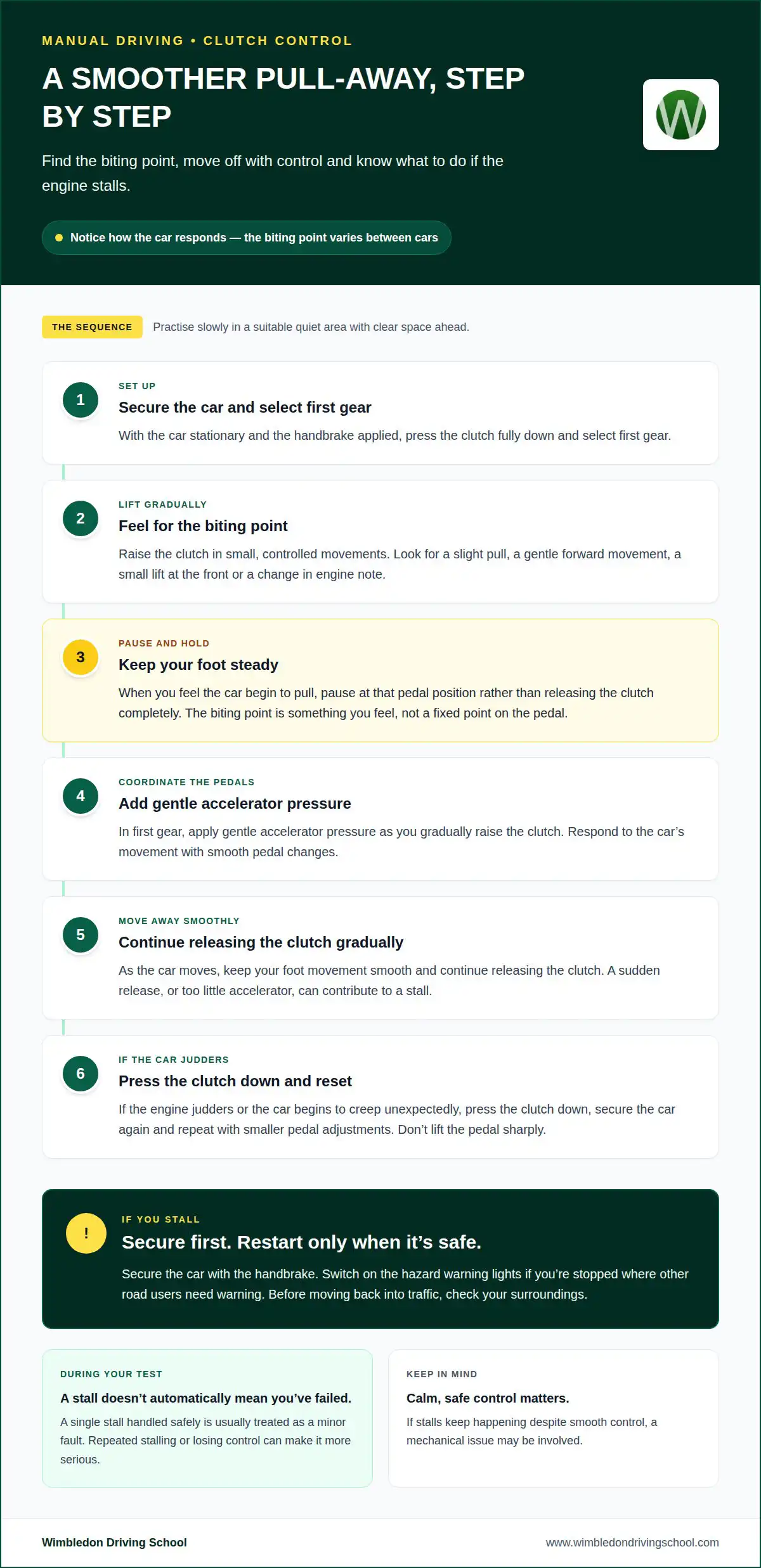
With the car stationary and the handbrake applied, press the clutch fully down and select first gear. Slowly lift the pedal until you feel a slight pull or notice the front of the car rise slightly. That change marks the biting point. Avoid lifting further in a hurry: raising the clutch too quickly can stall the engine.
-
Find and hold the biting point
Keep your left heel on the floor and lift the clutch in small, controlled movements. When you feel the car start to pull, pause your foot at that position rather than releasing the pedal completely. The biting point can feel different between cars, so focus on the response of the car you’re driving. If the engine judders, press the clutch down and reset.
- Notice the car’s response, not just your foot position. A slight change in engine note, a gentle pull forwards or a small lift at the front can signal that the clutch is engaging. These signs vary between cars. Use the feeling of the car beginning to move as your main guide, and keep your foot movement smooth.
- Practise in a suitable quiet area with clear space ahead. Keep the handbrake on while you locate the biting point, and avoid letting the car roll. Once you recognise the pull, lower the clutch fully before trying again. Repeating this controlled movement helps you learn how the pedal responds without rushing into a moving start.
- Separate finding the biting point from moving away. First, lift the clutch slowly until the car’s response changes, then hold your foot steady. If the car begins to creep, don’t panic or lift the pedal sharply. Press the clutch down to stop the movement, secure the car again and repeat with smaller pedal adjustments.
- Remember that the biting point is a position you feel, not a fixed point on the pedal’s travel. The clutch may engage higher or lower in different cars. If you’re learning to coordinate the clutch with gear changes, manual gear-shifting techniques can help you understand how controlled pedal movement supports smoother starts.
How can I avoid stalling?
A manual car can stall when clutch control, gear choice or engine performance interrupts power to the wheels. A stall can be dangerous if it leaves you exposed to traffic, so prioritise controlling the car and recovering safely.
- Match your gear to your speed. If you slow down without changing down, the engine may labour, judder and stall. For example, avoid letting the car struggle in a high gear as you approach a junction. Select a lower gear as your speed falls, and press the clutch just before the engine begins struggling when stopping.
- Use the clutch smoothly. Releasing the pedal too quickly can interrupt the engine’s ability to deliver power to the wheels. Too little accelerator when moving off can also contribute. Lift the clutch gradually and respond to the car’s movement, rather than making a sudden pedal change when it judders.
- Pay attention to repeated stalls. A one-off stall during a difficult start may point to clutch control or gear choice. If it continues despite appropriate driving, consider a mechanical cause. A worn clutch or flywheel can make a car easier to stall, while clutch play can affect how power reaches the wheels.
- Notice changes in engine performance. A faulty alternator or a battery that needs replacing can be associated with engine power loss. A loss of power in the drive chain may also contribute. If the engine repeatedly cuts out, note when it happens, such as at idle or while moving, and arrange a mechanical assessment.
- Take persistent symptoms seriously. Blockages in fuel or exhaust lines can affect how the engine runs. Exhaust soot can build up and contribute to a blockage; water or debris can obstruct a fuel line. These faults aren’t corrected by changing your clutch technique, so don’t keep trying to drive through repeated stalls.
- Distinguish a driving issue from a vehicle fault. A car can stall while idling or moving. If the engine cuts out as your speed drops, consider whether you stayed in too high a gear or delayed pressing the clutch. If it stalls repeatedly in different situations, a mechanical cause becomes more relevant than a single missed gear change.
- Practise deliberately and watch for patterns. Focus on one factor at a time, such as gear selection, clutch movement or accelerator use. Note whether stalls happen during pull-aways, at low speeds or while idling. If they continue despite steady control, stop treating each incident as a separate driving mistake and arrange a vehicle assessment.
Using the clutch and accelerator when moving off
Build a smooth pull-away by coordinating both pedals and responding to the car’s movement. Practise the sequence in a suitable quiet area before relying on it in traffic.
-
Practise clutch control safely
Choose an empty car park with enough clear space ahead to move off gently. Practise only where you’re permitted to drive, and keep each attempt slow and controlled. Start with one pull-away, then pause and reset before repeating. This gives you time to notice how the car responds without traffic pressure. Stop if the car moves unexpectedly or you feel rushed.
-
Coordinate the clutch and accelerator
In first gear, apply gentle accelerator pressure as you raise the clutch gradually. When the car starts to pull, keep your foot movement smooth and continue releasing the clutch as the car moves. The clutch transfers engine power to the wheels. If it comes up too quickly, or the engine receives too little throttle, the car may stall before it gathers momentum.
- Use the engine’s response as feedback. A judder or change in engine note can mean the pedals aren’t working together yet. Avoid stamping on the accelerator or lifting the clutch sharply to correct it. Ease the car back to a controlled stop, then try again with smaller adjustments. Each attempt should help you identify which movement needs more control.
- Practise the separate parts of the movement before aiming for a quick start. In a clear space, work on applying gentle throttle, then gradually release the clutch while watching the car’s response. Keep your eyes ahead, not on your feet. Once the movement feels consistent, practise pulling away and stopping again, leaving room to reset between attempts.
- Adjust your coordination to the situation. A level car park gives you space to focus on the pedals, while a slope adds the need to prevent the car rolling. Practise hill starts only when you can manage the basic pull-away calmly. Don’t rush to release the handbrake; time it with the car beginning to move.
- Use a slow count as a prompt, not a strict timing rule. Counting to three while raising the clutch can remind you to move gradually, but the car’s response should guide your pace. If the engine struggles, pause and make a small adjustment rather than changing both pedals abruptly. Repeat controlled starts until you can pull away without rushing.
Restarting and rejoining traffic
If your car stalls at a busy junction or on a hill, apply the handbrake and switch on the hazard warning lights. Restart only when it’s safe, then check your surroundings before moving off.
- Secure the car first. Keep control of the vehicle and apply the handbrake before restarting. This is especially important on a hill, where an unsecured car could roll. Switch on the hazard warning lights after the stall so approaching road users can see that you’ve stopped.
- Take a moment to assess the position. At a busy junction, traffic may be passing close by or waiting behind you. Don’t rush into a restart because you feel pressured by other drivers. Focus on keeping the car secure and choose a safe moment to restart and prepare to move.
- Restart the engine carefully. Press the clutch pedal down before turning the key or using the start button. Some cars require the clutch to be fully depressed for the engine to restart. If the engine doesn’t start, keep the car secured and follow the vehicle’s normal starting procedure rather than repeatedly turning the ignition.
- Select a suitable gear. Once the engine is running, keep the clutch down and select first gear for a normal pull-away. In icy conditions, starting in second gear can help prevent excess strain on the engine. Don’t select a gear until you’re ready to move and can maintain control of the vehicle.
- Check the car after restarting. Look at the dashboard warning lights and listen for unusual engine sounds or knocks. If a warning remains on or the engine sounds abnormal, don’t assume the restart means everything is fine. A car that continues stalling may need attention before you continue your journey.
- Check around you before moving off. Check your mirrors and blind spot after restarting, then reassess traffic, cyclists and pedestrians. A vehicle or person may have moved while you were stopped. Move only when there’s a safe gap, and make sure your position and intended direction remain suitable.
- Manage a hill start without rushing. Keep the handbrake applied while preparing to move, then coordinate the clutch and accelerator before releasing it. At a junction, wait until you can move safely rather than pulling away simply because traffic is waiting. Practising junction starts without stalling can help you build a clear routine.
- Notice repeated restart problems. Repeated stalls can strain the starter motor and drain the battery. If the engine won’t restart or stalls again, keep the car secure and avoid repeated attempts that could leave you unable to rejoin safely.
Stalling during a driving test
A stall during a UK driving test doesn’t automatically mean you’ve failed. The examiner considers where it happens, your control of the car and how you respond.
- Stay focused on control. If the engine stops, keep your attention on the road and apply the handbrake. Switch on the hazard warning lights when stopped, particularly if your position could surprise approaching traffic. Deal with the car first, rather than letting pressure from other road users rush your next decision.
- Assess the position before restarting. Consider whether you’re safely stopped or exposed to moving traffic. A stall in a busy roundabout, for example, may create more risk than one in a quiet place. Check what’s happening around the car and choose a safe moment to restart, rather than reacting to impatient drivers.
- Restart deliberately. Press the clutch down and use the car’s normal starting procedure. Once the engine is running, select first gear and prepare to move away. Don’t focus only on getting moving quickly. Reassess traffic, pedestrians and your position, as road users may have moved while you were stopped.
- Wait for a safe opportunity to move. At a junction, don’t pull out just because another vehicle is waiting behind you. Check that the gap is suitable and that you can move away without affecting other road users. A measured restart is safer than rushing the clutch and accelerator under pressure.
- Recognise that context matters. A single stall handled calmly and safely is usually treated as a minor fault. It doesn’t automatically end your test. The circumstances matter, including whether you maintained control and whether your actions created risk for others on the road.
- Respond carefully if it happens again. Repeated stalls and poor vehicle control can make the fault more serious. For example, repeated stalling at a busy roundabout may disrupt traffic or leave the car in a dangerous position. Don’t assume the first stall decides the outcome; make each subsequent action safe and controlled.
- Refocus on the rest of the drive. Once you’ve moved off safely, return your attention to the examiner’s directions and the road ahead. Continue checking signs, mirrors and developing hazards. Dwelling on the stall can distract you from the next decision, so treat each situation on its own and drive with care.
Wimbledon Driving School: Manual Driving Lessons
Wimbledon Driving School can help you build smoother clutch control through manual driving lessons. Turn to an instructor if you’re still stalling during pull-aways, finding junctions difficult or feeling unsure about restarting safely.
Lessons can focus on the situations you find challenging, from finding the biting point to coordinating the clutch and accelerator in traffic. Practising these skills with an instructor gives you a structured way to improve your control and prepare for your driving test.
Contact Wimbledon Driving School to book a manual driving lesson.
Build confidence for your next drive
A stall doesn’t have to shape how you feel about driving. Treat it as a chance to strengthen your judgement and become more comfortable handling unexpected moments on the road.
If you’re still unsure what to do when stalling in a manual car, make steady practice your next step. Work on responding calmly in different situations, so your decisions feel more familiar when traffic, a hill or test pressure adds complexity.
Progress comes from building skill at a pace that suits you. Wimbledon Driving School offers manual driving lessons, automatic driving lessons and intensive driving courses, giving you different ways to develop your driving. Choose the support that fits your experience and goals.
Keep learning, stay focused and give yourself room to grow into a capable, confident driver.
Frequently Asked Questions
If your engine stalls what is the first thing you should do?
If you’re wondering what to do when stalling in a manual car, first secure the vehicle before attempting to restart. Apply the handbrake, then assess your position and the traffic around you. If you’re stopped where other road users need warning, switch on your hazard warning lights. Don’t rush because someone is waiting behind; regain control and decide whether it’s safe to restart.
What does stalling mean?
Stalling means the engine stops running unexpectedly, so the car can no longer drive under its own power. In a manual, it can happen when the engine lacks enough power for the selected gear or the clutch is released incorrectly. For example, the engine may stop as you pull away if the clutch comes up too quickly or the car is in too high a gear.
Will car stalling damage my car?
An occasional stall usually doesn’t cause significant damage. Repeated attempts to restart can strain the starter motor and drain the battery, while frequent stalling left unchecked can contribute to wear on vehicle components. If the engine keeps cutting out despite appropriate driving, don’t assume it’s just a technique issue. A recurring fault may need a mechanical assessment, especially if it happens in different driving situations.
Will you fail your driving test if you stall?
No, a stall doesn’t automatically mean you’ll fail your UK driving test. A single stall is usually treated as a minor fault when you handle it safely and calmly. The situation can be more serious if you stall repeatedly, lose control or stop somewhere dangerous, such as a busy roundabout. Respond safely, assess the road and follow the examiner’s directions.
What should you do immediately if a manual car stalls while driving in the UK?
Secure the car and assess your surroundings before doing anything else. Engine power loss can make steering and braking less effective, so keep control and avoid abrupt movements. Apply the handbrake, use hazard warning lights if your position needs warning, and restart only when it’s safe. Before moving back into the road, check for traffic, pedestrians and cyclists that may have approached while you were stopped.
How do you restart a manual car safely after stalling?
With the car secured by the handbrake, press the clutch down and restart the engine using the car’s usual procedure. Some cars require the clutch pedal to be depressed before they’ll start. Once the engine is running, keep the clutch down and select first gear. Check the dashboard for warning lights and listen for unusual engine sounds before moving, particularly if the car has stalled more than once.
How do you move off smoothly in a manual car without stalling?
Select first gear, apply gentle accelerator pressure and lift the clutch gradually. When you feel the car begin to pull, pause briefly before releasing the clutch further. You can count slowly to three as you raise the pedal, adjusting your movement to the car’s response. Keep your attention on the space ahead rather than looking down at the controls, especially near junctions.
What causes a manual car to stall when moving off?
Common causes include releasing the clutch too quickly, applying too little accelerator or attempting a hill start without coordinating the controls. Selecting too high a gear for a low speed can also make the engine struggle. If you’re asking what to do when stalling in a manual car keeps happening, consider whether your technique needs practice or whether a recurring mechanical fault may be affecting the vehicle.
Disclaimer
This article is provided for general informational purposes only and does not constitute professional driving, legal, or safety advice. While we aim to keep our content accurate and up to date, rules, prices, and DVSA test requirements can change — always check gov.uk or contact us directly at 020 3524 7968 for the latest guidance before making any decisions. Nothing in this article guarantees a specific outcome, including passing your driving test within any stated timeframe. For current pricing, course availability, and instructor details, please visit our Prices page or get in touch.