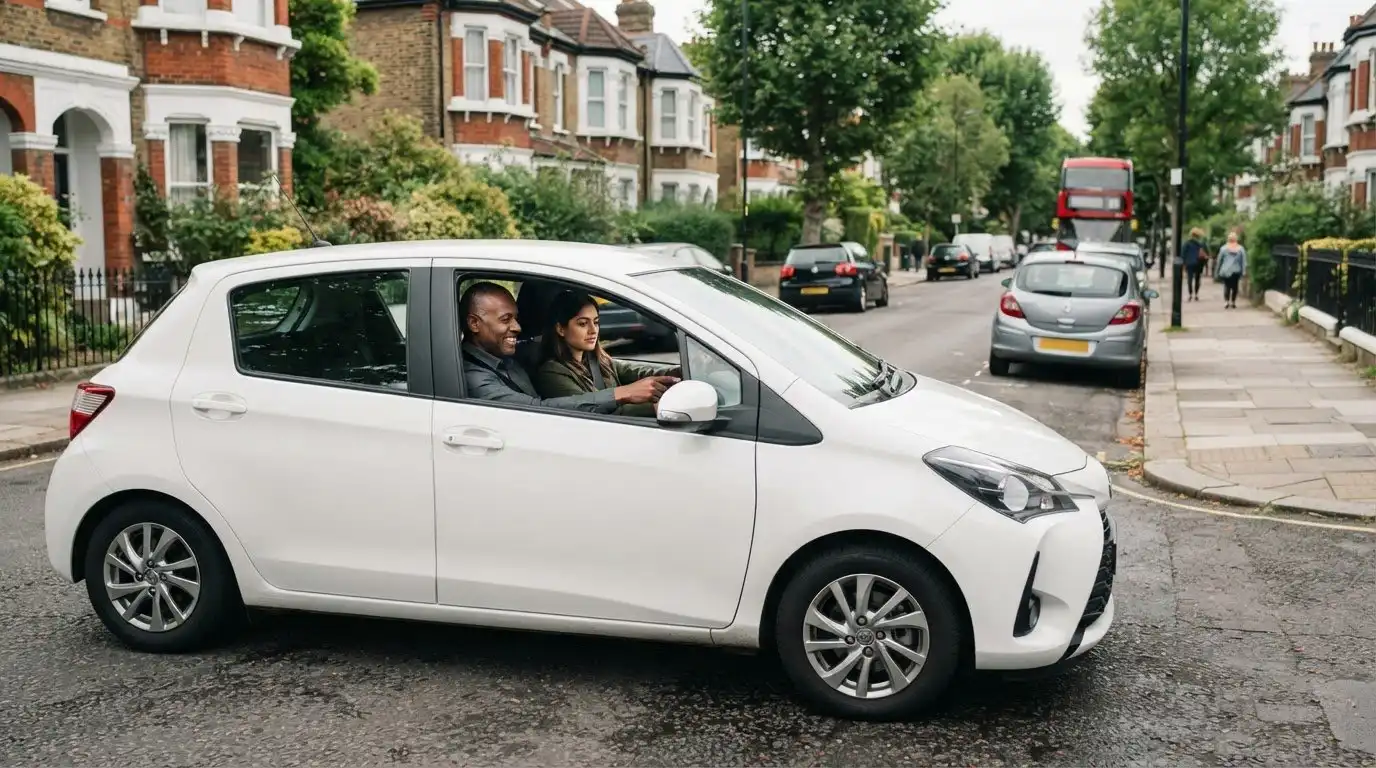

What if the freedom to shape your working week comes with more business responsibility than you expected? If you’re asking, “is being a driving instructor a good job?”, the honest answer depends on whether you enjoy teaching, can stay patient under pressure and are comfortable managing the practical side of work.
The appeal is real: you can help learners build confidence and reach an important milestone, while having more control over your working pattern. But flexible hours don’t automatically mean dependable income. You’ll also need to handle traffic, different learning needs and the responsibility of keeping lessons safe and productive.
This guide will help you weigh the rewards against the demands before deciding whether the ADI route fits your strengths and lifestyle. You’ll get a realistic picture of day-to-day instructor work, the DVSA qualification journey and the business choices that can shape your working life. Wimbledon Driving School has supported learners since 2006 and offers ADI training for people considering this career path. Treat the decision as a journey to explore carefully, not a guaranteed shortcut to a new career.
Key Takeaways
- To decide whether “is being a driving instructor a good job?” has a yes for you, weigh the satisfaction of helping learners against the patience and responsibility the role demands.
- Look beyond lesson time: planning, travel and communication can all shape how you organise a working week.
- Compare the potential rewards, such as varied interactions and meaningful learner progress, with the effort each can involve.
- Use a practical self-check to assess your motivation to teach, communication style, organisation and comfort with responsibility.
- Explore the current DVSA requirements on GOV.UK, then consider whether structured ADI training fits your next career step.
Is being a driving instructor a good job for you? Start with what the work involves
It can be rewarding if you enjoy teaching, have patience and take responsibility seriously. But asking “is being a driving instructor a good job?” means looking beyond the appeal of being your own boss: the work calls for preparation, clear communication and steady support as learners build safe, independent driving skills.
You’re not simply demonstrating routes. You’re helping someone understand how to make decisions on the road, recognise hazards and develop skills they can use without your guidance. For a general introduction to what the work involves, see this overview of driver education.
For a related look at the driving-test context, watch this video:

What does a driving instructor do beyond teaching driving skills?
A lesson involves more than giving directions. You explain techniques in a way the learner can understand, observe their decisions and behaviour, then adapt your guidance to what they’re ready to practise. One learner may need time to build confidence in busy traffic; another may benefit from focused work on planning ahead.
You’ll also plan lessons, communicate professionally and maintain a calm learning environment, particularly when a learner feels anxious or makes a mistake. Practical road knowledge matters, but so does helping each person learn safely and steadily. Wimbledon Driving School shares further insight into the qualities of a great driving instructor.
Why the work can feel meaningful
Progress can be gradual. A learner who once hesitated at a busy junction may begin approaching it with better observation and sounder decisions. Seeing that change, and knowing your clear feedback helped them develop, can make the work personally satisfying.
The aim is to prepare people for independent driving, not to promise a particular test result. That takes patience: you may need to explain a skill in different ways and give learners time to practise. If you value that steady teaching journey, the role may suit you. If you mainly want autonomy without the organisation and responsibility that come with it, consider the day-to-day reality carefully before choosing this career.
A driving instructor’s working day: flexibility, teaching and responsibility
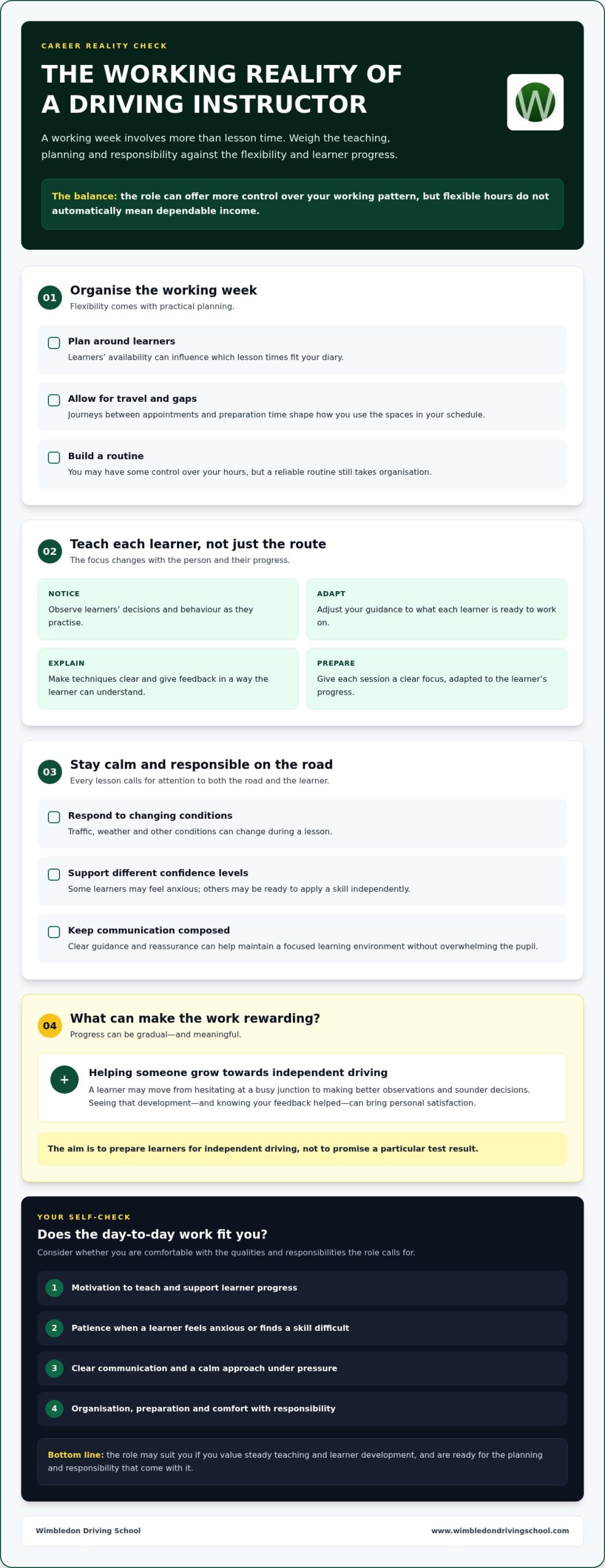
A working week is made up of more than time spent teaching in the car. You may need to plan lessons, travel between appointments, communicate with learners and make practical use of gaps in your schedule. The balance depends on how you work and where your pupils are based, so flexibility is possible, but it still takes organisation to build a reliable routine.
That’s central to deciding whether is being a driving instructor a good job for you. You might have some control over how you arrange your work, but learners’ availability and travel around areas such as Wimbledon and South West London can influence which lesson times make sense. For a closer look at the topic, read about flexible hours for driving instructors.
Can instructor work offer flexible hours?
Potentially, yes, though flexibility doesn’t mean every preferred hour will fit neatly into your diary. You’ll need to take learners’ schedules into account, allow for journeys and leave enough time to prepare between appointments. The working arrangements also vary, so consider what kind of routine you want and how much responsibility you’re ready to take for organising it.
The responsibility behind each lesson
Every lesson calls for attention to both the road and the learner. Traffic, weather and other conditions can change, while pupils differ in confidence and in how quickly they absorb feedback. You need to stay calm, notice what’s happening and give clear guidance without overwhelming the person behind the wheel.
Preparation helps you make each session purposeful. A clear focus, adapted to the learner’s progress, can help them understand what to practise and why. The emotional effort matters too: a pupil who feels unsettled may need reassurance, whilst someone ready for a challenge may need space to apply a skill independently. Consistent, composed communication supports learning and helps maintain a focused environment.
If you’re weighing up the career, use the official GOV.UK guidance on practical next steps to understand the route into the profession. It can help you separate the qualification process from the ongoing demands of the work, including planning a schedule and supporting different learners.
Explore the instructor career pathway
The pros and pressures of being a driving instructor, weighed honestly
Is being a driving instructor a good job? The answer depends on how much you value helping people learn, and how you feel about the less visible work that comes with teaching. The potential rewards are real, but they don’t make every lesson easy or every working week predictable.
Use this comparison to weigh the appeal against the effort involved. These are possible experiences, not guarantees: each learner, schedule and working arrangement is different.
| Potential benefit | The effort or trade-off |
|---|---|
| Helping learners grow in confidence and move towards independent driving | Progress varies. You’ll need patience and a considered approach when someone finds a skill difficult or feels anxious. |
| A practical, people-focused role with varied conversations and learning needs | Not every interaction will feel straightforward. You’ll need to adapt your communication whilst maintaining a calm, professional manner. |
| Finding satisfaction in seeing a learner’s skills develop over time | Their progress is gradual, and a test result isn’t something an instructor can promise. |
| Some scope to organise how you work | Flexibility doesn’t remove the need to manage appointments, travel, preparation and the business tasks around lessons. |
What people may find rewarding about the career
If you enjoy explaining practical skills and seeing people become more confident, teaching can feel purposeful. A learner might move from needing frequent prompts to making safer, more independent decisions. That change can be satisfying because it reflects steady instruction and effort from both sides, rather than a single dramatic breakthrough.
The work also brings you into contact with people who learn at different paces and in different ways. That variety may suit you if you like adjusting your teaching; it can be tiring if you expect every lesson to follow the same pattern.
What can make instructor work challenging?
Patience is tested when a learner repeats a mistake or progress slows. You must stay attentive and constructive, even when a lesson doesn’t go as planned. Behind the teaching, organising work and keeping on top of tax responsibilities also take time. Wimbledon Driving School’s guide to taxes for driving instructors explores that business side.
Flexible work isn’t automatically easy, predictable or free from administration. Before deciding, consider whether you’re comfortable balancing learner support with the practical tasks of running your working week. GOV.UK sets out the official requirements to become a driving instructor, which can help you understand the qualification pathway separately from the day-to-day realities of the job.
Explore the instructor career pathway
How to decide whether a driving instructor career matches your strengths
Knowing the rewards and pressures is a useful start. Now consider how the work fits your temperament and everyday life. Asking “is being a driving instructor a good job?” is personal: the answer depends not only on whether you enjoy driving, but on whether you want to teach, stay organised and take responsibility for another person’s learning.
Questions to ask yourself before pursuing the route
Reflect honestly on these five areas. You don’t need to feel perfectly confident in every one, but your answers can show where the role may fit and what you’d need to develop.
- Teaching motivation: Would you enjoy explaining the same skill in different ways until it makes sense to someone?
- Patience: Can you stay encouraging when progress is uneven or a learner needs more practice?
- Communication: Are you comfortable giving clear feedback and listening carefully to understand what a learner finds difficult?
- Organisation: Would planning appointments, preparing lessons and being punctual suit the way you like to work?
- Responsibility: Can you stay attentive and composed while guiding someone through changing road conditions?
Also picture the routine you want. Think about travel between lessons, time spent organising your work and how much structure you prefer in a working week. There isn’t one arrangement that suits everyone, so focus on whether the practical realities feel compatible with your priorities. For more qualities to reflect on, read about what makes a great driving instructor.
Understand the qualification journey before committing
Personal suitability and eligibility are separate questions. You may feel well suited to teaching and still need to meet the current requirements for becoming an Approved Driving Instructor (ADI). Equally, meeting the requirements alone doesn’t establish whether the day-to-day work matches your strengths.
Before investing in training, read the latest GOV.UK guidance on becoming a driving instructor. It explains the current process and requirements, so you can understand the route from an authoritative source rather than relying on assumptions. Keep this early check focused on the broad pathway; detailed preparation for the qualification tests is a separate step.
Once you’ve considered your motivation, working preferences and the official route, you’ll be better placed to decide whether to explore ADI training. Wimbledon Driving School’s instructor development pathway is a practical next step for people considering the profession, without promising a particular qualification or career outcome.
Explore the instructor career pathway
Starting an instructor career with Wimbledon Driving School: practical next steps
If you’re still weighing up whether is being a driving instructor a good job for you, turn that reflection into a few measured steps. Start with the current official requirements, consider how the realities of the role fit your strengths and lifestyle, then explore training. This gives you a clearer basis for deciding without relying on promises about earnings or how quickly you could qualify.
What to explore before beginning ADI training
- Read the official guidance. GOV.UK explains the current process for becoming an Approved Driving Instructor. Use it to understand the requirements and stages, and return to the guidance for procedural details rather than relying on outdated summaries.
- Revisit your career-fit questions. Think about whether you’ll find teaching, patient communication, organisation and responsibility satisfying as ongoing parts of work, not just appealing in theory.
- Look beyond qualifying. Consider the day-to-day demands and the practical choices involved in building a working routine. Wimbledon Driving School’s article on tips for new driving instructors offers further early-career context.
There’s no need to force a quick decision. A considered choice is more useful than assuming a qualification will guarantee a particular timeframe, income or employment outcome.
Explore the instructor pathway with Wimbledon Driving School
Wimbledon Driving School has an ADI training and careers arm for people exploring instructor development. The school has operated since 2006 and works across South West London, South East London, Surrey and Middlesex. That local context may help you picture where instructor work could take place, but it isn’t a promise of a role or future earnings.
Take the next step once you’ve reviewed the requirements and considered whether the work suits you. Explore the instructor pathway through Wimbledon Driving School’s bookings page.
Choose your next step with confidence
So, is being a driving instructor a good job? It can be a meaningful career if you enjoy teaching, can remain patient as learners progress at different speeds and are ready to balance lessons with planning and responsibility. Flexibility may appeal, but it doesn’t remove the need to organise your working week or consider the business side.
Before committing, reflect on whether the everyday work suits your strengths and lifestyle, then read the current DVSA and GOV.UK guidance on the Approved Driving Instructor route. A careful decision is more valuable than assumptions about income, qualification timeframes or future employment.
Wimbledon Driving School has operated since 2006 and has an ADI training and careers arm for people exploring instructor development. Its experience provides useful context as you consider the pathway, but your progress and career outcomes depend on your own circumstances.
Take the time to make an informed choice. If teaching feels like a good fit, you can begin exploring the route with purpose and realistic expectations.
Frequently Asked Questions
Is being a driving instructor a good job?
Yes, it can be a good job if you enjoy teaching, can stay patient and take responsibility seriously. The work is more than driving: you help learners develop safe, independent judgement and adapt your explanations to their progress. It may suit you if learner development feels rewarding and you’re comfortable with planning and business tasks too. Flexible working is possible, but it doesn’t guarantee predictable hours or income.
What are the pros and cons of being a driving instructor?
Potential benefits include helping learners gain confidence, varied people-focused work and some scope to organise your schedule. The trade-offs include patience when progress is uneven, responsibility in changing road conditions, travel between appointments and administration. If you work independently, you’ll also need to manage business matters such as tax. The balance varies by instructor and working arrangement, so consider the full routine rather than flexibility alone.
Can driving instructors choose their own working hours?
Some instructors have scope to organise their working hours, but that doesn’t mean complete control over every appointment. Learners’ availability, travel between lessons and the way you arrange your work can all shape your diary. You may need to plan around suitable lesson times and allow for time between appointments. Think of flexibility as a possibility that comes with organisation, not a guarantee of an easy or predictable schedule.
How do you become an Approved Driving Instructor in the UK?
You need to follow the current DVSA qualifying process to become an Approved Driving Instructor (ADI). The route includes qualifying tests covering theory, driving ability and instructional ability. Requirements and procedures can change, so read the latest GOV.UK guidance on becoming a driving instructor before making plans. Wimbledon Driving School also has an ADI training arm to support people exploring this career pathway.
Do you need to be a patient person to become a driving instructor?
Patience is important because learners build skills at different speeds and may feel anxious or need to revisit a topic. You’ll need to explain ideas clearly, give constructive feedback and remain calm when a lesson doesn’t go to plan. You don’t have to be endlessly patient by nature, but you should be willing to develop a steady, supportive teaching approach and keep the learner’s progress at the centre of each lesson.
How much can a driving instructor earn?
Earnings vary with experience, workload, expenses and how you arrange your work. The National Careers Service gives guide salary figures of £32,000 for a starter and £45,000 for an experienced driving instructor. These are estimates, not guaranteed earnings, and they may not reflect your take-home income. If you’re self-employed, remember to account for business costs and tax when assessing whether the career fits your financial needs.
Is being a driving instructor suitable as a career change?
It can suit a career changer if you’re motivated to teach, communicate clearly and take responsibility for supporting learners. Consider the qualification journey, the time needed for preparation and the practical demands of organising work before committing. Wimbledon Driving School has operated since 2006 and offers ADI training across its South West London, South East London, Surrey and Middlesex service area. Training can support your development, but it can’t guarantee qualification or employment.
Disclaimer
This article is provided for general informational purposes only and does not constitute professional driving, legal, or safety advice. While we aim to keep our content accurate and up to date, rules, prices, and DVSA test requirements can change — always check gov.uk or contact us directly at 020 3524 7968 for the latest guidance before making any decisions. Nothing in this article guarantees a specific outcome, including passing your driving test within any stated timeframe. For current pricing, course availability, and instructor details, please visit our Prices page or get in touch.