
Did you know that over half of the UK’s driving instructors currently have a waiting list, yet fewer than 50% of candidates pass their final qualifying exam? It’s a career path offering incredible freedom and prestige, but the initial driving instructor training cost can feel like a daunting hurdle. You’re likely worried about investing your hard-earned savings only to fail at Part 3, or perhaps you’re confused by the mix of mandatory DVSA fees and professional tuition rates. It’s natural to want absolute certainty before committing to this transformative journey toward a new career.
This guide provides the clarity you need to move forward with confidence. We’ll break down every expense you’ll encounter in 2026, from the mandatory £303 for DVSA tests to the investment in high-calibre coaching that ensures you don’t become a failed statistic. You’ll discover a clear, line-item budget for the ADI qualification, learn to spot hidden business costs before they bite, and understand the return on investment for instructors in high-demand areas like South West London. By the end, you’ll have a definitive roadmap to becoming a top-tier professional without any financial surprises.
Key Takeaways
- Master the breakdown of mandatory DVSA fees for Parts 1, 2, and 3 to ensure your budget is precise from day one.
- Understand how to evaluate the total driving instructor training cost, balancing professional tuition fees with high-quality outcomes.
- Identify essential ‘hidden’ expenses, such as specialist ADI insurance and dual-control vehicle requirements, before you start your journey.
- Discover how quickly you can recoup your investment by teaching in high-demand areas like South West London and Surrey.
- Learn why training with RoSPA Gold certified mentors significantly increases your chances of passing the qualifying tests first time.
The Three-Part Path to Becoming an Approved Driving Instructor (ADI)
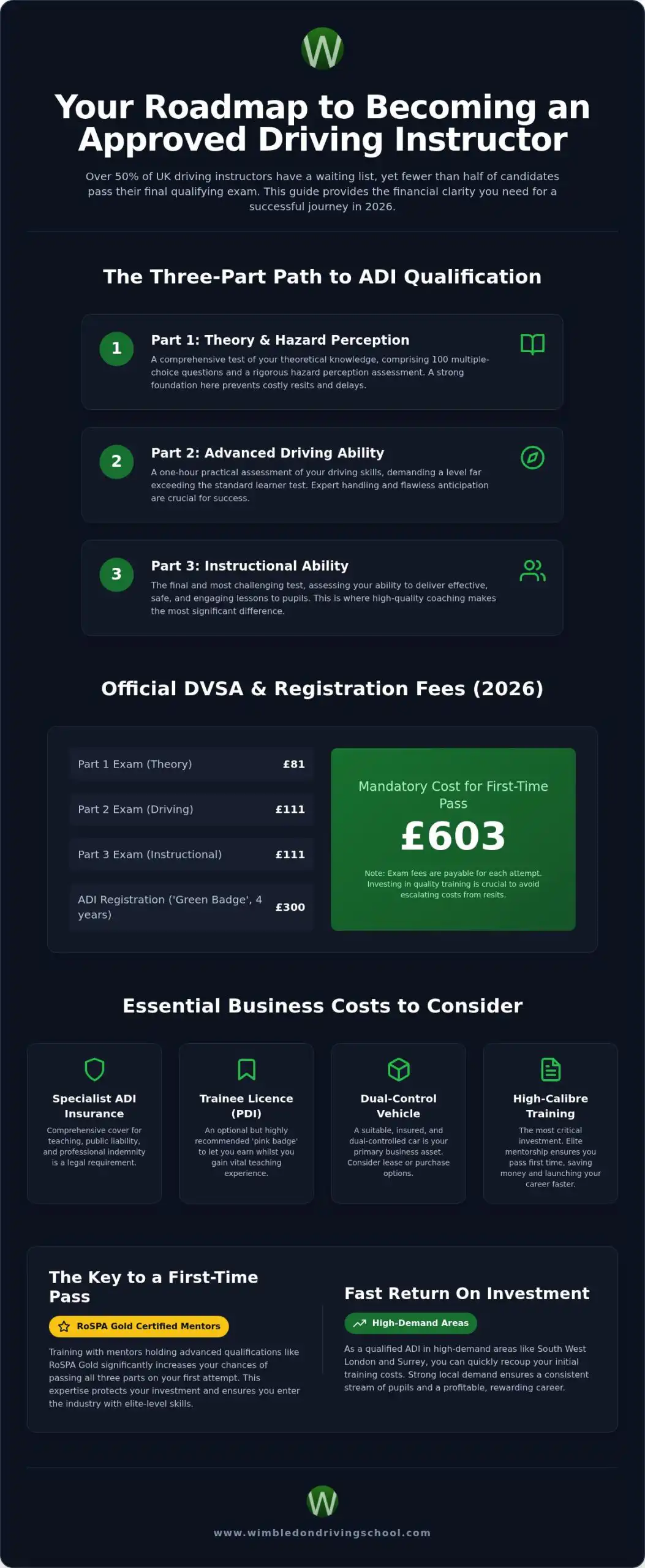
Becoming a qualified Approved Driving Instructor (ADI) represents a significant career milestone. It’s a journey of professional transformation that requires discipline, patience, and a strategic approach to your finances. In 2026, the DVSA continues to elevate professional standards, making it essential to choose a training programme that prioritises high-quality tuition over the cheapest headline price. Managing your total driving instructor training cost starts with understanding that this isn’t a single transaction, but a three-stage investment in your future business. By following the sequence correctly and seeking elite mentorship early, you can avoid the financial drain of multiple resits.
Part 1: Theory and Hazard Perception
This initial stage involves a 100-question multiple-choice test and a rigorous hazard perception segment. Whilst many candidates attempt to save money through independent study, a lack of structured guidance often leads to expensive resits and lost momentum. Utilising modern resources from a professional learning centre allows you to master the instructional theory required for the later stages. Building this solid foundation is the safest way to avoid the hidden costs of delays. It’s about more than just passing a test; it’s about developing the professional knowledge that will define your career.
Part 2: Advanced Driving Ability
Part 2 is a practical assessment of your driving skill that lasts approximately one hour. It requires a level of competence far beyond the standard learner test, demanding expert handling and flawless anticipation across various road conditions. Investing in professional coaching here is vital to your success. At Wimbledon Driving School, our mentors hold RoSPA Gold and IAM certifications, providing a level of expertise that private practice simply cannot match. This high-level training ensures you are prepared for the specific challenges of South West London and Surrey test routes, protecting your driving instructor training cost by securing an early pass.
Part 3: Instructional Ability
The final hurdle is the most rigorous and tests your ability to deliver effective, safe, and engaging lessons to real pupils. Many trainees find the transition from driving to teaching to be the most stressful part of the journey. This is where your investment in quality coaching truly pays off. To help manage the financial transition, many trainees opt for a Trainee Licence (PDI). This ‘pink badge’ allows you to charge for lessons for six months, helping you earn back your training fees whilst gaining vital experience. Our “Confident Mentor” approach focuses on developing your unique teaching style, ensuring you enter the industry as a premier provider ready to achieve high pass rates. For those seeking broader professional development during this shift, Rainmakers Coaching International provides specialised personal and career coaching to help you reach your full potential.
Official DVSA Fees and Mandatory Costs in 2026
Whilst your choice of training provider offers flexibility, the government-mandated fees provide a fixed baseline for your driving instructor training cost. These official charges are paid directly to the Driver and Vehicle Standards Agency (DVSA) at each stage of your journey. Budgeting for these from the outset ensures you aren’t caught off guard by administrative requirements just as you reach the final stretch of your qualification. These figures are non-negotiable and represent the essential entry price for the profession.
Mandatory Test Fee Breakdown
Securing your place on the register starts with three definitive assessments. Each test requires a separate fee, and it’s vital to remember that these costs apply to every attempt you make. Precision is key here; failing to prepare adequately can quickly double your expected spend through resit fees.
- Part 1 (Theory and Hazard Perception): £81
- Part 2 (Driving Ability): £111
- Part 3 (Instructional Ability): £111
A successful first-time pass through all three stages results in a total test outlay of £303. However, with national pass rates for Part 2 and Part 3 often sitting below 50%, the risk of resit fees remains a significant concern for many candidates. This is why seeking elite mentorship is a financially sound decision. It protects you from the recurring costs of failed attempts and keeps your journey on track.
Licencing and Registration Fees
Once you have conquered the three tests, you must apply for your first ADI registration certificate. Known as the ‘green badge’, this costs £300 and remains valid for four years. This fee covers your entry onto the Official DVSA ADI fees register, establishing your legal right to teach for profit and marking your transition into a fully qualified professional.
Many candidates also choose to apply for a Trainee Licence, or ‘pink badge’, after passing Part 2. At a cost of £140, this licence allows you to teach for six months while preparing for your final Part 3 exam. It’s a strategic choice for those who wish to earn whilst they learn, providing a practical way to offset your overall driving instructor training cost. You will also need to factor in a nominal £5.40 for a new DBS check to ensure your record is up to date for the DVSA register. If you’re ready to begin this rewarding transition, you can start your journey today by securing your initial assessment with our expert team.
Comparing Training Course Options: Intensive vs. Flexible
Choosing your training structure is a pivotal moment in your professional journey. It dictates how you manage your driving instructor training cost and how effectively you absorb the skills required for the DVSA’s high standards. You must decide whether a rapid, immersive approach or a steady, flexible pace aligns best with your learning style and current commitments. Both paths lead to the same destination, but the financial and psychological journey differs significantly. Selecting the right fit early prevents the frustration of stalled progress.
Intensive ADI Training Packages
Intensive ADI training packages are designed for those who want to qualify as quickly as possible. These courses typically range from £1,000 to £2,999, providing a concentrated burst of tuition that can move you through the stages in a matter of weeks. Whilst the speed is attractive, you should remain sceptical of ‘guaranteed pass’ claims. No provider can truly guarantee a DVSA result; success depends on your performance on the day. A high-quality intensive driving course should focus on genuine skill mastery rather than just ticking boxes. If you’re looking to launch your career rapidly, this immersive route is a powerful, results-driven choice.
Flexible and Part-Time Training
Flexible training allows you to spread the driving instructor training cost over a longer period, making it more manageable alongside a full-time job. This pay-as-you-go model, with rates often around £60 per hour, offers the benefit of ‘soaking time.’ This gap between lessons allows complex instructional concepts to settle, which is particularly beneficial for the instructional ability required in Part 3. Professional bodies like the Driving Instructors Association (DIA) emphasise that thorough preparation is the hallmark of a successful professional. It’s a disciplined way to build your new career amongst other life commitments without sacrificing your current income.
Local expertise in South West London and Surrey provides a distinct financial advantage that national providers often overlook. Familiarity with specific test routes in areas like Morden, Tolworth, or Isleworth reduces the need for excessive remedial lessons. By training with mentors who know these local road layouts intimately, you optimise every hour of tuition. ‘Cheap’ national packages often lack this granular knowledge, which can lead to expensive resits if you’re caught out by a complex junction you’ve never seen. Choosing a premier local school ensures your investment is focused exactly where it needs to be for a first-time pass.
The ‘Hidden’ Costs of Becoming a Driving Instructor
Planning your transition into the driver training industry requires looking beyond the initial course fees. To build a sustainable business, you must account for the total cost of ownership. Many trainees overlook the operational overheads that arise before they even deliver their first lesson. These “hidden” expenses are essential investments in your professional infrastructure, ensuring you provide a safe and compliant environment for your future students. Factoring these into your driving instructor training cost from the start prevents financial strain during the critical final stages of your qualification.
Vehicle and Equipment Overheads
Your vehicle is your office, and it must meet strict DVSA standards. If you’re using a private car, you’ll need to invest approximately £300 to £500 to have professional dual controls fitted. This is a non-negotiable safety requirement for teaching. Beyond the pedals, you’ll need high-quality signage, a secure roof box, and potentially in-car cameras to support your teaching and protect your insurance position. Maintenance is another vital consideration. Tuition vehicles endure significantly higher wear and tear than standard cars, particularly on clutches and brakes. Budgeting for more frequent servicing ensures your car remains reliable and your business stays operational without unexpected downtime.
Operational Expenses in London and Surrey
Operating in South West London and Surrey introduces specific geographic costs that you won’t find in national averages. The “London Factor” includes navigating the Ultra Low Emission Zone (ULEZ). You must ensure your tuition vehicle is compliant to avoid a £12.50 daily charge, which would otherwise devastate your profit margins. Fuel efficiency also becomes a priority in urban environments. Constant stop-start traffic in areas like Wimbledon or Putney increases fuel consumption, making it wise to factor in an estimated £200 to £500 for extra fuel and wear during your training period.
Insurance is perhaps the most significant operational variable. Standard car insurance won’t suffice; you require specialist ADI or PDI insurance that covers hire and reward, as well as pupil liability. Premiums typically range between £300 and £600 per year, depending on your location and driving history. Whilst this adds to your initial driving instructor training cost, it provides the legal and financial security required to teach with confidence. Professional membership fees for organisations like the Driving Instructors Association (DIA) or the Motor Schools Association (MSA) are also worth considering. These memberships provide essential industry updates and legal support, further establishing your status as a premier professional. If you’re ready to transition into a professional role with the support of local experts, you can book your initial assessment here.
ROI and Earning Potential with Wimbledon Driving School
Transitioning into the driver training industry is a strategic business move that offers substantial financial rewards for those who prioritise quality. In London and the surrounding home counties, the earning potential is significantly higher than the national average. Whilst instructors across the UK typically charge around £42 per hour, professionals in South West London and Surrey command rates between £45 and £65. This premium reflects the complexity of the urban environment and the high demand for elite tuition. For many, the driving instructor training cost is recouped with surprising speed. An instructor charging London rates can cover a total investment of £2,500 to £4,000 by teaching just 70 to 90 hours of lessons.
Calculating Your Potential Earnings
Realistic expectations are essential for your first year in business. A full-time instructor in 2026 can expect a gross income between £35,000 and £55,000. After accounting for expenses and taxes, take-home pay typically sits between £22,000 and £35,000. The shift toward electric and automatic vehicles is also a significant factor in your profitability. With automatic test passes now exceeding 40% of all practical exams, instructors who provide automatic driving lessons often charge a premium of £3 to £5 per hour. You can compare these figures against low driving school prices to see why our premium positioning delivers a superior return on your initial driving instructor training cost.
The Value of the Wimbledon Driving School Brand
Joining an established local powerhouse offers a level of security that independent operation cannot match. Over 56% of UK instructors currently report having a waiting list; however, our reputation in Surrey and Middlesex ensures your diary stays full without expensive marketing costs. By leveraging our high pass rates and the prestige of our RoSPA Gold certified mentors, you can focus on specialised instruction. This includes supporting nervous learners or delivering Pass Plus and motorway training. These niches allow for premium pricing and long-term career progression into fleet coaching. Your qualification is the start of a journey toward financial independence and professional pride. If you’re ready to achieve your career milestones, Start your journey as a WDS instructor today.
Launch Your Future as a Premier Driving Professional
Navigating your career change requires a clear view of the road ahead. Whilst the total driving instructor training cost includes mandatory DVSA fees and operational overheads like ULEZ-compliant vehicles, it remains one of the most rewarding investments you can make. By choosing high-calibre tuition, you protect your capital and ensure you don’t become another statistic in the national failure rates. Success in 2026 depends on balancing these initial outlays with the superior earning potential found in premium markets like South West London and Surrey.
Wimbledon Driving School has been a beacon of excellence since 2006, specialising in transforming trainees into elite instructors. Our RoSPA Gold certified mentors provide the sophisticated coaching needed to master the instructional ability test and excel with nervous learners. Don’t leave your professional journey to chance. Secure your future with a provider that prioritises your achievement and long-term business growth. It’s time to transition from a student to a confident mentor in your own right.
Enquire about ADI Training with Wimbledon Driving School
Take the first step toward your new career today. We look forward to supporting you through every milestone of this transformative experience.
Frequently Asked Questions
How much does the full driving instructor training process cost on average?
Total cost typically falls between £3,000 and £8,000, with most people spending £4,500 to £6,500. This includes DVSA fees (£303 for all three parts), professional tuition, and hidden expenses like insurance and fuel. Your total driving instructor training cost depends heavily on your pass rate. Investing in high-quality coaching from the start is the most effective way to ensure you don’t exceed your initial budget or encounter unexpected fees halfway through.
Can I train to be a driving instructor whilst working another job?
Yes, flexible pay-as-you-go training is specifically designed to accommodate your current professional commitments. Many trainees choose to spread their learning over several months to maintain their existing income whilst they prepare for the ADI tests. This approach allows for vital ‘soaking time’ between lessons. It ensures you can master complex instructional techniques without the pressure of a full-time schedule, making it easier to transition into the industry with confidence.
How long does it take to qualify as an ADI in 2026?
The entire process typically takes between 6 and 18 months to complete. You have a two-year window to pass all three parts of the exam after passing the Part 1 theory test. If you miss this deadline, you must start the entire process again. Factors like test availability in South West London and your personal study pace will influence the timeline. Consistency is key to moving efficiently through each stage of the journey.
What happens if I fail one of the ADI qualifying tests?
If you fail a test, you can resit it, but it adds to your overall driving instructor training cost. You pay the DVSA fee again, which is £111 for Part 2 or Part 3. Realistically, each failure adds £200 to £400 once you factor in remedial training. You are allowed three attempts at Part 2 and Part 3. Failing a third time means you must wait until your Part 1 certificate expires to restart.
Is the trainee licence (PDI) worth the extra cost?
The £140 trainee licence is a strategic investment that allows you to earn money whilst you learn. It provides six months of real-world experience teaching students before you take your final Part 3 test. This ‘on-the-job’ training is invaluable for building the confidence needed for a high pass rate. Most trainees find that lesson income quickly offsets the badge cost. It’s a practical way to gain experience whilst supporting yourself financially.
Are there any grants or funding available for ADI training in the UK?
Direct government grants for ADI training are extremely rare in 2026. Most candidates fund their own journey as a personal business investment. However, some national driving schools offer subsidised training in exchange for a long-term franchise contract. It’s important to weigh these options carefully against the freedom of independent operation. Many local professionals prefer self-funding to maintain control over their future earnings and lesson rates in premium areas like Surrey and Middlesex.
Do I need to pay for my own car and insurance during training?
Yes, you are responsible for providing a suitable vehicle and specialist insurance during your training. If you use a private car, you must install professional dual controls, which typically cost between £300 and £500. You also require specialist ADI or PDI insurance to cover pupil liability. These operational overheads are essential components of your budget. Ensuring your vehicle is ULEZ compliant is also vital for teaching in South West London centres like Morden.
How much can a driving instructor earn in London and Surrey?
Full-time instructors in South West London and Surrey can expect gross annual earnings between £35,000 and £55,000. Because hourly rates in these premium markets range from £45 to £65, your earning potential is significantly higher than in other UK regions. After expenses, a typical take-home salary sits between £22,000 and £35,000. Specialising in automatic lessons or nervous drivers can further increase your profitability and ensure a consistently full diary of high-value students.
Disclaimer
This article is provided for general informational purposes only and does not constitute professional driving, legal, or safety advice. While we aim to keep our content accurate and up to date, rules, prices, and DVSA test requirements can change — always check gov.uk or contact us directly at 020 3524 7968 for the latest guidance before making any decisions. Nothing in this article guarantees a specific outcome, including passing your driving test within any stated timeframe. For current pricing, course availability, and instructor details, please visit our Prices page or get in touch.