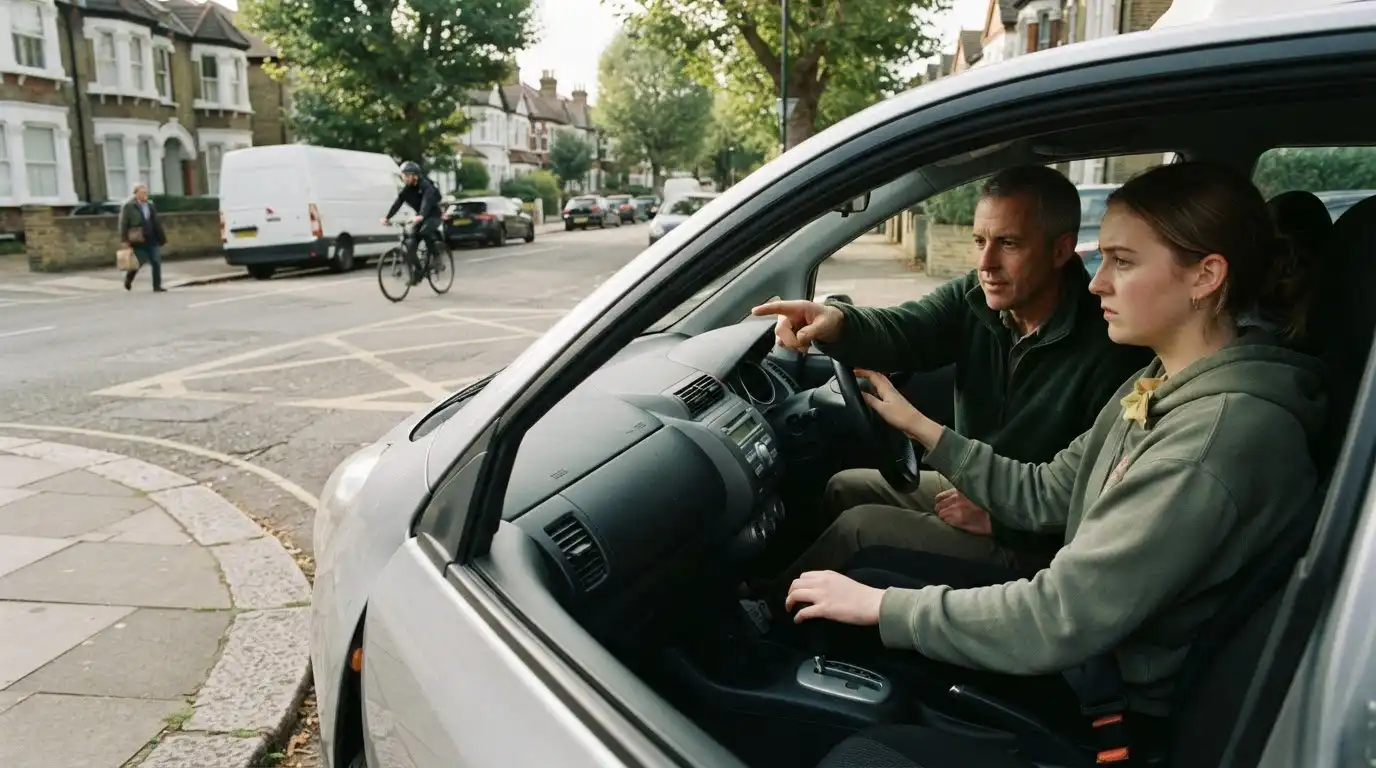
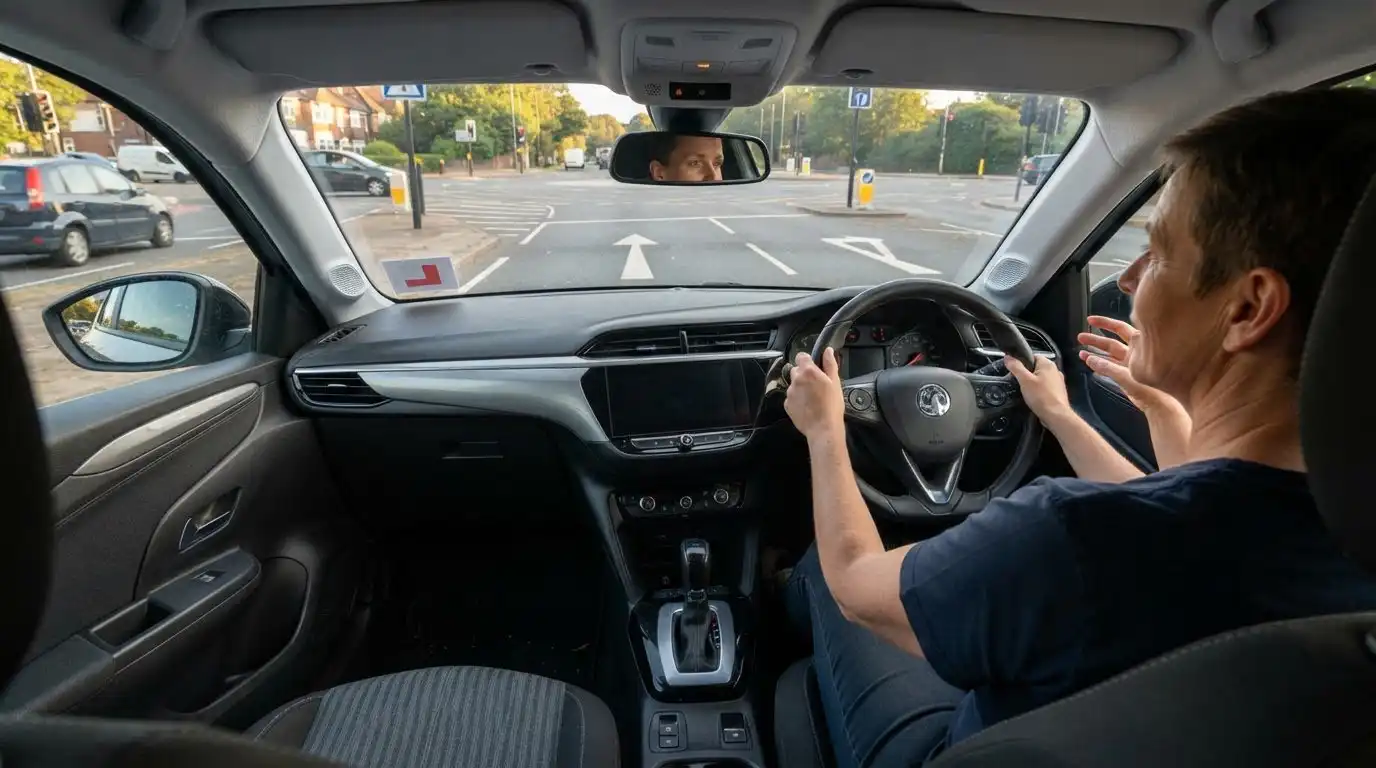
Fast-track driving courses in London can be scheduled over 5, 7 or 10 days, with several hours of driving practice each day. The right length depends on your experience so far and how much practice you need to build consistent skills. A one-week course may suit some learners, but it isn’t the only format.
It’s easy to see the appeal of concentrating lessons into a short period, especially when you’re working towards a test or fitting learning around a busy schedule. The key is choosing a pace that gives you enough time to practise, absorb feedback and feel settled behind the wheel.
This guide explains what an intensive course involves, how fast-track and one-week formats are structured, and what can affect the time you need. You’ll also learn how previous lessons and theory-test preparation fit into the plan, so you can take the next step with a clearer idea of what lies ahead.
Key Takeaways
- Intensive courses can be arranged over 5, 7 or 10 days, with several hours of driving practice each day.
- Choose a course length that reflects your previous lessons and the skills you still need to develop.
- Compare course formats by tuition hours and daily pace, not just the number of days.
- For a practical-focused course, passing your theory test beforehand can help you concentrate on driving.
- A one-week format may suit some learners, but a shorter or longer schedule can be more appropriate depending on your experience.
What is an intensive driving course?
An intensive driving course brings lessons together over a shorter period than weekly learning, which can stretch across 6-12 months. Courses may run over five days, but the right pace depends on your experience and how consistently you can practise.
Course levels and learner experience
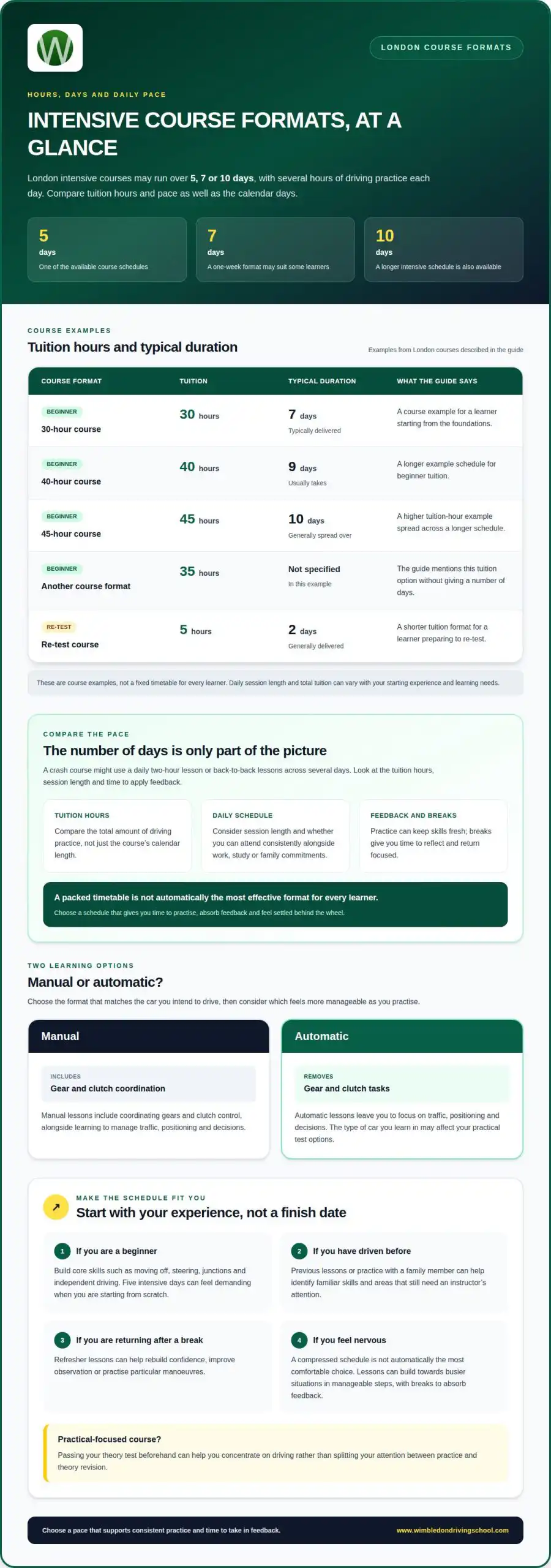
Beginner courses develop skills from the foundations, including moving off, steering, junctions and independent driving. If you’ve already had lessons or practised with a family member, a shorter course may focus on gaps rather than repeat familiar basics. Compare tuition hours and the planned pace, not just the number of calendar days. Five days of intensive learning can feel demanding if you’re starting from scratch.
Automatic and manual options
You can learn in either a manual or an automatic car. Choose the format that matches the car you intend to drive, then consider which feels more manageable as you practise. Manual lessons include coordinating gears and clutch control; automatic lessons remove those tasks, leaving you to focus on traffic, positioning and decisions. The type of car you learn in may affect your practical test options.
Your starting point matters as much as the timetable. A complete beginner needs time to develop core control and apply it in different road situations. Someone returning after a break may know the basics but need refresher lessons to rebuild confidence, improve observation or practise particular manoeuvres. Early lessons can help identify which skills need focused work.
Nervous learners can consider intensive learning, but a compressed schedule isn’t automatically the most comfortable choice. If busy junctions make you anxious, for example, lessons can build towards them in manageable steps: first practising car control on quieter roads, then applying those skills in more demanding traffic. Breaks between sessions can also help you absorb feedback and return focused.
You need a provisional licence to learn on public roads. You don’t need to pass your theory test before starting lessons, but passing it before a practical-focused intensive course can help you concentrate on driving rather than split your attention between practice and theory revision.
Before choosing a format, consider your previous lessons, the skills you need to develop and how much time you can give to practice each day. A five-day course may suit a learner with experience, while a beginner may benefit from a longer learning plan. The London intensive driving course guide explores how to assess course formats and prepare for a fast-track learning schedule.
Intensive driving course duration and structure
Intensive courses bring driving practice together across consecutive days or longer daily sessions. In London, formats may run over 5, 7 or 10 days, with the timetable shaped by tuition hours and your starting experience.
Course durations and formats
A crash course might involve a daily two-hour lesson or back-to-back lessons across several days. Compare the total tuition hours, session length and opportunities to apply feedback. Several hours of practice each day can keep skills fresh, while breaks give you time to reflect. A packed timetable isn’t automatically the most effective format for every learner.
Typical course length
London course examples show how tuition hours and calendar days work together. A 30-hour beginner course is typically delivered over 7 days; a 40-hour course usually takes 9 days. A 45-hour option is generally spread over 10 days, while another beginner format includes 35 hours. A re-test course has 5 hours of tuition and is generally delivered over 2 days.
Structure each day around a clear learning objective. An instructor might introduce a manoeuvre, observe you practising it, then revisit it in a different setting. A mock test can show which skills need more attention before your practical test. This gives each session a purpose, rather than making the course simply a collection of driving hours.
For a practical-focused course, passing your theory test beforehand can help you focus on driving. From May 2026, learners in the UK must book their own car practical driving test. Test dates are separate from tuition, so plan your course schedule around the appointment you have booked. No London area or test centre can be identified as consistently offering the earliest dates; availability changes.
Course costs depend on the tuition hours, schedule and learner’s starting point; the price is given after a quote request. A learner with previous experience may need a different amount of practice from a beginner. In London, concentrated tuition can reduce long gaps between sessions and help build continuity. It supports preparation, but no course can guarantee a test result.
Before choosing a format, consider how you’ll manage the daily pace alongside work, study or family commitments. A schedule you can attend consistently makes it easier to arrive focused and carry feedback into the next lesson. Match the timetable to your learning needs, not simply the earliest finish date.
Choosing a course based on previous driving experience
Let your previous practice shape the course, rather than focusing only on your preferred finish date. List what you’ve already driven, which skills feel steady and where you still need an instructor’s help.
A complete beginner needs structured teaching in core skills, from moving off and steering to junctions and manoeuvres. A learner with regular practice may be able to focus more on roundabouts, independent driving or parking. The distinction matters: repeating familiar skills takes time away from the areas that need attention.
Previous experience includes practice outside formal driving lessons. If you’ve driven with a family member, describe the roads and situations you encountered, such as quiet residential streets or busy multi-lane junctions. Your instructor can assess how you respond to signs, traffic and hazards instead of assuming every learner has the same starting point.
Choose a course by matching its tuition to your current ability. Someone who controls the car confidently but struggles with observation, for example, needs different teaching from a beginner still learning clutch control. A tailored plan should identify those priorities early, then revisit them in varied conditions. Your preferences matter too, but work best alongside an honest assessment of your skills.
Continuity with an instructor can make feedback easier to apply across consecutive lessons. The instructor can track whether a recurring issue, such as late mirror checks, is improving and adjust the next session accordingly. Ask how your progress is reviewed during the course and how lessons adapt when a skill needs more practice than expected.
Experience at a driving school matters in how it organises intensive learning, matches instruction to ability and explains progress. Look for clear information about the instructor’s qualifications, course structure and what happens if your assessment shows that you need more practice. A useful guide to choosing a driving school can help you identify the details that affect your learning plan.
To check whether a London driving instructor is DVSA-approved, use the official GOV.UK service for approved driving instructors. Check that the instructor’s name and status match the register. This distinguishes an approved instructor from someone still training.
Before choosing a course, share your learning history and any test feedback with your instructor. A previous driving test, for example, can highlight specific areas to practise, while a long break from driving may make refresher work more useful. These details help shape a course around what you can already do and what you still need to learn.
Fast-track and one-week driving courses in London
A one-week course concentrates driving practice into a focused period instead of spreading lessons across weeks. Fast-track driving courses in London can help maintain momentum, provided the daily pace gives you time to learn and use feedback.
Course length alone doesn’t tell you whether a one-week format suits you. Consider your current skills, tuition hours and how much time you can give to practice each day. A learner who already handles basic car control may use the week to improve consistency. Someone starting from the beginning may need more time to establish core skills before tackling complex traffic.
Plan each session around a clear learning goal. Practise junction approaches, review your instructor’s feedback, then apply it on different roads. This is more useful than treating each lesson as a separate drive. Road layouts and traffic vary across London, so a well-planned week can help you practise adapting rather than relying on one familiar route.
Before starting, organise your schedule so you can focus on lessons and recover between sessions. Leave time to review feedback and arrive rested for the next drive. Passing your theory test beforehand can also help you concentrate on practical skills during a practical-focused course. The aim is steady progress across the week, not simply completing a timetable.
A practical test booking is separate from the learning schedule. If you plan a test during or after a course, allow for the possibility that your progress and readiness may not match the original date. A mock test can highlight areas that need more work. Use that feedback to plan focused practice instead of assuming a one-week course automatically means you’re ready to take the test.
If you fail the practical test during or after a fast-track course, you haven’t passed on that attempt. Review the examiner’s feedback with your instructor, practise the areas identified and take another test when you’re ready. A course can support your preparation, but it can’t guarantee a result.
Fast-track driving courses in London are most useful when the schedule fits your experience, availability and learning pace. Choose a format that gives you time to practise skills consistently and respond to feedback. For a practical guide to planning concentrated tuition, see this guide to making the most of a week-long course.
How many hours or days do London crash courses typically take?
London crash courses can involve several hours of driving practice each day, arranged across consecutive days. Common intensive schedules run over 5, 7 or 10 days, but the total tuition hours matter just as much as the calendar. Compare both before choosing a format.
Course examples show how those measures fit together. A 30-hour beginner course is typically delivered over 7 days. A 40-hour beginner course usually takes 9 days, while a 45-hour option is generally spread across 10 days. These formats offer different amounts of practice and different daily workloads.
A shorter course can suit someone returning to driving or preparing for a retest. One London re-test format includes 5 hours of tuition, generally delivered over 2 days. That is quite different from a beginner programme, which needs time to build and practise skills across varied road situations. The course label alone doesn’t tell you how much tuition is included.
Several hours behind the wheel each day can create continuity between lessons. You can apply feedback from one session in the next, rather than revisiting the same skill after a long gap. A 7-day schedule may also place a mock test and final test on day 7, allowing practice and assessment within one planned week.
Daily intensity is another consideration. Back-to-back lessons can feel demanding, particularly when you’re learning car control and road decisions at the same time. Build in time to rest and absorb your instructor’s feedback. After practising junctions, for example, you could revisit them in the next session before adding more complex traffic situations.
Match tuition hours to your experience and the skills you still need to develop. A confident learner preparing for a retest may need a different structure from someone learning from the beginning. Consider whether the schedule leaves enough time to practise manoeuvres, drive in varied conditions and review skills that still feel inconsistent.
Use the course duration as a planning guide, not a promise of test readiness. Consider how the timetable fits around your other commitments and whether you can stay focused throughout each session. A well-matched schedule gives you a practical framework for learning and helps you approach the test with preparation grounded in your progress.
Wimbledon Driving School
Wimbledon Driving School can help you shape a learning plan around your experience, confidence and goals. Whether you’re starting out or returning after a break, lessons can focus on the skills you want to develop.
Manual, automatic and intensive courses offer different ways to organise your learning. Consider which transmission suits you and how much structure you want in your practice. After passing, Pass Plus is another option for drivers who want to continue learning.
Take the next step towards confident driving
Start by deciding what kind of support will help you learn, not just the date you hope to reach. Wimbledon Driving School offers manual and automatic lessons, as well as intensive courses, so you can choose a format suited to your experience and goals. If you’re in South West London, South East London, Surrey or Middlesex, contact the school to discuss your next step towards fast-track driving courses in London.
Before you begin, think about what you want to feel more confident doing behind the wheel. It might be handling busy junctions, preparing for a practical test or getting comfortable with a particular transmission. Share that priority when you get in touch and use it to shape the next stage of your learning.
Every capable driver starts with a first step. Choose a pace that lets you build sound skills, absorb feedback and move forward with purpose.
Frequently Asked Questions
How do I pass my driving test in London the first time?
Build consistent habits and practise responding safely to different traffic situations. Ask your instructor to identify recurring errors, then work on them deliberately. If you miss observations at roundabouts, for example, practise scanning and choosing a safe gap on varied routes. A mock test can help you experience the assessment format and pinpoint areas to improve. No course can guarantee a pass, but focused practice can strengthen your preparation.
I get quite anxious; will this be a suitable course for me?
An intensive course may suit you if regular practice feels manageable and the schedule gives you time to absorb feedback. Tell your instructor what triggers your anxiety, such as busy junctions or manoeuvres, so lessons can build towards those situations step by step. You might start on familiar roads before practising more demanding routes. If consecutive lessons feel overwhelming, a less compressed schedule may suit your learning better.
What’s included in my course?
An intensive course focuses on practical driving tuition, with lessons designed to develop and apply your skills. The learning plan can cover positioning, junctions, manoeuvres and independent decisions. Your chosen course determines the amount and timing of tuition. The practical test is booked separately, so distinguish driving instruction from test arrangements when planning your progress towards becoming a confident driver.
What types of fast-track driving courses are available in London?
Wimbledon Driving School offers manual and automatic intensive courses, with Fast Track, Fast Pass and Fast Forward formats. Learners in South West London, South East London, Surrey and Middlesex can choose a concentrated learning route suited to their starting point. Your experience and the skills you need to practise will help determine which course fits.
How much do intensive driving courses in London cost?
The DVSA practical-test fee is separate from tuition. All prices listed on this page reflect our current and active pricing. Prices are subject to change at any time without prior notice. Any prices mentioned on old or outdated materials, whether online, printed, or otherwise, are no longer valid.
What is included in the course price, such as test fees, pickup, and accommodation?
The charge applies within 8 miles of pickup; extra travel must be agreed before test day and is charged pro-rata. Plan accommodation separately around your tuition schedule. All prices listed on this page reflect our current and active pricing. Prices are subject to change at any time without prior notice. Any prices mentioned on old or outdated materials, whether online, printed, or otherwise, are no longer valid.
Disclaimer
This article is provided for general informational purposes only and does not constitute professional driving, legal, or safety advice. While we aim to keep our content accurate and up to date, rules, prices, and DVSA test requirements can change — always check gov.uk or contact us directly at 020 3524 7968 for the latest guidance before making any decisions. Nothing in this article guarantees a specific outcome, including passing your driving test within any stated timeframe. For current pricing, course availability, and instructor details, please visit our Prices page or get in touch.