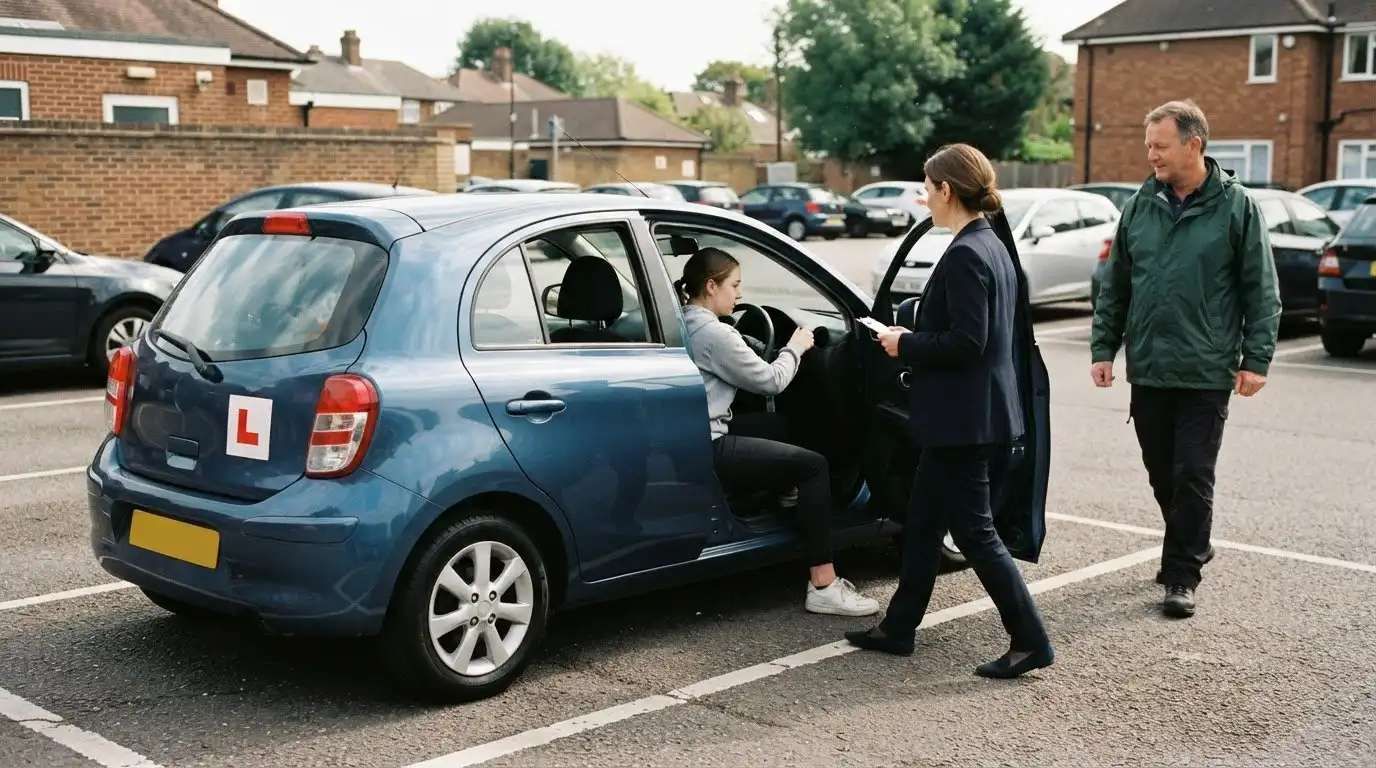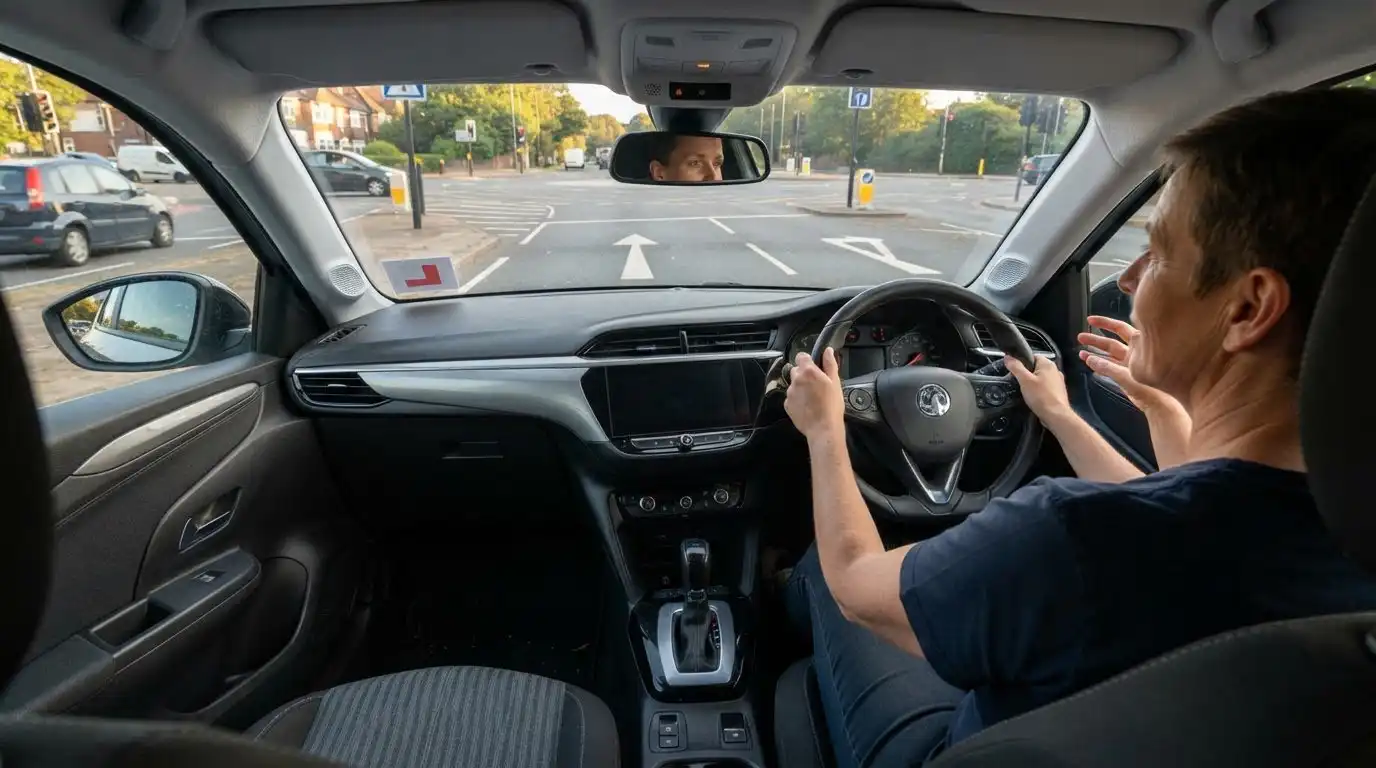
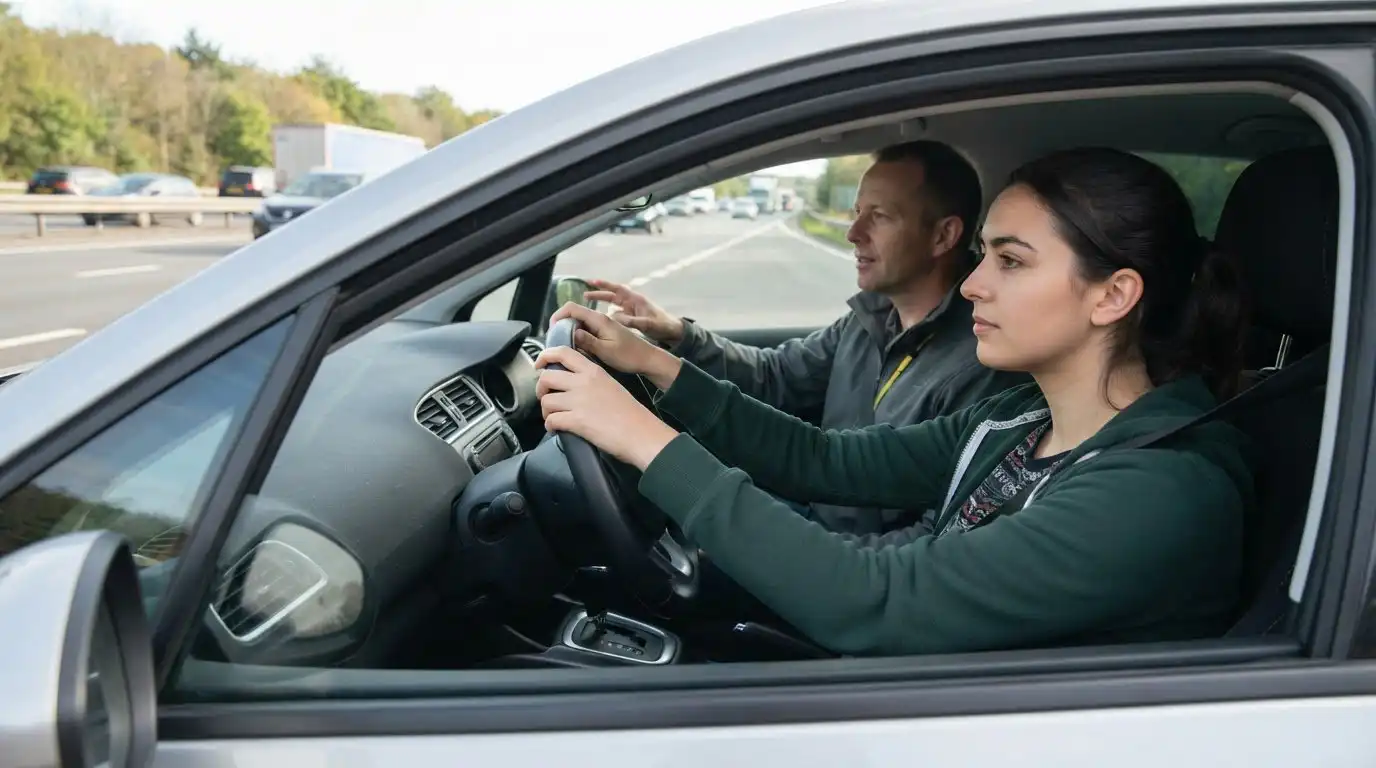
Passing your test shows you can drive safely, but confidence develops with experience. To learn how to build driving confidence after passing your test, start with short journeys on familiar roads, then gradually practise situations that make you nervous.
It’s normal to feel less confident when your instructor is no longer beside you. Driving alone, following an unfamiliar route or dealing with impatient traffic can feel more challenging than expected. You don’t need to master everything at once: calm, repeated practice helps you build experience at a manageable pace.
This guide explains how to ease into solo driving, manage common concerns such as parking, roundabouts and motorways, and decide whether Pass Plus or refresher lessons could help. You’ll also find ways to build up to busier roads and more demanding journeys without putting unnecessary pressure on yourself.
Key Takeaways
- Break down worries about parking, roundabouts and motorways into specific skills you can practise calmly.
- Build towards busier roads and unfamiliar journeys at a pace that feels manageable.
- Use Pass Plus to gain experience in a wider range of driving conditions, or consider refresher lessons for targeted support.
- Remember that passing your test is the start of independent driving, and confidence develops through experience.
- Learn how to choose the right next step for the situations you find most challenging.
1. Addressing motorway, parking and roundabout fears
Choose one situation that makes you tense and practise it in manageable steps. For parking, start in a quiet car park, where fewer moving vehicles give you more time to position the car. Repeat the same bay or reverse park, pause, then adjust your approach. When your steering, observation and speed feel more consistent, try a space with a different layout.
Roundabouts can feel demanding because you need to observe, choose a gap and act smoothly. Start with a familiar, quieter roundabout and focus on one decision at a time: approach at a suitable speed, check traffic, signal where appropriate and follow your exit. If you miss an exit, continue safely and choose another route rather than turning suddenly. Repeating the same junction helps you get used to its lane markings and traffic flow.
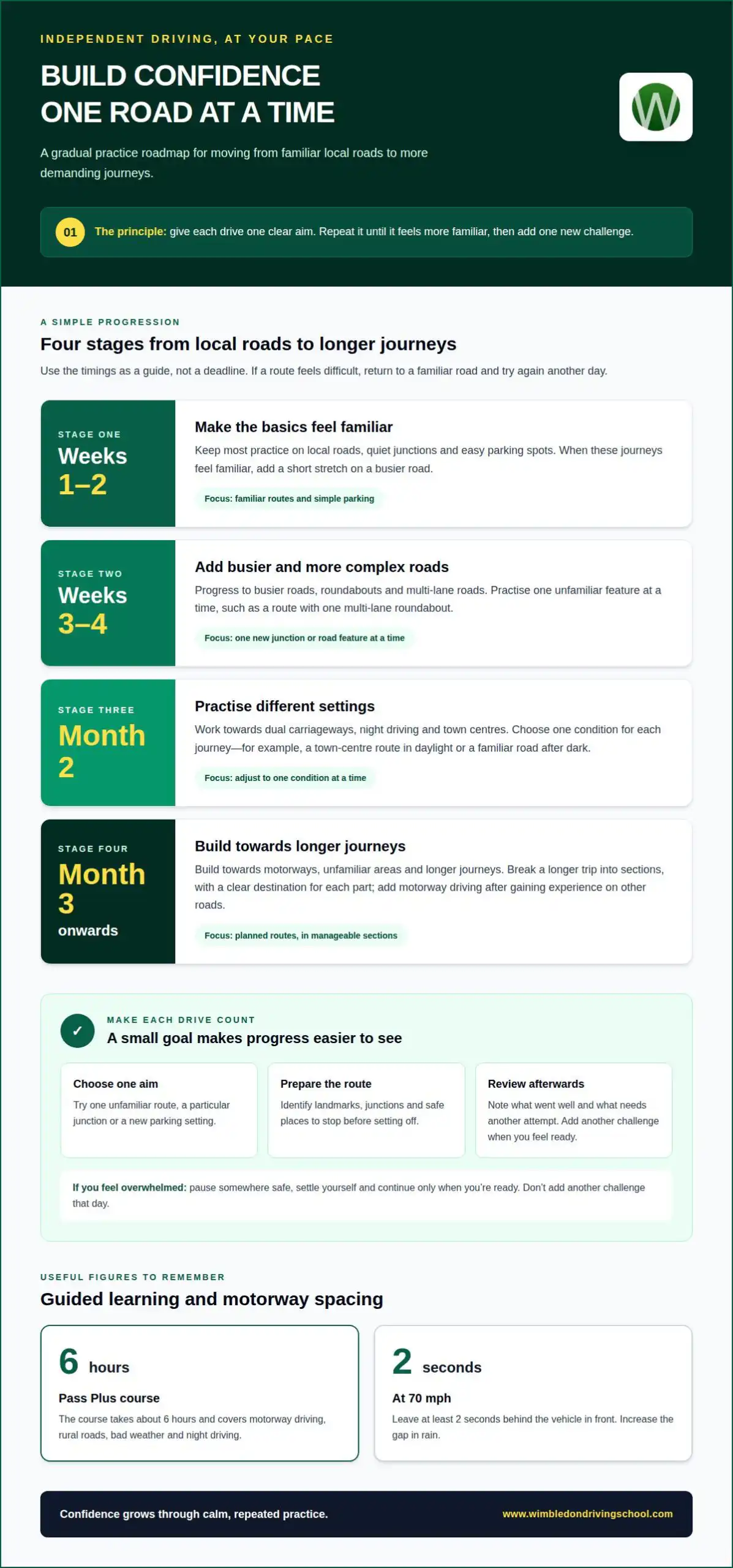
Motorway practice is easier when you prepare the route and choose a quieter time. Focus on joining smoothly, keeping a steady speed and leaving space ahead. At 70 mph, leave at least 2 seconds behind the vehicle in front; in rain, increase that gap. Check your mirrors regularly, including before changing lanes, and avoid rushing to match faster traffic. If motorway driving is a particular worry, Pass Plus covers motorway driving, rural roads, bad weather and night driving. An instructor-led motorway lesson can also give you structured practice.
If you’re newly qualified in the UK, don’t assume a P plate changes the rules that apply to you. Check current GOV.UK guidance on P plates and carrying passengers, and make sure you feel comfortable managing the journey before taking passengers.
Budget for the costs of gaining driving experience, not just the journey itself. Insurance premiums can depend on your vehicle, driving history and cover. Regular driving also involves costs such as fuel, servicing, tyres, parking and any road charges on your route. Factor these ongoing commitments into how often you expect to drive.
Keep attention on the road: according to the UK Government, using a phone while driving is illegal. Put your phone away before setting off, and keep music low enough to hear traffic and the engine. If rain makes the road slippery, slow down and leave extra stopping distance. A calm, predictable driver has more time to respond.
In South London, practising in an automatic can remove gear changes from a busy junction or roundabout, leaving you more attention for observation. Explore automatic driving lessons in South London if that setup suits your needs.
2. Building up to more challenging driving gradually
If you’re working out how to build driving confidence after passing the test, give each drive one clear aim. Choose a new junction, an unfamiliar road or a different parking situation. Repeat the task until you can pay attention to traffic, signs and road position together, then add one challenge. This step-by-step approach makes progress visible without turning every journey into a test.
During weeks 1-2, keep most practice on local roads, quiet junctions and easy parking spots. Once those journeys feel familiar, add a short stretch on a busier road. Plan where you’ll turn off before setting out, so the new section has a clear beginning and end. If a route feels difficult, return to a familiar road and try again another day.
In weeks 3-4, progress to busier roads, roundabouts and multi-lane roads. Practise one unfamiliar feature at a time. For example, choose a route with one multi-lane roundabout, rather than combining several new junctions in one drive. Review what felt manageable afterwards, then repeat the route or add another challenge.
In month 2, you can work towards dual carriageways, night driving and town centres. Choose one condition for each practice journey: a town-centre route in daylight, or a familiar road after dark. Changing light, traffic and weather can affect what you see and how much time you have to respond. Keep the route simple while adjusting to each condition.
From month 3 onwards, build towards motorways, unfamiliar areas and longer journeys. Break a longer trip into sections, with a clear destination for each part. For practice roads in Surrey, use this guide to roads for driving practice to help plan a suitable route. Add motorway driving after you’ve gained experience on other roads.
Try an unfamiliar route at a quieter time, such as mid-morning, then repeat it when the traffic or light is different. Before setting off, check the route and identify useful landmarks, junctions and safe places to stop. If you feel overwhelmed, don’t add another challenge that day. Pause somewhere safe, settle yourself and continue only when you’re ready.
A useful way to think about how to build driving confidence after passing the test is to set goals you can assess: complete one unfamiliar route, handle a particular junction calmly, or park in a new setting. After each drive, note what went well and what needs another attempt. A refresher lesson can provide structured practice for a specific skill. Book a lesson if guided practice would help you progress.
3. Pass Plus and refresher lessons
Passing your test gives you a foundation, but some road situations need more practice. A structured post-test course can help you gain experience with a qualified instructor beside you. Pass Plus is a government-backed UK course that takes about 6 hours. It covers motorway driving, rural roads, bad weather and night driving. Consider it if these conditions still feel unfamiliar or you want guided practice beyond your test preparation.
Use lessons to focus on situations you find difficult, rather than treating every drive alike. For example, ask to practise joining a motorway if slip roads make you tense. In poor weather, work on reading the road and adjusting your driving to the conditions. Night driving can help you become more familiar with reduced visibility and headlight glare. A clear learning goal makes each session more useful.
Pass Plus may also matter when you review your motoring budget. Some UK insurers offer drivers who complete the course a 10-25% discount on their premium. Insurers set their own terms, so compare the policy details and the saving against the premium you’d otherwise pay. Don’t assume a course automatically reduces every driver’s insurance costs.
Refresher lessons are suited to drivers who want focused help with a particular skill or situation. You might have avoided parallel parking, feel uncertain at busy roundabouts or not have driven for a while. Tell your instructor what feels difficult and where it happens. They can shape practice around your current ability instead of revisiting skills you already handle comfortably.
Use each lesson to follow a simple cycle: explain the concern, practise it, then review what changed. If lane choice causes stress, an instructor can help you read signs earlier and position the car in good time. If parking is the concern, repeat the manoeuvre in suitable locations and adjust your approach as needed. Targeted refresher lessons can turn a broad worry into specific, manageable goals.
Choose between a broader course and refresher support by identifying what you want to improve. Pass Plus suits drivers seeking structured experience across a range of conditions; refresher lessons suit drivers who want help with selected situations. You can also combine guided sessions with independent practice on familiar routes. After each drive, note one skill that improved and one to practise again. This keeps your next lesson purposeful and builds experience steadily.
4. Starting with familiar routes and quiet roads
Start with a short journey you already know, such as driving from home to a local shop. Familiar turns and landmarks leave more attention for traffic and road position. Choose a quieter time, such as mid-morning or early afternoon, to reduce pressure from busy traffic. When the route feels manageable, extend it by one familiar road or destination.
For your first solo drives, choose a familiar route, a quieter time and a clear destination. Drive alone at first if that feels comfortable, as a passenger can add pressure or distraction. Keep the journey short and avoid unfamiliar roads until you’re ready. If you feel overwhelmed, pull over somewhere safe and take a moment before deciding whether to continue.
Before setting off, adjust your seat and mirrors so you can reach the controls and see clearly. If you’re driving a different car, learn its controls while it’s stationary. Locate the hazard lights, windscreen washer and fog lights before you need them. Check where the indicators, wipers and lights operate, then practise using them without moving the vehicle.
Make each trip purposeful. For example, drive to a familiar supermarket, park, then return by the same route. Before leaving, check the route and note key turns, junctions and landmarks. Follow signs and the road layout rather than relying entirely on a sat nav. This gives you practice planning ahead, while a familiar destination keeps the journey manageable.
A brief, regular drive can make learning feel more achievable than an occasional long outing. Aim for 10-15 minutes each day, choosing a straightforward route that suits your current experience. Focus on one skill during each drive, such as smooth braking or reading road signs early. Keep the route simple if rain, darkness or heavier traffic adds extra demands.
Use familiar roads to learn how your car responds. Notice the clutch bite point in a manual, or how gently the accelerator moves an automatic forward. Practise stopping smoothly at a quiet junction, then setting off when it’s safe. If you change cars, take time to adjust before driving because pedal response, visibility and controls can differ.
After each journey, recall one moment that went well and one to practise again. A missed turn, for example, can remind you to look for signs earlier next time. Build confidence behind the wheel by repeating routes until key decisions feel more familiar, then add a small change. These practical driving confidence tips can help you plan your next step.
5. The gap between passing a test and driving proficiently
Passing your practical test shows you met the standard required to drive safely. It doesn’t mean you’ve encountered every road, vehicle or weather condition. A test route can’t cover every situation you may face later, such as driving alone through an unfamiliar town or reacting to impatient traffic. The next stage is to build experience and apply your skills on varied, real-world journeys.
There’s no set number of practice hours that makes every new driver confident. Progress depends on the situations you’ve encountered, how often you drive and which skills still need attention. Use a practical measure instead: can you plan a route, respond to changing traffic and make decisions without feeling rushed? Keep practising the areas that still demand all your attention.
Confidence and proficiency aren’t the same. Feeling relaxed on a familiar road doesn’t automatically prepare you for a busy town centre, a dark country lane or sudden heavy rain. A confident driver stays alert, adjusts to conditions and recognises when a journey is beyond their experience. Expand your driving gradually rather than treating confidence as permission to tackle every challenge.
Driving beyond your ability can leave too little time to spot signs, assess hazards or choose a safe response. For example, an unfamiliar route combined with heavy traffic may overload your attention. Reduce the pressure by planning a simpler journey, driving in quieter conditions and adding one unfamiliar element at a time. If you feel overwhelmed, pull over somewhere safe and take a moment before continuing.
Experience also teaches you to anticipate what others might do. On a familiar high street, watch for vehicles slowing near parked cars and pedestrians approaching crossings. On a country road, be ready for bends that restrict your view. Give yourself time to read the road, maintain a safe position and avoid rushing decisions. These habits develop through repeated practice, not from one test result.
Review each drive with a specific question: where did you feel rushed, and what would help next time? If lane choice was difficult, practise reading signs earlier on a suitable route. If poor weather unsettled you, gain experience in manageable conditions before taking a longer journey. A guide to life after passing can also help you understand the transition to independent driving.
Passing is a milestone, not the finish line. Make safe decisions, practise deliberately and build your experience one situation at a time.
Wimbledon Driving School: Pass Plus Courses
Wimbledon Driving School offers Pass Plus Courses for newly qualified drivers who want structured experience beyond their test. The course covers motorway driving, rural roads, bad weather and night driving. It can be a useful next step if any of these situations still feel unfamiliar.
If you’re comfortable with most journeys but want help in a specific area, consider which conditions you’d like to practise. Pass Plus can broaden your experience across different road types and driving conditions. For a more targeted concern, such as parking or roundabouts, focused refresher lessons may be a better fit.
Choose support that matches your next goal, then build your experience steadily. Contact Wimbledon Driving School to discuss whether Pass Plus or refresher lessons suit your needs.
Make your next drive a confident step forward
Learning how to build driving confidence after passing your test isn’t about proving you can handle every road straight away. Choose the next step to match your experience, then give yourself room to learn from each journey. This steady approach can help turn a driving licence into greater independence.
If you’d benefit from guidance, Wimbledon Driving School offers manual and automatic driving lessons, as well as intensive driving courses. Choose support that fits your goals, whether you want to develop your skills gradually or prefer a more concentrated learning plan. Lessons give you space to practise and discuss situations that still feel difficult.
Take your progress one drive at a time. You’ve already reached an important milestone; now build on it with thoughtful practice and support that suits you.
Keep moving forward at your own pace. Every safe, considered journey adds to your experience.
Frequently Asked Questions
How can new drivers build confidence after passing their driving test?
Build confidence by reviewing your driving decisions, not just counting journeys. After each trip, note one situation that felt straightforward and one that needs attention, such as judging a gap in traffic. Before your next drive, choose a route where you can practise that skill safely. This gives each outing a clear purpose and helps you recognise progress without expecting every journey to feel effortless.
What are the best first drives for newly qualified drivers in the UK?
Choose a daytime drive with a clear destination, straightforward roads and a convenient place to stop. A familiar trip to a local shop can work well if you know where to turn and park. Avoid combining unfamiliar roads with a tight appointment or several passengers. Before setting off, consider where you could pause if traffic becomes tiring, and leave flexibility to return by a simple route.
Can Pass Plus or refresher lessons improve confidence after passing?
Yes. Pass Plus provides structured practice across driving conditions, while refresher lessons can focus on a specific concern. For example, use a lesson to practise joining faster-moving traffic or handling a demanding route. Wimbledon Driving School offers both Pass Plus Courses and Refresher Lessons, giving you options for broader experience or targeted support after passing.
What should new drivers do if they feel anxious or panic while driving?
If anxiety affects your concentration, don’t force yourself to continue as though nothing is wrong. Find a safe place to stop, secure the car and take time to settle before deciding what to do next. Don’t stop in a live traffic lane or make a sudden manoeuvre. For future drives, identify what triggered the feeling, such as heavy traffic, and plan a less demanding route.
How can new drivers build confidence on motorways, at night, and in bad weather?
Practise each condition separately instead of combining several unfamiliar challenges. For example, start with a familiar route after dark before attempting an unfamiliar night journey. Choose weather and traffic conditions that let you concentrate on one task. If joining a motorway or driving in low visibility concerns you, an instructor can provide guided practice and help you work through the decisions involved.
How can new drivers practise parking, roundabouts, and unfamiliar routes?
Break each skill into manageable decisions. For parking, focus on positioning and observation; at a roundabout, concentrate on reading signs and choosing the correct lane early. On an unfamiliar route, review the main turns before setting off and allow time for a safe alternative if you miss one. Practising one challenge at a time makes it easier to identify what needs more attention.
Disclaimer
This article is provided for general informational purposes only and does not constitute professional driving, legal, or safety advice. While we aim to keep our content accurate and up to date, rules, prices, and DVSA test requirements can change — always check gov.uk or contact us directly at 020 3524 7968 for the latest guidance before making any decisions. Nothing in this article guarantees a specific outcome, including passing your driving test within any stated timeframe. For current pricing, course availability, and instructor details, please visit our Prices page or get in touch.