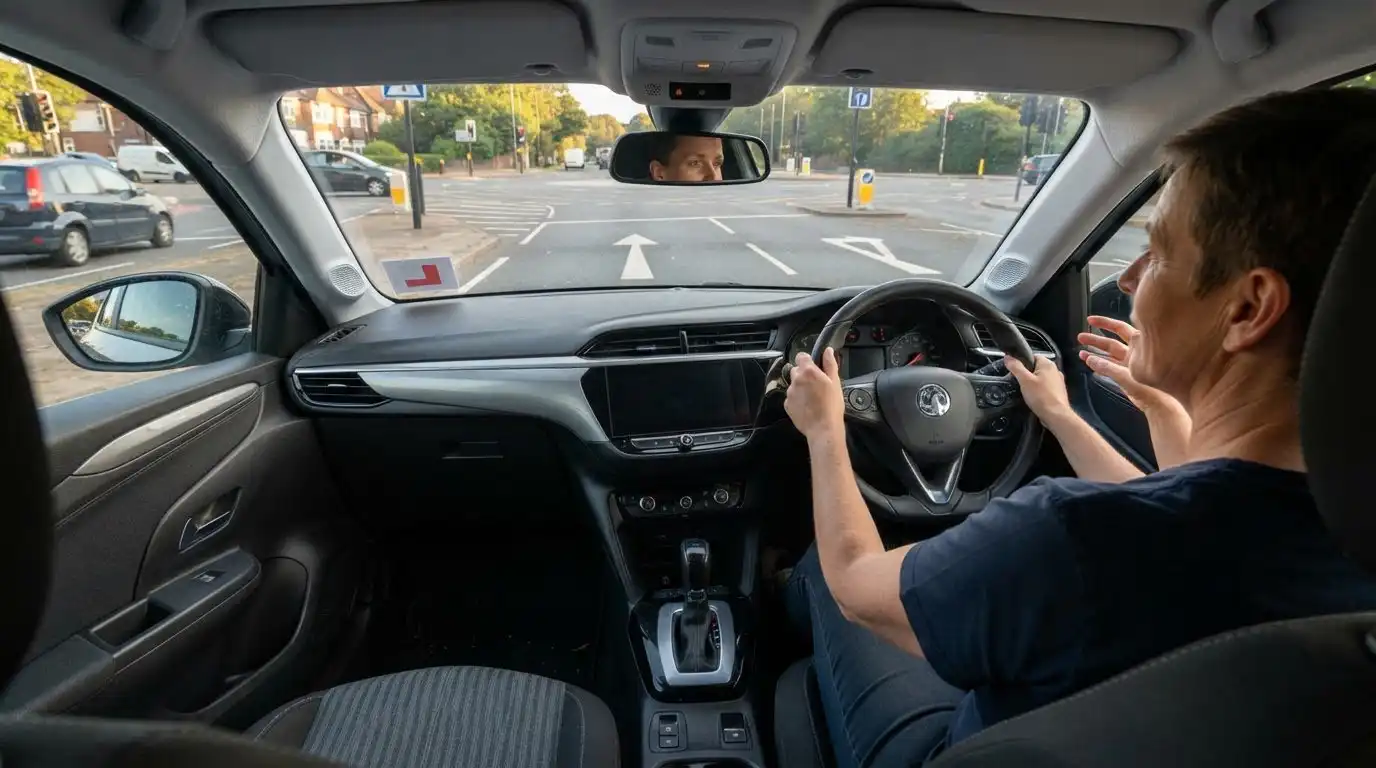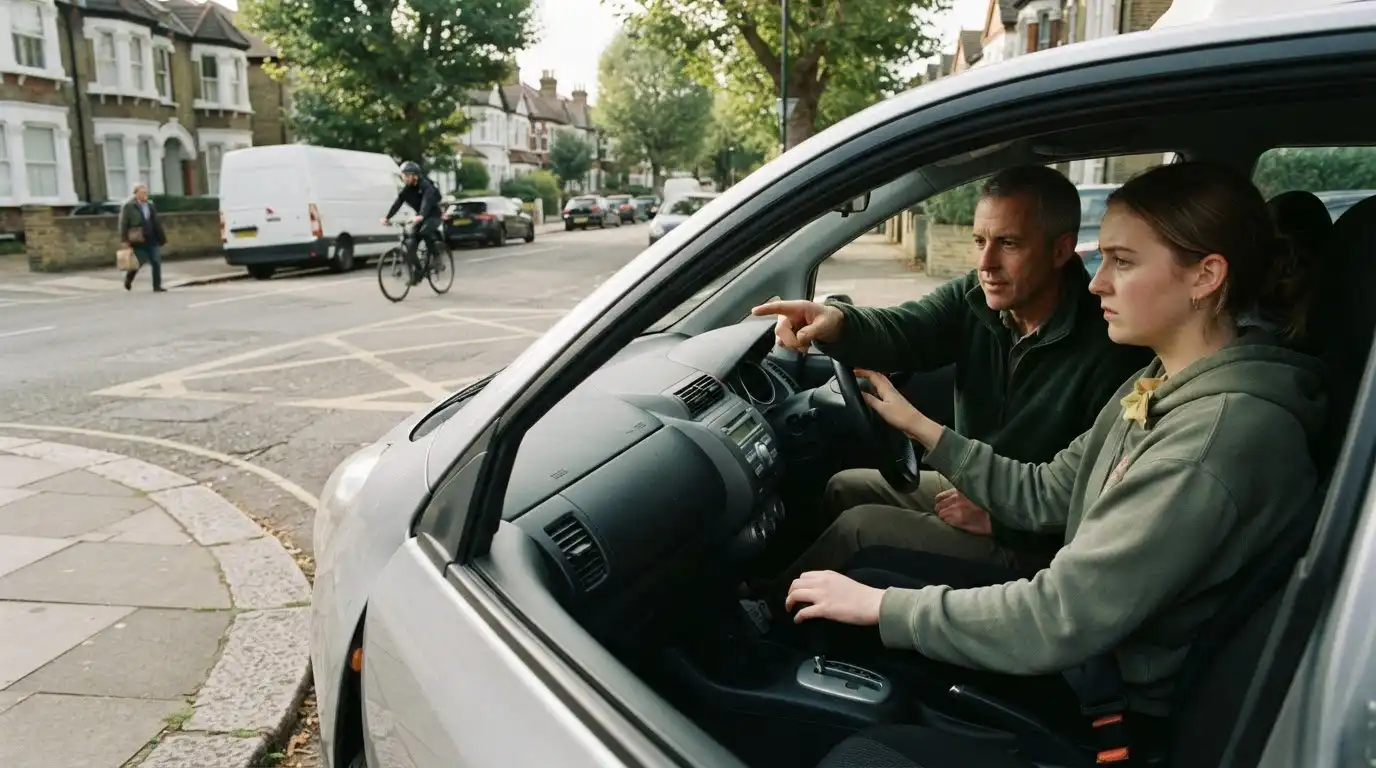
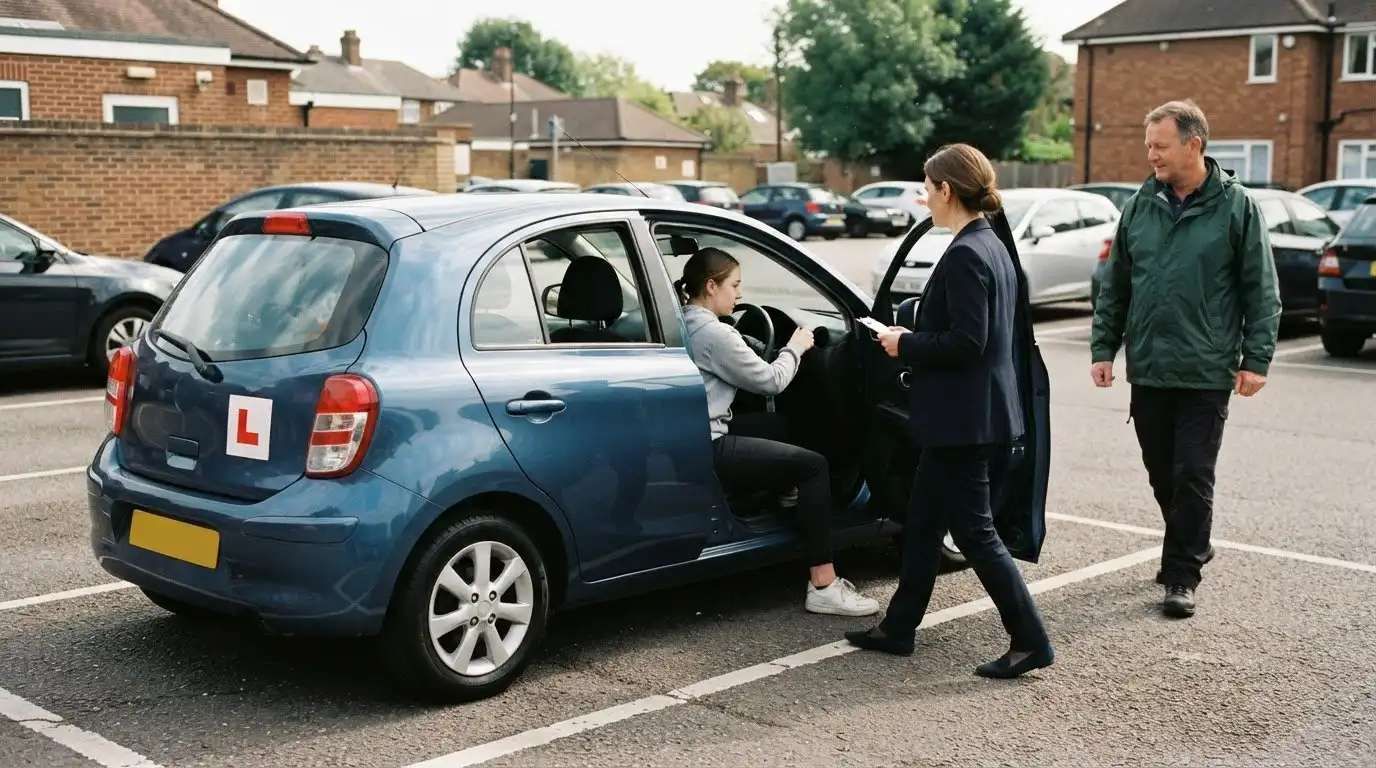
Yes, you can take your practical driving test in your own automatic car, provided it meets the test requirements. It must be suitable for the examiner to sit in and have the required safety and learner-driver features. The car doesn’t need dual controls when it’s your own.
Using a familiar car can feel reassuring on test day, but check the requirements before deciding. This guide explains what your car must meet, which in-car features may need to be switched off or removed, and what to consider when taking the test in an automatic or semi-automatic car.
You’ll also learn how the rules apply to roadworthiness and insurance, so you can plan for test day and focus on showing the examiner that you drive safely and confidently.
Key Takeaways
- You can use your own automatic car for the practical test if it meets the required conditions.
- Know which tax, insurance, roadworthiness and MOT requirements apply before test day.
- Make sure the car is eligible for the test, including meeting the required performance standard.
- Some in-car features may need to be switched off or removed, so prepare the vehicle in advance.
- Passing in an automatic or semi-automatic car affects which types of cars you can drive afterwards.
1. Can I take my driving test in my own car?
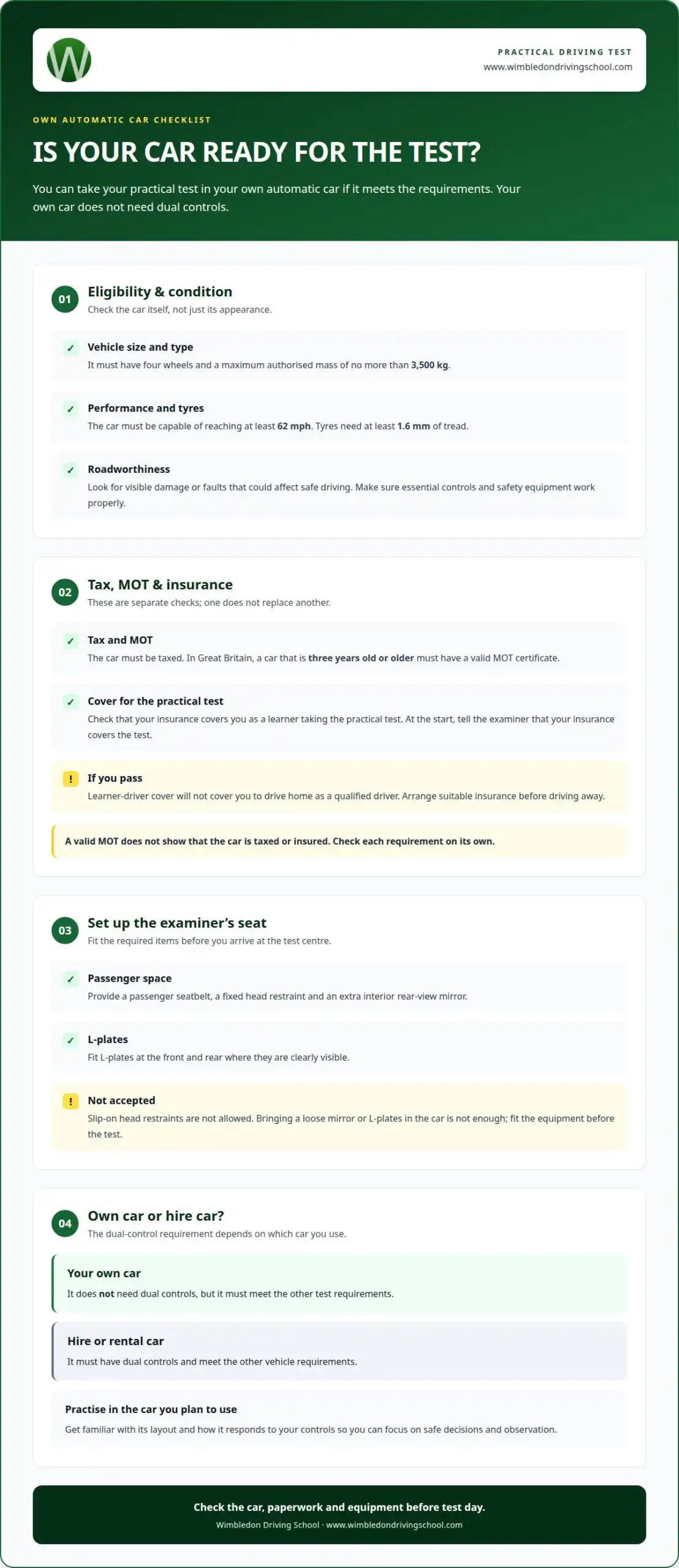
Yes. You can take your practical test in your own car, including an automatic, if it meets the test requirements. The car must be suitable for the examiner to sit in and have the required safety and learner-driver features. Your own car does not need dual controls.
In the UK, you must be at least 17 years old to book a practical driving test, according to the Driver and Vehicle Standards Agency. You also need a valid UK provisional driving licence before booking. An automatic or semi-automatic test car has two pedals. Your transmission choice matters after the test too, so consider whether automatic driving lessons suit your learning needs.
Prepare the passenger space for the examiner before test day. The car needs an extra interior rear-view mirror, a passenger seatbelt and a fixed head restraint. Slip-on head restraints are not allowed. Fit L-plates at the front and rear, where they are clearly visible.
The vehicle must have four wheels and a maximum authorised mass of no more than 3,500 kg. Its tyres need at least 1.6 mm of tread, and the car must be roadworthy. Look for visible damage or faults that could affect safe driving, and make sure essential safety equipment works properly.
In Great Britain, a car that is three years old or older must have a valid MOT certificate. Your car must also be taxed and insured for the practical test. At the start, tell the examiner that your insurance covers the test. These are separate requirements: an MOT certificate does not show that the car is taxed or insured.
Bring your valid provisional driving licence. Fit all required equipment before arriving; bringing a loose interior mirror or L-plates in the car is not enough. To take the test, meet the age and licence requirements, arrange your practical test and use a suitable car. If the vehicle does not meet the requirements, your test may be cancelled without a refund.
A familiar car can make it easier to concentrate on safe decisions instead of getting used to a new layout on test day. Consider whether you can use its controls confidently and maintain good observation throughout the drive. Prepare both the car and your ability to drive it safely.
2. Requirements for the car’s tax, insurance, roadworthiness and MOT
A valid MOT alone does not make a car ready for a practical test. The vehicle must also be taxed, roadworthy and insured for your test. Treat these as separate checks: one document or policy does not replace another.
In Great Britain, a car that is three years old or older must have a valid MOT certificate. The car must also be taxed. If either requirement is not met, the vehicle is not ready for the test, even if it looks clean and runs normally.
Roadworthiness depends on the car’s condition as well as its paperwork. Before test day, look for obvious damage or faults that could affect safe driving. Check that the essential controls work as expected and that nothing inside or outside the car could distract you or the examiner. A valid MOT does not rule out a fault that develops afterwards.
Pay particular attention to insurance when using your own car. Your policy must cover you as a learner taking the practical test, not just ordinary practice. Read the terms for restrictions that could affect the test, and have the relevant insurance details available. At the start, tell the examiner that your insurance covers the test.
The examiner needs to know that the car is insured for the purpose it is being used for. Do not assume a learner policy automatically covers a practical test. If you have practised with an instructor, the instructor’s insurance does not cover your own car.
Plan for what happens after the test, too. If you pass, your learner-driver policy will not cover you to drive home as a qualified driver. Arrange suitable insurance before driving away. Passing does not automatically change your existing policy, so do not assume you can continue under learner cover.
A practical preparation sequence keeps these requirements distinct:
- Confirm the car is taxed and, where required, has a valid MOT certificate.
- Review the insurance policy for cover during the practical test.
- Make sure the car remains roadworthy, with no obvious damage or faults.
- Plan suitable qualified-driver insurance before driving home if you pass.
Sort out the paperwork and the car’s condition before test day, rather than trying to resolve a problem at the test centre.
3. Eligibility to take the practical test in your own car
A car must be capable of reaching at least 62 mph to be used for a UK driving test, according to the Driver and Vehicle Standards Agency. This is about the vehicle’s ability, not a speed you must reach during the test. A car that cannot reach this capability won’t be suitable, even if you expect to drive mainly on slower roads.
Consider how the car will handle on the test route, which can include different road conditions. It should perform as expected and respond predictably to your controls. Practise in the same car under ordinary driving conditions before choosing it for the test. Familiarity can help you focus on driving instead of adapting to a different layout or response.
There is an important difference between using your own car and a hire car. Your own car does not need dual controls. A hire or rental car used for a UK practical test must have dual controls and meet the other vehicle requirements. Hiring a car does not remove the need to check that it is suitable for the test.
Think about where the car is coming from before booking. If you plan to borrow one, arrange its use for the test and practise in it beforehand. If you plan to hire one, it must be equipped for the test, including dual controls. In either case, having access to a car does not automatically make it eligible.
Check the specific car’s suitability, not just its make or appearance. Consider how it performs, how it responds to your controls and whether it belongs to a vehicle category that can be used for the test. For a hire or rental car, include the dual-control requirement in your checks.
Before settling on a vehicle, use these practical questions:
- Can the car reach at least 62 mph?
- Is it your own car, or a hire or rental vehicle with dual controls?
- Have you practised in this specific car and become comfortable with its response?
- Does the particular model and configuration qualify for a practical test?
Keep the car’s eligibility separate from your readiness as a learner. Being able to present a vehicle does not mean you are ready to drive it confidently under test conditions. Practising in the exact car you plan to use helps you get used to its acceleration, braking and handling before the examiner is beside you.
Choose your car early enough to practise in it. Switching at the last minute from a familiar car to an unfamiliar one adds a new adjustment when you need to concentrate on the test. Ideally, use a suitable car you already know how to drive.
4. Features that can and cannot be used during the test
Check in-car cameras before setting off. A camera that records audio must be removed or switched off for the UK practical test. A camera that records video without audio is not covered by that specific restriction, but it must not obstruct your view or the examiner’s view through the windows or mirrors.
Check the camera before arriving at the test centre. Review its settings rather than assuming it is silent, as some devices record audio automatically. If you cannot disable audio recording, remove the camera for the test. Do not operate or adjust equipment while driving; focus on the road, traffic and the examiner’s directions.
Some vehicle models are not accepted for a practical test, even if they are taxed, insured and in working order. The listed examples are:
- BMW Mini Convertible
- Ford KA convertible
- Two-door Smart Fortwo
- Toyota iQ
- VW Beetle Convertible
These exclusions apply to the specific models and body styles listed. Do not assume a similar-looking car is also excluded, or that a different version is acceptable without meeting the other vehicle requirements. The cars considered for a driving test can help you assess whether a vehicle is suitable.
Driver-assistance equipment is a separate consideration from the rule on cameras that record audio. The listed facts do not establish a blanket ban on features such as parking sensors or cruise control. You must, however, remain in control of the car and make your own observations. Do not rely on a camera, sensor or alert instead of checking your surroundings and mirrors.
Before test day, identify unfamiliar buttons and dashboard alerts. Know, for example, how to stop a dashcam recording audio and how to use the ordinary controls without taking your attention from driving. If a feature affects your view, obscures a mirror or distracts you, remove or disable it where possible.
Check the examiner’s equipment separately from the car’s required safety items. A camera does not replace the extra interior rear-view mirror, and electronic alerts do not replace direct observation. Your licence and insurance do not make an unsuitable vehicle acceptable either. Each requirement serves a different purpose, from permission to drive to the examiner’s visibility.
Before leaving for the test, check that any camera recording audio is switched off or removed, the windows are clear and the mirrors are usable. This helps prevent a removable device or unsuitable model from disrupting your appointment.
5. Automatic and semi-automatic test cars
You can take the practical test in an automatic or semi-automatic car if it meets the vehicle requirements. Both types have two pedals. Before arriving at the test centre, make sure you know the car’s controls and how its transmission responds.
An automatic car changes gear without a clutch pedal. A semi-automatic also has two pedals, but its gear selection may work differently from the automatic you have practised in. Before test day, learn how to select drive and reverse, use the parking brake and operate the car’s controls.
Practise in the same type of car you plan to use for the test. If your lessons are in an automatic, for example, get used to the controls of your own automatic car. An unfamiliar layout or gear selector can take attention away from traffic, observations and the examiner’s directions.
You will need to use the speedometer and mirrors while driving. Make sure you can read the speedometer clearly and adjust your mirrors before moving off. Fitted equipment must not block your view or interfere with the examiner’s view. A spare tyre does not determine whether the car is automatic, but the vehicle must still meet the overall test requirements.
Your choice also affects the vehicles you can drive after passing. If you pass your test in a semi-automatic car, you can drive only automatic and semi-automatic cars. The test result therefore has consequences beyond the test centre. Think about the type of car you intend to drive afterwards before settling on the vehicle for your test.
To prepare, sit in the parked car and locate its main controls. Practise using them safely during lessons or supervised practice, then drive the same car in varied conditions. An instructor can help you practise moving off, stopping, junctions and manoeuvres in an automatic. Rehearsing these skills in the test car helps you focus on safe driving instead of learning its layout.
Before booking, confirm that your chosen car is an automatic or semi-automatic with two pedals, and that you are comfortable using its controls. Consider how passing in that type of car fits your plans as a learner. Being ready means more than knowing how to start the car; you need to be prepared to drive it safely throughout the test.
Wimbledon Driving School: Automatic Driving Lessons
Wimbledon Driving School provides Automatic Driving Lessons to help you build confidence with the controls and practise for your practical test. An instructor can help if you are still getting comfortable with your automatic car or want focused practice before test day.
A Mock Driving Test gives you the chance to practise test-style driving and identify areas to work on, such as observations, positioning and manoeuvres. It can help you assess your preparation, whether you plan to use your own car or another suitable automatic.
For guidance on preparing for an automatic test, contact Wimbledon Driving School.
Make your test car part of your preparation
Make your choice of car part of your practice plan. If you are deciding whether you can take your driving test in your own automatic car, consider how familiar you are with its controls and whether you can practise in it consistently. Confidence comes from being ready to drive safely, not simply from knowing the route to the test centre.
Wimbledon Driving School offers Automatic Driving Lessons to help you develop your skills in an automatic. You can also choose Manual Driving Lessons if you want to learn in a manual, or an Intensive Driving Course for a more focused programme of instruction. A Mock Driving Test lets you practise responding to test conditions and identify skills to keep working on.
Choose support that suits your learning and the car you plan to use. Take the next step towards test day with a clear, steady plan.
Keep practising, build your confidence and take each stage one step at a time.
Frequently Asked Questions
Can I take my driving test in my own car?
Yes. You can take the practical test in your own car if it meets the requirements and is insured for the test. Your choice may depend on which vehicle you know best and whether it is ready for test day. If you use someone else’s car, make sure you have permission and that its insurance covers your test.
Should I use my own car or my instructor’s car?
Choose the car you can drive most confidently and consistently. Your own car may feel familiar, but it must meet the test requirements and be insured for the test. An instructor’s car may already be set up for lessons, including dual controls. Consider which vehicle you have practised in and whether you can use it for the test.
Do I need to tell the test centre if I use my own car?
The key practical requirement is to arrive with a suitable, insured car. At the start of the test, tell the examiner that your insurance covers it. This declaration does not replace the need for the right cover. If you are unsure how to record your vehicle choice when booking, follow the official booking process.
Do I need learner driver insurance if I use my own car for the test?
Your car must be insured for you to take the practical test as a learner, and you must tell the examiner this at the start. A policy for ordinary practice may not cover the test, so read its terms carefully. If you pass, learner-driver cover will not insure you to drive home as a qualified driver; arrange suitable cover first.
What should I do if my car fails to meet the requirements on the day of the test?
If the car does not meet the requirements, the test may be cancelled without a refund. Do not go to the test centre hoping a missing item or fault will be overlooked. If you spot a problem beforehand, arrange a suitable alternative with the required features and insurance. The replacement car must be ready for the test.
Can I take a UK driving test in my own automatic car?
Yes. You can use your own automatic car if it meets the practical-test requirements. An automatic or semi-automatic test car has two pedals. Choose a vehicle whose gear selector, parking brake and other controls you can use confidently. If you pass in a semi-automatic car, you can drive only automatic and semi-automatic cars afterwards.
What requirements must a car meet for a UK practical driving test?
The car must have four wheels, a maximum authorised mass no greater than 3,500 kg, and be able to reach 62 mph, according to the Driver and Vehicle Standards Agency. It also needs L-plates, an extra interior mirror, a passenger seatbelt and a fixed head restraint. Tyres need at least 1.6 mm of tread, and the vehicle must be roadworthy.
Does my car need dual controls for a UK driving test?
No. Your own car does not need dual controls for the practical test. A hire or rental car, by contrast, must have dual controls and meet the other requirements. Dual controls allow an instructor to intervene during lessons, but your own car still needs to be safe and suitable, and insured for the test.
Disclaimer
This article is provided for general informational purposes only and does not constitute professional driving, legal, or safety advice. While we aim to keep our content accurate and up to date, rules, prices, and DVSA test requirements can change — always check gov.uk or contact us directly at 020 3524 7968 for the latest guidance before making any decisions. Nothing in this article guarantees a specific outcome, including passing your driving test within any stated timeframe. For current pricing, course availability, and instructor details, please visit our Prices page or get in touch.