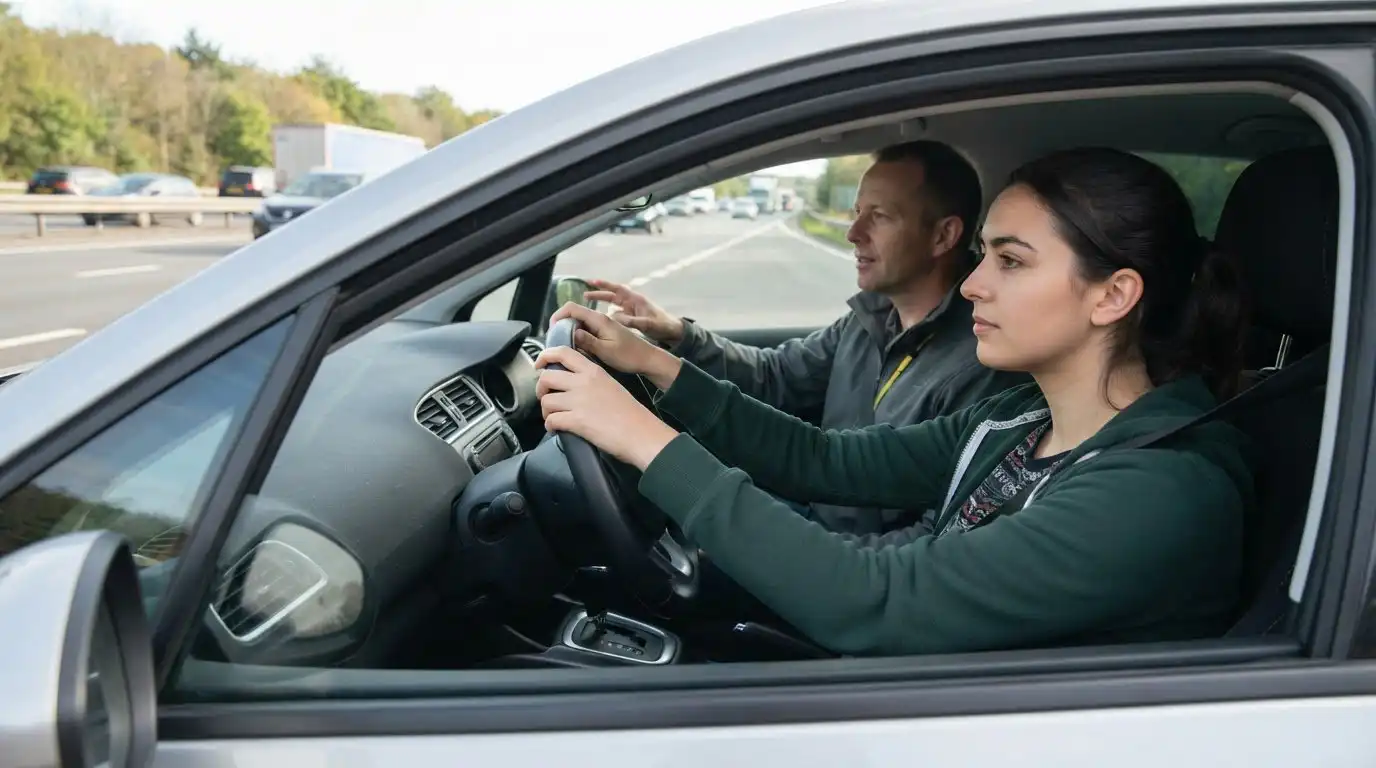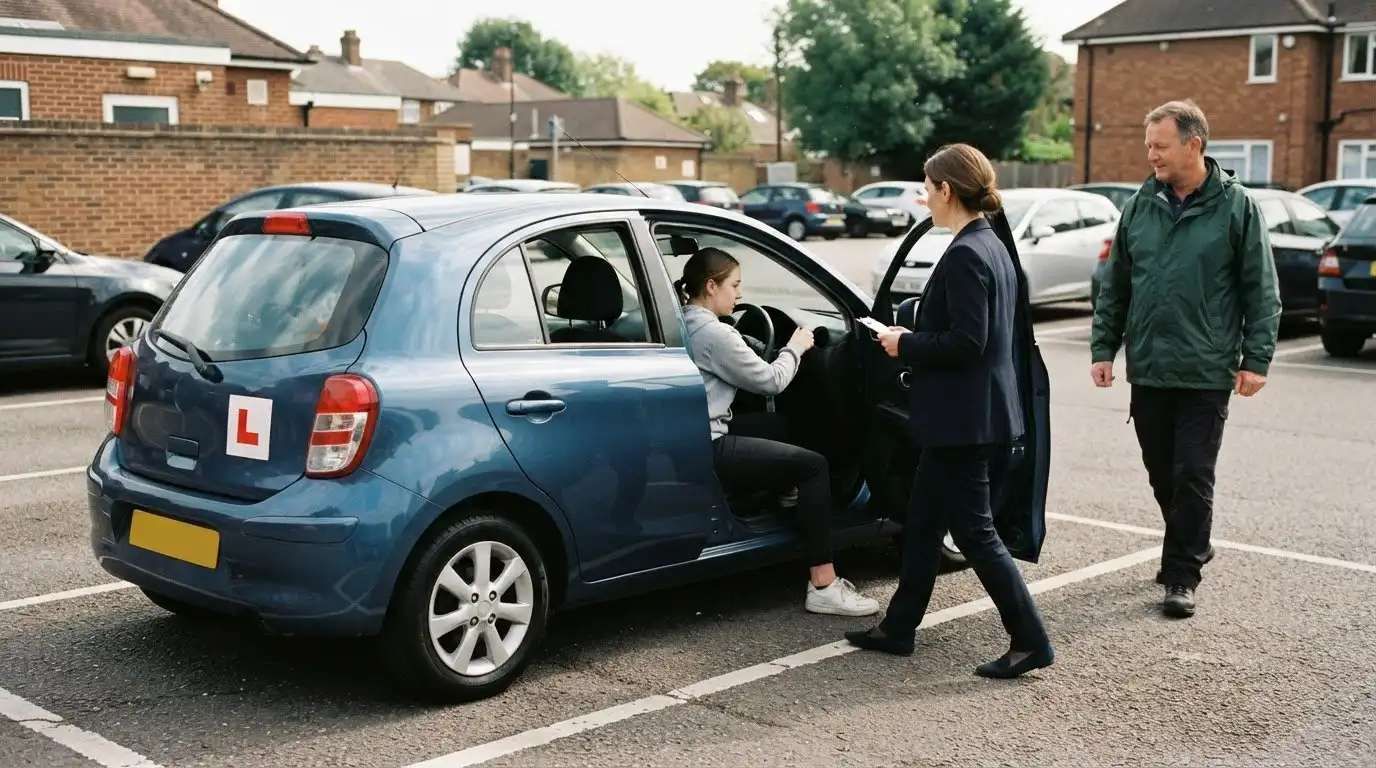
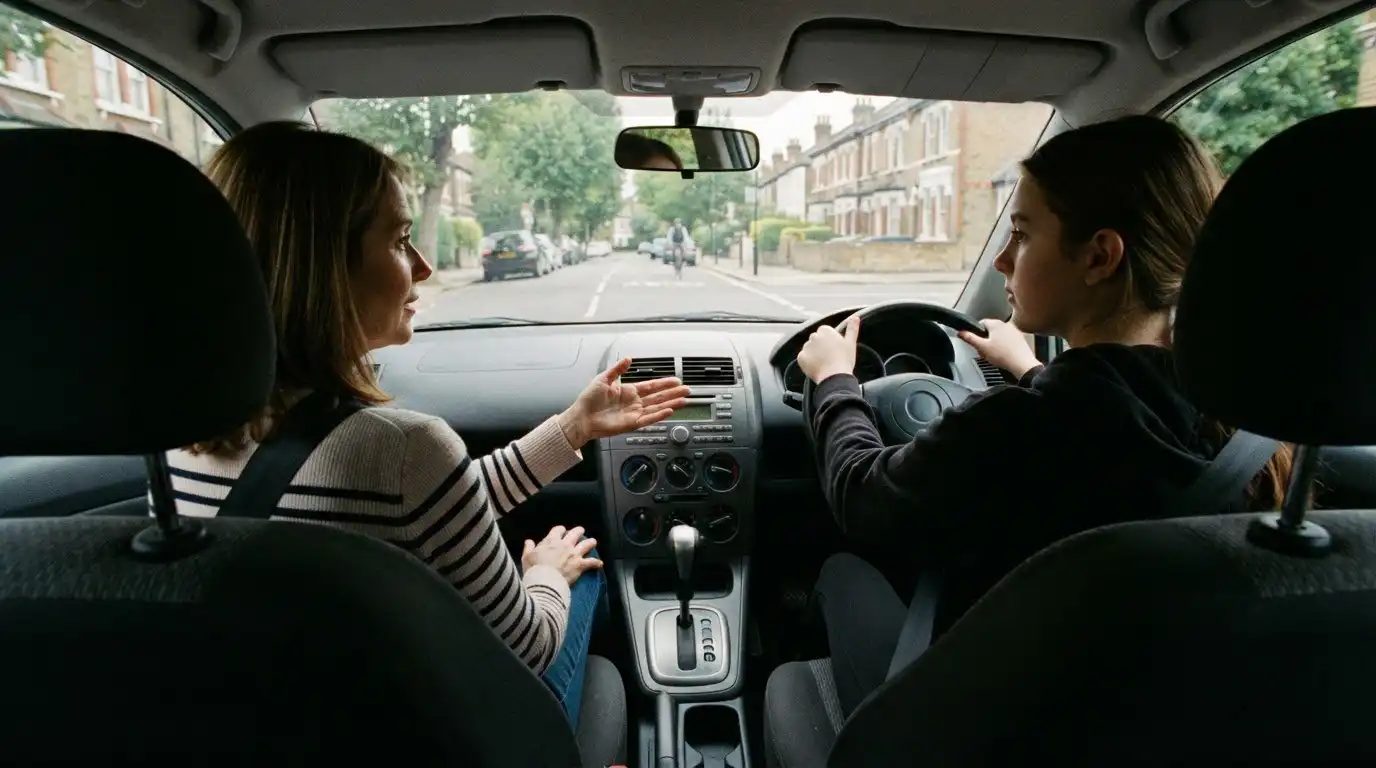
Staying calm is part of keeping practice safe. Knowing how to support a learner driver as a parent starts with giving clear, simple instructions, keeping your tone steady and avoiding shouting. Combine professional lessons, where skills are taught in a structured way, with private practice that reinforces what your teenager is learning.
It’s natural to want to step in when your child feels unsure, especially if you learned to drive years ago. But you don’t need to teach everything yourself or hurry them towards a test. Reassure them that nerves are common, agree what to practise before setting off, and pause if either of you feels stressed.
This guide explains how to make parent-led practice calmer and more useful, work alongside an instructor, and help your teenager prepare for the test without adding pressure. You’ll also find ways to stay involved as they build confidence and independence after getting their licence.
Key Takeaways
- Use parent-led practice to reinforce skills from professional lessons, rather than replacing structured instruction.
- Agree a calm, focused goal before each drive and make space to pause if nerves rise.
- Help your teenager build test readiness by practising under realistic conditions and noticing where they need more confidence.
- Keep offering steady support after they pass, while helping them take increasing responsibility for safe driving.
- Recognise small achievements along the way to encourage confidence and independence.
1. Combining professional lessons with supervised practice
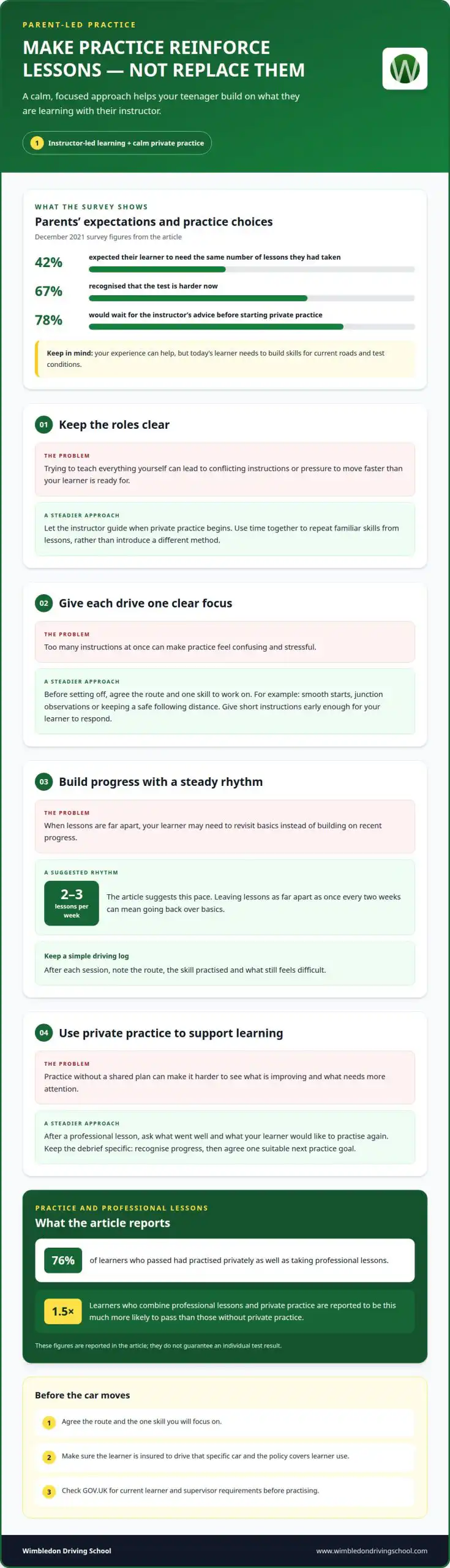
Combine an instructor’s structured teaching with private practice that reinforces the same skills. Parents bring different expectations: in a December 2021 survey, 42% expected their learner to need the same number of lessons they had taken, while 67% recognised that the test is harder now. Your experience can help, but today’s learner needs to build skills for current roads and test conditions.
Let the instructor guide when private practice begins. In the same survey, 78% of parents and other influencers said they would wait for the instructor’s advice. Private practice can then help your learner repeat familiar skills between lessons, rather than introduce conflicting instructions. Among learners who passed, 76% had practised privately as well as taking professional lessons; learners who combine both are reported to be 1.5 times more likely to pass than those without private practice.
Plan each drive around one clear aim, such as smooth starts, junction observations or keeping a safe following distance. A suggested schedule is 2-3 lessons per week; leaving lessons as far apart as once every two weeks can mean revisiting basics instead of building on progress. Keep a simple driving log after each session, noting the route, skill practised and what still feels difficult.
Where can a learner practise legally in the UK, including on motorways? Practise only where the learner may lawfully drive and the supervising driver meets the current rules; GOV.UK explains the requirements. Before practising on a motorway, check the current requirements and make sure the learner and supervisor are legally permitted to do so.
What insurance does a learner driver need when practising with a parent? The learner must be insured to drive that specific car, either through a learner-driver policy or cover arranged under the vehicle’s existing insurance. Before setting off, make sure the policy covers learner use and that the parent’s supervision meets its terms.
Keep practice focused and calm. Before moving off, agree the route and one skill to work on; during the drive, give short instructions early enough for the learner to respond. If an additional passenger will be in the car, wait until the learner can drive safely with someone else present. The school’s learner-driver passenger rules can help you understand this consideration.
After each professional lesson, ask the learner what went well and what they’d like to practise again. A useful debrief notes progress and the next practice goal, rather than turning the journey home into a second lesson. Keep feedback specific: praise a well-timed mirror check, then agree to practise that observation again at a suitable opportunity.
2. Comfort and familiarity when practising with a parent
A parent’s familiar presence can make the car feel less formal, but family dynamics can also make mistakes feel personal. Your teenager may worry about disappointing you or being corrected by someone they know well. Before starting, ask what would help them feel comfortable and agree that practice is about learning, not judging their ability.
Parents wondering how to support a learner driver can make practice feel more predictable. Let the learner choose between two suitable routes, or agree beforehand where you’ll turn back. Familiar surroundings can reduce the number of new things competing for attention, leaving more room to notice how the drive feels.
What are the legal requirements for supervising a learner driver in the UK? The learner, supervisor and vehicle must all meet the current rules for learner driving. Check GOV.UK for the requirements before practice, including who may supervise, rather than relying on rules you remember from when you learned.
Can a learner driver practise in a parent’s car, and what checks are needed first? Yes, if the learner is insured to drive that vehicle and it is roadworthy. Confirm that the insurance covers learner use, display the required L plates, and make sure the learner can adjust the seat, mirrors and head restraint before moving off.
Small choices can give a learner more control without making the drive feel like a test. Agree that they’ll decide when they’re ready to start, for example, or invite them to ask for a quieter route. If they seem overwhelmed, ask whether they’d like to pause somewhere safe or end the session.
Parents can reduce tension by setting expectations before getting into the car. Agree not to compare the learner with siblings, friends or your own past experience. If a familiar disagreement starts to surface, postpone the discussion until you’re parked. This keeps family concerns from taking over the learner’s attention on the road.
Notice what makes practice easier for your teenager. They may prefer silence when approaching an unfamiliar junction, or a quick explanation before reaching a busy stretch. Ask directly, then adapt your approach. This is part of how to support a learner driver as a parent: offer a steady presence while letting them build confidence in their own decisions.
If professional guidance would help your family feel more at ease, book a driving lesson to support your learner’s next steps.
3. Parents’ influence on learners’ test readiness
Your influence can help a learner prepare without making the test feel like a family verdict. Ask what feels hardest, then agree one practical focus, such as checking mirrors before signalling or keeping a steady speed. In December 2021, a survey included 1,501 parents and guardians of learner drivers aged 17 to 24, reflecting how closely families are involved in preparation.
Which driving skills should parents practise with a learner, and in what order? Start with vehicle control and observations, then move on to junctions, manoeuvres and independent driving as the learner becomes ready. Follow the instructor’s sequence so your practice reinforces familiar techniques instead of introducing competing instructions.
For the theory test, help your learner build a short, organised study routine. They might review road signs, revisit challenging questions and practise hazard perception in separate sessions. Ask them to explain why an answer is safe, rather than simply memorising it. A wrong answer can reveal a gap to discuss with their instructor or revisit through hazard perception test practice.
A mock practical driving test can make the practical test feel more familiar. Agree on a route and let the learner complete a sequence without coaching, then discuss specific observations afterwards. Include parallel parking, safe following distances and responding to signs. Keep your notes factual: “You checked the left mirror before moving in” gives a clearer target than “That was good”.
Manage pressure by separating preparation from judgement. Don’t present a test date as a deadline for being ready; instead, ask the instructor which skills are consistent and which still need work. During practice drives, leave a quiet pause after a mistake so the learner can identify what happened and choose a safer response next time.
If the learner doesn’t pass, let them explain how the test felt before offering advice. Note the skills they want to revisit, such as positioning at junctions or maintaining observations during a manoeuvre. A failed test shows what to practise next, not whether they can become a safe driver.
Keep the next steps manageable: review one theory topic, practise one agreed driving skill and discuss progress with the instructor. This steady approach gives your learner room to develop their technique without carrying extra pressure from the passenger seat.
Use a practice drive as a low-pressure rehearsal, not a chance to recreate every challenge at once. Before setting off, agree that the learner will focus on the parts of the practical test they want to practise, such as parallel parking or keeping a safe distance. During the drive, give them space to make decisions without a running commentary. If safety requires an instruction, keep it clear and brief; save other observations until the vehicle is stopped.
Afterwards, invite the learner to describe what felt familiar and what they’d like to repeat. Ask whether they had enough room while parking or kept a safe distance as conditions changed, then let them identify a useful adjustment. Keep the discussion focused on the driving task, not on whether the rehearsal went perfectly. A supportive practice test can make the practical driving test feel less unfamiliar and give the learner a chance to work on their chosen skills.
4. Ongoing support after a teen gets a licence
Passing the test marks a new stage, not the end of your support. During the first year, discuss practical boundaries before your teenager drives alone. You might agree that they’ll tell you their route, avoid carrying friends initially, or call if plans change. Be specific, so expectations are clear without treating every journey like a test.
Agree a curfew that suits your household and the journeys your newly licensed driver makes. Talk through what to do if a late school event, work shift or traffic delay changes their return time. A clear plan for keeping you updated helps build responsibility. It’s more useful than an unspoken expectation that they’ll know what you want.
Passengers can add noise, conversation and pressure to a journey. Consider setting limits on driving with friends during the first year, then review them together as your teenager gains experience. Talk through an example: if a passenger urges them to speed or use a phone, the driver can refuse, pull over safely when appropriate, or end the journey.
Keep reinforcing habits that mattered during lessons. Before a familiar trip, ask your teenager to plan the route, check likely traffic conditions and leave enough time to avoid rushing. Afterwards, ask what felt straightforward and where they had to adapt, such as changing lanes near a busy junction or responding to a diversion.
Stay available without taking over. If your teenager is unsure about an unfamiliar route, help them plan it before departure rather than giving rushed directions from the passenger seat. For a difficult situation on the road, talk through a calm response afterwards and use practical examples from this guide to unexpected driving situations.
Review boundaries regularly, not just after a disagreement. After a week of school or work journeys, for example, discuss whether the agreed route, passenger limits and check-in plan are working. If your teenager follows the plan consistently, consider adjusting it together. If a journey raises concerns, agree on a specific change before the next one.
Focus feedback on decisions, not character. Instead of calling someone careless, describe the action: “You followed too closely in slow traffic; leave more space next time.” This gives your licensed teenager a clear habit to practise while keeping communication open for the next journey.
Parents can consider setting driving curfews or limiting journeys with friends during a newly licensed teen’s first year, then reviewing those boundaries as experience grows.
5. Parental involvement in teen driver education
Parents shape driver education through everyday conversations, not only time behind the wheel. A December 2021 survey included 1,501 parents and guardians of learner drivers aged 17 to 24. Ask your teenager, “What part of driving feels hardest today?” Their answer can guide a useful conversation about confidence, pressure or a skill they want to develop.
Family practice can feel more nerve-racking than professional teaching. Learners may feel especially nervous driving with family, where old habits and familiar dynamics can affect communication. Agree on one goal before starting, such as practising at a quiet junction. Give instructions early and calmly, then save detailed feedback until the vehicle is parked.
Your experience still matters, but roads and driving expectations change. Parents may bring teaching habits from 20+ years ago into practice, even when those methods don’t suit a learner’s current lessons. Ask what the instructor has taught before offering another technique. For example, if your teenager has learned a particular mirror-check routine, reinforce that sequence rather than replacing it with your own.
Make progress visible through small achievements. Mastering clutch control or navigating a roundabout is a practical skill worth recognising. Name the action specifically: “You checked both ways before moving” helps your learner understand what to repeat. Then ask what they want to work on next, so your encouragement supports independence rather than pressure to please you.
A short practice session can still have a clear purpose. Use a 20-minute window to repeat a familiar route or practise one safe skill, rather than cramming in several new challenges. A parent can also set up a mock test in a safe, open area when the learner is ready. Afterwards, discuss one strength and one next step, not every minor hesitation.
Use ordinary journeys to model defensive driving. Explain how you leave space behind the vehicle ahead, adjust speed to the conditions and avoid mobile-phone distractions. Repeating a familiar drive in different lighting or weather can help your teenager notice how visibility and road conditions change. Make seat belts part of every journey, including short trips.
Learning to drive builds more than test technique. Planned conversations, calm practice drives and specific encouragement can help a teenager develop confidence, awareness and independence. Let professional instruction guide the teaching. Your role is to reinforce safe habits and make it easier to talk openly about progress.
Wimbledon Driving School
Wimbledon Driving School provides professional instruction to complement calm practice with a parent. An instructor helps your learner develop skills systematically, while you can reinforce agreed practice between lessons without taking on the instructor’s role.
Choose manual or automatic lessons to suit your learner, or consider a mock driving test as they prepare for the practical test. After they pass, Pass Plus Lessons provide further guided learning as they gain experience on the road.
If you’d like professional support alongside your family’s practice, contact Wimbledon Driving School to discuss booking a lesson.
Help your learner take the next step
Knowing how to support a learner driver as a parent also means recognising when your role can change. As your teenager becomes more confident, encourage them to explain their decisions and identify what they want to improve. This helps them take ownership of their learning instead of relying on you to direct every move.
Keep the conversation open beyond the next drive. Ask what would make learning feel more manageable, then discuss whether a professional lesson could help with a particular challenge or offer a fresh perspective. You can remain a steady source of encouragement while your learner takes increasing responsibility for their progress.
Support doesn’t need to be complicated. A calm conversation about the next step can turn uncertainty into a clear plan, while giving your learner room to grow at their own pace.
Frequently Asked Questions
What are the best ways to give clear, calm feedback to a learner driver?
Describe what you observed and offer one useful next step. For example: “You slowed smoothly before the bend; look further ahead on the next one.” Keep your voice even and avoid correcting several things at once. If you need to give an instruction while the car is moving, make it brief and early. Save longer explanations until you’ve parked safely.
What are the risks of supervising a learner driver, and how can parents manage them?
Risks include becoming distracted, giving instructions too late or letting frustration affect your judgement. Before setting off, put your phone away, choose a route that matches the learner’s current ability and agree how you’ll communicate. If traffic becomes too demanding, give calm, simple directions and help the learner find a safe place to stop. Don’t continue the practice drive if you can’t give it your full attention.
How many hours of practice should a learner driver get before the UK practical test?
There’s no single number of practice hours that suits every learner. Focus on whether they can drive safely and consistently on different roads, in different traffic conditions and during manoeuvres, rather than reaching an arbitrary total. Ask their instructor which skills still need work and use those priorities to guide further practice. For example, a learner who needs more time at busy junctions should build confidence there before treating a set number of hours as proof of readiness.
What should parents do if a learner becomes anxious or makes a mistake while driving?
Stay calm and help the learner focus on the immediate situation. Give one clear instruction if needed, then allow them time to act; don’t raise your voice or discuss blame while the vehicle is moving. Once parked safely, ask what they noticed and what they’d try next time. If anxiety continues to affect concentration, pause family practice and discuss a suitable next step with their instructor.
Disclaimer
This article is provided for general informational purposes only and does not constitute professional driving, legal, or safety advice. While we aim to keep our content accurate and up to date, rules, prices, and DVSA test requirements can change — always check gov.uk or contact us directly at 020 3524 7968 for the latest guidance before making any decisions. Nothing in this article guarantees a specific outcome, including passing your driving test within any stated timeframe. For current pricing, course availability, and instructor details, please visit our Prices page or get in touch.